BOOK: 齐天大圣 by Yinuo Wang

齐天大圣 Monkey King: A Bilingual Chinese Storybook (Pinyin & English) with HSK Vocabulary (Learn Chinese with Mythology:Bilingual Pinyin Edition 9)齐天大圣 Monkey King: A Bilingual Chinese Storybook (Pinyin & English) with HSK Vocabulary by Yinuo Wang
My rating: 4 of 5 stars

Amazon Page

This book collects episodes from the classic Chinese novel, Journey to the West, and condenses each into a page or two. Specifically, these are episodes from early in the story of Journey to the West, before the protagonist (a.k.a. Sun Wu Kong / the Monkey King / the Great Sage Equal to Heaven) actually departs on his journey to the west with a monk to get Buddhist scriptures. It is Sun Wu Kong’s origin story in a highly condensed form.

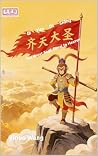
The illustrations of the book are aesthetically pleasing and are colorful and non-threatening (i.e. suitable for young readers.) Also, the book has quizzes and vocabulary building exercises at the back.

My biggest criticism of the book would be that it bites off more than it can chew. With single pages for major events and no room for transitions, the plates are a bit incongruous and don’t feel like a story as much as like viewing someone’s scrapbook. A lesser criticism would be that with a loose translation style (which is fine,) it sometimes translates the same characters in two different ways. (As it does with the title card which it translates quite literally as “The Great Sage Equal to Heaven” and the opening page where it translates the same four-character phrase quite loosely as “The Great Monkey King.”) This would not be an issue if the book were not a book for learning to read.

As I said, this is more like Sun Wu Kong’s scrapbook than his life story, but it is a nice way to practice beginner level reading. I’d recommend it for those beginning to read Chinese, particularly if one already knows the Journey to the West story.

View all my reviews

PROMPT: Change the Ending

Daily writing prompt
If you could change the ending of any book, which one would it be?

Titus Andronicus. A bit over-the-top with the familial cannibalism and all. Just sayin’.

BOOK: “Fight Club” by Chuck Palahniuk

Fight ClubFight Club by Chuck Palahniuk
My rating: 5 of 5 stars

Publisher Site – W.W. Norton

Through a weird and wild storyline, Palahniuk offers insight into two (intertwined) crises of identity that have only grown more prominent since the book (and the David Fincher film adapted from it) came out in the late 90’s. First and foremost, there is a craving for, yet confusion about the nature of, masculinity. As men raised by women struggle to ape masculine behavior only to over-emphasize conspicuous features such as violence and aggression while missing more subtle aspects such as the instinct to protect and a grasp of responsibility, self-empowerment, and fortitude. The second identity crisis is self as consumer, wherein people start linking who they are to their consumption, and this becomes demoralizing because it’s such a hallow way of seeing oneself. (I say the crises are “intertwined” because it’s a long and painful fall to go from “protector” to “consumer-” the latter having nothing at all to feel good about.)

This is one of those books that people either find illuminating or unreadable. There is a lot in the book that is stomach-turning. For many, this will be the violence, but — for me, and I suspect many others, — it’s the “mischievous” pranks that Tyler Durden and the unnamed lead “play” as they work as waiters. Upton Sinclair once said of The Jungle that he aimed for the reader’s heart (i.e. to bring awareness to labor issues in the meat packing industry) and hit them square in the stomach (i.e. people’s main takeaway was that how their food was made was gross and needed to be corrected.) This may be a similar situation. Palahniuk, I suspect, is trying to show how these full-grown men in some ways haven’t escaped the grossest era of boyhood as they attempt to find their power in the world, but it mostly reminded me to not eat at banquets or other gatherings of rich people.

I found this to be an insightful book and would highly recommend it for anyone trying to figure out some of the oddities of the world in which we find ourselves living.

View all my reviews

BOOK: “Shuhari” by Nobuo Suzuki

Shuhari: The Three-Step Japanese Path to Lifelong Growth and SuccessShuhari: The Three-Step Japanese Path to Lifelong Growth and Success by Nobuo Suzuki
My rating: 5 of 5 stars

Release date: August 11, 2026

I was introduced to the concept of “shuhari” as a student of Japanese martial arts, and over time I discovered it to be one of the most useful concepts for personal growth and development. Shuhari is by no means exclusive to martial arts and is applied to arts in the broadest sense — really to endeavors of any type (as is true in this book which references not only martial arts, but literary arts, graphic arts, cinematic art, and even sciences.) The idea is this: one begins by repetitively practicing what one is taught in as close to an exemplary fashion as possible (shu,) then one starts adapting the principles one has cultivated to changing and unpredictable circumstances (ha,) and finally one abandons the forms and embraces the spontaneous (ri.) In short, we follow the rules (shu,) break the rules (ha,) and abandon the rules (ri.)

Recent years have seen a flood of books on cultural life philosophies, starting and continuing with those of the Japanese culture, but venturing out into Scandinavian (Sisu and Lagom,) Goan (Susegad,) and many others. One could easily fill a shelf each with the popular books on “ikigai” or “ganbatte.” It’s kind of a surprise to see that it’s taken this long to venture into the invaluable concept of “Shuhari.” It is an idea whose time has come to go global.

In a broad sense, this is a book on learning and creativity, and I’d highly recommend it for anyone looking to reevaluate their approach to learning and / or creating.

View all my reviews

BOOKS: “Know Yourself and Your Enemy” by Qixia Yu

Know Yourself and Your Enemy 知己知彼百战不殆 (Bilingual Chinese Idiom Stories)Know Yourself and Your Enemy 知己知彼百战不殆 by Qixia Yu
My rating: 5 of 5 stars

Author Amazon Site

This illustrated bilingual book tells a story out of the Romance of the Three Kingdoms. It’s a popular tale of strategy in which the renowned strategist (and then Prime Minister) Zhuge Liang outfoxed the (also) renowned General Sima Yi as the latter brought a large army to the walls of the capital where Zhuge Liang was residing. The city was only weakly guarded because the bulk of forces were on campaign and they could not be recalled in time to be of service. Were it not for Zhuge Liang’s insightful stratagem, the capital would have been lost.

This is a great book for those learning Chinese for a few reasons. First, it contains pinyin and English translation. Secondly, it’s illustrated in a way that is not only aesthetically pleasing but which also helps a learner follow events – despite gaps in language understanding. Third, it’s an interesting story, and a nice break from the usual (re: dreadfully boring) beginner level reading fare. Finally, it’s a nice bite-sized chunk of writing for someone who still has to think out words and sentences. I don’t know that the author restricted themselves to any particular HSK level. It seemed to have some language beyond what was in HSK 3 / 4 readers I’ve read but is still relatively simple and straightforward in its language. Restricting to a simple level might be an issue with any historical work because there are going to be terms that are important but certainly aren’t among the most common words today (e.g. halberd.)

If you’re learning Chinese and are interested in strategy, martial arts, history, or Chinese literary classics, I’d highly recommend reading this book.

View all my reviews

BOOKS: “Four Quartets” by T. S. Eliot

Four QuartetsFour Quartets by T.S. Eliot
My rating: 5 of 5 stars

Available online

Four Quartets is a collection of four long poems by T.S. Eliot, written over several years before and during the Second World War. The poems are: “Burnt Norton,” “East Coker,” “The Dry Salvages,” and “Little Gidding.” They share a theme of metaphysical inquiry, particularly regarding time and man’s relation therewith. The book came out about five years before Eliot won the Nobel Prize for Literature, and was the last of his major poetry collections, and so it reflects a mature phase of his poetry writing.

I loved this collection, which combines food for thought with beautiful turn of phrase. As far as I could see, most of the disgruntlement with the collection had to do with Eliot’s religious / spiritual references, which offended the sensibilities of some of the most stridently atheist / agnostic individuals in the poetic community. Besides reflecting his own Christian worldview, Eliot had clearly been moved by reading the Bhagavad Gita and makes a number of references to Krishna.

Four Quartets is a pleasant read and I’d highly recommend it for poetry readers.

View all my reviews

BOOKS: “The Romance of Lust” by Anonymous

The Romance of LustThe Romance of Lust by William Lazenby
My rating: 3 of 5 stars

Public Domain — Wikisource

This book is classed as a “Victorian Erotic Novel,” but I’d call it pornography rather than erotica. I don’t mean that as condemnation, but as an application of the criteria “without the sex scenes, is there anything left?” In this case, without the sex, there isn’t really a story. If one took the sex scenes out of any erotica it wouldn’t be erotic anymore (and would probably be much less interesting,) but it could still have character development, a discernable plot in non-sex events, or an overarching moral. This book doesn’t really have any of that beyond some expository mentions of life events outside the sack.

This novel tells the story of a well-hung fictional character named Charlie Roberts through his myriad sexual adventures, which stretch from schoolboy / adolescent sex acts with his governess and his sisters to his wife-swapping adult years. The approach reminded me of the Marquis de Sade’s The 120 Days of Sodom The book under review has none of the Sado-Masochism (beyond the odd spanking or consensual flagellation) of Sade’s work, but it is a series of episodes that try to gradually one up each other in terms of their perceived level of perversity. Unlike The 120 Days of Sodom’s dark cruelty, The Romance of Lust reaches its extremes by way of incest, bisexual [omni-sexual?] orgies, and sex involving youths of ages that are undefined but clearly under our current conception of age of consent — but consent / amicability is present throughout.

Not long ago, I reviewed Venus in India. This work has some things in common with that one. For example, both books are set in the same era defined by a highly repressive culture that spurred a covert highly perverse counterculture, and both books were anonymously published. [FYI: It is known that The Romance of Lust was published by William Lazenby, but the author is unknown — though William Simpson Potter and Edward Sellon are among subjects of speculation.] However, in other ways, I think the books were quite different. I would say that Venus in India is to The Romance of Lust as Justine is to The 120 Days of Sodom, which is to say that former titles had something going on besides the sex scenes, while the latter titles really didn’t.

If you’re looking for an erotic novel that would stand without detailed descriptions of one sex scene after the next, this probably isn’t for you. However, if you like porn pacing and the lack of intrusions by non-arousing happenings, you may find this book compelling.

View all my reviews

PROMPT: Overrated

Daily writing prompt
What’s a classic book that you think is overrated?

Joyce’s Ulysses springs to mind. I do love some of the language, but — overall — reading it was a bit like getting my teeth drilled. (But I have been known to have a different perspective upon giving a book a second chance.)

There are many long works that I thought could have used an editor (e.g. Moby Dick and Atlas Shrugged,) but still I see their literary appeal.

BOOK: “Angel at the Earth’s Extremes” by Chūya Nakahara [trans. & ed. by Jeffrey Angles]

Angel at the Earth's Extreme: Collected PoemsAngel at the Earth’s Extreme: Collected Poems by Nakahara Chuya
My rating: 5 of 5 stars

Publisher Site — Penguin Classics

Release date: August 4, 2026

Chūya Nakahara was a Japanese poet who lived in the early twentieth century and who wrote in both classic Japanese forms (notably Tanka) as well a modern Western-influenced styles, particularly from the French avant-garde movement — e.g. Dadaism. Though he lived only to the age of thirty, Chūya left a substantial body of poems. He only published one collection during his lifetime, and had edited a second that came out posthumously, but the volume under review includes many previously uncollected poems as well.)

While only the Tanka poems early in the book are of classical Japanese form, Japanese literary influence shows up throughout, such as via seasonality. I took particular note of a focus on Autumn, followed [not chronologically, but in terms of volume,] by Winter, which may give insight into the tone of the volume. Of course, I didn’t count season words, so it might be a reflection of what resonated in my reading. But there is also a certain haiku-esque feel that appears in the author’s descriptions and juxtapositionings.

I enjoyed the language of these poems, particularly in description of sensory experience, which I presume owes both to Chūya and to the translator, Jeffrey Angles. Some examples include: “moonlight makes no sound // as it pools on the grass…”; “Rustling like rice husks, // Rough and dry as a loofa“; “dark against the night sky, // fig leaves stir in the wind // through the gaps, sky appears // –a beautiful woman // missing her front tooth, // standing gracefully // under the nighttime sky.

I’d highly recommend this book for poetry readers.

View all my reviews

DAILY PHOTO: Great Chinese Warriors in Incheon’s Chinatown

Photograph of a statue of Guan Yu taken in Incheon, Korea's Chinatown.
Photograph of the Enthroned Guan Yu on Incheon Chinatown's Samgukji Mural Street.
Photograph from Samgukji Mural Street in Incheon Korea's Chinatown of two warriors clashing -- from the "Romance of the Three Kingdoms."