“Wine Spring” by Pan Lang [w/ Audio]

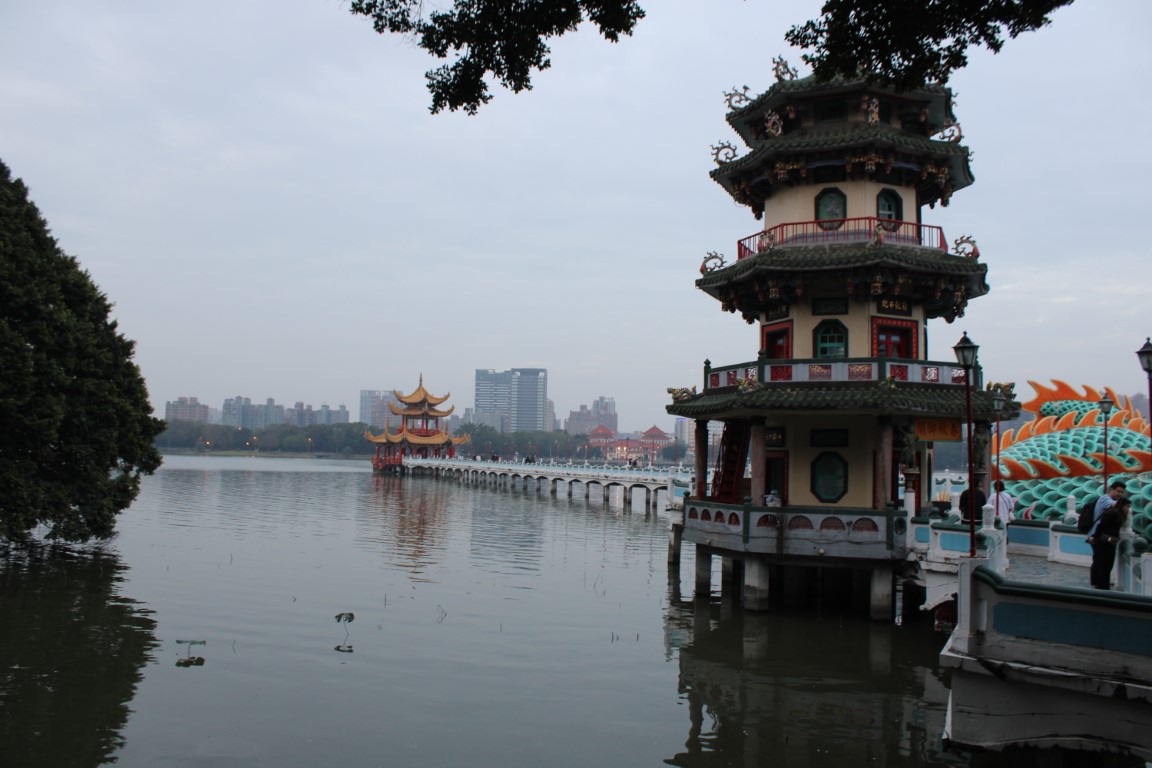
I remember viewing the West Lake
While leaning on a pagoda rail.
The boats all clustered in threes or twos.
The islets under deep Autumn blues.

Flute song arose from among the cattails.
And a line of white birds - overhead - sailed.
I planned to fix my old fishing pole,
but clouds on water had my mind & soul.

“Water Dragon Chant” by Ge Changgeng [w/ Audio]

A screen of cloud veils the mountain,
And cold monkeys squawk from green pines.
Fungi abound, but seeds dormant,
Searching for sprouts -- alas, in vain.
Somewhere near there's a fairy cave
Where flutes and lutes are often played.
Its Way is overgrown with moss,
And the old stone gate yields no clue.
Where have all the fairy folk gone?

Looking back, there's an endless plain
Where flowers fall like streaming tears.
It's easy to grow old; Where is
the messenger to bring some news?
To tell who the Golden Phoenix charms?
Waking from a deep, restless dream
What remains are blooms on the stream.

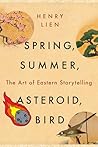
BOOK: “Spring, Summer, Asteroid, Bird” by Henry Lien

Spring, Summer, Asteroid, Bird: The Art of Eastern StorytellingSpring, Summer, Asteroid, Bird: The Art of Eastern Storytelling by Henry Lien
My rating: 4 of 5 stars

Publisher Site

I enjoyed, and was stimulated in thought, by the first half of this book, as well as by sections of the latter half, especially in the fourth chapter. (It’s arranged into four chapters, echoing the book’s central idea of a unique four-act approach to storytelling prevalent in Eastern societies. I’ll get to why I was not so fond of Ch. 3 later.) The book employs exemplary works of literature, film, and even video games to support the claim that there’s not just one approach to sound story crafting — but, rather, that Eastern societies developed distinct modes of storytelling reflecting their values and worldview. (A note on the use of the word “Eastern”: while the book draws heavily on East Asian sources, it tries to make a broader case suggesting not only South Asia but also the Middle East [i.e. everyplace not big-W “Western”] fit this mold. The book might have made a stronger case sticking to East Asia, as – for example – it might be argued that Arabia / Persia of the time of One Thousand and One Nights, being Abrahamic, was closer to Europe than East Asia in values and worldview. To be fair, the author does argue that some parts of that book are believed to have come from farther East (India and, possibly, beyond.))

The book proposes that there are two (arguably three) styles of story construction that are distinctly Eastern. The first is a four-act structure that is far from just a rejiggering of the three and five act forms with which English Literature students will be familiar. Incidentally, the book’s rather unusual title maps to the elements of this four-act structure. The second involves circular and nested story structure. I don’t know that the author succeeds in (or even seeks to) convince the reader that this is a uniquely Eastern approach, but -rather – makes an argument as to why it is prominent in Eastern storytelling.

The author picked an excellent set of works to illustrate his points. Generally, the works are both well-known and well-received among diverse audiences. The films he employs as cases include Parasite, Everything Everywhere All at Once, and Rashomon (the latter also being a literary work.) Lien uses one of my favorite Haruki Murakami novels Hard-Boiled Wonderland and the End of the World as a critical example. I was not at all familiar with the video games he describes (beyond name,) but – given that I’d at least heard of them – I assume they are pretty popular (though I can’t speak to whether they have any discernable stories and will have to take that on faith.) [I’m not sure whether One Thousand and One Nights was a good choice for Eastern literature, though it is an excellent choice as of nested structure.]

As for why I didn’t care for the book’s third part. I should point out that is the most philosophical (and the least explicitly concerned with story) part of the book, and it aims to show how values and worldview vary across cultures such that there are differences in story structure and crafting between different parts of the world. That could be a laudable objective and germane to the book’s point and it’s not why I found this section to be muddled and ineffective. The problem is that the chapter oversimplifies the issue in a way that seems to undercut a broader central argument (that Eastern modes of storytelling are underrepresented outside of the East.) Instead of suggesting that people experience conflicts along continuums (e.g. individual to group identity) and that Easterners tend come to different conclusions than Westerners do based on differing values and cultural perspectives, it engages in an elaboration of the distinctions that seems to suggest there’s some unbridgeable gulf of understanding between cultures (and, quite frankly, kind of feels like it’s shifted from making the aforementioned point to just being a thinly veiled critique of Western culture — which is fine, but probably belongs in a different book — or maybe a manifesto.) But if there were no basis for stories to resonate across this gulf, then not only wouldn’t Parasite and Everything Everywhere All at Once have killed it at both the Oscars and American box office, there’d be no reason for artists to attempt to branch out and tells stories across tribal lines. Without establishing a basis for story resonance, it’s ridiculous to argue that Hollywood should use Eastern modes of storytelling and Eastern worldviews to a greater extent. (A profit pursuing entity is always going to seek the largest possible customer base.) I’m not attempting to negate the argument that there are different approaches to storytelling among different peoples nor that more diversity of approaches shouldn’t be seen across cultures. I’m saying that this chapter doesn’t well support the argument for greater representation of Eastern modes of storytelling outside of Eastern outlets (publishers, film studios, etc.) because it spends so much time arguing the cultural differences that it doesn’t indicate how cross-cultural story resonance is possible.

Overall, I found this to be an interesting and thought-provoking read, though it was – for me – a bit muddled in the middle.

View all my reviews

“Jade Cup” by Zhang Ju [w/ Audio]

The West winds tumble fallen leaves;
Autumn 's yellow, though blooms are shy;
I brush at dust upon my sleeves;
The horses' hoofprints dot the frost;
Moonlit cocks crow amid grain sheaves;
The road to town: no passersby.

Fame 's not gained by effort or skill,
And would fade away ten years hence.
Please don't dance, but drink your fill.
Six Dynasty tales flow away:
Diluted as waters spread and spill.
The world feels like dream and pretense.

BOOKS:  木兰辞 [Ballad of Mulan] by Anonymous

The Ballad of Mulan: 木兰辞 (Simplified Chinese Characters with Pinyin)The Ballad of Mulan: 木兰辞 by Song Nan Zhang
My rating: 5 of 5 stars

Available online at YellowBridge

This is a short lyric poem (15-1/2 quatrain, or 62 lines) that tells the story of a young woman who disguises herself as a man and joins the military to fill a slot that would otherwise have required her aged and infirm father to serve. The tiny poem packs in ten-plus years, during which Hua Mulan serves with great distinction and then returns home to take care of her parents. It’s a well-known tale that emphasizes the importance of filial piety and sacrifice. Though outside of China (as well as Taiwan and other Chinese cultural enclaves,) many may know it from the Disney version which has been panned for ditching the Confucian values and replacing them with ones that were thought would resonate better with a Western audience.

The poem is mostly arranged in quatrains of five-character lines with alternate line rhymes.

It’s a quick read and there is no room for the detailed tales of heroism that are depicted in adaptations.

If one is looking for a culturally insightful telling of the story of Hua Mulan, this is the right place to look. I’d highly recommend reading it.

View all my reviews

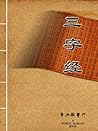
BOOKS: 三字经 by 王应麟 [“Three Character Classic” by Wang Yinglin]

三字经三字经 by 章炳麟
My rating: 5 of 5 stars

Available online — Project Gutenberg

This is a Confucian primer written in lines of three characters. It’s a children’s book in the sense that it’s aimed at children, but not necessarily with respect to being presented in a manner most conducive to childhood learning. (While it’s concise, the material isn’t presented in an interesting or memorable form. i.e. It’s intended for brute force rote memorization.)

The book consists of five sections, ranging between twenty-four and one hundred and six lines (72 to 318 characters per chapter.) The first introduces Confucian virtues. The second offers a broad overview of classics of Chinese philosophy. The third section lists the dynasties of China. The penultimate section describes ideal behavior from a Confucian perspective. The last, and briefest, section is largely a pep talk on studying hard.

As someone learning Mandarin Chinese, it’s interesting to see how sentences are formed in this sparse format, and this text offers insight into Chinese history and philosophy, in addition to providing a good early reader.

If you are interested in learning elementary Confucianism or you’re learning Chinese and looking for short and simple texts for reading, I’d recommend one look into the Three Character Classic.

View all my reviews

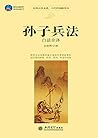
BOOKS: 孙子兵法 [Sunzi’s Art of War] by Sunzi

孙子兵法白话全译孙子兵法白话全译 by 史哲 文
My rating: 5 of 5 stars

Available online – YellowBridge

In thirteen short chapters, Sunzi lays out a masterclass in strategy. One sees in Sunzi’s work the mark of a Taoist mindset, seeing it in the book’s emphasis on engaging in warfare only when necessary, doing things the easy way whenever possible, and never letting one’s ego write checks one isn’t able to cash in lives.

There is good reason that this is one of the world’s most well-known (if not the most well-known) treatise on warfare. Far from being complicated and technical, this guide is full of pithy teachings such as: “War is the way of deception.” “No country ever benefited from a long war.” “Defeating the enemy without fighting is supreme excellence.” “To be undefeated lies in oneself, to be victorious lies in the enemy.” “Know the enemy and yourself and victory is assured; know heaven and earth and victory is complete.” (And these teachings are even more concise in the original Chinese.)

In addition to basics like leadership, maneuver, and terrain, the book devotes chapters to both the use of fire and spies in warfare. (One’s level of understanding is central to strategic victory throughout Sunzi’s teachings.)

I’d highly recommend this book for anyone interested in strategy, martial arts, or other strategic pursuits. The book may be ancient, but it’s not obsolete by any means.

View all my reviews

“The Joy of Words” by Lu Ji [w/ Audio]

Writing is joy --
so saints and scholars all pursue it.

A writer makes new life in the void,
knocks on silence to make a sound,
binds space and time on a sheet of silk
and pours out a river from an inch-sized heart.

As words give birth to words
and thoughts arouse deeper thoughts,
they smell like flowers giving off scent,
spread like green leaves in spring;
a long wind comes, whirls into a tornado of ideas,
and clouds rise from the writing-brush forest.

Translation by Tony Barnstone and Chou Ping in The Art of Writing (1996) Boston: Shambhala.

BOOKS: “The Romance of the Three Kingdoms” by Luo Guanzhong

Three Kingdoms (4-Volume Boxed Set)Three Kingdoms by Luo Guanzhong
My rating: 5 of 5 stars

Publisher Website – Penguin

The edition that I read was the Penguin abridged version that fits this sprawling epic into a single volume of a little over 600 pages. This is one of the four Great Classics of Chinese literature (along with Journey to the West, Water Margin, and Dream of the Red Chamber.) It offers a fictionalized telling of a period of Chinese history featuring a three-way civil war, especially centered upon the Han attempt to maintain its Imperial line against challengers, a fight that would ultimately end in the reunification under the Jin.

I’ve loved reading the Chinese classics. While this book and Water Margin feature massive ensembles of characters and could become clunky and cumbersome to read, they don’t because stories are told in intense battle-sized chunks and with a profound capacity to build character hooks that maintain clarity despite so many characters.

I would break this book up into three parts. The first (and by far the bulk of the story) focuses on a trio of great warriors that form a kind of blood-brother pact: Xuande, Guan Yu, and Zhang Fei. Under Xuande’s leadership, these men fight to keep the Han imperial line intact. (It’s fair to say it could also be seen as focusing on the opposition to these men, notably Cao Cao.) The next bit continues the action as the masterful strategist, Kong Ming, tries to keep the wheels rolling on Xuande’s army after the dramatic deaths of the aforementioned trio, and finally there is a section in which it is as though all the great warriors are gone, resulting in an inevitable reunification as there are no longer those who can fight insurmountable odds. As I describe it, it might seem anticlimactic, but it is far so, but I would count it a tragedy.

To me, this book read more like historical fiction than did Water Margin, the latter (also excellent) is almost like fantasy: its characters are so much larger than life as to be veritably superhuman. That said, this novel does feature some magic, but the characters feel much more life-sized — if not without a measure of grandiosity.

I’d highly recommend this book for readers of historical fiction. It’s highly engaging and readable, despite being long and of epic of proportions.

View all my reviews

“A One-String Harp” by Lu Ji [w/ Audio]

When an author composes too short a poem,
it trails off with a lonely feeling
like looking down at solitude with no friends
or peering into the vast sky, disconnected.
One string on a harp is crisp and sweet
but sings without resonance and harmony.

Translation by Tony Barnstone and Chou Ping in: The Art of Writing (1996) Boston: Shambhala Publications.