BOOKS: “36 Ways of Writing a Vietnamese Poem” by Nam Le

36 Ways of Writing a Vietnamese Poem36 Ways of Writing a Vietnamese Poem by Nam Le
My rating: 4 of 5 stars

Amazon.in Page

Release Date: March 5, 2024

This is a clever collection of poems, lighthearted in places but raw and incensed in others. (A pacing that I appreciate in poetry collections.) The collection draws heavily on the author’s experience being of Vietnamese ethnicity while growing up in the West. It touches upon the tragedies lived by his elders, but, more so, how his life (and perception of him) has been shaped by war and the diaspora it caused. The collection playfully engages with language and cultural concepts in a way that is interesting and – at times – scintillating.

My main gripe with this collection would be its occasional swerves into the domain of huge, rare, and super-specialized terminology. I enjoy being sent to the dictionary as much as the next person, but in a poetry collection – where evoking emotion is the name of the game – I find it takes me out of the experience.

I enjoyed reading this collection and would recommend it for poetry readers.

View all my reviews

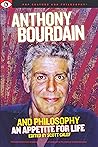
BOOKS: “Anthony Bourdain and Philosophy” ed. by Scott Calef

Anthony Bourdain and PhilosophyAnthony Bourdain and Philosophy by Calef Scott
My rating: 5 of 5 stars

Amazon.in Page

Release Date: December 26, 2023

These pop philosophy books that examine philosophical ideas through the lens of a particular pop culture personality or entity have become, well, popular. It’s not hard to see why; it’s an easy way to take your medicine, your medicine being to learn philosophical concepts. And, let’s face it, scholarly philosophical books are often nigh unreadable, being laden with jargon and having a tendency to get so lost in the minutiae of razor fine points that they display no relevance to the human experience. I am not immune to the appeal of such books, though when I see a book like “Miranda Sings and Philosophy” I figure I can take a hard pass. But this one caught my eye because Anthony Bourdain did live a life shaped by his own particular philosophy, and an intriguing one at that.

Like most of these books, this is a collection of essays written by different authors. As such, the quality and relevance of the included chapters does vary somewhat.

The book is divided into four parts. The first part looks at the subject of the work for which Bourdain was best known — i.e. at the intersection of food and travel. In these four chapters, authors explore the aesthetics of food and questions like: Do “expert” views on food matter? What is disgusting? And what role does culture play in the culinary experience?

The second part is entitled, “life,” and these five chapters look at Bourdain, the man. That is, they shift away from his work, and look at Bourdain as a martial arts student, a storyteller, and -generally – as a person. These chapters also offer insight into his epistemological perspective — i.e. how he viewed (and engaged in) the pursuit of truth, as well as touching upon his philosophical views more broadly.

The third part takes another turn to examine Bourdain’s addiction and his death by suicide. The chapters present broader philosophical frameworks on suicide and freedom, as a means to put Bourdain’s experience in perspective.

The final part is really kind of a grab-bag of subjects that don’t fit neatly into the other sections. Probably not coincidentally, this is where most of the book’s rough spots are located. It sometimes seems that Bourdain’s philosophy is not so much the subject anymore, and some authors convey their ideas more clearly and effectively than others. This is not, by any means, to say that any of the chapters are completely stinkers, nor to say that all of the chapters are defective. Chapter 13 [which, BTW, I think could have found a spot in Part II] does an interesting job in clarifying Bourdain’s approach to ethics, no easy task as it can seem like an odd mix of spiteful nihilistic impulses and compassionate humility (and it certainly evolved over time.) But even Chapters 14 and 15, which are not only the least flattering discussions of Bourdain but also the most didactic, have something to offer. The first lays out the scandal involving Bourdain’s girlfriend who was a MeToo leader but who also paid off a young actor who accused her of statutory rape, a pay-off made by Bourdain and which seems to be a factor in his suicide. Chapter 15 offers examples of what the author believed Bourdain did right and wrong in discussing the historical context of the places he visited that had been colonized. Ch. 16 was a discussion of the ethics of engaging in luxuriant fine dining in a world with starving people. I thought this chapter would stay the course set by the previous two, but it did shift back into academic objectivity by producing a more complete discussion of competing viewpoints. The penultimate chapter goes more niche than the others, but is a fascinating look at the ethics of AI generated voicework for the “Roadrunner” documentary — i.e. using AI to make it sound like Bourdain said things that he wrote in emails or books but never said [at least not into a recording device.] The last chapter involves climate change and episodes Bourdain did in Madagascar and Bhutan. This was both one of the longer chapters and definitely the most muddled. It remains unclear to me exactly what the author was trying to say, exactly. It’s perfectly readable, and yet unclear.

All in all, I enjoyed this book (as much as one can “enjoy” a book that is about a deceased beloved figure,) and thought it offered some excellent food for thought.

View all my reviews

BOOKS: In Praise of Shadows by Jun’ichirō Tanizaki

In Praise of ShadowsIn Praise of Shadows by Jun’ichirō Tanizaki
My rating: 5 of 5 stars

Amazon.in Page

Tanizaki’s essay on Japanese aesthetics doesn’t just show the reader the simple, rustic, and weathered traits of Japanese beauty, it fully submerges them in an otherworldly place ruled by different principles of seeing. So enamored with this pre-modern Japanese aesthetic was Tanizaki that we are convinced he would give up all present-day conveniences to see the world this way (but, alas, he recognizes the impossibility of maintaining a household or business in today’s world that way.)

While the book is principally a tour of this Japanese shadow world, moving from architecture to toilets to lacquerware to Noh plays to skin tones to hotels (with other stops along the way,) it is also a critique of modernity, and particularly a modernity shaped by the West by virtue of Western countries building a lead in a number of key technologies. The most crucial of these technologies, and the one Tanizaki most decries, is electric lighting, which does away with the artistic beauty that derives from the interplay of varied toned shadows (and occasionally a little bit of light.) [I should say, he’s not bashing the Western technology or ways, but rather how poorly they work with maintaining Japanese aesthetic ways.]

I’d highly recommend this book for all readers. If you’re interested in aesthetics, art, architecture, culture, or “things Japanese,” then all the more so, but I can’t remember the last time description pulled me into a book as hard as this one. The essay can be a bit rambling and shifts from euphoria to rant and back, rapidly, but that is part of its magic.

View all my reviews

PROMPT: Meat

What are your feelings about eating meat?

The condensed version is, I’m fine with it. As a traveler, I try to eat mostly things locals eat. While I don’t go to great effort or expense to sample the most rare and exotic foods, I’ve eaten snake in China, croc in Zambia, horse in Kyrgyzstan, and guinea pig in Peru. Anything that regular people eat where I’m visiting is fair game. [That is part of the process of breaking down the invisible barriers between us’s and them’s so as to not enter into the interaction with a feeling of superiority because: “my arbitrary cultural conventions are better than your arbitrary cultural conventions.”]

I do believe that everyone would be better off if they were closer to [i.e. more intimately familiar with] the source of their food. I feel this of myself as well, though I did have the benefit of growing up on a small farm and seeing at close range the origins of food and how life moves on to being food. (By different mechanisms [hopefully — #SoylentGreenIsPeople,] it’s a process that I am fully aware will apply to me, as well. Ultimately, nothing living gets out of this world without being transformed through a process of being food. In my case –probably — I’ll be food to bacteria and fungi, but if I have a good run and am eaten by a tiger or wild dogs, I’d not begrudge them the meal.)

In fact, as I’ve learned more about how plants and trees live, e.g. sending warning pheromone signals to neighboring trees when under attack by insects, I’ve come to see the logic by which people determine what life is edible and what isn’t as mere species-chauvinism and anthropomorphizing. It is true that there are excellent points about the environmental benefits of some form of vegetarian diet. However, when one starts to talk to environmental vegetarians about eating insects (one of the most sustainable protein sources available, supposedly,) many will shove their fingers in their ears and sing, “La-la-La-la, I don’t want to hear this.”

Rivers of the Dead [Free Verse]

So many cultures
make their dead
cross a river.

The Greeks' Styx.
The Hindus' Vaitarna.
The Norse Gjȍll.
The Gnostic's Hiṭpon.
The Japanese Sanzu-no-Kawa.
The Mesopotamians' Hubur.
Taoists cross Naihe Bridge --
over what (I'm not sure,
but) is probably a river.

No rest for the dead?
It seems kind of rude.

PROMPT: Cultural Heritage

Daily writing prompt
What aspects of your cultural heritage are you most proud of or interested in?

It’s not something that I’ve thought of much. In my youth, I was attracted to most every culture but that of my own ancestry. In my late teens and early twenties, I visited Liverpool two or three times (just across the Irish Sea from my ancestral homeland,) but (sadly) never made it to Ireland. I’ve been to over 40 countries, but not yet my ancestral homeland. I think that’s not so uncommon to come around to an interest in such things later in life.

But the answer to the question is certainly to be found in the literature. Yeats is among my favorite twentieth century poets (if not my favorite,) and Seamus Heaney is certainly in the running. Of late, I’ve gotten on an Oscar Wilde kick, and his work definitely appeals to my ornery yet thoughtful nature. Even Joyce, who I had trouble getting into in his role as novelist, is a writer whose use of language I love.

PROMPT: Comfort Foods

What’s your go-to comfort food?

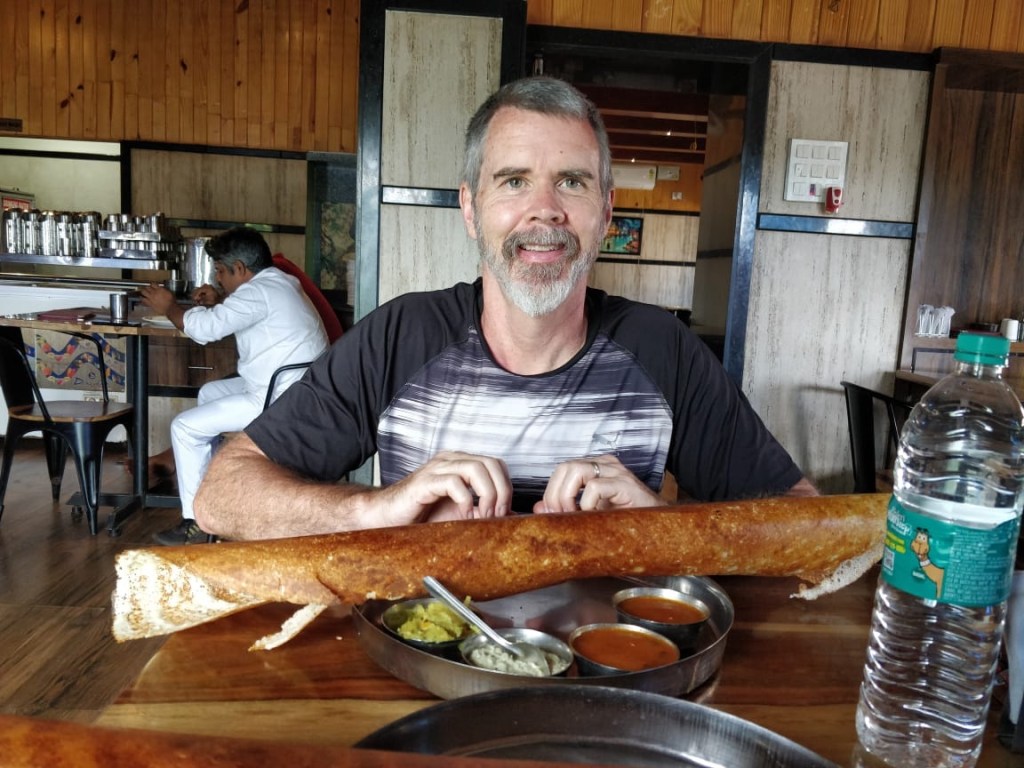
Completely depends on where I am at the moment. Here, in South India, it’s a paper masala dosa.

But [for example] in Budapest it’s túrós csusza, in Bangkok it’s pad thai, in Bombay it’s vada pav, and in Vajrayana Buddhist areas it’s momo.

BOOK REVIEW: Identity: A Very Short Introduction by Florian Coulmas

Identity: A Very Short IntroductionIdentity: A Very Short Introduction by Florian Coulmas
My rating: 5 of 5 stars

Amazon.in Page

This book explores the slippery metaphysical concept of identity — not only as it’s presented in philosophy, but also in psychology, law, politics, anthropology, and literature. It begins with individual identity and expands outward to encompass gender, political, socio-economic, and linguistic identities. The aforementioned slipperiness of identity stems from the fact that we all have an intuitive grasp of identity that could be leading us astray. It tends to make us believe that aspects of identity are inherent features of the universe, when – in fact – they may be arbitrary designations – in which case, a given criterion or classification of identity may be chopped up in different ways than a given culture happened to glom onto.

I learned a great deal from this Introduction, and feel it was well organized and presented. How we see various dimensions of group identity (as well as how we weight them) has a lot to do with our social tensions and strife, and the issues around identity are worth dissecting — despite the fact that it might seem like a dry academic topic at first blush.

If you’re interested in learning more about identity, selfhood, and how various group identities feature in an individual’s overall identity, this book is worth investigating.


View all my reviews

BOOK REVIEW: Social and Cultural Anthropology [VSI] by John Monaghan & Peter Just

Social and Cultural Anthropology: A Very Short IntroductionSocial and Cultural Anthropology: A Very Short Introduction by John Monaghan
My rating: 5 of 5 stars

Amazon.in Page

Get Speechify to make any book an audiobook

This was one of the most interesting “Very Short Introduction” books — of the many titles in the series that I’ve read. The authors use stories and examples to convey the basics of the subject in way that’s not mind-numbingly dry (i.e. the scholarly norm) – in fact, there’s a fair amount of humor laced throughout the book.

Most of the examples come from the two tribes that these two authors study – i.e. one in Mexico and the other in Indonesia. However, those two groups provide a rich arena of interesting anecdotes, and the authors do use social groups outside their research focus when necessary.

In addition to learning about the nature of ethnographic fieldwork and what anthropologists do, there’s an exploration of culture, the various ways in which people are socially organized (i.e. kinship, castes, societies, etc.,) and how different societies view religious belief, economic activity, and selfhood.

If you’re starting from zero and are seeking an introduction to anthropology, I’d highly recommend this one.

View all my reviews

BOOK REVIEW: Introducing Cultural Studies: A Graphic Guide by Ziauddin Sardar

Introducing Cultural Studies: A Graphic GuideIntroducing Cultural Studies: A Graphic Guide by Ziauddin Sardar
My rating: 4 of 5 stars

Amazon.in Page

Get Speechify to make any book an audiobook

Culture is a deep and fascinating topic, but a dirty little secret of academia is that there are two words used to signal subjects and courses for the not-so-bright kids: one is “Studies” and the other is “for.” (As in “Math FOR Economists,” a course that I once took that was – I’m sure of it – greatly dumbed down from what Math majors learned. “Economics FOR Business Majors” is a more widely known example; it’s Economics for people who are afraid of equations and who can’t figure out which way is up on a supply and demand curve.) So, I wasn’t sure what to expect from a guide to “Cultural Studies,” as opposed to a book about, say, Cultural Anthropology, which I believe is the big-boy pants version of the discipline under discussion.

The author is forthright that cultural studies is a bit amorphous and that it struggles to find its place amid the established disciplines that touch upon culture from varying perspectives (i.e. psychology, philosophy, anthropology, etc.) The book begins before there was a “Cultural Studies,” per se, discussing competing definitions of culture and related precursor disciplines, e.g. semiotics. It then describes the evolution of the subject and its varied points of focus and ideas across its major epicenters: Europe, North America, Australia, and South Asia. It investigates colonization and its influence on indigenous cultures, and it looks at how a range of concepts intersect with culture, including: science, technology, race, gender, sexuality, and media. It concludes by reflecting on globalization and the discontents who wish to end or replace this homogenizing force.

I did learn quite a few new things from this book, and if you’re looking to understand culture as a landscape of academic study, it’s worth having a look at it.


View all my reviews