AUSTRIA LIMERICK

There once was a man from Austria
prone to coffee house nausea.
“Our cafés are held dear,
but I can’t go near…”
said that lonely, skinny man of Austria.
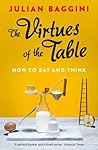
BOOK: “The Virtues of the Table” by Julian Baggini

The Virtues of the Table: How to Eat and ThinkThe Virtues of the Table: How to Eat and Think by Julian Baggini
My rating: 4 of 5 stars

Publisher Site – Granta

This book examines the nexus of food and philosophy, from the ethics of butchery to the virtue of authenticity to whether hedonism is a necessary component of eating philosophically. Much of the book challenges or debates conventional wisdoms such as whether local foods are inherently better, whether dining is always and everywhere a social activity (or should be,) and whether organic is always preferable. The book covers a wide variety of topics including: mindfulness, gratitude, skepticism, fasting, willpower, spontaneity, technology, etc.

The book offers many ideas for reflection though sometimes it felt like it rambled on for more than the issue in question necessitated.

Each chapter ends with a discussion of a particular food and its preparation as thought relevant by the author. This is a nice grounding mechanism for discussion that tends otherwise to be cerebral and philosophic.

I’d recommend this book for anyone interested in thinking more about food and its intersection with philosophy of life.

View all my reviews

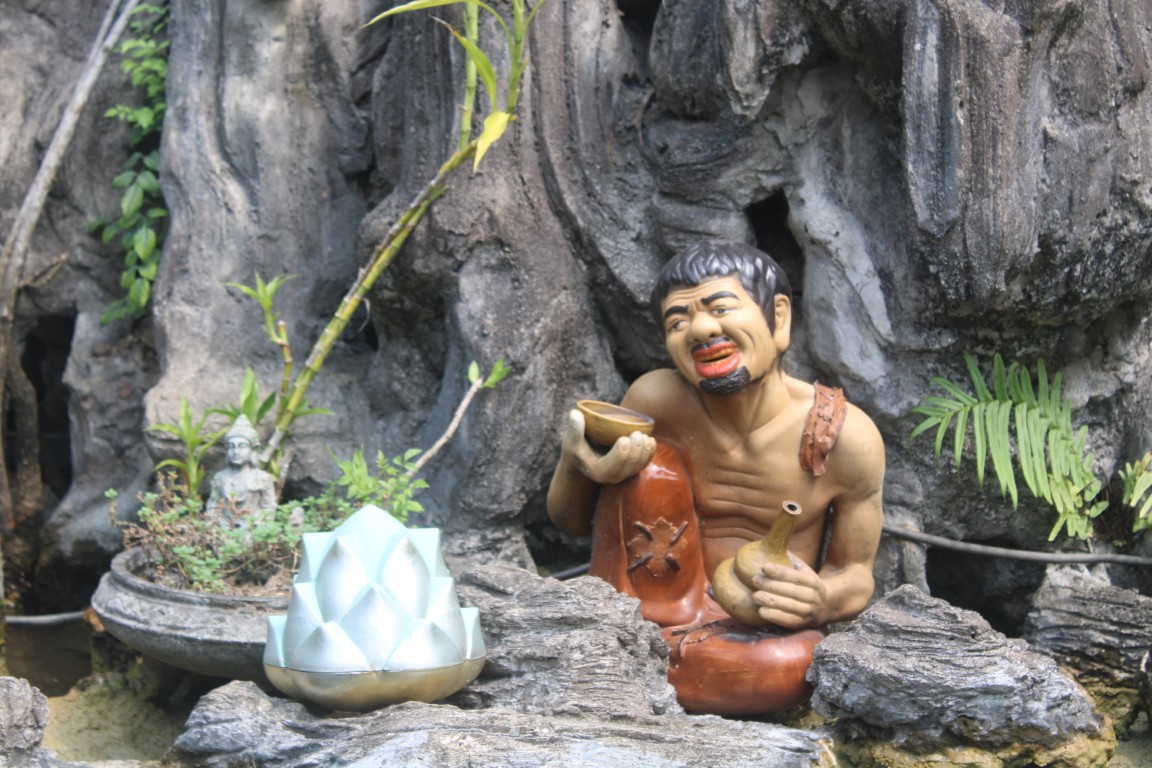
Calabash Time [Kyōka]

bowl in the right
calabash in the left:
drunkard empties
& then fills his cup --
amid missing time.

GEORGIA LIMERICK

There was a famed Georgian vintner
who thought about wines all winter –
as he thought, he drank,
and -- let us be frank –
he became less vintner than drinker.
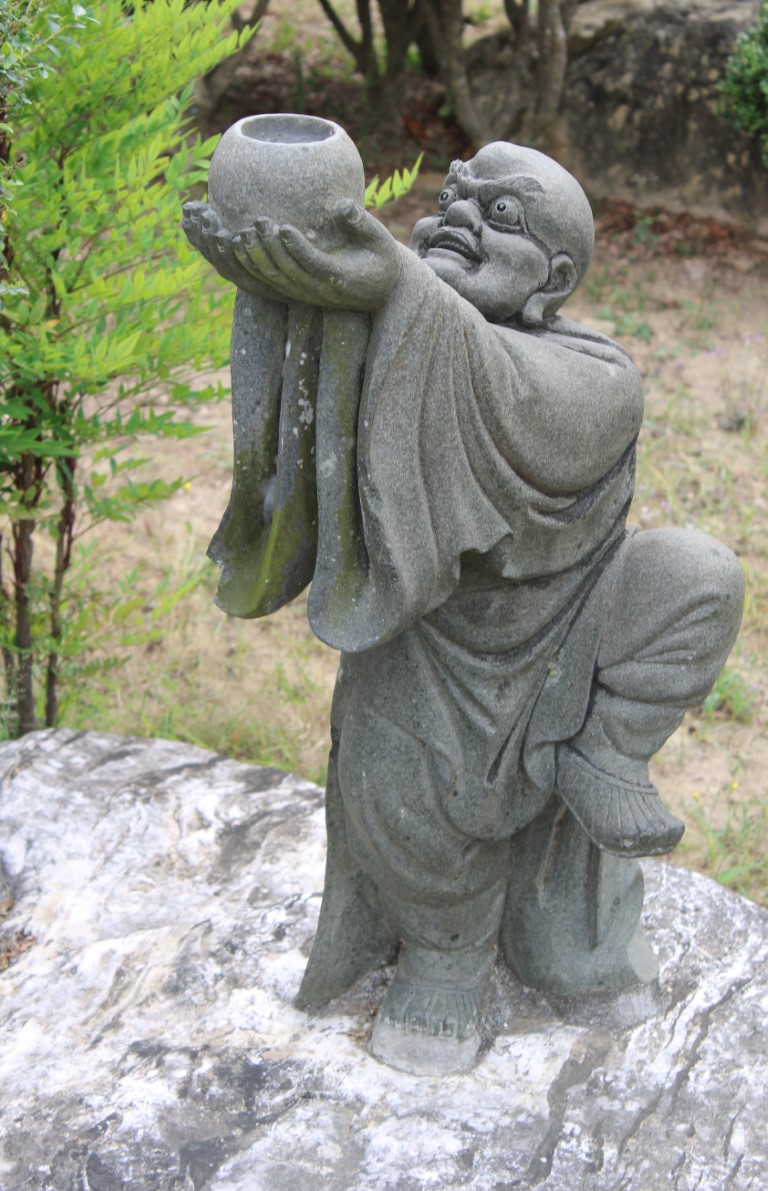
Wine Dance [Senryū]

the poet's wild dance
spills not a drop of wine,
but for down the throat.
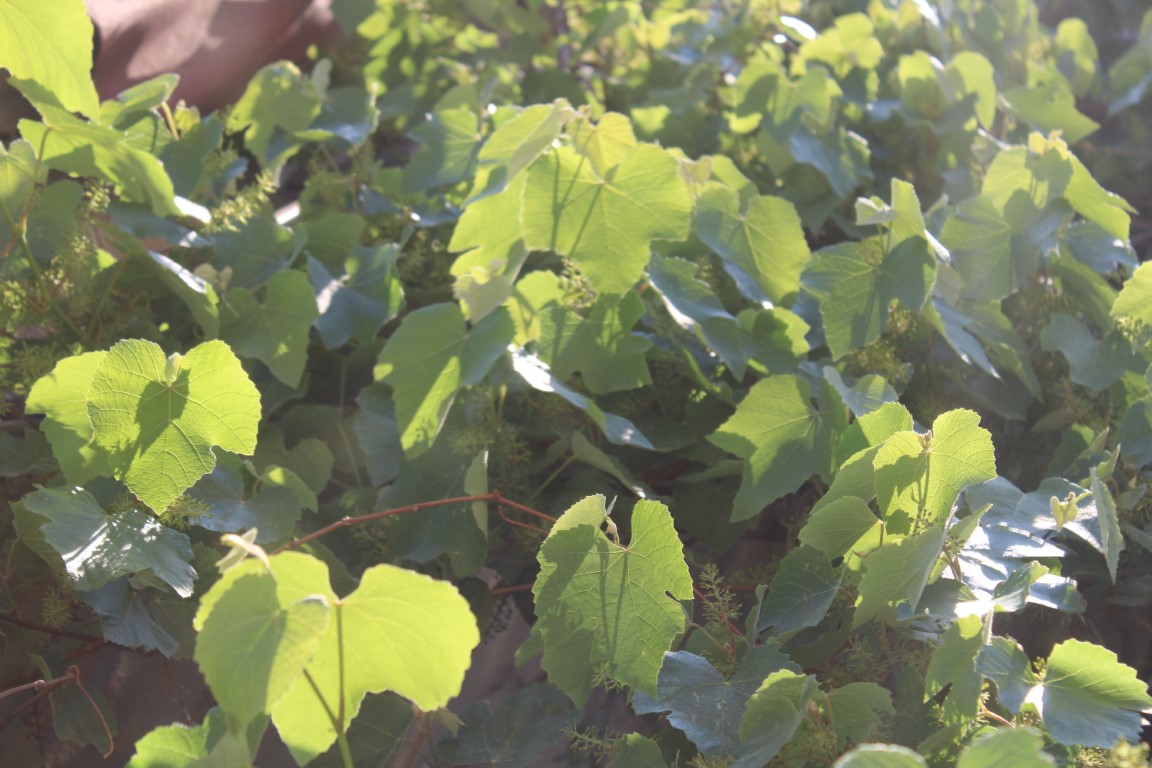
The Vine [Free Verse]

Grape leaves flutter 
and some catch the light
to glow with translucence.

I'm in an ancient place,
and this is such an ancient
endeavor.

Wine has been the king
of pursuits in these parts
for millennia.

Is that why I can become
lost in the play of light
on quivering leaves?

Or is it just that time of day?
The sun is low -- ready to set --
My mind is slow & ready to drink.
“Drinking” by Abraham Cowley [w/ Audio]

The thirsty Earth soaks up the Rain,
And drinks, and gapes for drink again.
The Plants suck in the Earth, and are
With constant drinking fresh and faire.
The Sea itself, which one would think
Should have but little need of Drink,
Drinks ten thousand Rivers up,
So fill'd that they o'erflow the Cup.
The busy Sun (and one would guess
By 's drunken fiery face no less)
Drinks up the Sea, and when he's done,
The Moon and Stars drink up the Sun.
They drink and dance by their own light,
They drink and revel all the night.
Nothing in Nature 's Sober found,
But an eternal Health goes round.
Fill up the Bowl then, fill it high,
Fill all the Glasses there, for why
Should every creature drink but I,
Why, Man of Morals, tell me why?

PROMPT: Drink

What is your favorite drink?

If amount consumed is any indication, that would have to be water – with coffee as a second runner up. And the rest of the pack is a muddled mess in which no one stands out, judging from the fact that the aforementioned are the only beverages that I drink on a daily basis. (Gin or beer are at most once a week beverages and average less than that, if this was meant to imply alcoholic drinks.)

Certainly, water is the only one that I: a.) can’t do without, and b.) could live a comfortable and healthy life drinking exclusively.

BOOKS: “Smoke and Ashes” by Amitav Ghosh

Smoke and Ashes: A Writer's Journey through Opium's Hidden HistoriesSmoke and Ashes: A Writer’s Journey through Opium’s Hidden Histories by Amitav Ghosh
My rating: 5 of 5 stars

Amazon.in Page

Release Date: February 15, 2024 [NOTE: for this edition; the book is already out in some markets in some additions.]

Ghosh has written a fascinating exploration of the profound global consequences of that pretty red flower, the opium poppy. I find the events surrounding the Opium Wars to be among the most incredible stories humanity has written. It is mind-blowing that a substance could be so utterly addictive as to spur wars and global social and economic upheavals. That substance is, of course, tea. Ah, you thought I was going to say opium (or its relative, heroin,) didn’t you? But while opium is fantastically addictive, its addicts were by-and-large in peaceful stupors in (or on) their clouds during the time in question. It is the uppity Earl Grey addict who was draining Britain’s treasury of precious metals, and — as addicts do in their impoverished desperation — turned to dealing drugs.

There have been many books written on this subject, but Ghosh carves himself a niche. First, while accounts often focus tightly upon the central adversarial relationship of Britain versus China, Ghosh examines at leisure the roles of two lesser discussed players — India (not only as a subject of Great Britain but also as an autonomous actor) and America. The importance of India’s involvement, from being a major producer and processor of opium to sourcing the sepoys who actually fought the Opium Wars, has been largely ignored, and Ghosh helps to clear up distortions in the historical record. Second, the book investigates questions around America’s opioid crisis and what history can tell us about its drivers. In particular, what does the China’s explosion of addiction tell us about what might have spurred America’s crisis?

This is a readable and compelling nonfiction exploration of the influence of opium from a writer who has produced novels (e.g. the “Sea of Poppies” trilogy) set around these historical events.

I’d highly recommend this book for individuals interested in the influence of Opium, particularly if one is curious about how history relates to the recent crises and what role Indians and Americans played in events.

View all my reviews

BOOKS: Absinthe by Tania Brasseur & Tamara Berger

Absinthe: The Forbidden Spirit: An Intoxicating History of the Green FairyAbsinthe: The Forbidden Spirit: An Intoxicating History of the Green Fairy by Tania Brasseur
My rating: 4 of 5 stars

Amazon.in Page

Release Date: February 27, 2024

The biography of a beverage might not seem exhilarating, but absinthe has no ordinary history. It rose from obscurity as a regional drink indigenous to parts of France and Switzerland to international celebrity by becoming popular with artistic geniuses of the era — e.g. Oscar Wilde. Some of whom credited the drink with more than just a pleasant tipsy sensation. Then it received its own prohibition while other alcoholic beverages remained perfectly legal. Of course, as with other prohibitions, Absinthe’s legend rose and taste for it didn’t disappear. Eventually, its prohibition ended, and absinthe was freed to have a second life.

This book is primarily a history of absinthe’s rollercoaster ride existence. However, it also discusses wormwood and other prominent ingredients, the distillation process, as well as the mythology that grew up around the beverage.

If you’re curious about the beverage and its mythos, I’d recommend you give this book a look.

View all my reviews
