FIVE WISE LINES [December 2025]

William Blake painting of Urizen praying to the world he created, an illustration from "Song of Los."
William Blake:
Urizen prays to the world he created (1795)
Song of Los

I must create a system
or be enslaved by another man’s…

william blake; Jerusalem: The emanation of the great albion

Saying Yoga exists to make one more flexible
is like saying that it exists to wring farts out of one’s body,
both will happen — neither is the primary objective.

Me

He that is without sin among you,
let him first cast a stone at her…

JESUS; John 8:7

The best government is that which governs least.

Henry david thoreau, Civil Disobedience

Gods always behave like the people who make them…

zora neale hurston; Tell my horse

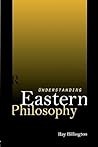
BOOK: “Understanding Eastern Philosophy” by Ray Billington

Understanding Eastern PhilosophyUnderstanding Eastern Philosophy by Ray Billington
My rating: 4 of 5 stars

Publisher Site — Taylor & Francis

This book does a solid job for one that bites off so much in a single go. Eastern Philosophy is a large subject, and to try to outline the major premises of its varied systems and also compare them to Western / Abrahamic notions (when Western schools are sometimes no more different from Eastern schools than each side is within,) and to do so in under two-hundred pages is a daunting undertaking.

For the most part, I felt the book did a fine job of meeting its objective. A fair amount of selection and simplification is required. I will say the part describing karmic doctrine didn’t seem consistent with what I was taught and seems more in line with the early Western scholars who started writing about Eastern Philosophy but could not help but couch the subject in a Western / Abrahamic frame because it was what they knew and was invisible to them. I say this as one who is no big fan of Karmic philosophy, though for another reason (one which is also mentioned in this book.) I’ve always been told that the central idea is to do selfless acts in order to escape the karmic cycle. Billington, like others before him, states it as do “good deeds” and then he puts forth the critique that this won’t help because doing good for one’s own benefit is fraught with peril. My understanding from Sanskrit scholars is: first, Hindu philosophers were aware of this paradox from the beginning and that’s why the emphasis has always been on “selfless” acts; second, the Abrahamic bifurcation of all actions into good and evil is not so much a thing in Hindu thinking (most actions are inherently neither.) I should point out that there is a lot of internal conflict within these philosophies (e.g. differences between Buddhist and Hindu thoughts on Karma) and that Billington does elsewhere reflect on the differences between Eastern and Western thinking about good and evil.

The first two-thirds of the book is organized by schools of thought (beginning with the Indian ones and working toward Chinese / East Asian schools) and the last third deals with a series of fundamental philosophical questions.

If you want a quick outline of Eastern philosophical ideas, this book gives a good look at them, particularly if one is interested in a comparison to Western ideas. The book also spends a fair amount of time in discussion of what a religion is and how one differs from a philosophy.

View all my reviews

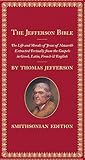
BOOK: “The Jefferson Bible” by Thomas Jefferson

The Jefferson Bible: The Life and Morals of Jesus of NazarethThe Jefferson Bible: The Life and Morals of Jesus of Nazareth by Thomas Jefferson
My rating: 5 of 5 stars

PDF available online [Public Domain]

Thomas Jefferson (yes, the same one who wrote the Declaration of Independence) produced this book by cutting and pasting excerpts from the Gospels so as to produce a distillation of who he believed Jesus was and what Jesus’s essential teachings were. It mixes parables and other New Testament teachings with biographical description.

There is an introduction which offers the reader more specific insight into Jefferson’s thinking than can be gleaned merely from what he includes and what he trims. The Introduction also discusses the similarities and differences between Christian philosophy and that of the Jews, the Greeks, and the Romans.

If you’re looking for a condensed version of the New Testament, I’d highly recommend this book. Jefferson was obviously a sharp guy who looked at the Bible from the perspective of Enlightenment-era thinking.

View all my reviews

PROMPT: Traditions

Daily writing prompt
What traditions have you not kept that your parents had?

All of them. As a traveler, I am more an anthropologist of traditions than a practitioner of them.

PROMPT: Romantic

Daily writing prompt
What’s your definition of romantic?

With a big-R, it’s a philosophical and artistic movement that served as a counterweight to the Enlightenment by advocating for Idealism (versus Materialism) and spirituality (if not necessarily religiosity.)

With a small-R, it’s the skill or proclivity to advance conditions for amorousness.

That’s why capitalization matters.

“Not All There” by Robert Frost [w/ Audio]

I turned to speak to God
About the world’s despair;
But to make bad matters worse
I found God wasn’t there.

God turned to speak to me
(Don’t anybody laugh)
God found I wasn’t there—
At least not over half.

PROMPT: Religion

Daily writing prompt
Do you practice religion?
Nope. Not even a little.

PROMPT: Sacrifices

What sacrifices have you made in life?

I’ve thrown coins in a fountain, and I once went to a pig roast where someone prayed out loud before we ate, but I’ve never pushed anyone into a volcano — if that’s what you’re getting at.

“Have you ever made a just man?” by Stephen Crane [w/ Audio]

"Have you ever made a just man?"
"Oh, I have made three," answered God,
"But two of them are dead,
And the third --
Listen! Listen!
And you will hear the thud of his defeat."

BOOKS: “A Short Stay in Hell” by Steven L. Peck

A Short Stay in HellA Short Stay in Hell by Steven L. Peck
My rating: 5 of 5 stars

Publisher Site: Strange Violin Editions

If you enjoy books like Joseph Heller’s Catch-22 or Douglas Adams’ The Hitchhiker’s Guide to the Galaxy this book will probably be right up your alley. It may not be as unrelentingly (and hilariously) absurd as H2G2, but it’s clever, amusing, and thought-provoking.

The premise is that a devout Christian finds himself in hell because it turns out that Zoroastrianism was actually the one true religion. Fortunately, Zoroastrian hell is neither as grim nor (perhaps, ironically) as fire & brimstone-oriented as the Biblical version, but it is tedious, demoralizing, and — while it might not last forever –it lasts long enough to seem like forever.

Jorge Luis Borges fans (such as myself) will find a nod to his work in the shape of said hell.

I’d highly recommend this book for readers of irreverent and humorous literary fiction. It’s funny. It’s clever. And it’s a quick read.

View all my reviews