BOOKS: “Imagination: A Very Short Introduction” by Jennifer Anna Gosetti-Ferencei

Imagination: A Very Short Introduction (Very Short Introductions)Imagination: A Very Short Introduction by Jennifer Anna Gosetti-Ferencei
My rating: 5 of 5 stars

Amazon.in Page

This is a concise guide to the subject of imagination, the capacity to conceptualize that which does not exist in reality. Philosophy is the primary dimension through which the subject is investigated, though the insights of poets (particularly Romantics,) authors, and artists are frequently presented — in several cases, in detail. Also, the author does discuss ideas from other disciplines as relevant (e.g. psychology, anthropology, science.) This is notable, for example, in Chapter 2, which looks at early signs of imagination in the human record and the evolution of this capacity.

Philosophical views on imagination have varied to the greatest possible extent, from Plato’s belief that imagination represents untruths and is therefore dangerous to various views suggesting that imagination is a good thing, is fundamental to what it means to be human (e.g. to empathy,) and is inescapable for humans. This Plato against the world dispute is revisited in several places throughout the book. Besides those of Plato, the views of Kant, Nietzsche, Wittgenstein, and Sartre are particularly extensively examined.

Creative types will find the final chapter (Ch.6 “Creativity from invention to wonder”) the most engaging part of the book as it deals with what makes for creativity. The chapter discusses topics such as whether constraints help or hinder creativity? Take, for example, poetry: does free verse poetry produce more imaginative material, or — on the contrary — is rhymed and metered verse more innovative and novel. If you think you know the answer, you might be surprised by the arguments that have been put forth.

I enjoyed reading this book and found it thought-provoking and worthy of the time.

View all my reviews

BOOKS: “Simple Passion” by Annie Ernaux

Simple PassionSimple Passion by Annie Ernaux
My rating: 5 of 5 stars

Amazon.in Pge

I’ll admit, I picked up this book because Ernaux won the 2022 Nobel Prize for Literature and I’m uncomfortable being ignorant of the work of a Literature Nobel Laureate. Her work is atypical of Nobel Prize winners. She is primarily known as a memoirist rather than a novelist, poet, or even essayist, and while she has a large body of works, many are quite short for prose work — i.e. under 100 pages.

This is a straightforward story of obsession, the author’s obsession with a married man, a diplomat from Eastern Europe during the late days of the Cold War. (The book doesn’t get into any Cold War intrigues, so don’t expect any. It’s a completely personal story.) The autobiographical narrative describes the lifecycle of obsession and is loaded with psychological insight. One sees the degree to which Ernaux’s yearning to be with this man intrudes on all aspects of her life, in as much as she can be said to have a life, so much of it being laid aside for their periodic dalliances. It is the kind of compulsion known mostly to young first lovers and those of addictive personalities.

A couple of the most compelling insights come as fourth wall breaks when Ernaux offers insight into her thoughts on writing. (One is that writing should have an effect like pornography [not necessarily be pornographic,] and another is that she writes to learn if anyone else does the things she does.)

I enjoyed read this. It’s an extremely fast read as it’s only around sixty pages and puts the reader in that compulsive mindset. I’d highly recommend it. I can’t speak to how typical it is of her work because it’s the first I’ve read from her, but it was mentioned prominently in the “best of” lists that came out around the time of her Nobel win.

View all my reviews

PROMPT: Character

Are you a good judge of character?

I’m good at judging who IS a character, but probably not so much a judge of who HAS character. People are demonstrably overestimative of their ability to draw conclusions about other people’s internal characteristics. (I cite as an example that study about interview subjects asked to hold either warm or cold coffee in the hand they would use to shake interviewer’s hands.) So, I’m probably better than people who think they are good at it, while still not being good at it.

PROMPT: Favorite Subject

What was your favorite subject in school?

Depends on the year. In twelfth grade, I remember enjoying Physics the most. In Eleventh, Psychology was the best class I attended. There was a year when I got the most out of an English class that focused on Creative Writing. I guess my most longstanding preference was for classes like Geography and Social Studies, wherein we learned about the world outside our world.

BOOKS: The Creative Act by Rick Rubin

The Creative Act: A Way of BeingThe Creative Act: A Way of Being by Rick Rubin
My rating: 5 of 5 stars

Amazon.in Page

This book offers Rick Rubin’s philosophy of creativity and art. For those unfamiliar with Rubin, he’s a ZZ Top-looking music producer who contributed to a lot of successful albums, ranging from hip hop to the rock-n-roll of Tom Petty. He was a major player behind the Run DMC cover of Aerosmith’s “Walk This Way” that blew peoples’ minds in the 80’s. Interestingly, Rubin is neither a musician nor a technologist, and I heard him say in an interview that his great value-added was having an extremely high level of confidence in knowing what he liked. Rubin has a persona that is as much guru as music producer, and this book reflects this broad insight and wisdom.

In the book, Rubin lays out his view of the creative process and the mistakes people make with it, but along the way he offers insight into such interesting questions as why some artists only seem to have one major work in them. While Rubin’s experience is mostly with music (though he also worked with comedian Andrew Dice Clay on Clay’s albums,) his book is broadly targeted towards all artists, and he seems to use as many examples from literature and graphic arts as he does from music.

Rubin does sound a bit woo woo here and there, but I found that many statements — e.g. those that spoke of the universe’s role in artistry — could be interpreted in a way that wasn’t necessarily superstitious. While woo woo sounding statements often get on my nerves, I felt Rubin’s use was poetic and spoke to a broader truth.

I’d highly recommend this book for artists and creative types, regardless of field.

View all my reviews

Hit by a Hard Word [Free Verse]

How is being hit by a hard word
 different from being hit by 
  a brick or a bat?

To burn, the spark of a hard word
  must find some kindling inside
   the recipient, elsewise it can't ignite. 

If someone points at me and screams:

"YOU ARE SUBPAR AT ALGEBRA!"

I remain unwounded.

[I'd like to say that it doesn't burn
  simply because it's true, 
   but the truth or falsity of hard words 
   is -- perhaps sadly -- not a major
   ignition factor.

 The kindling is a thing that sits inside one --
  something that makes one care,
   probably a complex mélange of factors.

 The truth of hard words? 
   That is an outside factor.]

Even if I were to discover that,
  to the person who issued the insult,
   there is no greater disparagement 
   than to cast aspersions upon a 
   person's middle school-level
   mathematics competency, 

I would remain unwounded. 

If I were to feel any sort of way
  about uncovering that knowledge,
   it would be to feel sort of bad 
   for the person who issued the taunt.

Now, how to burnproof one's soul,
  that is the question?

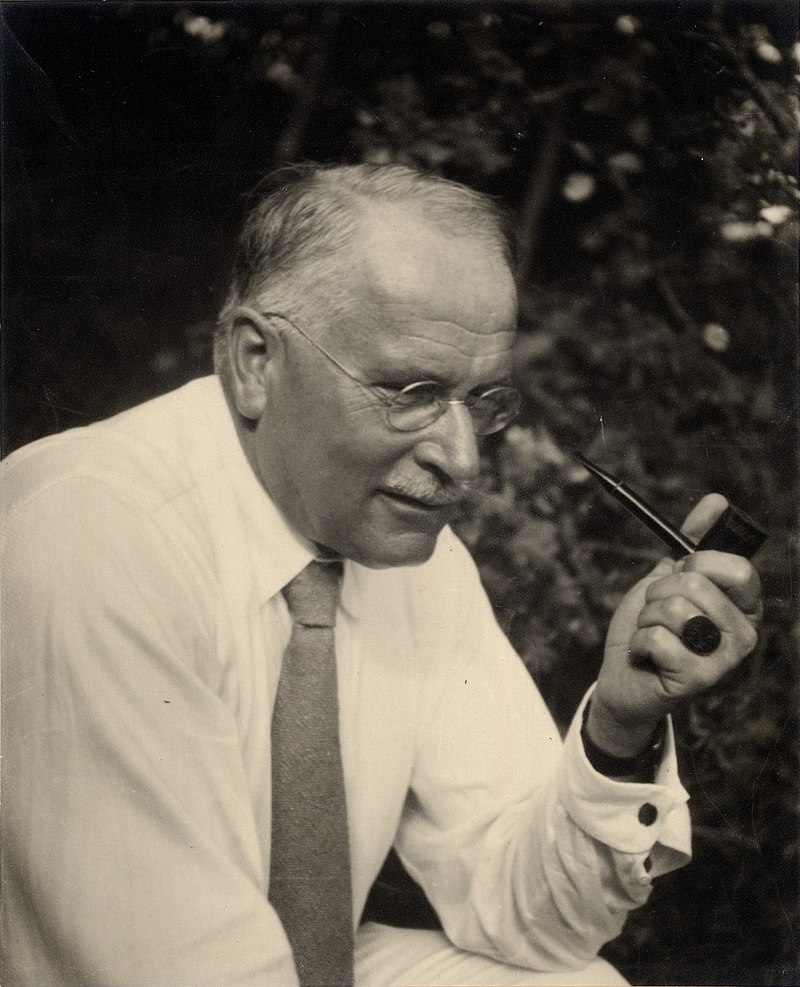
Jung Limerick

There was a psychiatrist named Jung
 who thought the Unconscious was far-flung --
  like Sandman's "The Dreaming"
  that you've seen on streaming:
 farfetched and fictional -- with heroes, unsung.

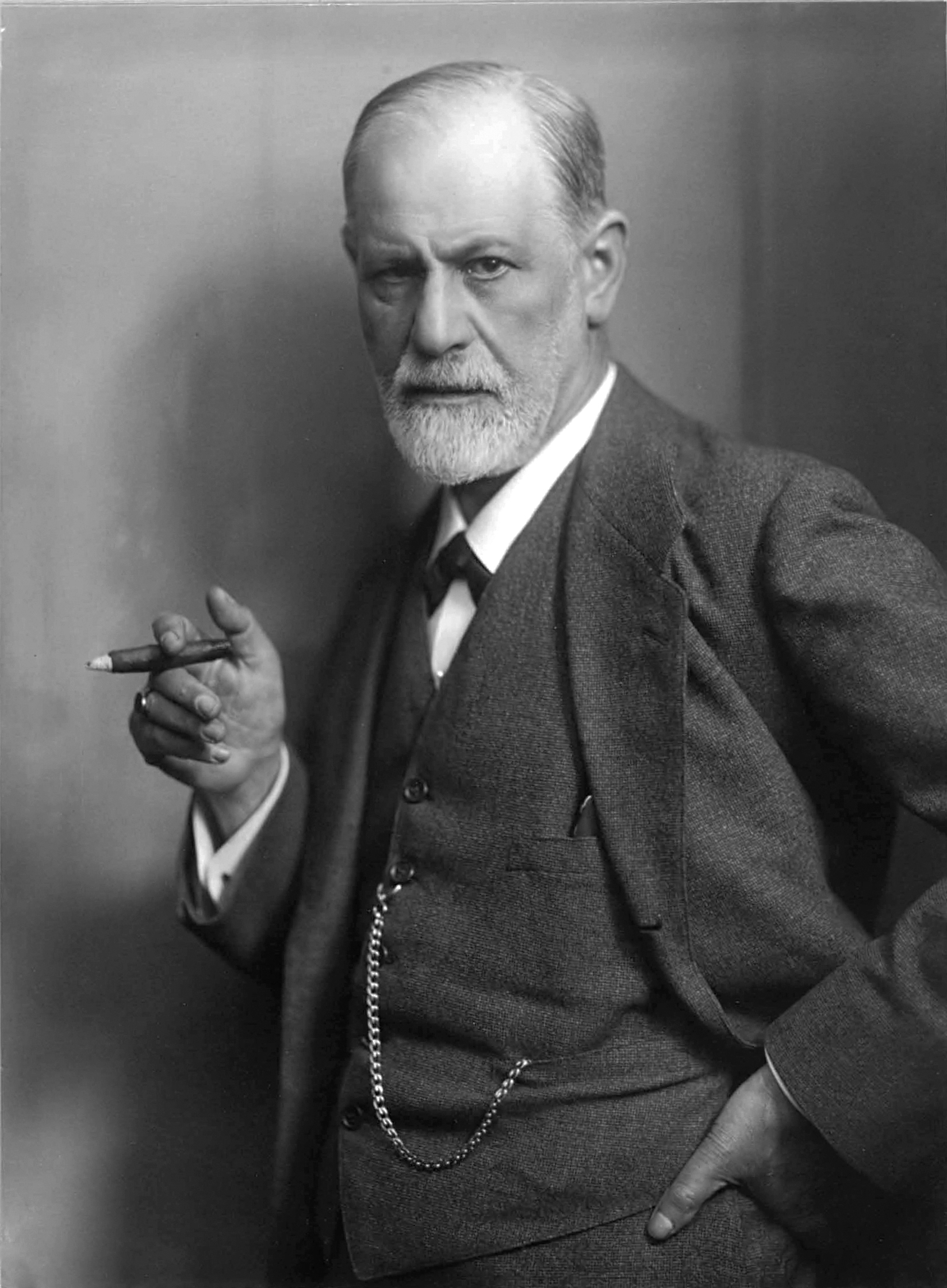
Freud Limerick

There once was a psychiatrist named Freud 
 who thought all were obsessed with filling a void...
   a void in the pants!
   Though some looked askance,
 and those whose cigars weren't cigars were annoyed.

PROMPT: Quote

Do you have a quote you live your life by or think of often?

Four, actually:

Be kind, for everyone you meet is fighting a hard battle.

Plato (attributions vary)

There is nothing either good or bad, but thinking makes it so.

William Shakespeare (in HamLet)

Contentment comes not so much from great wealth as from few wants.

Epictetus

If you reject the food, ignore the customs, fear the religion, and avoid the people, you might better stay home.

James a. Michener

The Most Important Lesson in All of Human Living [DAILY PROMPT]

Describe something you learned in high school.

A Psych teacher told us a story of what he called “a gestalt of expectations.” A man from a city in the East is driving out West, and he passes a gas station – despite being low on fuel. (He’s used to gas stations being everywhere.) Anyhow, he runs out of fuel. He can’t see anything around except desolate desert bisected by a line of asphalt. He decides to walk back to the gas station he passed ten miles back. There is no one traveling on this remote stretch of desert road. As he’s walking in the intense heat, it comes to his mind that the employee at the service station is really going to gouge him on the price of gas and a jerry can. As he walks and walks, skin prickling with the heat, he keeps thinking about how he’s going to get screwed by the gas station attendant and also how he’ll be chided and ridiculed for running out of gas in the middle of the desert. He imagines it in great detail. Finally, bedraggled and with heaving breaths, he arrives at the station. The gas station attendant rushes out to help this poor man, and the man punches the attendant square in the nose (for all the offenses taking place solely in the man’s mind.)

In a broader formulation, I think this is the most important lesson any human can learn. Our personal perception of what we experience is not equal to what it is that we experience (the exterior world.) This is why some people dealt a crappy hand can turn it into a wonderful life, and also why some people who seem to have it all commit suicide in the prime of life.

I could be angered or dismayed that the single most important lesson I learned in secondary school was via off-curriculum ramblings during an elective class, but I choose not to. Instead, I’ve been trying all my life to make that bit of knowledge into wisdom.