BOOKS: Mad World by Slavoj Žižek

Mad World: War, Movies, SexMad World: War, Movies, Sex by Slavoj Žižek
My rating: 5 of 5 stars

Amazon.in Page

Release Date: November 27, 2023 (Jan 11, 2024 in some markets)

I can see why Slavoj Žižek is one of the most successful popular philosophical authors out there today. For one thing, he deals in provocative topics straight from the headlines: politics, pop culture, war, and sex. Furthermore, like the authors of such books as Freakonomics, he picks cases that are fascinating, if inconsequential / frivolous (e.g. in the case of this book, the question of a proposed massive Ukrainian orgy to be carried out in response to a Russian nuclear strike.) For another thing, while philosophy tends to be nigh unreadable owing to the philosopher’s need to be defensively precise (which, in turn, leads to overuse of complex jargon and tedious qualifiers,) Žižek is quite readable owing to an ability to make clear and confident statements.

Of course, there is a downside to this confident clarity. Many a reader will find too many gratuitous statements for his or her taste. Žižek is often willing to say “clearly, x means y” about things for which there is no consensus, whatsoever. An example seen more than once in this book is in discussing what Žižek believes to be the unambiguous meaning of symbolism in artistic works. Of course, there is a name for the fallacy of believing one knows what an author or artist meant to convey, i.e. the intentional fallacy.

That said, the author provides many intriguing ways of thinking about the absurdity of the modern world. For example, to (deceased) former Secretary of Defense Donald Rumsfeld’s tripartite epistemological nomenclature (i.e. known-knowns, known-unknowns, and unknown-unknowns) Žižek asks us to consider a seemingly impossible fourth sector, unknown-knowns (i.e. we don’t know the question, but we have an “answer.”) Žižek’s self-described “pessimistic realism” appeals to the reader’s sense of martyrdom even as it frustrates, by-and-large telling us that the modern world is screwed and there’s little chance of saving it.

If you’re interested in popular philosophy, this book is worth giving a read. However, if you are used to scholarly philosophy, you may find it a bit sloppy and trivial.

View all my reviews

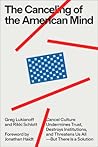
BOOKS: The Canceling of the American Mind by Greg Lukianoff & Rikki Schlott

The Canceling of the American Mind: Cancel Culture Undermines Trust and Threatens Us All―But There Is a SolutionThe Canceling of the American Mind: Cancel Culture Undermines Trust and Threatens Us All―But There Is a Solution by Greg Lukianoff
My rating: 5 of 5 stars

Amazon.in Page

This book presents an in-depth exploration of cancel culture in its many varied manifestations, from both the left and the right of the American political spectrum. The biggest part of the discussion is with respect to the educational system, and particularly higher education. Sadly, this is because the institutions that used to be among the most formidable bulwarks of free speech, expression, and academic freedom have increasingly become untenable to multiple points of view. (The authors point out that there have been more dismissals of faculty members for cancel culture speech and expression issues than there were during the McCarthy era for political stance.)

However, the book doesn’t restrict itself to education, but also investigates cancelations in journalism, publishing, the scientific community, standup comedy, and the medical and psychiatric communities. The authors also present cases of the effect that wokeness and other expression limiting activities are having in these areas. One of the most disturbing revelations to me was the role of wokeness in psychotherapy and the negative effect it may have on people getting the help they need.

The book presents a series of cases in detail to advance the discussion. It also has a couple chapters that examine the tactics that are used to apparently “win” debates by silencing / demoralizing the opposition while avoiding any actual contest of ideas. The authors go through tactics favored by the Right as well as those by the Left. (Though it’s clear that, in a race to the bottom, both sides adopt the approaches of the other side that seem to be effective. e.g. the Left is getting into book banning (historically a Conservative tactic) and the Right is getting into cancelling and shout-downs (usually Progressive tactics.)) I think it was smart to have two authors, one from the left and one from the right, in order to help ensure balance in the project. That said, as the Left has been in the cancel culture vanguard, they come up more often.

Some have called this a sequel to “The Coddling of the American Mind,” with which it shares a co-author, Greg Lukianoff. I don’t know that I’d think of it that way. While it does address some of the same issues as background, psychology and child development are not at the fore in this book (Jonathan Haidt – the other co-author of “Coddling” is a psychologist,) but rather are the legal, cultural, and political issues.  

This is probably the most important book I’ve read this year (and, being late November, it’s likely to retain that status) and I’d highly recommend it for all readers.

View all my reviews

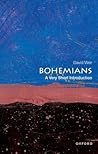
BOOKS: Bohemians: A Very Short Introduction by David Weir

Bohemians: A Very Short Introduction (VERY SHORT INTRODUCTIONS)Bohemians: A Very Short Introduction by David Weir
My rating: 5 of 5 stars

Amazon.in Page

This book examines the brief life of the Bohemian artistic lifestyle, exploring how it came about, what it looked like in its heyday, what led to its demise, and by what / whom it was replaced (e.g. the Beats.) It is an intriguing examination of the subject. I will say, there were points that I felt the book had become lost in the weeds, but at other points I found it fascinating. I concluded that my own calculus was to find it interesting when it discussed the lives and works of artists who are still deemed to have relevance and influence today (e.g. Baudelaire, Picasso, and Whitman,) and not so much when it was elaborating on artists and works that have fallen into obscurity among the general populace (e.g. Henry Murger’s Scenes of Bohemian Life.) So, that may be more a reflection on me than on the book.

The author touches upon the fictional influences that inspired Bohemianism, the places where the lifestyle thrived (e.g. Paris and New York,) the philosophy and – particularly – the political philosophy of the Bohemians (e.g. often Anarchists or – at least – anti-government.) One of the topics that most interested me is how the successor artistic communities differed from the Bohemians.

If you’re interested in who the Bohemians were and how they differ from other artistic communities (before and after,) this book is well worth the brief read required.

View all my reviews

BOOKS: How Long Can the Moon Be Caged by Suchitra Vijayan & Francesca Recchia

How Long Can the Moon Be Caged?: Voices of Indian Political PrisonersHow Long Can the Moon Be Caged?: Voices of Indian Political Prisoners by Suchitra Vijayan
My rating: 4 of 5 stars

Amazon.in Page

It’s no secret that the Gandhian pluralistic vision for India has been taking some hard knocks under the current administration (and the rise of Hindu nationalism that it represents,) but it’s also not as widely and intensely discussed as it could be. This book represents an attempt to make the stories of dissident political prisoners more widely heard.

For that attempt, I would give it high marks, but the execution is problematic. The middle part of the book does a reasonably good job of telling the stories of these individuals. However, the book comes across far too much like a reference book than a journalistic account for much of its length — particularly in the beginning and at the end. The beginning has a long bullet point account of relevant events that I’m sure is meant to give readers an idea of the scope of the problem, but it also sterilizes the information. At the end there are letters and a chapter that consists entirely of data. Letters can be fine, but they aren’t the most evocative way to convey these stories because they contain a good deal of information that is extraneous to the author’s point, and thus the message is diluted.

I do wish supporting evidence was turned up and gratuitous statements turned down a bit. In other words, I assume the government could present a counter-narrative that these are not just dissenters voicing unpopular opinions but rather individuals actively engaged in subversive operations. Granted, the prominence of poets, the ill, and the elderly does make it hard to believe these are some sort of guerrilla warfare masterminds. True, there is a challenge in disproving a negative that makes it hard to prove a person has done nothing wrong.

At any rate, it’s a book I’m glad I read, and I did learn about the issue, but I wish the execution had been better. Maybe that’s for another book.

View all my reviews

Orwell’s Politics and the English Language

Politics and the English LanguagePolitics and the English Language by George Orwell
My rating: 5 of 5 stars

Available online at The Orwell Foundation

In this essay, Orwell decries a scourge of weak writing in the English language, writing marked by cliched phrases, imprecise descriptors, meaningless words, and pretension. In short, he tells us that writing is becoming simultaneously more verbose and less meaningful.

While the essay isn’t as fun to read as George Carlin’s rants on the same subject, it’s a clear and well-organized discussion of this flaw. Orwell presents the problem, offering examples of random unreadable passages and discussion of where each goes awry. He also contrasts a clear and concise Biblical passage with how its message would sound translated into this corrupt modern form of the language. (That’s the most comedic portion of the essay.) Next, Orwell offers writers simple questions they might apply to making their writing less bloated and more impactful. The key insight of the essay is that thought corrupts language, but language also corrupts thought.

The essay is almost eighty years old, but the problem persists — particularly among politicians, a class of people who love to both sound impressive but without saying anything definitive, anything that might pin them down. That said, since Orwell we’ve developed new linguistic afflictions unique to the internet age, and the essay could probably use updating. Still, it’s an excellent place to start one’s reflection on what’s going wrong in the English language.

View all my reviews

Under Pressure: Or, A House Divided [Free Verse]

A construction worker once told me -
    for a building to last -
 depends not so much on
    its materials,
    nor even on its foundations,

but rather on the building being
    in balanced strain throughout.

A building stays up when its 
    parts press into each other firmly,
    or pull at each other strongly,
    but never too out of balance.

This web of unseen forces
    allows the building stand solid
    against any huffing, or puffing,
    the world might throw its way. 

A democratic society works the same.

It must have an establishment.

It must have a counterculture.

And these two elements must 
    constantly pull at each other
    or mash into each other:
    tension & compression,
    compression & tension,
    tug-of-war & sumo.

If one side is unopposed, or too weak,
    the state will crumble into some kind of
    authoritarianism by another name.

Destroy your enemies at your own peril.

Beijing Limerick

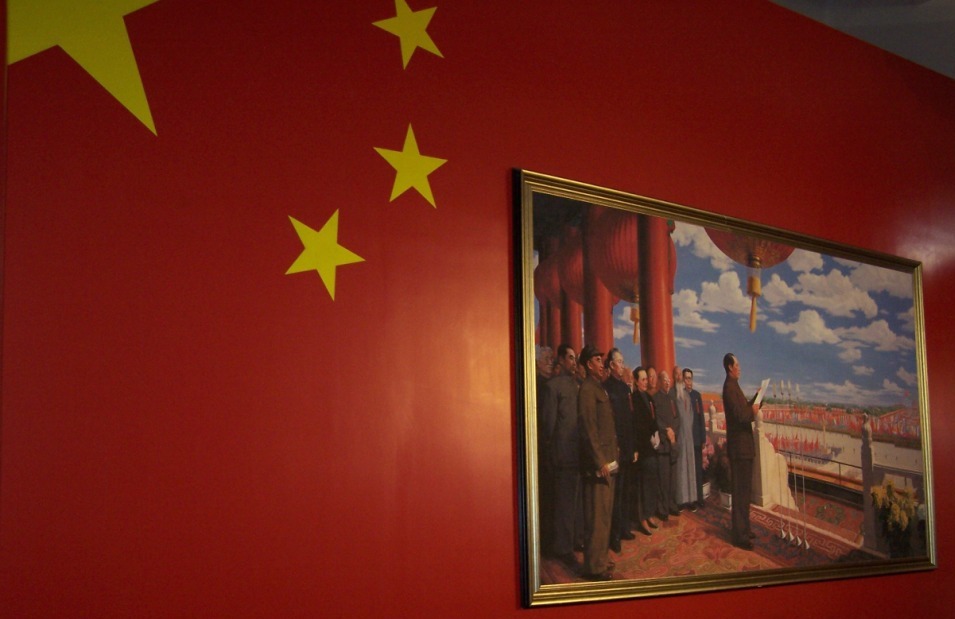
There was a bureaucrat from old Beijing
who claimed that COVID was in a downswing,
"It must be, you see,
for it cannot be
the rules changed cause of shouts of "Can Xi Jinping!"

BOOK REVIEW: The Gothic: A Very Short Introduction by Nick Groom

The Gothic: A Very Short IntroductionThe Gothic: A Very Short Introduction by Nick Groom
My rating: 5 of 5 stars

Amazon.in Page

Gothicness is the perfect kind of subject for the VSI series because it’s one of those areas about which everybody knows something, and yet knows nothing, really. Goth is [or has been] a people (or some people’s perception of other people,) an architectural style, a literary / cinematic genre, a contemporary lifestyle, and a political motif. Because of this diversity, even people who have a degree of expertise on some aspect of gothicness may have little understanding of other aspects or how these varied forms of gothicness relate (if they do, and – if they don’t — why enough people believe they relate to have made this well-formed, consensus view of connectedness.)

The downside of this diversity is that this book will almost certainly be dry, verging on tedious, at some point in the reading, depending upon one’s interests. For example, I found the portions on Gothic literature and cinema to be fascinating, but the part that dealt with gothicness in Whig politics to be boring. [With the architecture bit somewhere in between.] That said, one needs to follow this throughline to see how so many varied domains came to be Goth. Also, the book is quite short, so one isn’t likely to be bored to death because there’s not enough space spent on any one topic for that to happen.

I learned a lot about what it means to be “Goth” [or “goth”] from reading this book. It covers the history in some detail, but also brings it around to present-day movies and art. If you seek to know more about what “Gothic” means, you should definitely look into this brief guide.

View all my reviews

Tiny Tank [Free Verse]

Someone put a tiny, limp-gunned tank 
on Danube west bank --
in Budapest, opposite Parliament.

Unsubtle symbolism, indeed,
but worth noting:

The might of violence
made feeble in the face of democracy,
and all that.

So true,
and yet so few
seem to believe it.

We seem to believe
that matching savagery
is the key to strategy
in opposing the extreme,

but then we've really just made more
extremism, haven't we?

BOOK REVIEW: Identity: A Very Short Introduction by Florian Coulmas

Identity: A Very Short IntroductionIdentity: A Very Short Introduction by Florian Coulmas
My rating: 5 of 5 stars

Amazon.in Page

This book explores the slippery metaphysical concept of identity — not only as it’s presented in philosophy, but also in psychology, law, politics, anthropology, and literature. It begins with individual identity and expands outward to encompass gender, political, socio-economic, and linguistic identities. The aforementioned slipperiness of identity stems from the fact that we all have an intuitive grasp of identity that could be leading us astray. It tends to make us believe that aspects of identity are inherent features of the universe, when – in fact – they may be arbitrary designations – in which case, a given criterion or classification of identity may be chopped up in different ways than a given culture happened to glom onto.

I learned a great deal from this Introduction, and feel it was well organized and presented. How we see various dimensions of group identity (as well as how we weight them) has a lot to do with our social tensions and strife, and the issues around identity are worth dissecting — despite the fact that it might seem like a dry academic topic at first blush.

If you’re interested in learning more about identity, selfhood, and how various group identities feature in an individual’s overall identity, this book is worth investigating.


View all my reviews