Prayer Flag Impermanence [Free Verse]

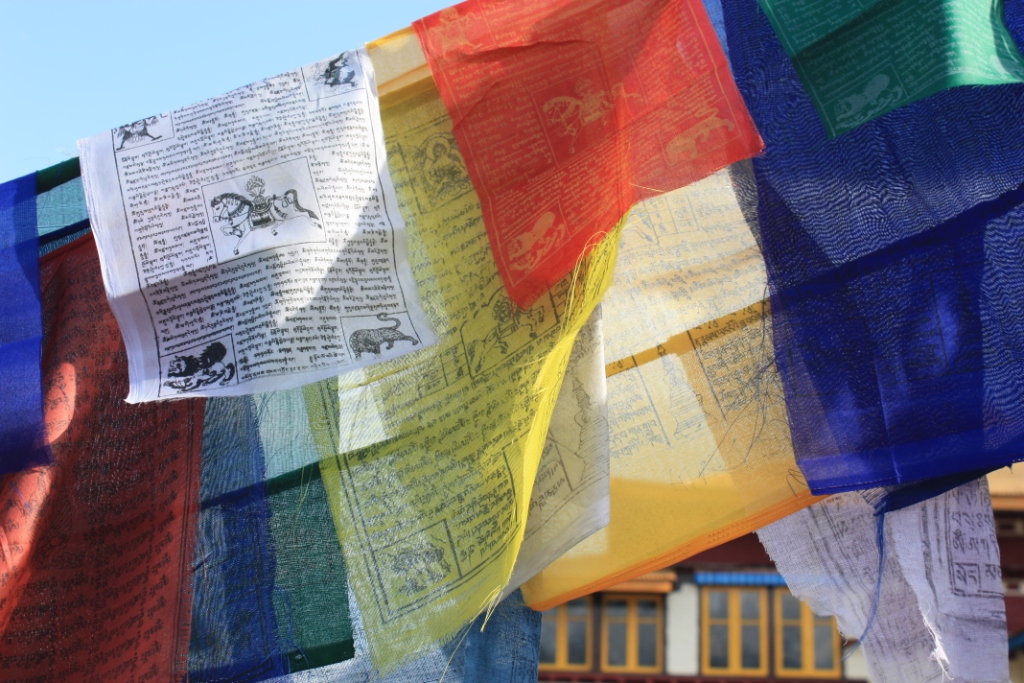
prayer flags languidly roll
in the courtyard
of the monastery

one monk
has seen the flags
every day since
they were erected

&

before that
saw their predecessors --
sun-bleached and tattered

that monk
 looks upon the flags
as if he's never seen them before
and will never see them again

each monk was taught to think this way,
but he's the only one who sees this way

BOOK REVIEW: Breathe! You are Alive [i.e. Anapanasati Sutta] Trans. & Commentary by Thich Nhat Hanh

Breathe! You Are Alive: Sutra on the Full Awareness of BreathingBreathe! You Are Alive: Sutra on the Full Awareness of Breathing by Thich Nhat Hanh
My rating: 5 of 5 stars

Amazon.in Page

One evening at the end of a rainy season in Shravasti (present-day Uttar Pradesh near the Nepali border,) the Buddha taught a practice using awareness of breath to quiet the mind. This is a translation with commentary by the Vietnamese Zen monk, Thich Nhat Hanh [RIP, FYI – he passed away on January 22nd.] (To clarify: Annabel Laity translated the book from Vietnamese to English, Thich Nhat Hanh translated versions of the sutra from Pali and Chinese.) The teaching is called the Anapanasati Sutta (i.e. “Sutra on the Full Awareness of Breathing.”) It consists of sixteen variations on the theme of “Breathing in, I know I’m breathing in. Breathing out, I know I’m breathing out.”

The sutra itself is only a few pages long, leaving commentaries and appendices to stretch the book to its barely one-hundred-pages. This isn’t a criticism; the commentary is beneficial because the sutra is bare bones. Even being somewhat aware of basic Buddhist concepts (e.g. impermanence, emptiness, liberation, etc.) I still found that the commentary offered some valuable insight about how to understand these ideas as well as how they relate to the practice. The Appendices consist of a variation on the practice and a translation of Chinese version of the sutra. The latter is a bit redundant, but one can also see little differences in translation that may be informative for some.

Besides presenting the practice, the book explains how it relates to (and is built around the principles from) the “Sutra on the Four Establishments of Mindfulness.” This book outlines the Four Establishments clearly enough to see how the Anapanasati practice is shaped by them. However, it’s worth noting that Thich Nhat Hanh also produced a translation and commentary on the Four Establishments that is entitled “Transformation & Healing.”

As someone who has found breath practices to be among the most effective tools for improving the mind, I benefited from this book tremendously. Besides its discussion of the practice and variations, I learned a lot from the philosophical elaborations that were made. I’d highly recommend this book.

View all my reviews

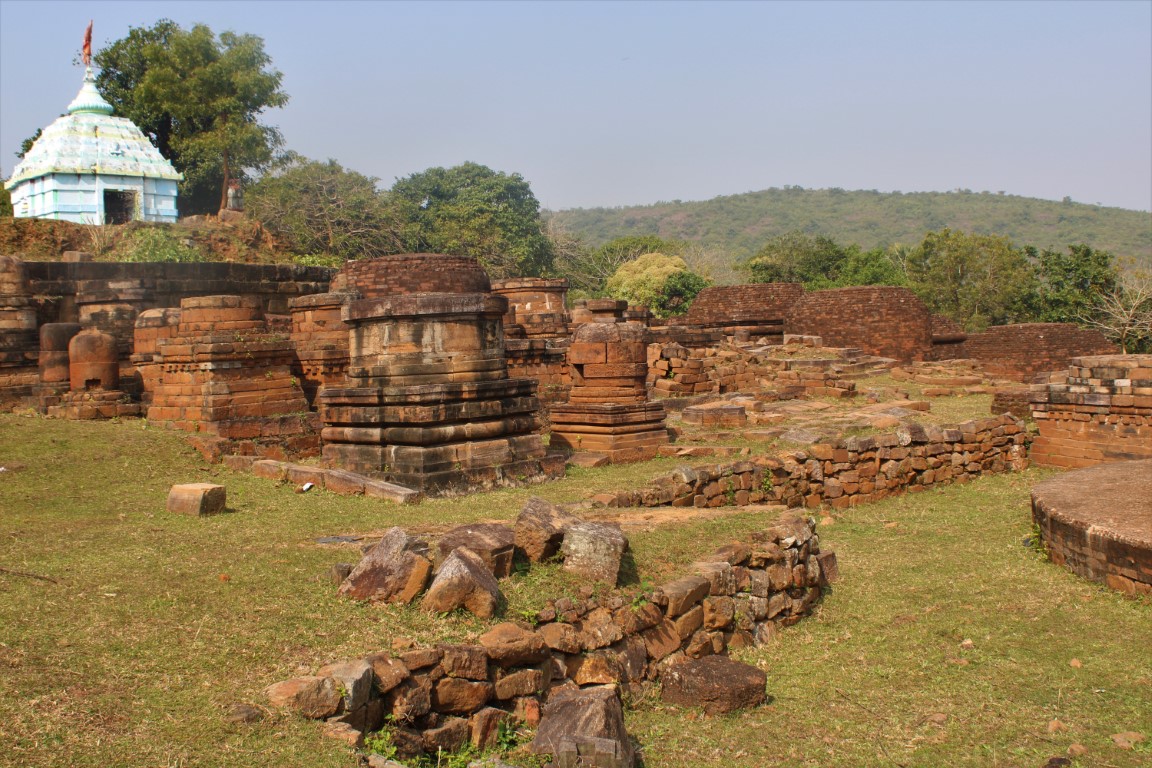
DAILY PHOTO: Scenes from Udaygiri [Diamond Triangle]

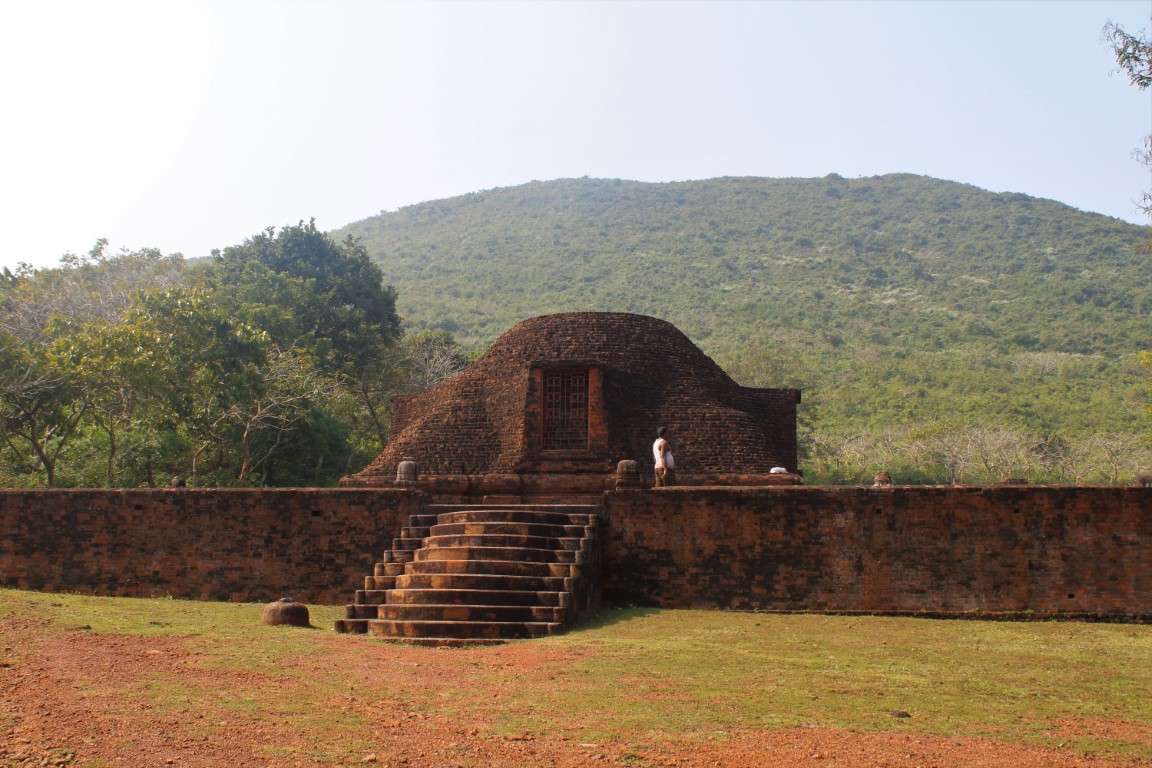
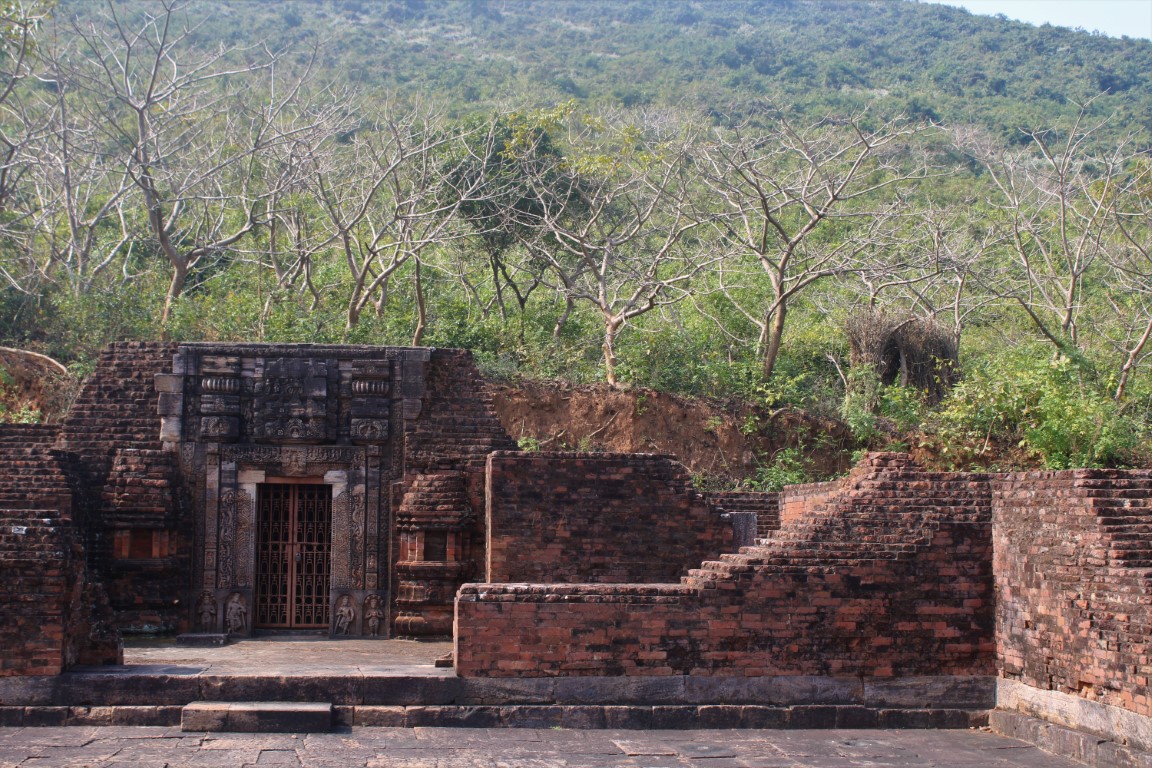
Taken in December of 2021 at Udaygiri in Odisha
The Great Stupa of Udaygiri
Mahavihara I

BOOK REVIEW: Bankei Zen by Peter Haskel [trans.] & Yoshito Hakeda [ed.]

Bankei Zen: Translations from the Record of BankeiBankei Zen: Translations from the Record of Bankei by Yoshito Hakeda
My rating: 5 of 5 stars

Amazon.in Page

This collection of sermons, notes, poems, and letters from the Zen monk Bankei present his iconoclastic views on Buddhism. Bankei’s central teaching revolves around a state of mind that calls Unborn Buddha Mind. The Unborn Buddha Mind isn’t defined neatly (perhaps it can’t be,) though Bankei does refer to the capacity to perceive without consciously directing one’s attention – that is, to achieve spontaneous perception of a sensory input without the error that one might experience in thought, when one’s mind is analyzing and judging.

Bankei presented a distinctive countercultural view, both religiously and culturally. In terms of the teachings and philosophy of Zen, this is most clearly seen in his rejection of many of Zen’s primary methods – e.g. koan (Zen “riddles”) and mondo (a conversational Q&A technique.) Even those techniques Bankei doesn’t reject (e.g. Zazen, seated meditation,) he does deemphasize in contrast to a more workaday focus. Culturally, one can see the difference of Bankei’s approach in his rejection of consensus views of the time, such as that women can’t achieve enlightenment.

The book uses stories, straightforward statements, and poetry to convey a unique approach to practice. The book can be a bit dry and repetitive. (Different media – e.g. sermons and letters – discussing the same teachings will lead to repetition.) That said, if you’re interested in Zen and mindfulness, there is much to be learned via this book. There are even a few teachings directed towards martial artists, and how they can apply the lessons of Zen.


View all my reviews

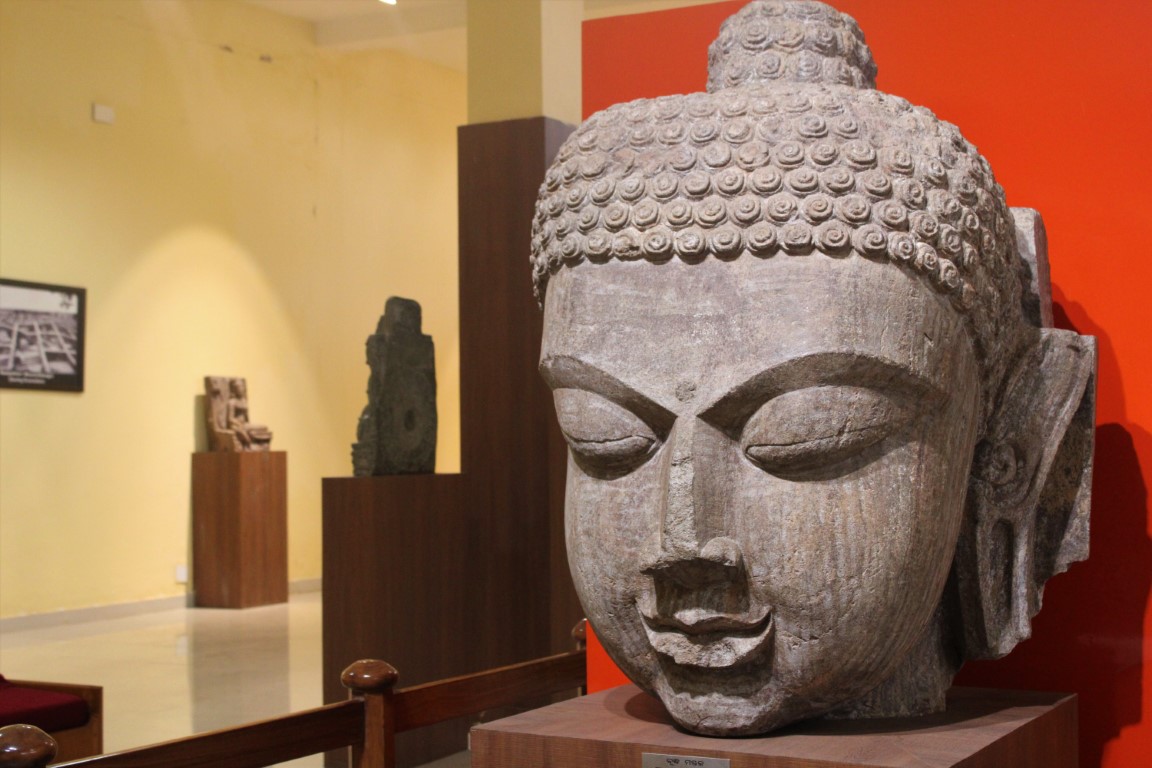
DAILY PHOTO: Buddha Head, Ratnagiri Museum

Taken in December of 2021 at the Ratnagiri Archeological Museum

BOOK REVIEW: The Divine Madman by Keith Dowman

The Divine Madman: The Sublime Life and Songs of Drukpa KunleyThe Divine Madman: The Sublime Life and Songs of Drukpa Kunley by Keith Dowman
My rating: 5 of 5 stars

Amazon.in Page

This book offers stories from the life of Drukpa Kunley, along with some interspersed poetry. Kunley was a “mad sage” (a Nyönpa, as Tibetan Buddhists call such individuals) / tantric yogi of the Vajrayana Buddhist tradition who lived during the 15th and 16th centuries in Tibet and Bhutan. Today, his most well-known legacy is the phallic graffiti that is common in Bhutan (encouraging it, not drawing it all himself.) Kunley’s approach was definitely tantric and ran counter to the mainstream. By “tantric” I mean that he did not eschew those activities that mainstream religion seeks to prohibit, but rather saw them as a means to master the mind through mindful practice. So, as the Bhutanese phalluses might suggest, he often comes across as sex-obsessed as well as being a drunkard, but the whole idea of this crazy form of wisdom is to rise above the programming of societal convention, and to be free of all the little niggling value judgements that culture and religion impose on the world in order to see life through a less distorted lens.

I’m not qualified to speak to how well concepts are translated, but the book is readable and thought-provoking, and that’s enough for me. There’s humor throughout, as when Kunley tells the monks of the monastery he’s visiting that he has a friend who is an excellent singer, and then proceeds to bring a goat in to bleat for them. That said, those who are attached to the mainstream religious approach and who place a high value on societal conventions are likely to find much to be offended by in the carefree discussions of sex and the wild statements designed to shock people out of their stupors.

I enjoyed reading this book, found it full of interesting ideas, and would recommend it for anyone interested in the person or philosophy of Drukpa Kunley.

View all my reviews

BOOK REVIEW: Zen Art for Meditation by Stewart W. Holmes and Chimyo Horioka

Zen Art for MeditationZen Art for Meditation by Stewart W. Holmes
My rating: 5 of 5 stars

Amazon.in Page

This is a clear and insightful exploration of what puts the Zen in Zen art. Zen Buddhism has long been associated with mind states conducive to peak performance in everything from tea making to swordsmanship. This book examines how Zen philosophy and mindset shows up in paintings and haiku poetry.

Fifteen tenets of Zen are presented, and for each of them two paintings (i.e. sumi-e) and several poems (i.e. haiku or tanka) are shown that have subject matter exemplifying the precept in question. The text points the way to understanding how the art is informed by Zen ideas.

I’ve read other books on the nexus between Zen and art, but this one became my favorite. It is concise, well-organized, and illuminating. There are a number of classes of people for whom I’d highly recommend this book. If you are studying Zen meditation (or peak mental performance more generally,) this book is for you. If you are a poet interested in Japanese forms, this book is for you. If you are an artist or a student of Chinese and Japanese painting styles, this book is for you. And, if you are interested in philosophy, be it Buddhist philosophy or aesthetics, this book is for you.


View all my reviews

BOOK REVIEW: Tibetan Buddhism: A Very Short Introduction by Matthew T. Kapstein

Tibetan Buddhism: A Very Short IntroductionTibetan Buddhism: A Very Short Introduction by Matthew T. Kapstein
My rating: 4 of 5 stars

Amazon.in Page

This book outlines the philosophy, theology, history, and future prospects of Tibetan Buddhism. It’s a big topic because Tibetan Buddhism is a unique amalgam of Buddhism, indigenous beliefs (e.g. Bön,) and adapted teachings from Yoga and Tantra.

For a concise guide, the discussions of history and philosophy can get deep in the weeds. However, to be fair, Tibetan Buddhism has a long and complicated history, and has produced deep metaphysical ideas, particularly with regards to philosophy of mind. Furthermore, it’s not a unitary religion, having schismed into a number of sub-sects.

Special attention is given to Tibetan Buddhism’s teachings on Enlightenment and death. Even those who aren’t familiar with Tibetan Buddhism may have heard of the “Tibetan Book of the Dead,” and may not be surprised to learn the topic is given its own chapter. I learned that the Bardo (e.g. a lobby between death and rebirth) was in part hypothesized to help reconcile the idea of Anatta (there being no persistent self, or soul) with reincarnation. [i.e. The question arises, what’s reincarnated if there’s no persistent “I” (i.e. atman, soul, etc.?) The book doesn’t really explain how the existence of a Bardo achieves this reconciliation, but achieving accord with the two ideas appears complicated, and -arguably- spurious.]

The book ends with a look at the religion’s prospects for the future, which are darkened by the Chinese government’s desire to subvert the religion’s influence, but may also be brightened by the fact that the current Dalai Lama has been open to dialogues, and – in particular – has made Tibetan Buddhism arguably the religion with the most cordial relationship to the scientific world. (No mean feat for a religion that is as superstitious as any in the modern world.)

If you’re interested in a concise overview of Tibetan Buddhism, give it a read.


View all my reviews

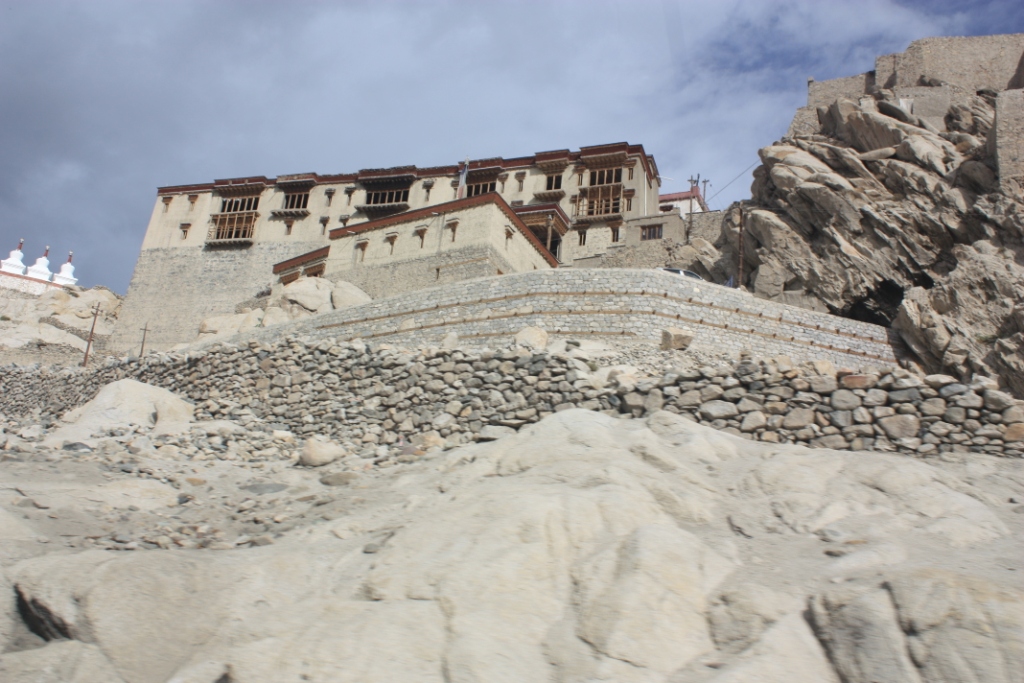
Gompa [Haiku]

mountain Gompa,
fused to the mountainside
as if carved from rock

BOOK REVIEW: Three Japanese Buddhist Monks by Saigyō, Chōmei, and Kenkō

Three Japanese Buddhist MonksThree Japanese Buddhist Monks by Saigyō
My rating: 5 of 5 stars

Amazon.in Page

This book collects three essays composed between the twelfth and fourteenth centuries. They are in chronological order, but also in order of increasing length, i.e. Saigyō’s piece is a short excerpt, while Kenkō’s essay makes up the bulk of the book.


An excerpt from Saigyō’s Senjūshō tells the story of the monk’s meeting with a wise reclusive meditator on Mt. Utsu. Saigyō tries to talk his way into living / meditating with the hermit, but the sage convinces him that that wouldn’t be good for either of them. The monk goes away, planning on visiting the hermit on his return, but he wistfully tells us that he took another route.


“The Ten-Foot Hut” is about the benefits of a simple, minimalist existence. It discusses Impermanence, and takes the view that having more just means one has more to lose. A quote that offers insight into the monk’s thoughts is, “If you live in a cramped city area, you cannot escape disaster when a fire springs up nearby. If you live in some remote place, commuting to and fro is filled with problems, and you are in constant danger from thieves.” The author’s solution? Build a tiny cabin in the woods and – in the unlikely event it burns or gets robbed while one is away – what has one really lost?


The Kenkō essay makes up about eighty percent of the book. Its rambling discussion of life’s impermanence delves into morality, aesthetics, and Buddhist psychology. There are many profound bits of wisdom in this piece. Though it’s also a bit of a mixed bag in that some of the advice feels relevant and insightful, while some of it hasn’t aged / traveled well.


I enjoyed this book and found it thought-provoking. Some may be disappointed by finding how little of Saigyō’s writing is included (he being the author of greatest renown,) but I found each author had something valuable to offer.


View all my reviews