Happy the man, and happy he alone,
 He who can call today his own:
 He who, secure within, can say,
 Tomorrow do thy worst, for I have lived today.
 Be fair or foul, or rain or shine
 The joys I have possessed, in spite of fate, are mine.
 Not Heaven itself, upon the past has power,
 But what has been, has been, and I have had my hour.
Twelve o'clock. Along the reaches of the street Held in a lunar synthesis, Whispering lunar incantations Dissolve the floors of memory And all its clear relations, Its divisions and precisions, Every street lamp that I pass Beats like a fatalistic drum, And through the spaces of the dark Midnight shakes the memory As a madman shakes a dead geranium.
Half-past one, The street lamp sputtered, The street lamp muttered, The street lamp said, 'Regard that woman Who hesitates towards you in the light of the door Which opens on her like a grin. You see the border of her dress Is torn and stained with sand, And you see the corner of her eye Twists like a crooked pin.'
The memory throws up high and dry A crowd of twisted things; A twisted branch upon the beach Eaten smooth, and polished As if the world gave up The secret of its skeleton, Stiff and white. A broken spring in a factory yard, Rust that clings to the form that the strength has left Hard and curled and ready to snap.
Half-past two, The street lamp said, 'Remark the cat which flattens itself in the gutter, Slips out its tongue And devours a morsel of rancid butter.' So the hand of a child, automatic, Slipped out and pocketed a toy that was running along the quay. I could see nothing behind that child's eye. I have seen eyes in the street Trying to peer through lighted shutters, And a crab one afternoon in a pool, An old crab with barnacles on his back, Gripped the end of a stick which I held him.
Half-past three, The lamp sputtered, The lamp muttered in the dark. The lamp hummed: 'Regard the moon, La lune ne garde aucune rancune, She winks a feeble eye, She smiles into corners. She smoothes the hair of the grass. The moon has lost her memory. A washed-out smallpox cracks her face, Her hand twists a paper rose, That smells of dust and old Cologne, She is alone With all the old nocturnal smells That cross and cross across her brain.' The reminiscence comes Of sunless dry geraniums And dust in crevices, Smells of chestnuts in the streets, And female smells in shuttered rooms, And cigarettes in corridors And cocktail smells in bars.
The lamp said, 'Four o'clock, Here is the number on the door. Memory! You have the key, The little lamp spreads a ring on the stair; Mount. The bed is open; the tooth-brush hangs on the wall, Put your shoes at the door, sleep, prepare for life.'
This day is call'd the feast of Crispian.
 He that outlives this day, and comes safe home,
 Will stand a-tiptoe when this day is nam'd,
 And rouse him at the name of Crispian.
 He that shall live this day, and see old age,
 Will yearly on the vigil feast his neighbours,
 And say "Tomorrow is Saint Crispian."
 Then will he strip his sleeve and show his scars,
 And say "These wounds I had on Crispian's day."
 Old men forget; yet all shall be forgot,
 But he'll remember, with advantages,
 What feats he did that day. Then shall our names,
 Familiar in his mouth as household words --
 Harry the King, Bedford and Exeter,
 Warwick and Talbot, Salisbury and Gloucester --
 Be in their flowing cups freshly rememb'red.
 This story shall the good man teach his son;
 And Crispin Crispian shall ne'er go by,
 From this day to the ending of the world,
 But we in it shall be remembered --
 We few, we happy few, we band of brothers;
 For he today that sheds his blood with me
 Shall be my brother; be he ne'er so vile,
 This day shall gentle his condition;
 And gentlemen in England now a-bed
 Shall think themselves accursed they were not here,
 And hold their manhoods cheap whiles any speaks
 That fought with us upon Saint Crispin's Day.
Gather ye rose-buds while ye may,
   Old Time is still a-flying;
 And this same flower that smiles today
   Tomorrow will be dying.

The glorious lamp of heaven, the sun,
   The higher he's a-getting,
 The sooner will his race be run,
   And nearer he's to setting.

That age is best which is the first,
   When youth and blood are warmer;
 But being spent, the worse, and worst
   Times still succeed the former.

Then be not coy, but use your time,
   And while ye may, go marry;
 For having lost but once your prime,
   You may forever tarry.
I wander thro' each charter'd street,
 Near where the charter'd Thames does flow,
 And mark in every face I meet
 Marks of weakness, marks of woe.

In every cry of every Man,
 In every Infant's cry of fear,
 In every voice, in every ban,
 The mind-forged manacles I hear.

How the Chimney-sweeper's cry
 Every black'ning Church appalls;
 And the hapless Soldier's sigh
 Runs in blood down Palace walls.

But most thro' midnight streets I hear
 How the youthful Harlot's curse
 Blasts the new born Infant's tear,
 And blights with plagues the Marriage hearse.
If you can keep your head when all about you
   Are losing theirs and blaming it on you,
 If you can trust yourself when all men doubt you,
   But make allowance for their doubting too;
 If you can wait and not be tired by waiting,
   Or being lied about, don't deal in lies,
 Or being hated don't give way to hating,
   And yet don't look too good, nor talk too wise:

If you can dream -- and not make dreams your master;
   If you can think -- and not make thoughts your aim:
 If you can meet with Triumph and Disaster
   And treat those two imposters just the same;
 If you can bear to hear the truth you've spoken
   Twisted by knaves to make a trap for fools,
 Or watch the things you gave your life to, broken,
   And stoop and build 'em up with worn-out tools:

If you can make one heap of all your winnings
   And risk it on one turn of pitch-and-toss,
 And lose, and start again at your beginnings
   And never breathe a word about your loss;
 If you can force your heart and nerve and sinew
   To serve your turn long after they are gone,
 And so hold on when there is nothing in you
   Except the Will which says to them: "Hold on!"

If you can talk with crowds and keep your virtue,
   Or walk with Kings - nor lose the common touch,
 If neither foes nor loving friends can hurt you,
   If all men count with you, but none too much;
 If you can fill the unforgiving minute
   With sixty seconds' worth of distance run,
 Yours is the Earth and everything that's in it,
   And -- which is more -- you'll be a Man, my son!
Full fathom five thy father lies,
   Of his bones are coral made;
 Those are pearls that were his eyes:
   Nothing of him that doth fade,
 But doth suffer a sea-change
   Into something rich and strange:
 Sea nymphs hourly ring his knell.
          Ding-dong!
     Hark! Now I hear them,
          Ding-dong, bell!
In Xanadu did Kubla Khan
     A stately pleasure-dome decree:
 Where Alph, the sacred river, ran
 Through caverns measureless to man
     Down to a sunless sea.
 So twice five miles of fertile ground
 With walls and tower were girdled round:
 And there were gardens bright with sinuous rills
 Where blossom'd many an incense-bearing tree;
 And here were forests ancient as the hills,
 Enfolding sunny spots of greenery.

But O, that deep romantic chasm which slanted
 Down the green hill athwart a cedarn cover!
 A savage place! as holy and enchanted
 As e'er beneath a waning moon was haunted
 By woman wailing for her demon-lover!
 And from this chasm, with ceaseless turmoil seething,
 As if this earth in fast thick pants were breathing,
 A mighty fountain momently was forced;
 Amid whose swift half-intermitted burst
 Huge fragments vaulted like rebounding hail,
 Or chaffy grain beneath the thresher's flail:
 And 'mid these dancing rocks at once and ever
 It flung up momently the sacred river.
 Five miles meandering with a mazy motion
 Through wood and dale the sacred river ran,
 Then reach'd the caverns measureless to man,
 And sank in tumult to a lifeless ocean:
 And 'mid this tumult Kubla heard from afar
 Ancestral voices prophesying war!

     The shadow of the dome of pleasure
     Floated midway on the waves;
     Where was heard the mingled measure
     From the fountain and the caves.
 It was a miracle of rare device,
 A sunny pleasure-dome with caves of ice!

     A damsel with a dulcimer
     In a vision once I saw:
     It was an Abyssinian maid,
     And on her dulcimer she play'd,
     Singing of Mount Abora.
     Could I revive within me,
     Her symphony and song,
     To such a deep delight 'twould win me,
 That with music loud and long,
 I would build that dome in air,
 That sunny dome! those caves of ice!
 And all who heard should see them there,
 And all should cry, Beware! Beware!
 His flashing eyes, his floating hair!
 Weave a circle round him thrice,
 And close your eyes with holy dread,
 For he on honey-dew hath fed,
 And drunk the milk of Paradise.
I wandered lonely as a cloud
   That floats on high o'er vales and hills,
 When all at once I saw a crowd,
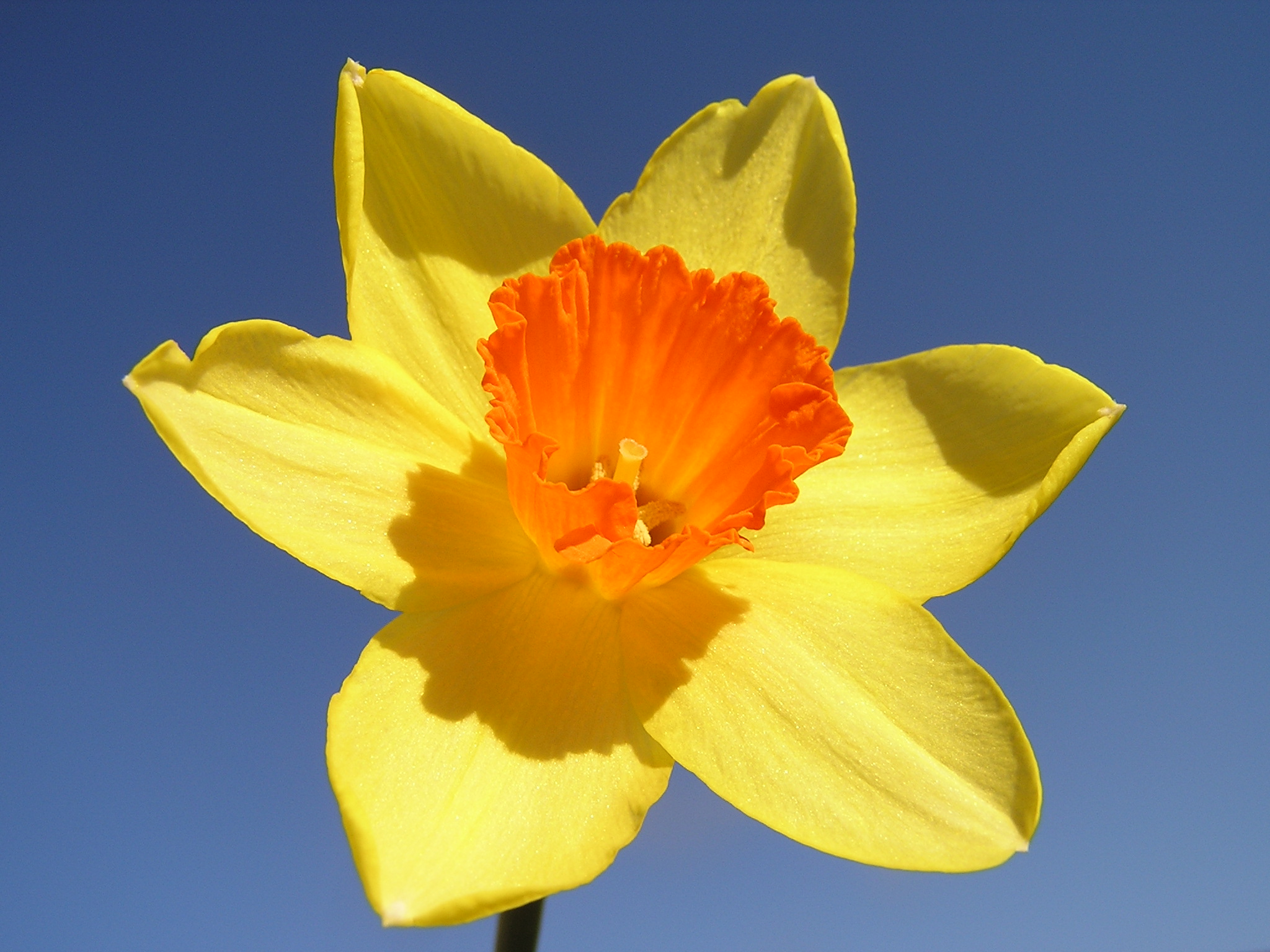
   A host, of golden daffodils;
 Beside the lake, beneath the trees,
   Fluttering and dancing in the breeze.

Continuous as the stars that shine
   And twinkle on the milky way,
 They stretched in never-ending line
   Along the margin of a bay:
 Ten thousand saw I at a glance,
   Tossing their heads in sprightly dance.

The waves beside them danced; but they
   Out-did the sparkling waves in glee:
 A poet could not but be gay,
   In such a jocund company:
 I gazed -- and gazed -- but little thought
   What wealth the show to me had brought:

For oft, when on my couch I lie
   In vacant or in pensive mood,
 They flash upon that inward eye
   Which is the bliss of solitude;
 And then my heart with pleasure fills,
   And dances with the daffodils.
Amazon.in Page
This play is an amusing cautionary tale on the dangers of “Bunburying” and / or leading a double life. “Bunburying,” a term coined by Wilde in this play, is the act of concocting meetings with a fictitious friend to get out of tedious familial (and other social) obligations. Don’t want to go to Aunt Bessie’s potluck? Tell her that your friend with a plausibly absurd name (e.g. Bunbury) has ruptured a disc in his back and desperately needs your assistance. Bunburying is the specialty of one of the two bachelor characters this story is built around, a man named Algernon. The other, Jack, goes by the name Ernest when he is in London, and has to invent the story that he has a brother when his town and country dichotomy of personalities starts to be seen through by those other than Algernon.
This humorous tale revolves around both Algernon and Jack finding desirable fiancés while being tangled in the web of their own duplicity. Much of the humor comes from the interactions of Algernon and Jack, two men who are quite alike, though Jack thinks himself more respectable. Algernon is more at ease with his own scamp-like nature and plays a role similar to that played by Lord Henry in Wilde’s novel, The Picture of Dorian Gray. That is, Algernon offers many a quotable line that at least has the appearance of wisdom — if, often, a kind of nihilistic wisdom.











 Tiger Riding for Beginners