BOOKS: “American Vampire, Vol. 5” by Scott Snyder

American Vampire, Vol. 5American Vampire, Vol. 5 by Scott Snyder
My rating: 5 of 5 stars

Publisher Site — DC Comics

This collection contains two separate story arcs. The first, entitled “Lord of Nightmares,” takes place in Europe and features Felicia Book reluctantly being drawn back into Vampire fighting to protect her son, Gus, from a threat created by an ominous rising force. The second, entitled “The Blacklist,” takes place in California and also centers on a woman being drawn into Vampire hunting. In this case that woman is Pearl Jones — whose husband, Henry, is in a coma, and Pearl concludes they can never be safe until the coven that is after them has been eliminated. Despite the commonalities of the two arcs, they both feel quite distinct. The first being more a slick tale of intrigue and the second one being more Hollywood noir.

There is a single-issue at the end that sets up the continuing story.

I continue to like this series. The story arcs are satisfying and action-packed. I would recommend it for comic book readers who aren’t averse to a bit of horror.

View all my reviews

BOOKS: “A Dome of Many-Coloured Glass” by Amy Lowell

A Dome Of Many Colored GlassA Dome Of Many Colored Glass by Amy Lowell
My rating: 5 of 5 stars

Project Gutenberg Page

This was Lowell’s first published collection (1912,) and my 5-stars notwithstanding, it is not everyone’s cup of tea. I think I understand why this is. If you read some of Lowell’s more popular and highly anthologized poems, you might find that this collection is unlike them in several ways. Many of those popular poems are highly imagist, emulate East Asian sparseness, and are free verse. These poems are by and large metered and rhymed verse and I would not be the first to say that they often feel conventional and pedestrian. As I was reading the final section, “Verses for Children,” I figured out what other key feature of Lowell’s poetry was largely missing from the lyric poetry and sonnets that preceded these Children’s poems — playfulness. [Fortunately, it’s on display in the kid’s poems.]
.
With all that said, there are some spectacularly evocative images presented within these poems. I particularly enjoyed poems like: “New York at Night” and “A Japanese Wood-Carving.” As I don’t have the aversion to metered verse that many poetry readers seem to have today, I wasn’t as dismayed by the collection as some readers seem to be. Though I will admit that the collection doesn’t just play it safe with form, it also infects the tone and content of the poems.

Still, I found the collection readable and pleasant reading. (But maybe this is because I like a good scavenger hunt for golden nuggets of beautiful verse.)

View all my reviews

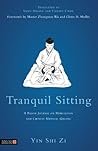
BOOKS: “Zen and the Ways” by Trevor Leggett

Zen and the WaysZen and the Ways by Trevor Leggett
My rating: 5 of 5 stars

Open Library Page

This book is the most densely populated with interesting insights that I’ve read in some time. It’s not new, being first published in 1978, but it takes a variety of approaches to give the reader a better understanding of Zen and the application of Zen mind to martial arts and other activities that found benefit in stillness and clarity. By “the Ways,” Leggett is referring to those arts and activities benefiting from Zen, which include: tea ceremony, flower arranging, painting, poetry writing, and all manner of martial arts. [Often represented by ending “do” in Japanese.] (The latter are dealt with most extensively, but not exclusively.)

The book is arranged in six parts, the first half of which focus mostly upon Zen Buddhism and, particularly, the Kamakura school that found a huge following among warriors and other artists. Those first three chapters take a big to small approach, examining Zen from ever finer levels of detail, starting with an introduction to Zen Buddhism broadly, moving on to the Kamakura developments, and then finally focusing on one particular practice — that of Koans (stories that present riddles which the student can only “solve” in a non-intellectual fashion.)

The second half of the book investigates the ways Zen has been applied to various arts. This is where one sees the varied approaches used to explore the confluence of Zen and artistry. Part Four consists of a series of essays explaining concepts such as ri (universal truth) and ji (formal technique,) ki (vital energy,) and isshin (single-heartedness) / zanshin (lingering awareness.) Part Five consists of historic martial arts scrolls and excerpts, including Yagyu Munenori’s Art of War and Chozan Shisai’s “Tengu’s Guide to the Martial Arts.” The final part consists of stories that illustrate crucial ideas in a readable and memorable fashion.

I was extremely pleased to stumble across a copy of this book in a second-hand bookshop. I’d long ago heard a fascinating story about murders in Edo era Japan of high-level martial artists, all killed in the same manner. They never found the killer, but they figured out how the murders were done easily enough. The killer exploited his knowledge of that school’s techniques to lay a fake that exploited their own technique to create an opening. It’s a cautionary tale that drilling muscle memory is not the end-all be-all of martial arts, and that it can create its own problems. At any rate, I’d never been able to find the source… until now. There is a detailed discussion of it in this book.

For readers interested in how state of mind influences artistic performance, I’d highly recommend this book.

View all my reviews

BOOKS: “The Black Riders and Other Lines” by Stephen Crane

The Black Riders and Other LinesThe Black Riders and Other Lines by Stephen Crane
My rating: 5 of 5 stars

Project Gutenberg Site

This collection consists of sixty-eight free verse poems, most of which are short (though a small number take up more than a page.) Crane’s poetry is philosophical and often surreal. It’s poetry that’s as likely to spur rumination as it is to evoke intense emotional experience. Some may find Crane’s poetry irreverent because it takes on formal religion and dogmatic groupthink, more generally, but – for others of us – therein lies its appeal.

This collection includes “In the Desert” as well as a number of Crane’s other well-known poems.

I’d highly recommend this collection for poetry readers, particularly those who enjoy poetry of a philosophical bent.

View all my reviews

BOOKS: “Southeast Asia: A Very Short Introduction” by James R. Rush

Southeast Asia: A Very Short Introduction (Very Short Introductions)Southeast Asia: A Very Short Introduction by James R. Rush
My rating: 4 of 5 stars

Publisher Site

I’ve been to most of the eleven countries of Southeast Asia, but still my questions are many. This short guide answered some of them. The book takes a largely historical approach, breaking the timeline into periods during which these countries were pre-nation-state kingdoms, then colonies, and then independent countries. While the guide is written by a historian and is organized by governance (i.e. who won the wars,) it does not solely address politics and regimes.

The guide also explores subjects such as religion. This was fortunate for me because a lot of my questions involve this topic. Why is the northern part of the region mostly Buddhist while the southern part is mostly Muslim? Why did Hinduism and other Indian religions (not inclusive of Buddhism, which virtually died out within India) almost entirely give way to other religions in this area, except for spotty exceptions (most notably Bali?) Incidentally, the former question is answered more than the latter, which makes sense as this is small book for a relatively large area, but more importantly for a long history. Southeast Asia has been a strategically and economically important place for centuries.

As a traveler, I found this book well worth reading as a way to gain insight into the region. It doesn’t dive deep into cultural questions (except a bit into religion,) and so there is much more to learn from other books. It does explore who governed these countries and how, and the last chapter brings the question up to date — reflecting on the political and economic changes in the last couple decades. If you’re curious to know more about Southeast Asia, in a way that doesn’t get too deep in the minutiae, this book is worth checking out.


View all my reviews

BOOKS: “Handbooks for Daoist Practice: Scriptural Statutes of Lord Lao” by Louis Komjathy [and Lord Lao]

Handbooks for Daoist Practice: Scriptural Statutes of Lord LaoHandbooks for Daoist Practice: Scriptural Statutes of Lord Lao by Louis Komjathy
My rating: 5 of 5 stars

Author Site

This paper presents exposition on, and translation of, an important Taoist work. Like many collections of sutras and other epigrams of wisdom, the “Scriptural Statutes of Lord Lao” are only a couple pages of sayings. To be more specific, they consist of nine practices (九行) and twenty-seven moral precepts. The bulk of the twenty-five-ish pages of this work are a scholarly background on the nine practices and twenty-seven precepts, plus back matter including references and the original (Chinese) “statutes.”

I read this because the nine practices seem like a concise statement of what it means to be Taoist (a topic that can be tremendously complicated given the varied sects, beliefs, and practices that all fall under the heading of “Taoist” — some religious, some philosophical, and some mystical.) Those nine practices are: non-action (which is much more complicated than just sitting on one’s bum,) softness, guarding the feminine, namelessness, stillness, adeptness, desirelessness, contentment, and knowing how and when to yield. The text offers some insight into where these practices come from (e.g. the points in the Dao De Jing that reverence them,) but the scope of the work is far to limited to gain a deep understanding of them (for that one will have to go elsewhere.)

I found reading this short work to be quite beneficial and insightful, despite its thin profile. I’m glad it includes the original text as well as provides citations, as therein much of its value lies.

View all my reviews

BOOKS: “Meschugge” by Benni Bodker

Meschugge: Le Labyrinthe du fouMeschugge: Le Labyrinthe du fou by Benni Bødker
My rating: 4 of 5 stars

Seller Site

This graphic novel reminded me of “The Alienist” TV series (based — itself — on a popular novel,) particularly the Sara Howard (Dakota Fanning) arc in which a young, upper-class woman becomes a detective in the (turn of the 20th century) world which sees women as too delicate to be subjected to such horrors.

While the lead in this book bears striking resemblance to Sara Howard and the settings are quite similar, the book also features major differences that make it its own unique story. First of all, Kabbalistic Judaism plays a central role in the crimes in this book. Secondly, this story creates the impression that the supernatural might be involved. I don’t believe it is unambiguously supernatural, one could explain things in a rational way as well, but “The Alienist” takes a clear rationalist approach.

I enjoyed the story, and it kept me reading. There were a couple points in the story that didn’t make sense to me, particularly an occurrence in which a character is being pursued and seems to be in a dire situation, and then suddenly is free. This mechanism is sometimes used with characters who’ve been established as being extremely capable individuals because it is as if to say, “I don’t even need to show you this person getting out of this spot because it’s not a big enough trouble to fuss about,” (it’s also often done in poor TV and movies for budget reasons,) but this character is not a master escape artist (being out of her depths is part of what creates such great tension throughout the story.)

An exciting premise and interesting characters, but with a few rough edges in plotting.

View all my reviews

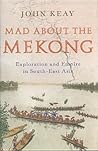
BOOKS: “The Story of Malacca” by Allein G. Moore

Sultans and Spices, Guns and Greed, Race and Religion: The Story of MalaccaSultans and Spices, Guns and Greed, Race and Religion: The Story of Malacca by Allein G. Moore
My rating: 4 of 5 stars

Publisher Website

With an upcoming trip to Malacca (a.k.a. Melaka) planned, I decided it would be good to learn something about the city of Malacca besides that it shares a name with the pirate-infested strait that it sits beside. Fortunately, given the tremendous historical import of this town, there were at least a few English-language resources available. I settled on this history and was pleased with my choice. [It’s definitely the most up-to-date work in English that I found.]

The book covers the history of Malacca from its earliest human occupants through to the COVID pandemic [during which it was published.] (Actually, the last chapter is a wishful forecast of what the author hopes for the near-term future of Malacca (i.e. over the next decade or so.)) The core chapters are chronologically oriented and sorted by the ruler of the day (of which Malacca had an impressive sequence: Indian, Chinese, Portuguese, Dutch, British, Japanese, British (again,) and then Independence and a Malay-led government of its own.) Interspersed with these chronological chapters are a few topical ones, beside the aforementioned chapter about the future, these include chapters on the mythology of the city and one of biographical sketches of prominent historical figures.

I found this book to be educational and full of fascinating tidbits. While I appreciated that it brings the reader up to date, the last couple chapters do sometimes veer from “just-the-facts” description of events into a combination city planning rant / wish-list (Pollyanna, in places) regarding the state of the city and its future. I did like that the book touched upon cultural dimensions, from language to martial arts, in addition to a telling of historical events. The book is well worth reading for travelers and / or history buffs.

View all my reviews

BOOKS: “Sweet Tooth, Vol. 3: Animal Armies” by Jeff Lemire

Sweet Tooth, Vol. 3: Animal ArmiesSweet Tooth, Vol. 3: Animal Armies by Jeff Lemire
My rating: 5 of 5 stars

Publisher Site – DC Comics

This is an action-packed entry in Sweet Tooth saga. It’s also a very satisfying story arc for a serialized comic book such as this. We see important events in the character development of Jepperd as well as a secondary character, Johnny (brother to Abbot — the lead antagonist.) Dr. Singh gains some important information as well, though that largely serves to advance the story and extend the mystery, rather than to conclude this segment of the story. That said, this episode is brought to a solid conclusion while leaving one waiting to see what happens next.

I’d highly recommend this series for comic book readers.

View all my reviews

“American Vampire, Vol. 4” by Scott Snyder

American Vampire, Vol. 4American Vampire, Vol. 4 by Scott Snyder
My rating: 5 of 5 stars

Publisher’s Site

The American Vampire saga enters the 1950’s, at least with two of the three storylines presented in this volume. The central arc takes place in Glendale, California in 1954 and features Fonzi-like vampire hunter, Travis Kidd, against the series’ central villain — Skinner Sweat. But the main story is bookended by two shorter stories. The opener is a cowboys v. indians tale, set in New Mexico Territory in 1871, that provides backstory on Skinner Sweat and James Book. The closing story is also set in 1954 but takes place in Alabama and features a black vampire hunter in the Deep South.

I found all three stories to be compelling and have greatly enjoyed this series.

View all my reviews