BOOK: “Seven Animal Postures” by Jeogun [Trans. by Dowon]

Seven Animal PosturesSeven Animal Postures by Jeogun
My rating: 4 of 5 stars

Publisher Information – Sunmudo Daegeumgangmun Foundation

I bought this book in the gift shop of Golgulsa Temple [i.e. Stone Buddha Temple,] in the countryside outside of Gyeongju, South Korea. Golgulsa is a fascinating place. It’s sort of the Shaolin Temple of Korea, teaching martial arts and qigong (energy work) alongside meditation and Buddhist philosophy. The Korean Buddhist martial art is called Sunmudo, and I’d never heard of it before traveling to Korea.

At any rate, this book is a 35-page guide to a set of qigong practices known as the “Seven Animal Postures” (or Yeongdongipgwan.) It’s a set of exercises that are similar to qigong practices like the Eight Pieces Brocade, and not greatly dissimilar to yogasana (i.e. yoga’s postural practices.) [FYI: The animals of these exercises are Tiger, Dragon, Deer, Monkey, Bear, Turtle, and Crane.]

The book offers a little bit of background on Sunmudo and the benefits of it, but is mostly a guide to the movement, breath, and postural details of these seven exercises. It has line drawings to help elaborate upon the text. My only gripe would be that the paper the book is printed on to make it more visually interesting has blocks of darker color that make it a little harder to read than is necessary.

If you are interested in qigong or yogic practices that are a bit more off the beaten path, you may find this one interesting.

View all my reviews

PROMPT: First Name

Daily writing prompt
Write about your first name: its meaning, significance, etymology, etc.

Having been raised in a Catholic household, I wouldn’t have this name if one or more saints hadn’t already. In my case, there are several Saint Bernards, and I don’t know that my parents had any particular one in mind. As far as I know, none were associated with Ireland, from whence my ancestry lies. [St. Bernard of Clairvaux seems to be the most famous St. Bernard – he’s “The St. Bernard,” if you will – excepting of course Chris the St. Bernard dog who starred in the 1992 movie “Beethoven” whose name was actually Chris and his breed was “St. Bernard” so, technically, Clairvaux is still king of the St. Bernards.] I also know that it’s not the first time this name appeared in my genealogical line, but don’t know much more than that.

I understand the etymology of the name is Germanic and that it means something like “Bear Hardy,” with which I’m pleased. (Could have been much worse — e.g. “Squirrel Brave” or “Bear Smelling.”)

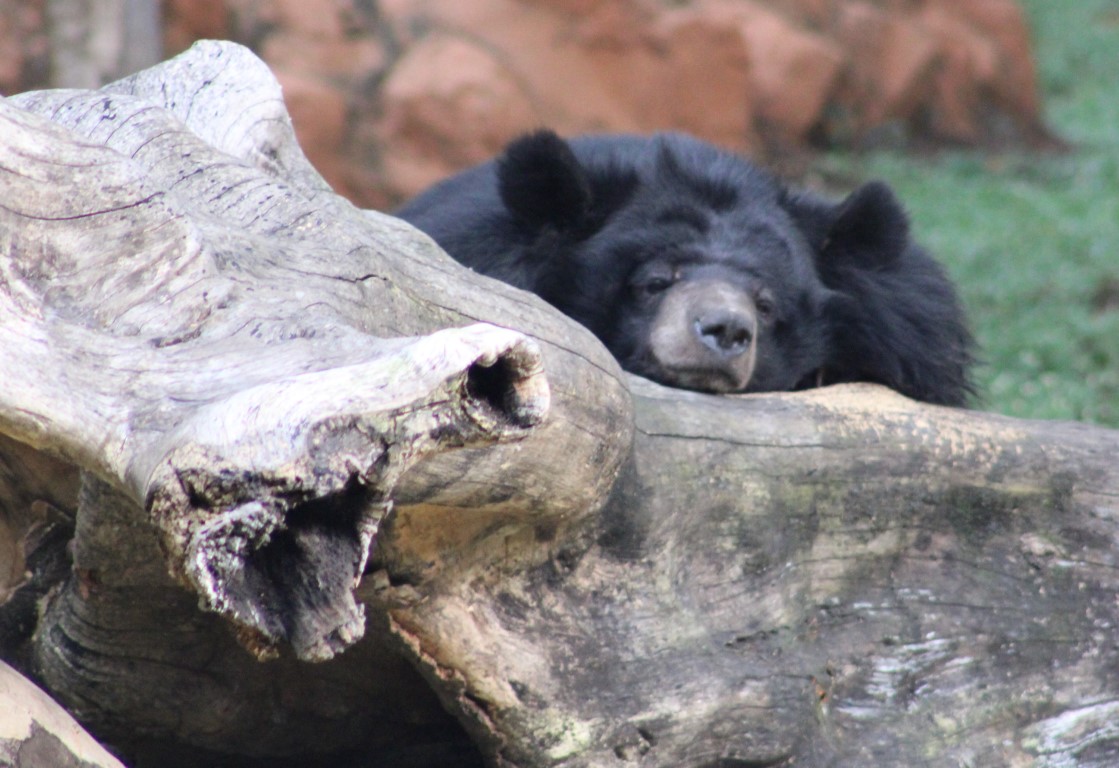
Sleeping Bear [Kyōka]

the sleeping bear
seems at peace, and still does
when its eyes open,
but my mental state - and
my drawers - are quite changed.

Bear [Lyric Poem]

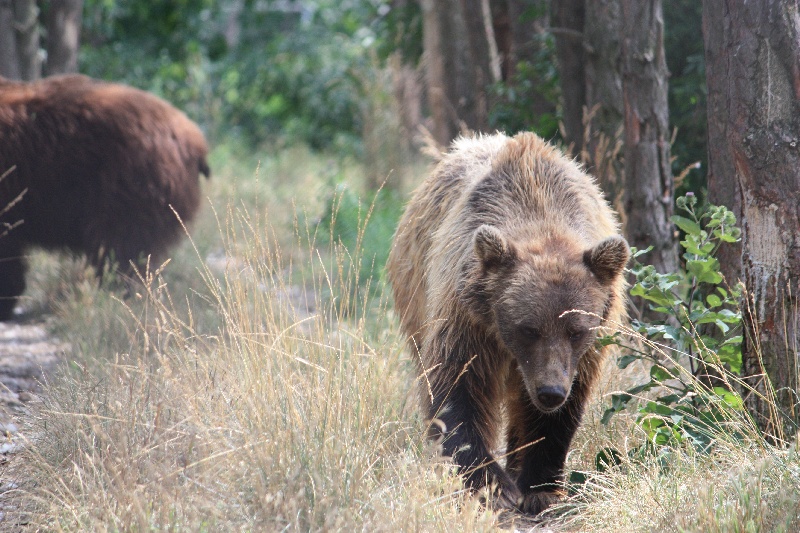
Walking down a trail, I had quite a scare --
For walking straight towards me was a big ole bear.
It glanced at me, and then down at its feet,
Then that speciesist bear had the nerve to cross the street.

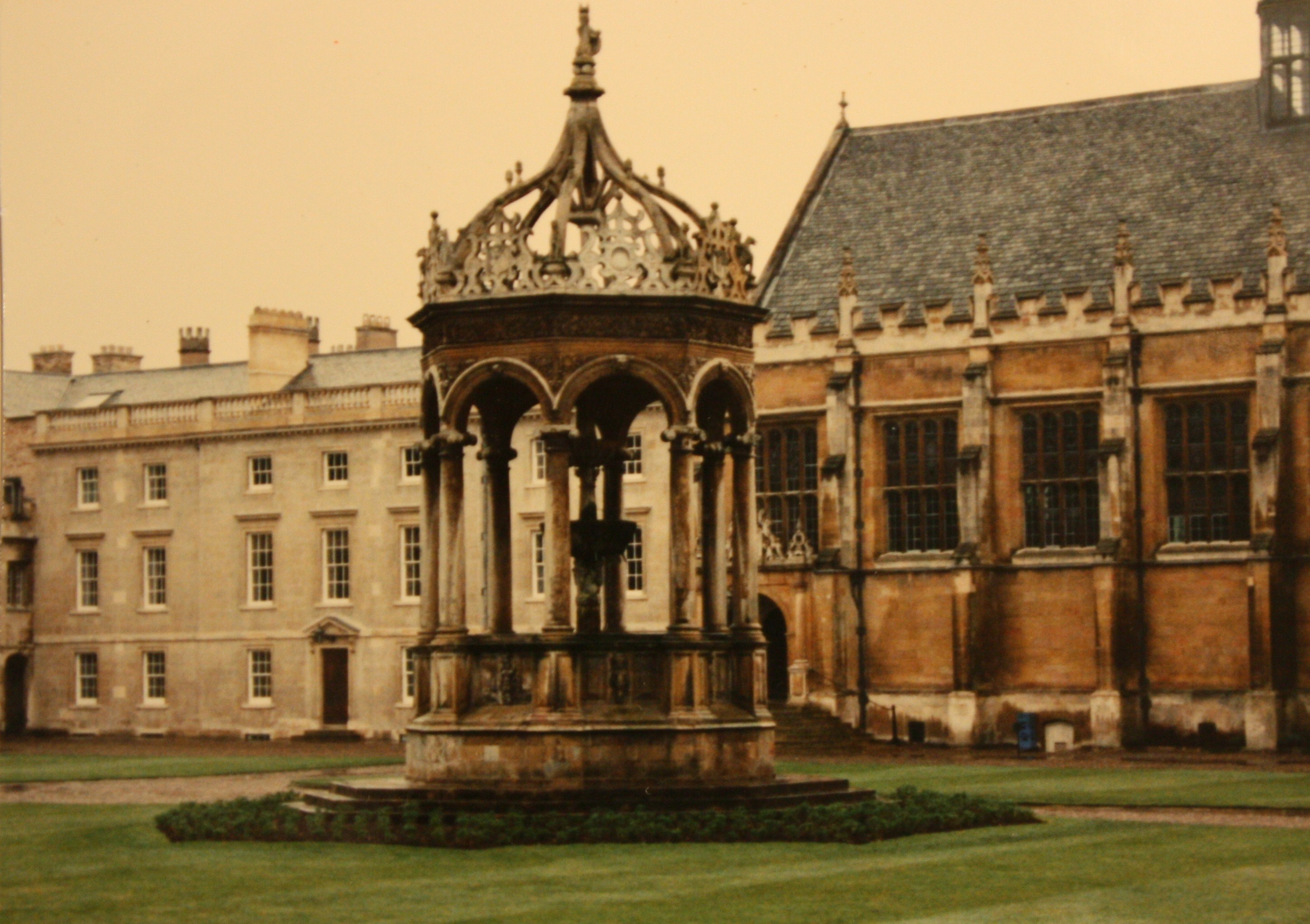
Cambridge U. Limerick

When Lord Byron lived at Cambridge University,
he greatly increased campus diversity.
He lived with a bear.
They were quite the pair.
For the poet, the dog ban was a perversity.

Bear Bouffant [Limerick]

There once was a quite sizable bear --
yet more imposing for its shaggy hair.
"If I took a shave,
I'd better fit my cave, 
but hunters would laugh, not beware."

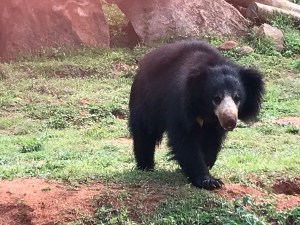
Sloth Bear [Senryu]

turning towards one,
the sloth bear becomes
more bear than sloth

POEM: Contrarian Bear

There once was a bear named Jerry,
and – like the nursery rhyme Mary –
Jerry Bear was quite contrary.

“Those salmon should not swim upstream.”
“The people I bite should not scream.”
“Why wreck good berries with whip cream?”

There wasn’t a thing anyone said
upon which Jerry would not tread.
Don’t be like Jerry. He’s a d!$%head.

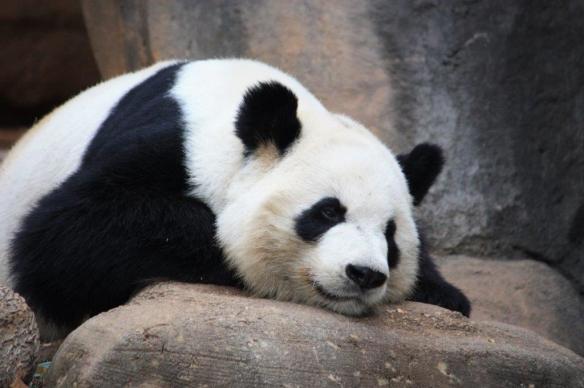
DAILY PHOTO: Resting Panda Face

Taken in February of 2012 at Zoo Atlanta.

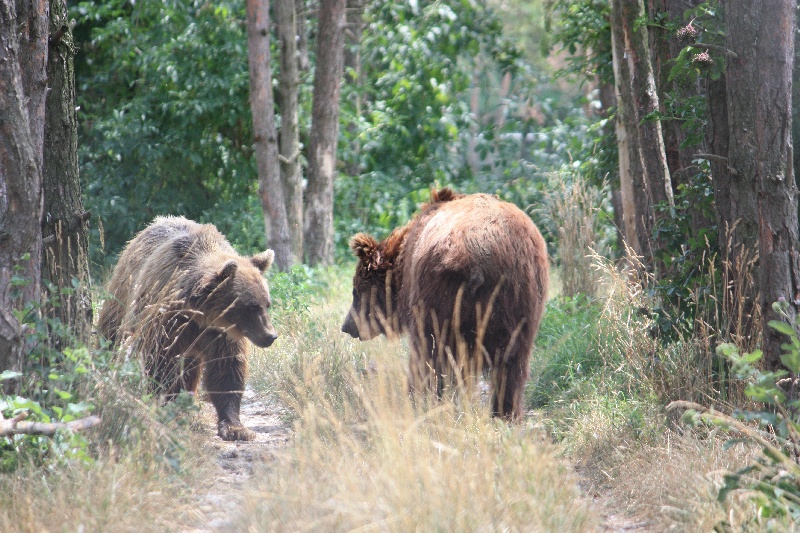
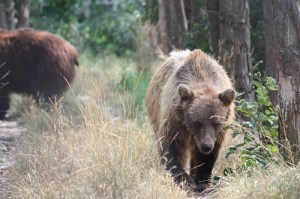
DAILY PHOTO: Yawning Bear

Taken in the summer of 2011 at Veresegyház, Hungary