FIVE WISE LINES [October 2025]

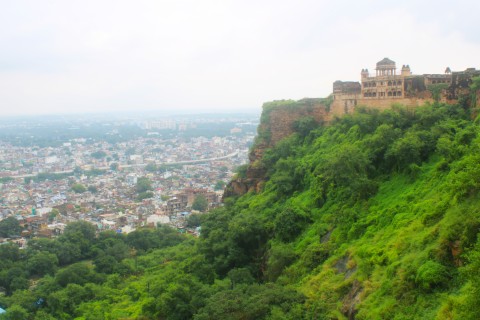
Gwalior Fort on Gopachal Hill in Gwalior, Madhya Pradesh, India

I had better never see a book
than to be warped by its attraction clean out of my own orbit,
and made a satellite instead of a system.

ralph waldo emerson; The american scholar

Free should the scholar be, — free and brave.

Ralph waldo emerson; The American Scholar

If you think adventure is dangerous, try routine, it is lethal.

Paulo coelho

What you’re supposed to do when you
don’t like a thing is change it.
If you can’t change it,
change the way you think about it.
Don’t complain.

Maya angelou

No man ever steps in the same river twice,
for it’s not the same river
and he’s not the same man.

Heraclitus

PROMPT: Security or Adventure

Daily writing prompt
Are you seeking security or adventure?

Not sure what to do with this one. It reads to me much as would, “Would you prefer air or water?”

On Tourists & Travelers [Free Verse]

A tourist looks back fondly upon 
A favorite destination;
A traveler is always at it.

A tourist loathes travel hiccups;
A traveler calls them stories.

A tourist jumps from one
Postcard vista to the next;
A traveler moves through the world.

A tourist collects knicknacks & geegaws;
A traveler collects experiences.

A tourist, between sights, seeks
A life experience as close to
Their homelife as possible.
A traveler wants a life experience
As close to local as possible.

A tourist has a favorite meal;
A traveler assumes he hasn't
Crossed paths with it yet.

A tourist leaves nothing to chance;
A traveler embraces the spontaneous.

A tourist takes comfort as a main course;
A traveler uses it like a condiment.

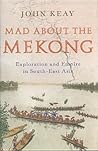
BOOK: “Mad About the Mekong” by John Keay

Mad About The Mekong: Exploration and Empire in South East AsiaMad About The Mekong: Exploration and Empire in South East Asia by John Keay
My rating: 4 of 5 stars

Publisher’s Site

This book is largely, but not exclusively, an accounting of the Mekong Exploration Commission’s two-year (1866-1868) expedition of the Mekong River. The French undertook this expedition in the expectation that the Mekong, like other of the world’s major rivers, would allow ocean-going ships to traverse deep inland — possibly even up into Yunnan, China. The explorers were quickly disabused of this notion, but they relentlessly kept going – despite suffering from disease and the exhaustion of a trip that involved a lot more portaging and other intense physical activities than they’d hoped for.

As I mentioned, Keay doesn’t stick purely to description of the activities of these nineteenth century explorers. Along the way he also brings in fascinating stories from other periods as well as discussion of what the river is like (e.g. its ecology, infrastructure, role in geopolitics, etc.) these days. So, while it would be excessive to call the book a history of the Mekong, it is in some regards — albeit the highlights reel. Some of the diversions were among my favorite parts of the book. Perhaps my favorite was the story of Tony Poe, whose story is said to be the model for Col. Kurtz of Apocalypse Now. I’d long heard that that movie was based on Joseph Conrad’s Heart of Darkness, and it is (the name “Kurtz” is clearly from Conrad’s novella, though Poe’s occupation more closely mirrors the Col. Kurtz character played by Marlon Brando.)

While the book sometimes shines the light more broadly than he Mekong Exploration Commission Expedition, it also narrows its focus much of the way, putting the expedition’s most colorful character, Francis Garnier, front and center. Garnier was not only the most intriguing member of the leadership, he also led the group to what was the end of the line for the expedition, deep in China, when the Captain, Ernest Doudart de Lagree, became incapacitated by disease.

If you’re interested in history, travel, or exploration, I’d recommend this book.

View all my reviews

“Excelsior” by Henry Wadsworth Longfellow [w/ Audio]

The shades of night were falling fast,
As though an Alpine village passed
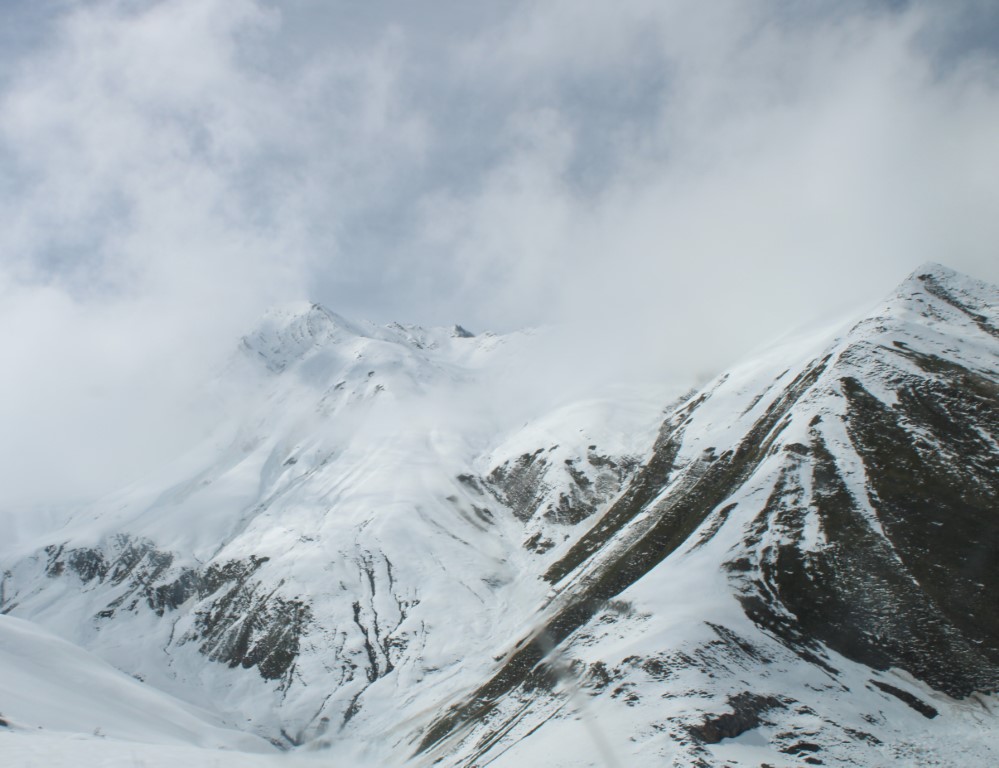
A youth, who bore, 'mid snow and ice,
A banner with the strange device,
Excelsior!

His brow was sad; his eye beneath,
Flashed like a falchion from its sheath,
And like a silver clarion rung
The accents of that unknown tongue,
Excelsior!

In happy homes he saw the light
Of household fires gleam warm and bright;
Above, the spectral glaciers shone,
And from his lips escaped the groan,
Excelsior!

"Try not the Pass!" the old man said;
"Dark lowers the tempest overhead,
The roaring torrent is deep and wide!"
And loud that clarion voice replied,
Excelsior!

"Oh stay," the maiden said, "and rest
Thy weary head upon this breast!"
A tear stood in his bright blue eye,
But still he answered, with a sigh,
Excelsior!

"Beware the pine-tree's withered branch!
Beware the awful avalanche!"
This was the peasant's last Good-night,
A voice replied, far up the height,
Excelsior!

At break of day, as heavenward
The pious monks of Saint Bernard
Uttered the oft-repeated prayer,
A voice cried through the startled air,
Excelsior!

A traveller, by the faithful hound,
Half-buried in the snow was found,
Still grasping in his hand of ice
That banner with the strange device,
Excelsior!

There in the twilight cold and gray,
Lifeless, but beautiful, he lay,
And from the sky, serene and far,
A voice fell like a falling star,
Excelsior!

How Worldly Are You? Take My Quiz and Find Out

I see so many of these life experience quizzes, and – mostly – they all seem the same. So, I decided to go bigger for all those souls who are maxxed out on the questionnaires that deal in questions like: “Have you ever been married?” and “Have you ever ridden a horse?”

So, give yourself one point for each yes answer (or partial points as described) tally up your points, and be sure to see the scoring guide at the bottom. Best of luck! [Also, please do NOT post your score in the comments section. I do not want any legal / moral hassles.]

[WARNING: Maybe distressing to: a.) those who’ve suffered trauma; or b.) those who are easily traumatized.]

1.) Have you ever plotted a coup? [Give yourself ½ point if it was only a workplace coup – unless your workplace is / was a military (or another part of the national security complex,) then it’s definitely a full point.]

2.) Has anyone ever died while having sex with you? [Give yourself a ½ point if you were a tertiary participant in an orgy or ménage à trois at the time.]

3.) Have you ever hired an expert in the removal of bloodstains?

4.) Have you ever been mauled by a bear or any other mammal heavier than a badger?

5.) Have you ever poisoned anyone? [Give yourself ½ point if it was entirely by accident.]

6.) Have you ever been hunted for sport? [Note: that does NOT say “been hunting” – i.e. have you ever been chased around by one or more armed persons who intended you harm?]

7.) Have you ever eaten human flesh? [Give yourself a full point even if you were not aware of what you were eating beforehand.]

8.) Have you ever participated in a mutiny? [A full point for mutiny both on the high sea and on the low sea, but only a ½ point if it was on a cruise ship.]

9.) Have you ever been on a private island that took full advantage of the fact that no national laws applied there?

10.) Have you ever forgotten the name of someone you are related to by blood or marriage for more than two minutes? [If you have dementia or Alzheimer’s, you should not be completing this survey.]

11.) Have you ever helped someone dispose of a package that you have reason to believe was once a human body? [Give yourself a 1/2 point if you were completely oblivious to the possibility until after the fact – e.g. you really and truly believed you were dumping some rolled up carpets until you saw the news story about the disappearance of your best friend’s nemesis. FYI – If your best friend has someone in his or her life who can legitimately be called a “nemesis,” you should be less gullible – and should reevaluate your friendships.]

12.) Have you ever woken up in a country where you didn’t speak the language, having no recollection of how you got there?

13.) Have you ever had a scare whereby you thought one or more of your organs had been harvested?

14.) Have you ever thought you were abducted by aliens, only to piece together what truly happened from memory scraps and witness testimony over subsequent days, and then earnestly wished you had been abducted by aliens?

15.) Have you ever been trapped under rubble?

16.) Have you ever engaged in a bare-knuckle cage fight in which there was neither a cage nor protective equipment of any kind? [Zero points for light sparring at local gym or dojo.]

17.) Have you ever fallen through a portal to another dimension only to later realize you consumed (or licked) something that was not safe for human consumption?

18.) Have you ever slid or fallen down a mountain into a tree or rock devoid of a sled, skis, a snowboard, a bobsled, or any other means of downhill conveyance?

19.) Have you ever been a hostage? [Zero points if other people would call it an “intervention” or being institutionalized for not being of sound mind. On second thought, give yourself a 1/2 point for being institutionalized for not being of sound mind.]

20.) Have you ever unwittingly joined a cult?

SCORING GUIDE:

15 – 20 points: Congratulations, you may have lived one of the most interesting – not to mention, luck-filled – lives of any living human. You should definitely sell your memiors to Random House. Alternatively, you are a compulsive liar and should seek therapy. Also, if you are not a compulsive liar, seek therapy anyway. [Your advance will more than cover it.]

10 – 14 points: Congratulations, you have made — oh so — many poor life decisions and lived to tell the tale. If you are not institutionalized, you soon will be.

5 – 9 points: You, too, have made a number of poor life choices, but not necessarily with the nine lives of a cat or the people with scores above you. Be careful, you probably occupy the most dangerous scoring segment.

1 – 4 point(s): I’m going to take a wild swing and say that you slipped and fell down (or off) a mountain, or you nodded “yes” and briefly ended up in a cult — but you got away before they extracted all your worldly possessions [or maybe both of the above.] Your memory may be slipping, and quite possibly your definition of a mountain is in question, but you’re probably going to be okay.

0 points: Congratulations on a nice safe life… but maybe you should get out more?

Ozymandias by Percy Bysshe Shelley [w/ Audio]

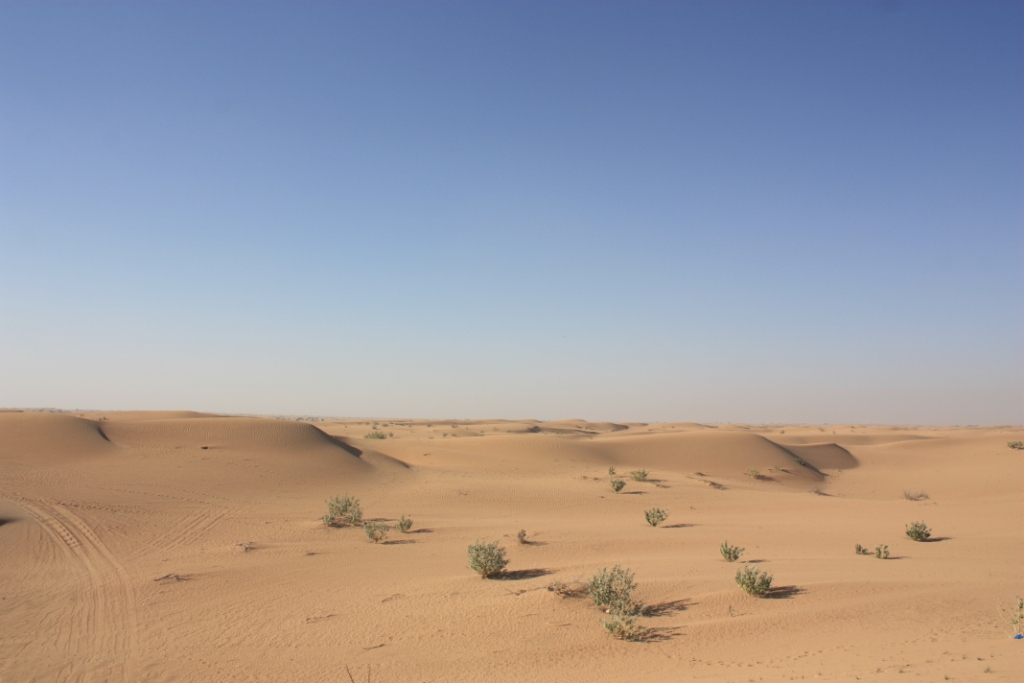
I met a traveller from an antique land
   Who said: Two vast and trunkless legs of stone
 Stand in the desert... Near them, on the sand,
   Half sunk, a shattered visage lies, whose frown,
 And wrinkled lip, and sneer of cold command,
   Tell that its sculptor well those passions read
 Which yet survive, stamped on these lifeless things,
   The hand that mocked them, and the heart that fed:
 And on the pedestal these words appear:
   "My name is Ozymandias, king of kings:
 Look on my works, ye Mighty, and despair!"
   Nothing beside remains. Round the decay
 Of that colossal wreck, boundless and bare
   The lone and level sands stretch far away.

Losers, Finders; Nester’s Blinders [Sonnet]

I ventured beyond civilization,
   and (by man's definition) I was lost.
 I knew no near city, state, or nation.
   Who knows what backwoods borders I'd crossed?
 I'd drifted down streams: still and rapid tossed,
   and when boat filled faster than I could bale,
 I took to foot. Onward at any cost!
   I passed over mountains and through their vales,
 and trudged the badlands, unparted by trails.
   But he who's lost is often he who finds,
 and I learned history's forfeit details
   in form of ruins in a sheltered blind. 
 Oh! What novel and beautiful sights
   are had by lost souls in eternal nights!

PROMPT: First Time

Daily writing prompt
What could you try for the first time?

Skydiving comes to mind. Particularly, because it seems like something that I’d like to do once, but then would have no pressing urge to repeat it, having had the experience. There are a lot of things in this world that I could try for the first time, but I’m getting old to be trying anything that might become an ongoing competing demand for my time and energy. For example, I’ve thought of doing scuba, but that seems like it would become a whole ordeal of maintaining certifications and feeling the need to keep doing it.

BOOK REVIEW: The Lost City of the Monkey God by Douglas Preston

The Lost City of the Monkey God: A True StoryThe Lost City of the Monkey God: A True Story by Douglas Preston
My rating: 5 of 5 stars

Amazon page


Preston tells the story of his participation in an expedition into the Mosquitia region of Honduras in search of a lost city, alternately called the White City (i.e. La Ciudad Blanca) or the City of the Monkey God. Preston was acting as a correspondent for National Geographic and was part of a larger team including a photographer, filmmakers, archaeologists, and a team of ex-Spec Ops escorts. It’s not a simple and straightforward tale of Indiana Jones types chasing after the artifacts of a long collapsed civilization (though it does capitalize on that sense of intrigue greatly from the title to the telling of both the historic and contemporary searches for this fabled lost city.) The book tells several stories that occur about and around this search, and they are arguably more interesting.

One of these side stories is the historic accounts of past explorers who searched for the White City. Those were the individuals who more closely corresponded to Indiana Jones–both because they didn’t have an airplane with a state-of-the-art Lidar system (lidar is the light/laser version of radar or sonar), and because they were more likely to engage in tomb-raiding and artifact robbery. This isn’t to say that the expedition that Preston was on didn’t have its share of snakes, quickmud, and other hazards that are the only reason that a huge city from a past civilization would remain undiscovered in the present day. The region in which the expedition took place had not only all the natural hazards of dense jungle, but the human hazards posed by operating in territory controlled by drug cartels. That said, they didn’t have to machete through hundreds of miles of jungle with no idea of where they were likely to find their objective.

One of the most interesting side stories occurred when Preston and many of the members of the expedition came down with leishmaniasis, a nasty tropical disease vectored by sandflies. The disease has a treatment that’s almost as likely to kill one as is the disease. It’s almost impossible to completely get rid of the disease. One can be cured in the sense of being made asymptomatic, but one may remain a potential carrier waiting to be bitten again and to pass the nasty parasite onto another sandfly so they can infect someone else. There are several elements of the disease story that are intriguing. The most interesting is speculation about the role that disease might have played in the sudden evacuation of this lost city. This is informed by a broader discussion of how “Old World” diseases spread through the “New World” with crippling effect. Another is how diseases are neglected when they almost exclusively infect poor and rural people (until a National Geographic correspondent tracks it back to the continental US, that is.)

For those outside of archaeology, one of the least interesting, but still interesting, side stories is that of the intense controversy in the field. Preston is very forthcoming about his talks with scholars who were angered and outraged by the use of terms like “Lost City” which hearken back to a period in which tomb-raiding was the norm and Westerners stole and shipped priceless artifacts back to the West by the ton. These internecine wars of academia reinforce the idea that this isn’t just musty history, but involves questions that many people feel intensely passionate about.

There is a photo section that provides images of both the cast of highly discussed people and a few of the artifacts uncovered. There’s also a section of sources and citations.

I found this book to be fascinating and I’d highly recommend it. Those interested in exploration and adventure tales will find it of obvious interest, but those with a curiosity about public health may find it unexpectedly of interest.

View all my reviews