PROMPT: Dogs or Cats?

Daily writing prompt
Dogs or cats?

Who would win in an interspecies death match? That’s a tough one. Dogs obviously have size and pack-fighting coordination, but cats are duplicitous, excel at the sneak attack, and are not constrained by moral conventions. (They’ll push things off the counter just to see them fall.) So, I doubt we’ll ever know.

BOOK: “Gut Feelings” by Gerd Gigerenzer

Gut Feelings: The Intelligence of the UnconsciousGut Feelings: The Intelligence of the Unconscious by Gerd Gigerenzer
My rating: 4 of 5 stars

Publisher Website – Penguin

Like Malcolm Gladwell’s Blink, Gut Feelings explores the circumstances under which intuitive decision-making has been shown to outperform rigorous and systematic reasoning. Gigerenzer is a psychologist and the Director of the Max Planck Institute for Human Development.

The central idea of this book is that our brains have evolved to engage in intuitive decision making, and that sometimes what looks like sloppy thinking has underlying benefits. Take – for example – the fact that many times people are asked a question that they don’t know the answer to, but they exploit their selective ignorance in a way that allows them to not only outperform those more ignorant than they, but also those less ignorant. Gigerenzer uses the example of students asked whether Milwaukee or Detroit has a bigger population. Often those who’ve only heard of one of the cities will guess that the one they know is bigger, and this tends to be right more often than not. Students familiar with both cities (but not knowing the precise answer) are more likely to stumble.

The book suggests that we tend to decide based on one key factor rather than the full “pros and cons” list for which many teachers and leaders advocate. The book has a fascinating chapter on how this all applies to healthcare decision-making. It provides insight into why the American healthcare system is so screwed up (high cost, low health outcomes.)

If you are interested in decision-making and the divergence between what we are taught to do and what most of us actually do most of the time (and why,) I’d highly recommend this book.

View all my reviews

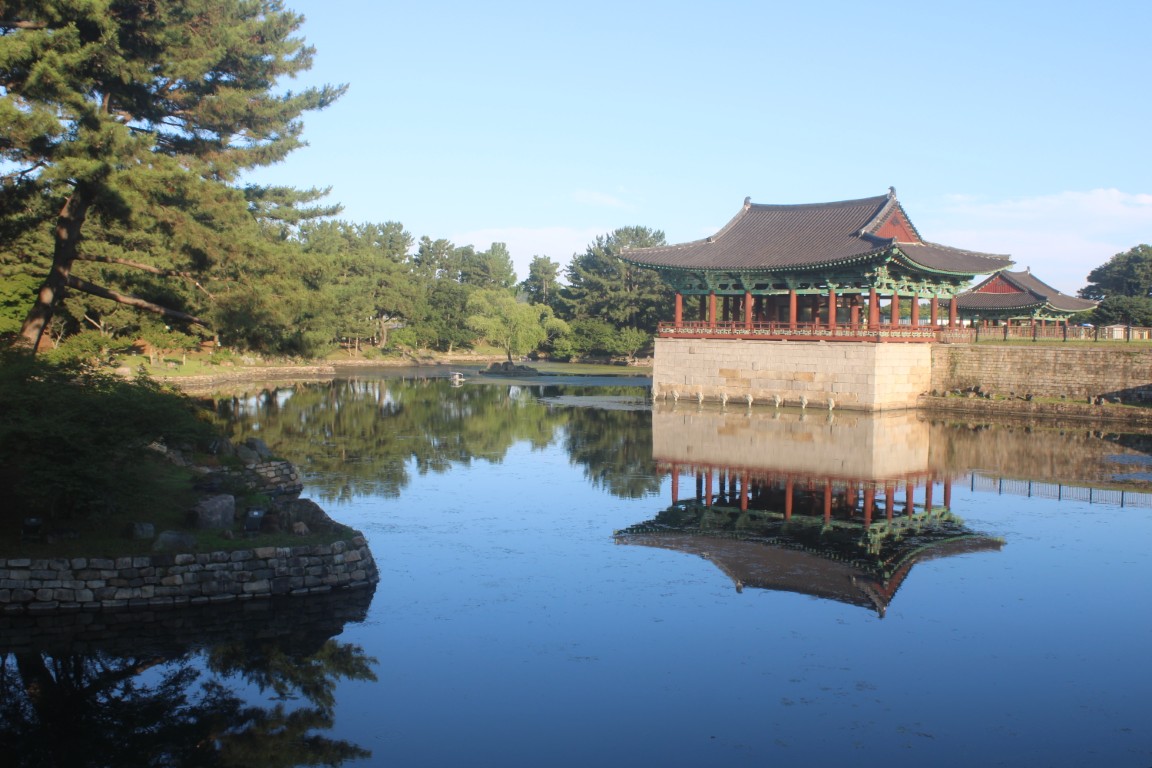
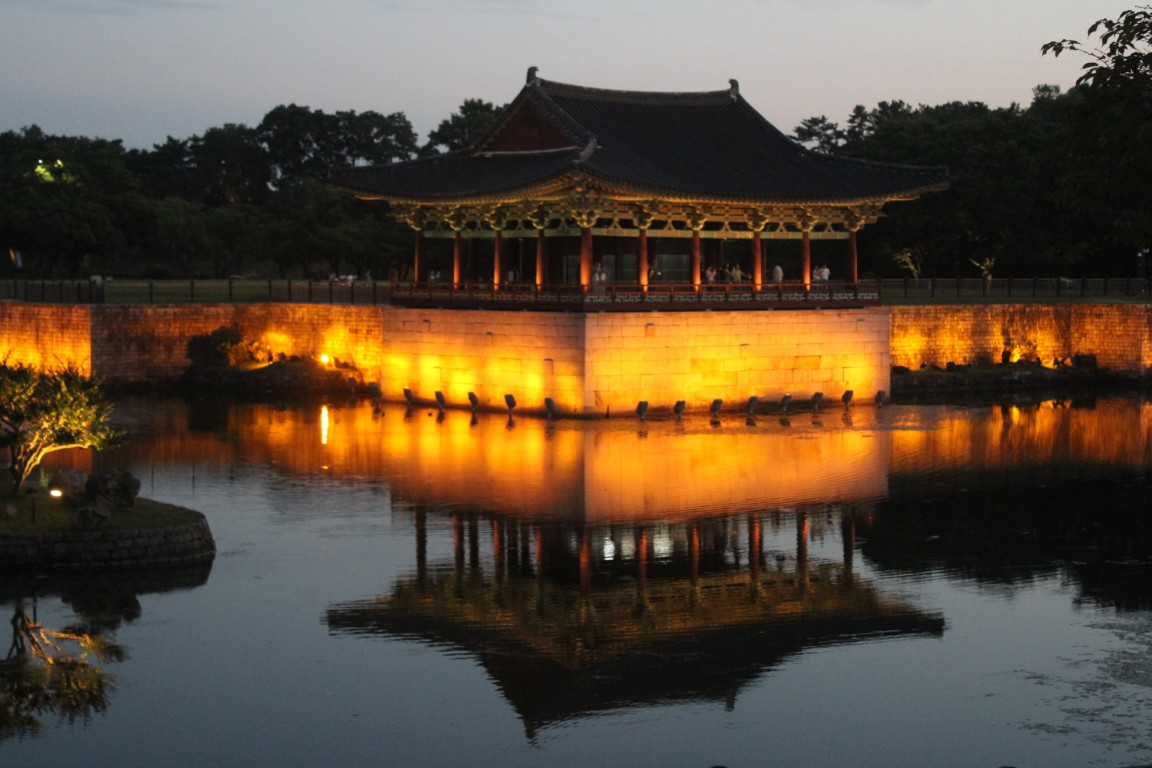
DAILY PHOTO: Wolji Pond Pavilions by Day & by Night

BOOK: “Breath” by James Nestor

Breath: The New Science of a Lost ArtBreath: The New Science of a Lost Art by James Nestor
My rating: 5 of 5 stars

Author’s Book Site

In this book, James Nestor takes an immersion journalism approach to reporting on the art and science of better breathing. In addition to participating in trainings on particular breathwork (e.g. Tummo / Wim Hof, Buteyko breathing, Sudarshan Kriya, the DeRose method, etc.,) he participates in a scientific studying involving closing off his nostrils for a few weeks and then systematically nose breathing for a few more. (The first half of which he describes as torturous.) In between discussions of his own experiences, he explores both ancient breathwork teachings and the discoveries of modern science.

While there’s not really anything new in this book, it does a good job of presenting the information in a clear and readable form. In truth, it would be hard to say something both profound and new on the subject, given that yogis, tantrics, Daoists, and others have been systematically observing and altering breath for centuries to improve health, concentration, and emotional poise. Even the seemingly modern systems are by-and-large variants of the old ways (e.g. Wim Hof breathwork adapts the Tummo of Vajrayana Buddhism, DeRose worked from ancient yoga teachings, and Andrew Weil’s 4-7-8 breathing is pretty much the 1:2:2 vrtti pranayama that yogi’s have practiced for centuries.) Still, despite the basic information in the book being widely available, there remains a crisis of bad breathing and the cascade of ill-health that results, therefrom, and so it is a valuable book. (The key takeaways are: nose breathe, breathe slowly and deeply, hyperventilate only consciously and occasionally, and elongate exhalation to facilitate relaxation.)

The newest information to me, personally, was that of Chapter 7, which dealt with the role that shifting to softer, cooked foods played in humanity’s proclivity for breathing problems. Chapter 1, which deals with humankind’s unique breathing issues, also provides insight into why people have so many problems with something so fundamental to life as breathing. Nestor also presented some of the breath-relevant insights of Albert Szent-Györgyi, a Nobel-winning biochemist whose work offered some insight into the connection between electrons and both cancer and aging. So, in addition to some nice reminders and references, I did learn a thing or two as well.

This is a fine overview of breath and how to improve it for better living, and I’d recommend it for anyone looking to learn more on the subject.

View all my reviews

“Epitaph On The World” by Henry David Thoreau [w/ Audio]

Here lies the body of this world,
Whose soul alas to hell is hurled.
This golden youth long since was past,
Its silver manhood went as fast,
An iron age drew on at last;
'Tis vain its character to tell,
The several fates which it befell,
What year it died, when 'twill arise,
We only know that here it lies.

PROMPT: Lose Track of Time

Daily writing prompt
Which activities make you lose track of time?

Everything but waiting the five minutes to press the plunger on the French press. As Tom Petty said, “The waiting is the hardest part.”

Busan Limerick

There was a young man from Busan --
'Twas up the hillside he lived on
That - pressed for time -
He bought a zipline,
But got stuck, dangling above Busan.

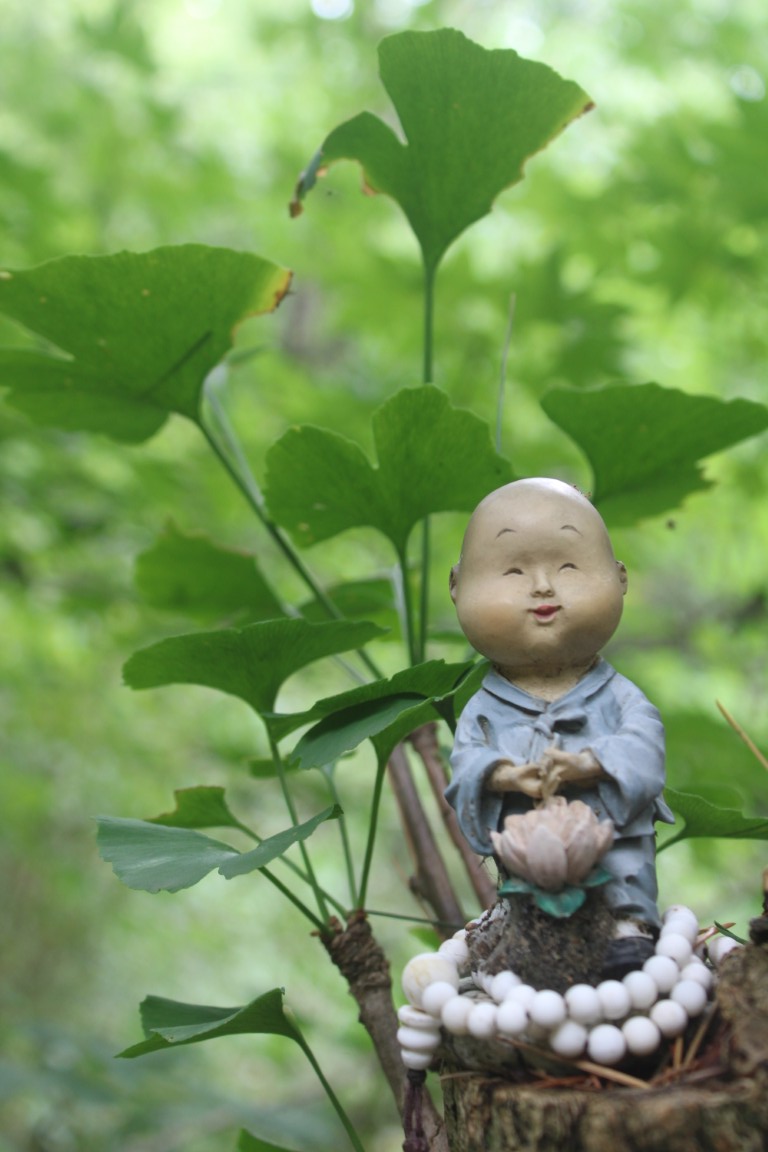
Cherubic Figurine [Haiku]

mountain forest trail:
cherubic figurine
cheers weary hikers.

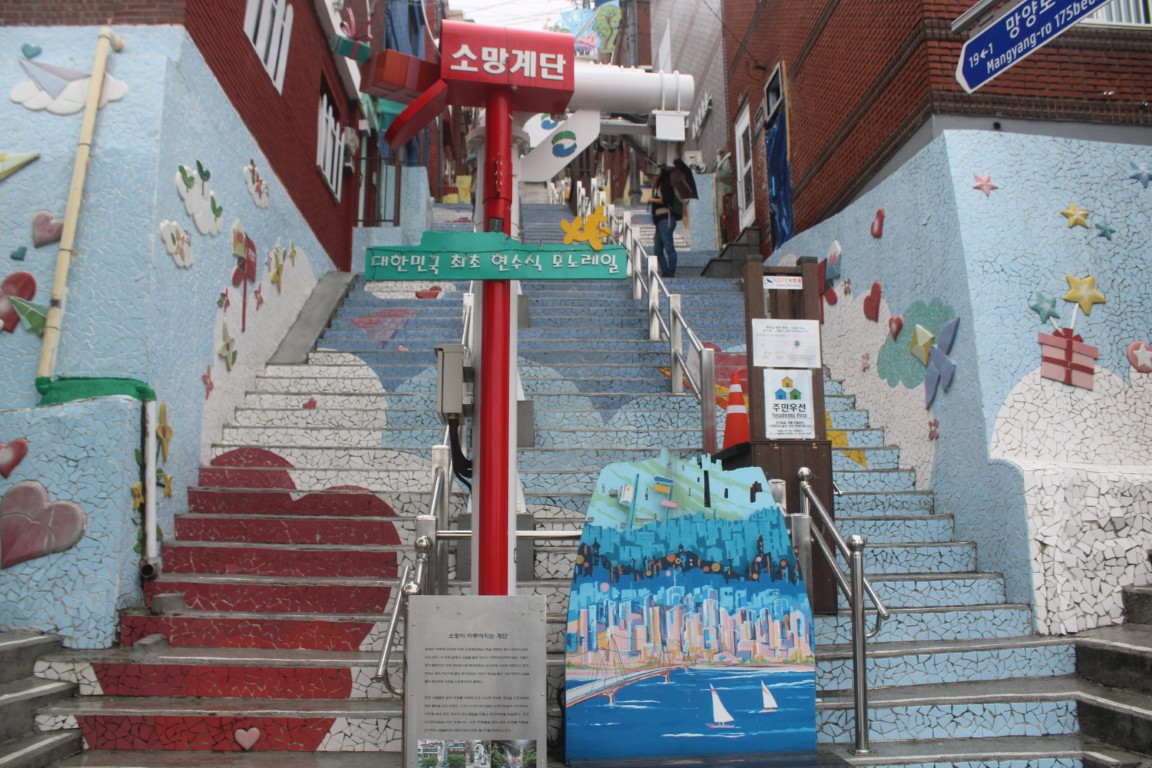
DAILY PHOTO: Busan Sky Capsules

“In Search of the Taoist, Chang” [寻南溪常道士] by Liu Changqing 刘长卿

I walk the narrow path,
Clogs divoting the moss.
White clouds over the shore;
Gate obscured by Spring grass.
Post-rain, I see the pines,
Follow stream to its source.
Flower-mind, then Zen Mind --
Arrived! Words have no force.

This is poem #136 of the 300 Tang Poems [唐诗三百首.] The original in Simplified Chinese goes:

一路经行处, 莓苔见屐痕。
白云依静渚, 春草闭闲门。
过雨看松色, 随山到水源。
溪花与禅意, 相对亦忘言。