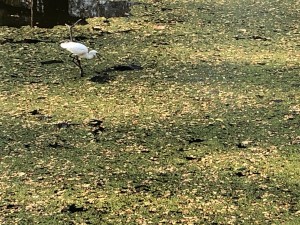
Last Hurrah [Haiku]

with foliage thinned,
the grassy undergrowth gets
one last time to shine.

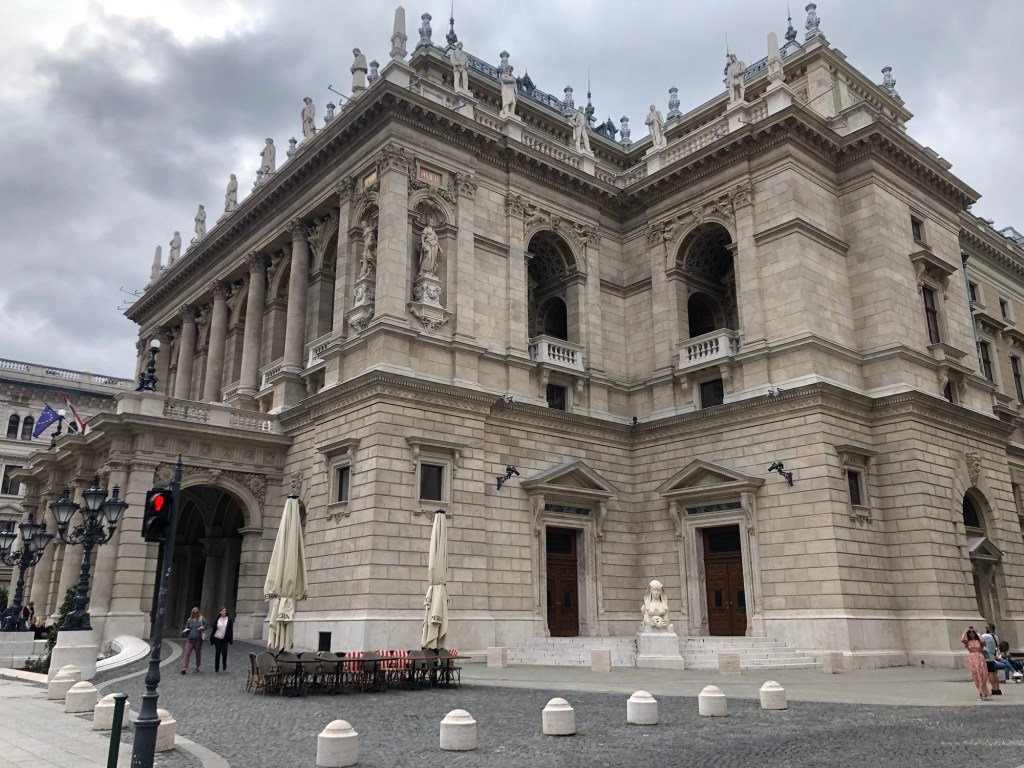
DAILY PHOTO: Hungarian Parliament on an Autumn Day

Image

BOOKS: “Southeast Asia: A Very Short Introduction” by James R. Rush

Southeast Asia: A Very Short Introduction (Very Short Introductions)Southeast Asia: A Very Short Introduction by James R. Rush
My rating: 4 of 5 stars

Publisher Site

I’ve been to most of the eleven countries of Southeast Asia, but still my questions are many. This short guide answered some of them. The book takes a largely historical approach, breaking the timeline into periods during which these countries were pre-nation-state kingdoms, then colonies, and then independent countries. While the guide is written by a historian and is organized by governance (i.e. who won the wars,) it does not solely address politics and regimes.

The guide also explores subjects such as religion. This was fortunate for me because a lot of my questions involve this topic. Why is the northern part of the region mostly Buddhist while the southern part is mostly Muslim? Why did Hinduism and other Indian religions (not inclusive of Buddhism, which virtually died out within India) almost entirely give way to other religions in this area, except for spotty exceptions (most notably Bali?) Incidentally, the former question is answered more than the latter, which makes sense as this is small book for a relatively large area, but more importantly for a long history. Southeast Asia has been a strategically and economically important place for centuries.

As a traveler, I found this book well worth reading as a way to gain insight into the region. It doesn’t dive deep into cultural questions (except a bit into religion,) and so there is much more to learn from other books. It does explore who governed these countries and how, and the last chapter brings the question up to date — reflecting on the political and economic changes in the last couple decades. If you’re curious to know more about Southeast Asia, in a way that doesn’t get too deep in the minutiae, this book is worth checking out.


View all my reviews

“Transcendent” [Poetry Style #21 (超诣)] by Sikong Tu [w/ Audio]

With no god, but with spirit;
With no mass of tiny things;
Up on high, with the white clouds --
Borne aloft on breezy wings.
From afar all seems in place.
When you arrive it's not there.
Just like acting with the Way
Leaves customs beyond repair.
Chaotic mountain woodlands,
Sweet green moss in the sunshine.
Keep reciting your mantra,
Till it's lost among the pines.

NOTE: The late Tang Dynasty poet, Sikong Tu (a.k.a. Ssŭ-k‘ung T‘u,) wrote an ars poetica entitled Twenty-Four Styles of Poetry (二十四诗品.) It presents twenty-four poems that are each in a different tone, reflecting varied concepts from Taoist philosophy and aesthetics. Above is a crude translation of the twenty-first of the twenty-four poems. This poem’s Chinese title is 超诣 and it’s been translated as “The Transcendental” and “Super”

PROMPT: Attention

What details of your life could you pay more attention to?

When I chop carrots, I should chop carrots; when I walk in the park, I should walk in the park; when I poop, I should poop.

Sneaky Trees [Senryū]

it seems trees sneak --
in ones and twos -- up the hill,
as the woods watch.

BOOKS: “Handbooks for Daoist Practice: Scriptural Statutes of Lord Lao” by Louis Komjathy [and Lord Lao]

Handbooks for Daoist Practice: Scriptural Statutes of Lord LaoHandbooks for Daoist Practice: Scriptural Statutes of Lord Lao by Louis Komjathy
My rating: 5 of 5 stars

Author Site

This paper presents exposition on, and translation of, an important Taoist work. Like many collections of sutras and other epigrams of wisdom, the “Scriptural Statutes of Lord Lao” are only a couple pages of sayings. To be more specific, they consist of nine practices (九行) and twenty-seven moral precepts. The bulk of the twenty-five-ish pages of this work are a scholarly background on the nine practices and twenty-seven precepts, plus back matter including references and the original (Chinese) “statutes.”

I read this because the nine practices seem like a concise statement of what it means to be Taoist (a topic that can be tremendously complicated given the varied sects, beliefs, and practices that all fall under the heading of “Taoist” — some religious, some philosophical, and some mystical.) Those nine practices are: non-action (which is much more complicated than just sitting on one’s bum,) softness, guarding the feminine, namelessness, stillness, adeptness, desirelessness, contentment, and knowing how and when to yield. The text offers some insight into where these practices come from (e.g. the points in the Dao De Jing that reverence them,) but the scope of the work is far to limited to gain a deep understanding of them (for that one will have to go elsewhere.)

I found reading this short work to be quite beneficial and insightful, despite its thin profile. I’m glad it includes the original text as well as provides citations, as therein much of its value lies.

View all my reviews

“I felt a Funeral, in my Brain” (340) by Emily Dickinson [w/ Audio]

I felt a Funeral, in my Brain,
And Mourners to and fro
Kept treading -- treading -- till it seemed
That Sense was breaking through --

And when they all were seated,
A Service, like a Drum --
Kept beating -- beating -- till I thought
My mind was going numb --

And then I heard them lift a Box
And creak across my Soul
With those same Boots of Lead, again,
Then Space -- began to toll,

As all the Heavens were a Bell,
And Being, but an Ear,
And I, and Silence, some strange Race,
Wrecked, solitary, here --

And then a Plank in Reason, broke,
And I dropped down and down --
And hit a World, at every plunge,
And Finished knowing -- then --

Vista Tree [Haiku]

a tree looms
over the valley;
beloved of hawks.