Your Life is Hard? Try Working with Ninjas,Pirates, and Smugglers!

Ninjas, pirates, and smugglers aren’t exactly chatty. They burn, or shred, their correspondence. They sow seeds of disinformation to confuse the authorities. They lurk in the inkiest of shadow worlds behind doors we don’t even know exist. Still, who wants to do a hatchet job on a pirate? Right?

Did I mention that these are characters in the novel that I’m currently revising (or did I let you believe I was talking about in-the-flesh smugglers so that you’d keep reading.) Sorry, no one ever accused me of NOT being a deceitful bastard. Well, my friend, you’re now more than Tweet deep in this post; that’s quite an investment; it’s the modern-day equivalent of having read The Iliad, so you might as well keep reading.

Kiss the Cobra (my third working title) features a cast of characters of not only the aforementioned occupations but also monks  (both the scholarly and  kick-ass kung fu varieties), an Emperor, a muay Thai master, and a secret society that makes ninjas look like chatty Cathys. Like all good lies, this novel begins with a seed of truth. That seed is the rescue of Emperor Go-Daigo from imprisonment by an evil (ok, quasi-evil) shogun in 1337.  From that seed, it’s my wild imagination run amok… or is it? The Emperor assigns the loyalist ninja who rescued him, Korando, to travel to Southeast Asia to acquire an artifact that legend has it will help him re-consolidate power.

Cut to the present day, a linguistically-talented young man, Matsuo (a.k.a. “Matt”), comes into possession of a scroll. The scroll is Korando’s journal, written and hidden as a confessional. Matt investigates Korando’s journal on an electronic bulletin board only to find himself being chased by nefarious characters. Matt discovers that there are still people willing to kidnap, kill, or commit treason for the secrets that Korando’s journal may possess.

The novel weaves the 14th century journal with this present-day cat and mouse game between the forces of good and evil. There’s murder and mayhem, love and betrayal, victory and defeat, virtue and vice; in short everything you love in a novel is densely crammed into this book.  There’s even one character who may or may not be a Zombie–I’ll let you be the judge.

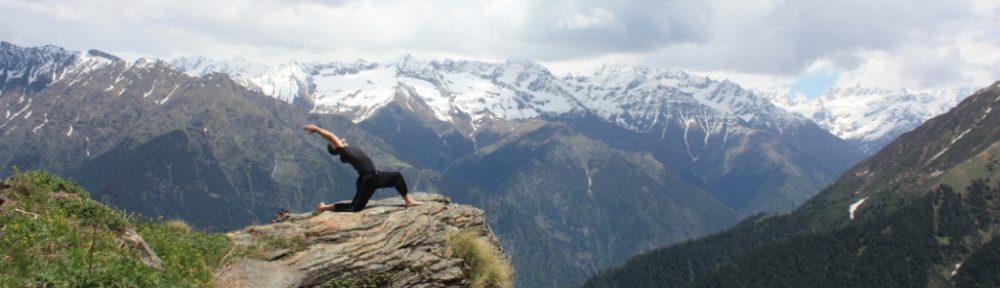
Now let me just add this screenshot of me to show you ho

Do you ever get a chill on the back of your neck?

Did you ever get an inexplicable chill on the back of your neck?

BOOK REVIEW: Smile When You’re Lying by Chuck Thompson

Smile When You're Lying: Confessions of a Rogue Travel WriterSmile When You’re Lying: Confessions of a Rogue Travel Writer by Chuck Thompson

My rating: 4 of 5 stars

Amazon page

Smile When You’re Lying gives the reader an insider’s view of the deceit rife in travel writing. In the process, Chuck Thompson tells a story of life on the vagabonding circuit. Instead of being a story of idyllic and pristine white sand beaches, it’s the story of drug- and booze-riddled expats and the prostitutes they frequent.

Thompson lived a colorful life. He tells of how his interest in Thailand began when he heard stories while in a jail in Alaska. He introduces cast of characters, such as Shanghai Bob, many of who are even more colorful than he. It’s this wild living that makes the book an interesting read, but, ironically, it also makes such stories impossible to sell to any of the travels magazines–all of which make money off of advertiser dollars, advertisers who have an interest in making travel seem safe, clean, and family-friendly.

Thompson tells of how he began teaching English in Japan, a common point of origin for expats taking to Asia. Japan has a large and well-developed program, called JET, that brings native English speakers to Japan to teach language or work in government offices as translators.

In addition to the intro on Thailand, a chapter on his Alaskan youth,and one on his JET days, there are chapters on Latin America, the Caribbean, the Philippines, and Eastern Europe. Furthermore, there is a chapter that lends travel advice for aspiring travel writers and one about what travel mags don’t want readers to know. It should be noted that besides having written for such magazines, Thompson did a stint as an editor as well.

Thompson also devotes a chapter to countering the myth that Americans are–on the whole–bigger travel bastards than the people of other Western nations.

If you are interested in travel writing or vagabonding, this is a worthwhile read.

View all my reviews

DAILY PHOTO: Graffiti Comedian, Suomenlinna

This is Sparta!

This is Sparta!

A couple years ago I saw this sign on Suomenlinna, a fortress island offshore from Helsinki. While it may not have been original, it made me laugh. The sign, meant to convey a fall hazard, featured a Sharpie marker addition of a kicking foot and a dialogue bubble proclaiming, “This is Sparta!.” If you don’t get this reference, you should see the movie 300. [Or, better yet, watch the clip below.]

TODAY’S RANT: Ambiguous Signage

Everyone sends an email or leaves a note on occasion that makes perfect sense to the writer, but which could mean any of a dozen things to the reader. That’s the price of doing business in a hectic world. However, if your job is making signs, it seems to me like cutting through the ambiguity would be important. Take the sign below, whose intended meaning is completely unclear to me.

Taken in Helsinki

Taken in Helsinki

A few of the possible meanings that sprang to mind were:
– “Give a girl a fist bump!”
– Pedophile-friendly zone
– Go Zone (i.e. they are walking away, so from that point you may only “go” and never “come”)
– Take Your Dad to School Day
– Midget Dating Allowed


Below is one that I think I comprehend, but you may disagree.

Taken in Phnom Penh

Taken in Phnom Penh

I’m pretty sure that it means, “Limbo dancing will be punished by God.” Granted I’m illiterate with respect to the squiggly language used in the caption and so maybe it says, “Watch out for falling snakes.”


Some signs seem to make perfect sense, but the context throws one a monkey-wrench. The sign below was seen on a little door of about 6X6 inches on the side of a tour-bus.

Seen on a bus in Helsinki

Seen on a bus in Helsinki

Now, obviously, this sign means, “Moose Fornication Zone.” However, how would you get the moose through that six-inch square portal?


Sometimes sign-makers add verbiage to reduce the ambiguity. This inevitably succeeds in making the sign more confusing than ever. I saw the sign below in a restaurant on Rue Sherbrooke in Montreal.

Taken in Montreal

Taken in Montreal

Now, seeing the photo, I was jonesing for some fatty, spicy pork product. However, every hetero male knows that you don’t ever want to be caught at a sausage fest.


I had a similar problem trying to decide whether to go into this gift shop at the Ming Tombs in China. The store bore this sign:

Taken at the Ming Tombs near Beijing, China

Taken at the Ming Tombs near Beijing, China

While I favor economic liberty, I’m willing to shop at a store that is state operated. However, it occurred to me that it could be the souvenirs that are state operated. What if they supplied a balding civil servant to operate the music box I bought there? That possibility was too creepy to consider.


Some signs are clear both pictorially and verbally, but, at the risk of digressing, one has to wonder if the sign is necessary.

Taken in  Budapest

Taken in Budapest

If there’s a completely opaque film of diarrhea floating on the water, do you really need to tell people not to go for a swim?


It’s true that some times ambiguity is strategic. Who would go through a door, if they saw the sign below posted on it?

Taken in Xian, China

Taken in Xian, China

Well, people do go into the DMV, so I realize there are some sadists who might be into being clubbed, starved, burnt, or being subjected to particularly fierce animal–such as an ill-tempered gerbil.


As I try live my life in a positive manner, I’ll leave you with an example of a sign-maker who got it right.

Taken in Arequipa, Peru

Taken in Arequipa, Peru

Now this is a sign that is completely unambiguous. Clearly, this sign was located at a Baptist church, and it means, “Boys and girls doing the twist in the same room will go to hell.”

BOOK REVIEW: 101 Great American Poems ed. The American Poetry and Literacy Project

101 Great American Poems101 Great American Poems by The American Poetry and Literacy Project

My rating: 5 of 5 stars

Amazon page

This is a collection of 101 poems by 39 different American poets. It begins with a poem by Anne Bradstreet in the 17th century and proceeds through to a work by W.H. Auden of the 20th century. In between are many poets that one would expect, such as Poe, Whitman, Dickinson, Sandburg, and Cummings. There are others that might be unexpected such as Abraham Lincoln, Herman Melville, and Stephen Crane. While the poems aren’t all jingoistic in nature, there is a recurring theme of celebration of America.

Most of the poems in this tiny anthology will be familiar to poetry readers. This is a $1 Kindle e-book of a Dover Thrift Edition, and so one won’t find living poets represented, or poems that tap into the zeitgeist du jour— at the risk of mixing loan words. However, most of these poems deserve to be read and reread.

A few of my favorites are below with title, author, and a fragment.

The Builders by Henry Wadsworth Longfellow
Nothing useless is, or low;
Each thing in its place is best;
And what seems but idle show
Strengthens and supports the rest.

The Raven by Edgar Allen Poe
Once upon a midnight dreary, while I pondered, weak and weary,

O Captain! My Captain! by Walt Whitman
O Captain! my captain! our fearful trip is done,
the ship has weather’d every rack, the prize we sought is won,

I’m nobody! Who are you? by Emily Dickenson
I’m nobody! Who are you?
Are you nobody, too?
Then there’s a pair of us–don’t tell!
They’d banish us, you know

The New Colossus by Emma Lazarus
“Give my your tired, your poor,
Your huddled masses yearning to breathe free,…

Solitude by Ella Wheeler Wilcox
Laugh, and the world laughs with you;
Weep, and you weep alone

War is Kind by Stephen Crane
Do no weep, maiden, for war is kind

Sence You Wend Away by James Weldon Johnson
Seems lak to me de stars don’t shine so bright,

Sympathy by Paul Laurence Dunbar
I know what the caged bird feels, alas!
When the sun is bright on the upland slopes;

Fire and Ice by Robert Frost
Some say the world will end in fire,
Some say in ice.
From what I’ve tasted of desire
I hold with those who favor fire

The Road Not Taken by Robert Frost
Two roads diverged in a wood, and I–
I took the one less traveled by,
And that has made all the difference.

Chicago by Carl Sandburg
They tell me you are wicked and I believe them, for I have seen your painted women under the gas lamps luring the farm boys.

Fog by Carl Sandburg
The fog comes
on little cat feet.

Thirteen Ways of Looking at a Blackbird by Wallace Stevens
Among twenty snowy mountains,
The only moving thing
Was the eye of the blackbird;

The Red Wheelbarrow by William Carlos Williams
so much depends
upon

a red wheel
barrow

The Love Songs of J. Alfred Prufrock by T.S. Eliot
The yellow fog that rubs its back upon the window-panes,

First Fig by Edna St. Vincent Millay
My candle burns at both ends;
It will not last the night;
But ah, my foes, and oh, my friends–
it gives a lovely light.

Ars Poetica by Archibald Macleish
A poem should not mean
But be

I, Too by Langston Hughes
I am the darker brother.
They send me to eat in the kitchen
When company comes,

Little Old Letter by Langston Hughes
You don’t need no gun nor knife–
A little old letter
Can take a person’s life.

Nothing struck me as conspicuously absent from this collection, but I’d be curious what poems people feel should (or shouldn’t) be in such a collection.

View all my reviews

DAILY PHOTO: Temple of Heaven Grounds in Beijing

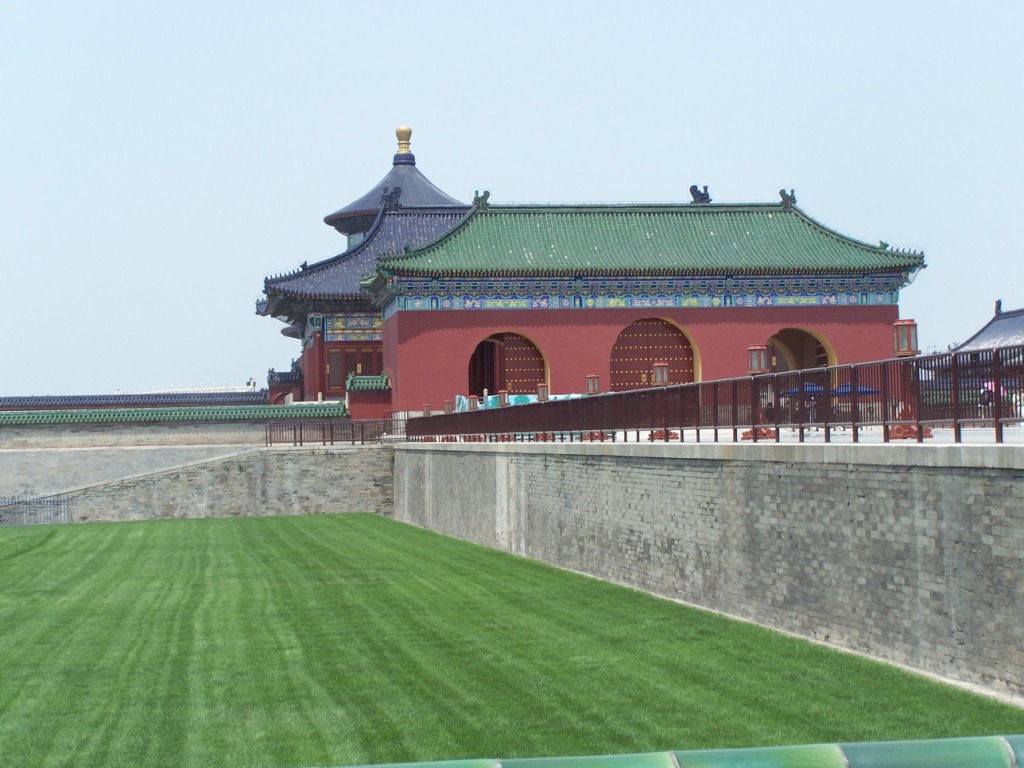
The pointy-topped building is the Hall of Prayer for Good Harvests

The pointy-topped building is the Hall of Prayer for Good Harvests

The Temple of Heaven is a complex of buildings used for Heaven worship.  It was built in the 15th century, and is a Taoist temple  (Heaven worship predates Taoism–though the Temple doesn’t.) The most distinctive building, the Hall of Prayer for Good Harvests–shown only partially in the picture–was built without any nails or spikes.

It’s  located in a beautiful park south of central Beijing. The park has a rose garden and is a popular hangout for people doing tai chi, playing instruments, and dancing.

BOOK REVIEW: Classic Haiku ed. by Yuzuru Miura

Classic Haiku: A Master's SelectionClassic Haiku: A Master’s Selection by Yuzuru Miura

My rating: 5 of 5 stars

Classic Haiku is a collection of 106 poems by masters such as Matsuo Bashō, Kobayashi Issa, and Yosa Buson. It’s logically arranged into five sections: Spring, Summer, Autumn, Winter, and New Year’s Day. While haiku has come to be thought of as any poem in a 5-7-5 syllable arrangement, those familiar with traditional haiku know that there are other requirements that are at least as fundamental as the syllabic arrangement. One of these is that the poem be pure observation devoid of exposition. Another criteria is that it be rooted in nature. A final criteria, historically, has been that the poem indicate the season, if not giving an explicit seasonal word or phrase. This makes the season an optimal organizational unit for the book.

One nice feature of this book is that it includes the English translation, the Japanese romaji version (i.e. the way it would be spoken in Japanese but using roman alphabet characters), and the version using the Japanese system of writing. Granted, for those who aren’t fluent in Japanese, these features might not seem to add much. However, sound can be evocative itself in poetry, and so it can be interesting to read the Japanese for that reason. Furthermore, there are those who argue that 5-7-5 syllables is not the closest facsimile to Japanese haiku for haiku written in English. Because of the average length of syllables, some say that a 2-3-2 accented syllable pattern for English haiku is closer to the original Japanese form. Reading the Japanese, gives one an idea of the sound characteristics of Japanese haiku.

[Furthermore, if one loves a haiku enough to want to get it tattooed in Japanese on one’s body, one can double-check the characters before one gets it done at a Chinatown tattoo parlor only to find that what one really has tattooed on one’s butt is, “Syphilitic nightmare – Ketchup bottle mayhem day – Rides the goat to school”]

Here’s a sampling my favorites:


the raftsman’s straw cape
brocaded with
the storm-strewn cherry blossoms
– Yosa Buson

calm and serene
the sound of cicada
penetrates the rock
– Matsuo Bashō

in summer grasses
are now buried
glorious dreams of ancient warriors
– Matsuo Bashō

oh, cricket
act as grave keeper
after I’m gone
– Kobayashi Issa

View all my reviews

TODAY’S PHOTO: Macaques of Lopburi

Monkey picnic

Pensive macaque reflects on a monkey’s life

BOOK REVIEW: Unbelievable by Stacy Horn

Unbelievable: Investigations into Ghosts, Poltergeists, Telepathy, and Other Unseen Phenomena from the Duke Parapsychology LaboratoryUnbelievable: Investigations into Ghosts, Poltergeists, Telepathy, and Other Unseen Phenomena from the Duke Parapsychology Laboratory by Stacy Horn

My rating: 3 of 5 stars

Amazon page

For 50 years a laboratory operated at Duke University that studied extra-sensory perception (ESP), ghosts, and other paranormal events. Today one can’t imagine an academic laboratory devoted to paranormal activity surviving, especially at such a prestigious university. Horn’s book takes one through the life of this lab. It describes phenomena debunked as either fraud or poor methodology, but it also discusses events and outcomes that have remained unexplained.

The central character in the book is J.B. Rhine, Director of the Duke Parapsychology Laboratory. Rhine was a botanist by training, but he developed an interest in parapsychology– eventually becoming the foremost expert in the, albeit dwarf, field.

When the lab opened in 1930, the universe of unknowns was much greater than when it closed in 1980. This was exemplified by Albert Einstein’s correspondence with Rhine, and the author of relativity’s attendance at a séance on one occasion. By 1980, having recorded some unexplained phenomenon, but having produced neither well-validated results nor explanations, the lab was looking increasingly like a boondoggle.

The phenomena studied included some that could be systematically studied  in the laboratory, as well as others that could only be observed in the field. The former being exemplified by the use of cards with shapes on them to study telepathy (as depicted by Bill Murray’s character in Ghostbusters.) The latter included the study of poltergeists or interviews of children about the lives of people who lived before their time (e.g. as Tibetan lamas are selected).

One of the questions confronting the investigators was whether those phenomena that could be studied in the lab were best studied there. While telepathy studies sometimes showed a weak but positive result, some thought that more robust results could only be attained under real world conditions.

In the 60’s, Timothy Leary came to call on Rhine. Leary, of course, thought hallucinogens were the key to unlocking the hidden powers of the mind. Rhine apparently took LSD on a couple of occasions before concluding that there was nothing but vivid chaos coming out of the experience. Still, there remained adherents to the notion that mind-altering drugs might unlock hidden potentials. Horn devotes several pages to the work of Sidney Gottlieb, the head of the CIA parapsychology program. It should be noted that the government programs were not stopped until the mid-90’s, fifteen years after Duke’s Parapsychology Lab shut down.

The last gasp of parapsychology was an attempt to determine if quantum entanglement might have any ramifications for ESP. Quantum entanglement is the situation in which two particles separated at great distance can influence each other instantaneously. Could the particles in two minds behave accordingly, and, if so, to what result?

View all my reviews

TODAY’S PHOTO: Providence Canyon in Southern Georgia

It started as a plow furrow, seriously.

It started as a plow furrow, seriously.