Don't be downcast, soon the night will come,
 When we can see the cool moon laughing in secret
 Over the faint countryside,
 And we rest, hand in hand.

Don't be downcast, the time will soon come
 When we can have rest. Our small crosses will stand
 On the bright edge of the road together,
 And rain fall, and snow fall,
 And the winds come and go.
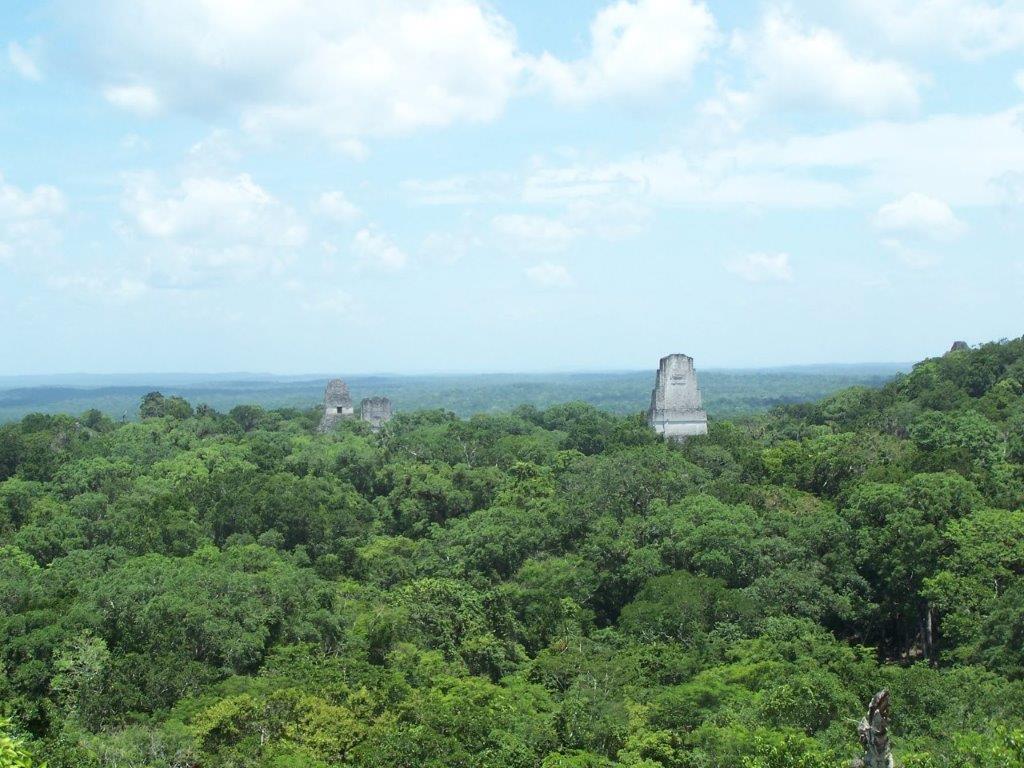
From the hilltop, one can watch nature reclaim: green grows up the glass, tufts sprout from each crevice and the man-made world is crevice-laden, one seed blown into a mortar crack will become a wedge -- a sprout that splits stone.
Concrete and steel prove digestible: time, water, oxygen, the enzymatic requirements are few.
Fungi blooms from a pile-full of dung.
I don't know whether it's a desirable meal, whether our trappings & vestiges are haute cuisine, or merely a meal of convenience.
This place was once with us. Now, it's hidden so well that it's become a myth, a once firm and tangible thing -- now invisible & conceptual.
I don't remember my dreams -- not in the middle of the night and not in the morning.
But, sometimes, I catch a glimpse at a random instant: composing a poem, reflecting on a passage from a book, eating a cracker...
But my dreams are like frightened animals, turning my attention directly upon them, makes them skitter off...,
vanishing into the thicket.
My dreams vanish like they were never really there, and I am left wondering just what I saw.
The harder I try to remember, the more severely I scrub my mental hard drive, purging all shapes and motions, until my recollection is nothing but a vague residue of feeling.
I don't KNOW that it was a dream.
I couldn't swear to it.
All I know is that it's an image that I can't tie to my waking life, can't tie to any person, place, or thing I know to be real.
(And, often enough, it's an image that couldn't exist in the real world.)
I couldn't remember it as a dream, but - somehow - I intensely FEEL that it was a dream,
but the Dream is deep down in its hole, shaking like a critter that was almost snatched up by a monster too awful to contemplate....
When I heard the learn'd astronomer,
 When the proofs, the figures, were ranged in columns before me,
 When I was shown the charts and diagrams, to add, divide, and measure them,
 When I sitting heard the astronomer where he lectured with much applause in the lecture-room,
 How soon unaccountable I became tired and sick,
 Till rising and gliding out I wander'd off by myself,
 In the mystical moist night-air, and from time to time,
 Look'd up in perfect silence at the stars.
Twelve o'clock. Along the reaches of the street Held in a lunar synthesis, Whispering lunar incantations Dissolve the floors of memory And all its clear relations, Its divisions and precisions, Every street lamp that I pass Beats like a fatalistic drum, And through the spaces of the dark Midnight shakes the memory As a madman shakes a dead geranium.
Half-past one, The street lamp sputtered, The street lamp muttered, The street lamp said, 'Regard that woman Who hesitates towards you in the light of the door Which opens on her like a grin. You see the border of her dress Is torn and stained with sand, And you see the corner of her eye Twists like a crooked pin.'
The memory throws up high and dry A crowd of twisted things; A twisted branch upon the beach Eaten smooth, and polished As if the world gave up The secret of its skeleton, Stiff and white. A broken spring in a factory yard, Rust that clings to the form that the strength has left Hard and curled and ready to snap.
Half-past two, The street lamp said, 'Remark the cat which flattens itself in the gutter, Slips out its tongue And devours a morsel of rancid butter.' So the hand of a child, automatic, Slipped out and pocketed a toy that was running along the quay. I could see nothing behind that child's eye. I have seen eyes in the street Trying to peer through lighted shutters, And a crab one afternoon in a pool, An old crab with barnacles on his back, Gripped the end of a stick which I held him.
Half-past three, The lamp sputtered, The lamp muttered in the dark. The lamp hummed: 'Regard the moon, La lune ne garde aucune rancune, She winks a feeble eye, She smiles into corners. She smoothes the hair of the grass. The moon has lost her memory. A washed-out smallpox cracks her face, Her hand twists a paper rose, That smells of dust and old Cologne, She is alone With all the old nocturnal smells That cross and cross across her brain.' The reminiscence comes Of sunless dry geraniums And dust in crevices, Smells of chestnuts in the streets, And female smells in shuttered rooms, And cigarettes in corridors And cocktail smells in bars.
The lamp said, 'Four o'clock, Here is the number on the door. Memory! You have the key, The little lamp spreads a ring on the stair; Mount. The bed is open; the tooth-brush hangs on the wall, Put your shoes at the door, sleep, prepare for life.'
In a square hut -
 beside a craggy pass -
  lived a Crouching Tiger,
 a man of spontaneity
  who danced to no music,
  staggered when sober,
  rested in times of urgency,
  & labored when there seemed
     to be nothing in need of doing.

He was courted by Emperors,
 but shunned them.
  The only way the Emperor
     could get him to visit was
    to order his exile.









 Tiger Riding for Beginners