PROMPT: Community

Daily writing prompt
How would you improve your community?

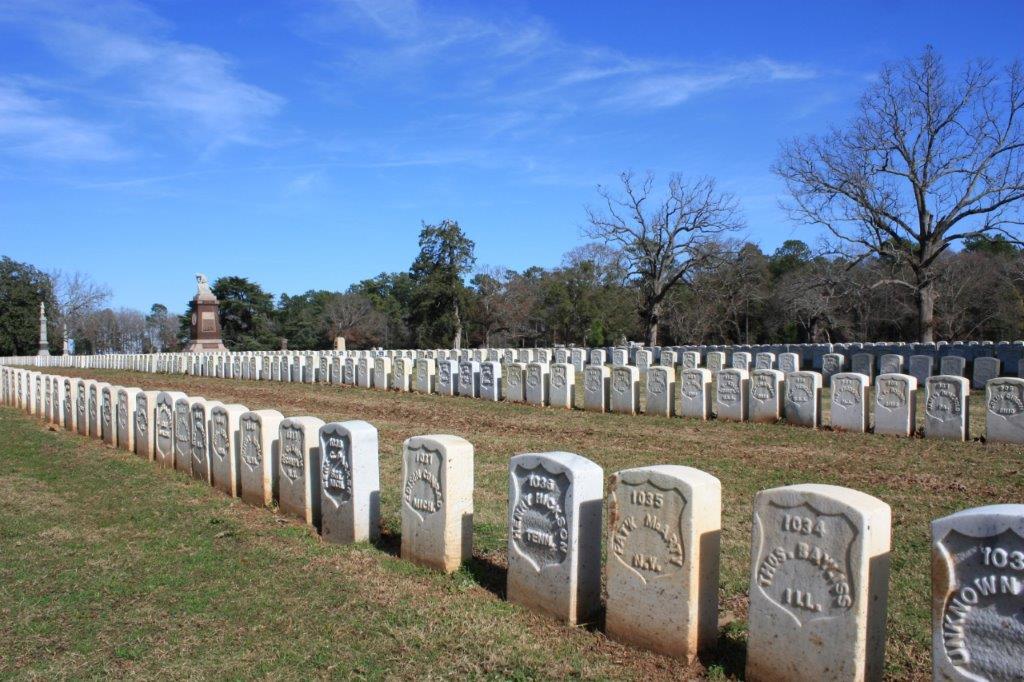
That’s a tough one because while I see value in communities, I’m also concerned that there is a rising trend toward tribalism and nationalism that will not be good for anyone — not to mention a shift toward virtual communities where anonymity and disconnect lead to people to act as though they were raised by hyenas. (I do know that, in reality, that’s an insult to the marvelous hyena, but I think it makes a sort of point for the non-hyena expert.)

I’ve been amazed at how India manages to have an intense sense of community in such a vastly super-tribal environment. (I’m using “supertribe” in Desmond Morris’s sense — i.e. a community which is too big for everyone to know everyone else, and which has a group dynamic that reflects that fact.) But it’s not as though there isn’t a dark side to this intensity of community — patriarchy, sectarian conflict, disempowered societal segments, etc.

America, by comparison seems to be experiencing a dearth of true community, which is driving people toward virtual “communities,” and in virtual communities people seem to fall into the shittiest versions of themselves. Not to mention the lack of community’s contribution to what I’ve heard called a “mental health crisis.”

I guess my preferences would be that community be: 1.) real and not virtual. 2.) that it exploit the advantages of diverse membership instead of wallowing in homogeneity and group think. 3.) that it doesn’t create overclasses and underclasses. And that, 4.) Community norms minimally negate individual freedoms.

That said, I’m not at all sure that the above criteria can be reconciled. Maybe the tradeoffs are too strong. Maybe – in our super-tribal world – the closest-knit society will always be the most xenophobic [fearful / disliking of outsiders,] and maybe tolerance and egalitarianism will always be accompanied by societal degradation. I have observed a strong inclination for people to think of compassion as a zero-sum game.

As I said, a tough one.

“Once there came a man” by Stephen Crane [w/ Audio]

Once there came a man
Who said:
"Range me all men of the world in rows."
And instantly
There was a terrific clamor among the
people
Against being ranged in rows.
There was a loud quarrel, world-wide.
It endured for ages;
And blood was shed
By those who would not stand in rows,
And by those who pined to stand in rows.
Eventually, the man went to death, weeping.
And those who stayed in the bloody scuffle
Knew not the great simplicity.

PROMPT: Power

Daily writing prompt
If you had the power to change one law, what would it be and why?

That no individual would have the power to unilaterally change any law.

Because if we all had the power to change one law it would be chaos, like in “Bruce Almighty.”

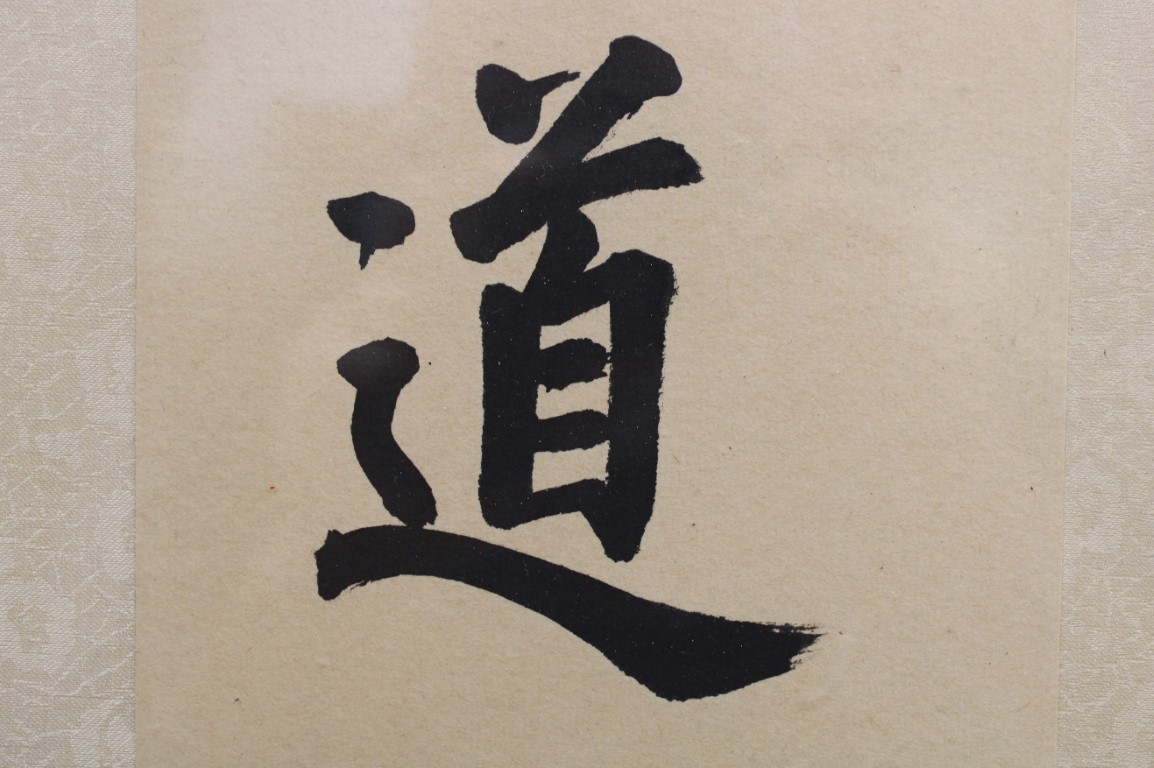
BOOKS: 道德经 by 老子 [a.k.a. Daodejing by Laozi]

老子道德经校释(简体中文版): 中华传世珍藏古典文库 (Chinese Edition)老子道德经校释(简体中文版): 中华传世珍藏古典文库 by 王弼
My rating: 5 of 5 stars

Available in Traditional & Simplified Chinese [w/ multiple translations] at YellowBridge

Packed into the 81 brief chapters of this book is the core Taoist philosophy on life, human relationships, governance, and war. Most often, it offers a wisdom that turns conventional wisdom on its head, advocating for inaction over action, less over more, simplicity over complication, and for recognizing the usefulness of what isn’t.

Some of the book’s central ideas are captured in these quotes:

上善若水。水善利万物而不争. “The greatest good is like water. It benefits all without fighting.” [Ch. 8]
金玉满堂,莫之能守 “A house full of jade and gold cannot be guarded.” [Ch. 9]
知人者智,自知者明。胜人者有力,自胜者强。“He who knows others is smart; he who knows himself is enlightened. He who conquers others has power; he who conquers himself is mighty.” [Ch. 33]
柔胜刚,弱胜强。“Softness overcomes hardness; weakness overcomes strength.” [Ch. 36]
道常无为而无不为。“The Dao is constant inaction, yet nothing is left undone.” [Ch. 37]
善者,吾善之;不善者,吾亦善之;德善。“The good, I treat well; the bad, I also treat well. Yeah Virtue!” [Ch. 49]
知者不言,言者不知。“He who knows does not speak; he who speaks does not know.” [Ch. 56]
千里之行,始于足下。“The journey of a thousand li (“miles”) begins with a single step.” [Ch. 64]
天之道,不争而善胜 “The way of heaven is to win without fighting.” [Ch. 73]
信言不美,美言不信。“True words aren’t pleasing; pleasing words aren’t true.” [Ch. 81]

I think this is one of those works that should be read and reread. It may help rewire your brain in useful ways.

View all my reviews

FIVE WISE LINES [November 2024]

Inspiration enters at the border between hard work and laziness.

Lu juren in “Poets’ jade splinters” [Trans. by Barnstone and Ping in The ART Of Writing]

I will not own anything that will one day be a valuable antique.

Miyamoto musashi in “My way of walking alone” [Dokkōdō] (Trans. by Teruo machida)

A house full of gold and jade can’t be guarded.

Laozi in the DAo De jing [Ch. 9]

Writing is a struggle between presence and absence.

Lu ji in The ART of Writing [Trans. by Barnstone and ping]

The best leaders remain unknown; the next best are praised; the next best are feared, and the worst are mocked.

Laozi in dAo de Jing [Ch.17]

Five Wise Lines (August 2024)

Empires arise from chaos, and empires collapse back into chaos. This we have known since time began.

The romance of the three kingdoms by luo guanzhong

Being poor is a mere trifle. It is being known to be poor that is the sting.

Jerome k. jerome; “On being hard up”

The art of war teaches us to rely not on the likelihood of the enemy’s not coming, but on our own readiness to receive him…

Sun tzu; The art of war

It is impossible to enjoy idling thoroughly unless one has plenty of work to do.

Jerome k. Jerome; “On being idle”

The wise man, like a child, can be filled with wonder at anything.

Tibetan proverb

Five Wise Lines [June 2024]

The man who says to me, “Believe as I do, or God will damn thee,” will presently say, “Believe as I do, or I shall assassinate thee.”

Voltaire, in On superstition

The real voyage of discovery lies not in seeking new landscapes but in having new eyes.

Marcel proust

The translation of a poem having any depth ends by being one of two things: Either it is the expression of the translator, virtually a new poem, or it is as it were a photograph, as exact as possible, of one side of the statue.

Ezra pound

The people are of supreme importance to the ruler,
food is of supreme importance to the people.

Chinese adage

All translators face two choices: leave the reader in peace and drag the author closer, or leave the author in peace and drag the reader closer.

Friedrich schleiermacher (1768-1834)
[Referenced in Twenty-Nine GOODBYES, ed. by timothy billings]

PROMPT: Elections

Do you vote in political elections?

Not as religiously as I did in my youth. Counter to the general trend of younger people hollering and protesting but not showing up to the polls, and thus not influencing change because politicians are cued into to the older crowd that tends to show up hell or high water.

BOOKS: “The Dangerous Life and Ideas of Diogenes the Cynic” by Jean-Manuel Roubineau

The Dangerous Life and Ideas of Diogenes the CynicThe Dangerous Life and Ideas of Diogenes the Cynic by Jean-Manuel Roubineau
My rating: 5 of 5 stars

Amazon.in Page

This is a translation of a French book about the life and philosophy of Diogenes the Cynic. It’s a thin volume, as there is much that’s unknown about the life of Diogenes, and the dearth of surviving texts means that some of what is believed about Diogenes and Cynic philosophy maybe corrupted by the reports of detractors. I learned a great deal from reading this book, but not because I learned much new about Diogenes, himself. The colorful anecdotes from his life have been extensively discussed.

With respect to what I did learn, it largely fell into three categories. First, I gained insight into the context and environment in which Diogenes lived. Second, I discovered that many of the stories of Diogenes’ life are far less certain than we have been led to believe through the presentations of them in so many books. For example, we know Diogenes was exiled from his native Sinope in relation to a scheme involving currency debasement. This is often straightforwardly stated as “Diogenes was a counterfeiter,” but Roubineau shows that we don’t know much (if anything) about the degree to which Diogenes was involved (i.e. whether he was mastermind, accomplice, or an unwitting pawn.) Third, I benefited from the comparing and contrasting of Cynic philosophy with that of predecessors (e.g. Socratics) and successors (e.g. Stoics,) and – in a few cases – comparisons between Diogenes and other Cynics.

The book consists of four chapters. The first is a discussion of what is known about Diogenes as a historical figure. The second focuses on the Cynics views on economy, wealth, and related ideas. The third explores the Cynic view of the human body and related topics like sex, pleasure, and pursuit of health and well-being. The last chapter considers Diogenes as a teacher and the Cynic approach to practicing philosophy.

I’d highly recommend this book for readers interested in philosophy.


View all my reviews

PROMPT: Ban

If you could permanently ban a word from general usage, which one would it be? Why?

I would ban the word ban because banning is not a thing that should exist. It is not an impulse one should have.