PROMPT: Romantic [Or, romantic]

Daily writing prompt
What’s your definition of romantic?

Depends on the context. If I’m thinking about poetry or philosophy (which I often am,) then it pertains to the early nineteenth century movement that counterpoised the Enlightenment. Those “Romantics” disliked what they saw as the cold rationality of Enlightenment thinking; they valued spiritual and mystical experiences, and they believed it was important to not throw out the spiritual “baby” with the bathwater. That is, like many Enlightenment thinkers, they realized that it was necessary to jettison many of religion’s noxious ideas (e.g. the concept of “chosen people”) and also realized that mindlessly following moral dictates that may or may not have made sense in the pre-Christian Levant could be detrimental to their present-day life experience. However, unlike most Enlightenment thinkers, they did find value in spiritual views of the world as well as in the pursuit of mystical experiences. William Blake (even though he is often labeled pre-Romantic) provides an excellent example. His poems are spiritual to the core, and yet explicitly reject a lot of the moralizing and toxic aspects of conventional religion.

Of course, that variety of “Romantic” is usually given a big-R, and so I suspect the question is after a more colloquial definition. With that in mind, I believe “romantic” means “that which facilitates the unity of two (or more, I don’t judge) people in an immersive intimate experience of each other during a common period of time.” I’m not big on trappings. I think people obsess over trappings because it allows them to slack on the physical / cognitive demands of being fully engaged. This is why sex (done well) is such a great tool both for relationship building and for personal development. It makes it relatively easy (i.e. rewarding) to stay fully engaged in a common experience and in the moment, and to not fall into the attentional abyss.

PROMPT: Self-Care

Daily writing prompt
How do you practice self-care?

1.) Move my body often and with vigor. 2.) Eat my veggies. 3.) Rest as though it’s an essential part of the process of living (i.e. not as though it’s goofing off between “doing stuff.”) 4.) Drop anything without value, making personal development as much a process of stripping away as it is of adding to.

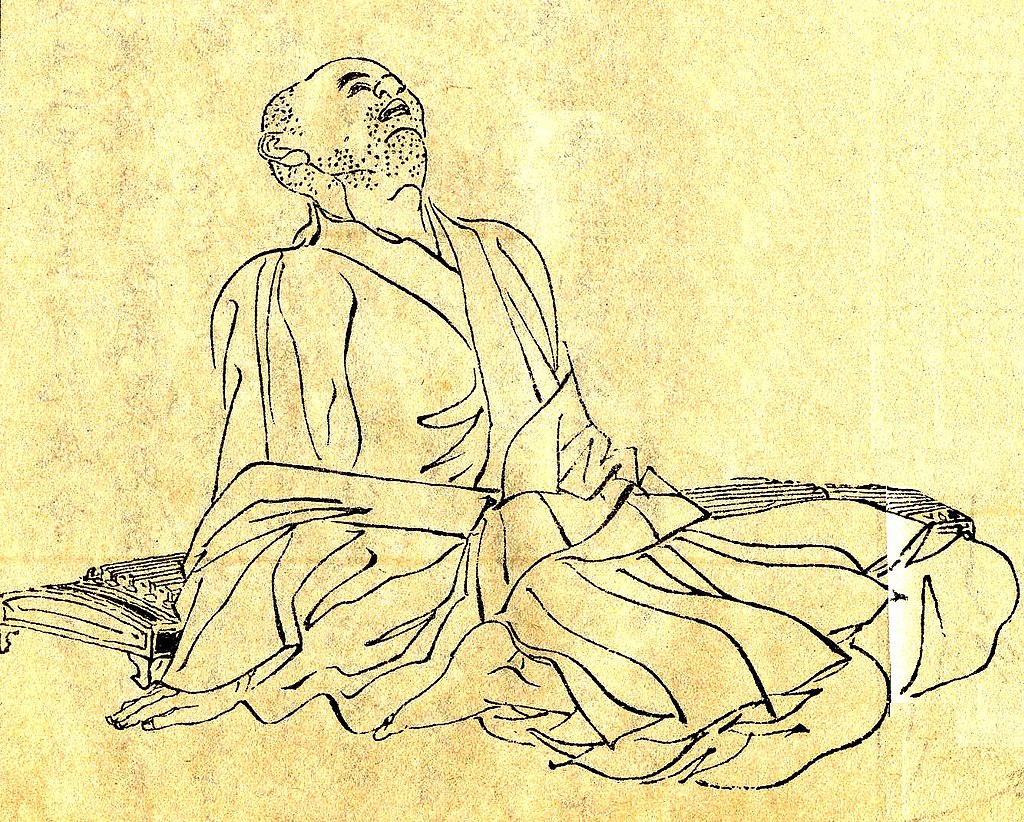
Five Wise Lines from Chōmei’s Hōjōki

drawing by Kikuchi Yōsai

On flows the river ceaselessly, nor does its water ever stay the same.

 Kamo no Chōmei, Hōjōki

No one owns a splendid view, so nothing prevents the heart’s delight in it.

Kamo no Chōmei, Hōjōki

Knowing what the world holds and its ways, I desire nothing from it, nor chase after its prizes. My one craving is to be at peace; my one pleasure is to live free from troubles.

Kamo no Chōmei, Hōjōki

These days, I divide myself into two uses — these hands are my servants, these feet my transport.

Kamo no Chōmei, Hōjōki

When I chance to go down to the capital, I am ashamed of my lowly beggar status, but once back here again I pity those who chase after the sordid rewards of the world.

Kamo no Chōmei, Hōjōki

Reference: Saigyō Hōshi, Kamo no Chōmei, Yoshida Kenkō. 2021. Three Japanese Buddhist Monks. New York: Penguin Books. 112pp.

Available Here

PROMPT: Good Life

Daily writing prompt
What are the most important things needed to live a good life?

1.) Good company; 2.) studiousness; 3.) a sense of humor, and 4.) the capacity to let go of that which has no value.

PROMPT: Three Books

Daily writing prompt
List three books that have had an impact on you. Why?
Leaves of Grass by Walt Whitman

This poetry collection teaches that most challenging of human skills: how to be insanely confident that you can do anything without being a jerk about it. (Also, how to see beauty beyond the societal consensus of what’s beautiful.)

Zhuangzi by Zhuangzi

The virtues of a carefree, spontaneous, minimalist, and down-to-earth approach to living explained through tiny stories.

The Tragedies of William Shakespeare by William Shakespeare

A master class in things that can turn a life into a tragedy.

Titus Andronicus: Live by the sword = tragedy (An eye for an eye, and everyone dies.)

Romeo & Juliet: Grudges (+ Lust) = tragedy

Julius Caesar: handing your adversary the mic (/ the fickleness of crowds) = tragedy

Hamlet: indecisiveness = tragedy (i.e. On or off the crazy-bus.)

Othello: jealousy = tragedy

Macbeth: excessive ambition = tragedy

King Lear: needing gratuitous signs of affection = tragedy

Timon of Athens: expectations of reciprocity = tragedy

Anthony & Cleopatra: mixing one’s love and work lives = tragedy

Coriolanus: a crotchety old warrior in peace time = tragedy

Five Great Yarns from Kahlil Gibran’s The Madman

The MadmanThe Madman by Kahlil Gibran
My rating: 5 of 5 stars

Project Gutenberg Page

The Madman is a collection of poems and short fiction (often micro-fiction) of a philosophical nature. The protagonist claims he became a madman when a thief broke into his house and stole his masks, the masks that people wear to fit into society and appear “normal.” Beyond the thread created by this mad character, the entries meander along, each with its own moral and with little discernible overarching plot.

There are many clever stories in this collection, offering food-for-thought on religion, philosophy, and psychology. I’ll discuss five of my favorites:

“The Sleepwalkers” A mother and daughter are both sleepwalkers. When they are somnambulating, they speak to each other in horribly cruel terms, but when they wake up, they display (at least a veneer of) love and affection. Besides demonstrating the nature of the aforementioned masks, the loss of which gets one designated “crazy,” this story encourages the reader to discern the differences between conscious and subconscious mental activity.

“War” This one presents an analogy for war in which a thief breaks into the wrong building, walks into a machine, pokes his own eye out, and then takes the building owner to court seeking “justice” for his lost eye. The craftsman / shop-owner says he can’t lose an eye because he won’t be able to do his work, but he knows a neighboring craftsman who could have his eye removed without great loss of productivity. This story builds upon the well-known “An eye for an eye…” Bible verse with the added absurdity of violence being doled out randomly and without concern for whether the victim had anything to do with the events in question.

“The Wise King” A disgruntled witch poisons a city well with a substance that makes drinkers insane. The King avoids the well water and is spared insanity. However, the townspeople begin to plot against the king because, in their insanity, they believe him (as one who acts differently) to be insane. The king eventually drinks the well water in order to come back into synch with his subjects. This entry speaks to the arbitrary nature of classification of sane and insane, an idea that has been discussed in modern times by mental health experts such as R.D. Laing.

“The Two Cages” A bird is caged next to a lion. The bird’s confidence provides the central lesson, knowing they’re both imprisoned separately, the bird refers to the lion as “fellow prisoner.” The power dynamic has changed from that of the jungle. Perhaps, the bird has even happily exchanged its freedom — either for safety or to tear the lion down a little.

“The Eye” In this story, the other sense organs mock the eye after it comments upon how grand a mountain is. The ear can’t hear the mountain and the skin can’t feel the mountain. Therefore, the other senses assume that the eye is either lying or is delusional. This tale speaks to the risk of denying something based on one’s own limited perception.

This book was originally published in 1918 and is in the public domain (most places.) It’s definitely worth the short time investment required to read it.

View all my reviews

PROMPT: Quote

Do you have a quote you live your life by or think of often?

Four, actually:

Be kind, for everyone you meet is fighting a hard battle.

Plato (attributions vary)

There is nothing either good or bad, but thinking makes it so.

William Shakespeare (in HamLet)

Contentment comes not so much from great wealth as from few wants.

Epictetus

If you reject the food, ignore the customs, fear the religion, and avoid the people, you might better stay home.

James a. Michener

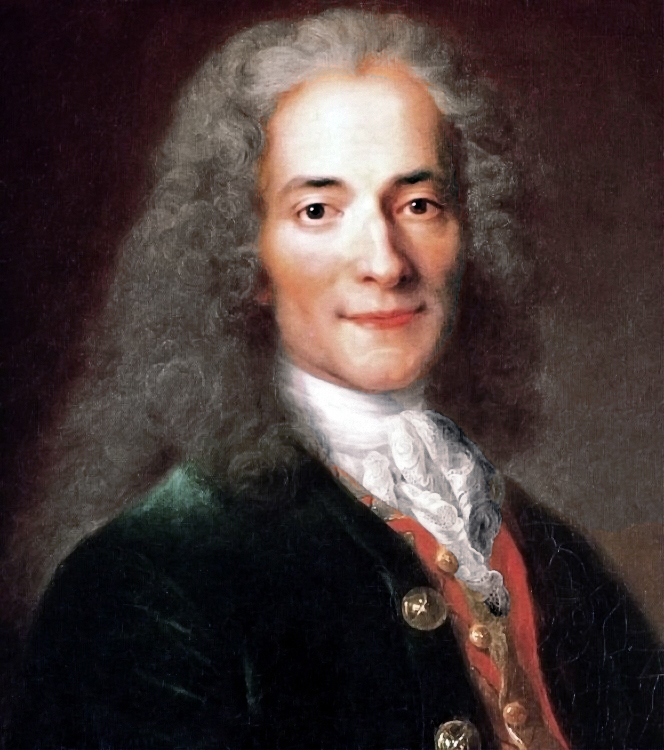
Food for Thought [Voltaire & Smartphones]

When Voltaire said:

“Once a nation begins to think, it is impossible to stop it.”

I don’t think he’d anticipated smartphones.

The Most Important Lesson in All of Human Living [DAILY PROMPT]

Describe something you learned in high school.

A Psych teacher told us a story of what he called “a gestalt of expectations.” A man from a city in the East is driving out West, and he passes a gas station – despite being low on fuel. (He’s used to gas stations being everywhere.) Anyhow, he runs out of fuel. He can’t see anything around except desolate desert bisected by a line of asphalt. He decides to walk back to the gas station he passed ten miles back. There is no one traveling on this remote stretch of desert road. As he’s walking in the intense heat, it comes to his mind that the employee at the service station is really going to gouge him on the price of gas and a jerry can. As he walks and walks, skin prickling with the heat, he keeps thinking about how he’s going to get screwed by the gas station attendant and also how he’ll be chided and ridiculed for running out of gas in the middle of the desert. He imagines it in great detail. Finally, bedraggled and with heaving breaths, he arrives at the station. The gas station attendant rushes out to help this poor man, and the man punches the attendant square in the nose (for all the offenses taking place solely in the man’s mind.)

In a broader formulation, I think this is the most important lesson any human can learn. Our personal perception of what we experience is not equal to what it is that we experience (the exterior world.) This is why some people dealt a crappy hand can turn it into a wonderful life, and also why some people who seem to have it all commit suicide in the prime of life.

I could be angered or dismayed that the single most important lesson I learned in secondary school was via off-curriculum ramblings during an elective class, but I choose not to. Instead, I’ve been trying all my life to make that bit of knowledge into wisdom.

The Good, the Bad, and the Bat-Shit Crazy of The Republic by Plato

INTRODUCTION: The Republic is the most read and discussed of the Socratic dialogues written by Plato, and for good reason. It offers some intriguing ideas that have influenced philosophy, politics, religion, and even science fiction to this day. That said, the book isn’t without its stinkers, and many people have reasonably asked whether a state or nation employing all of Plato’s guidance wouldn’t be more dystopian than utopian. To avoid the error committed by many religious people regarding scriptures (and probably by a few scholars regarding Plato’s work,) we shouldn’t ignore the parts that are — let’s say…, complete lunacy, and also shouldn’t contort language and reason to make the questionable ideas palatable. With that in mind, we’ll start with a couple of The Republic‘s banana ideas before examining a few that have stood the test of time.

PLATO’S WAR AGAINST POETRY & THE ARTS: In The Republic, Plato goes on a tirade against the arts on the basis that they aren’t truthful and that they encourage readers and viewers to behave from the lesser elements of their “soul” – the emotional and desirous bits. Plato’s condemnation of art is informed by two of his major teachings. First, the “tripartite soul” in which reason is king and emotion and desire are lesser elements of humanity that should be checked by reason. Ergo, he doesn’t like that reading Homer makes people weepy or riled up. Second, in Plato’s conception of forms, for any given thing under the sun there’s an ideal form that was made once by god, then there are actual items made by craftspeople, and then there are the imitations made by artists. In Plato’s mind, this leads to a warped situation in which the craftsmen stray from the ideal by copying what artists presented, rather than seeking the divine ideal, and Plato is all about the pursuit of the ideal.  

Plato would grant artists the opportunity to prove that their works are of service to the state, but barring their demonstration that the art advances reason and is truthful it would be outlawed. To me, it sounds a lot like the Soviet Union where art was mostly jingoistic pieces that encouraged a Stakhanovite effort. At any rate, I’ve got to give this one to Aristotle who saw the cathartic value of art and poetry. There is value in the existence of a wide variety of modes of expression and ways of thinking about the world. It allows us to break new ground. I was just reading a book by Yeats in which he wrote: “Everything exists, everything is true, and the earth is only a little dust under our feet.” This may not seem like sound thinking in our rational age, but I like that such a counterweight exists.

THE SHARING OF WIVES & CHILDREN BY THE RULING CLASS: Plato’s Republic would be ruled by a philosopher-king, and it requires the ruling class to be specially educated and controlled to avoid pursuit of wealth and comfort. One such control is that the aristocrats can only have kids (unaborted ones, at least) under certain conditions, but the children wouldn’t know who their biological parents were.

Plato is no fan of democracy. In fact, democracy is the stage right before tyranny in Plato’s model of political devolution. [It starts with Plato’s ideal, Aristocracy, which devolves into Timocracy with the declining character of leaders (because they’re not well-trained philosophers.) Timocracy devolves into Oligarchy as the lesser quality ruling class becomes obsessed with wealth. This leads to Democracy because people get fed up with the oligarchs having all the money and they revolt. But since anyone can become leader, a tyrannical type will eventually rise to the top and use an iron-hand to maintain power.]

There’s a reason why, to my knowledge, this approach has never been tried, despite the immense popularity of Plato and The Republic. It relates to a previously mentioned point as it pertains to Plato’s ineptitude with regards to human psychology. Plato [like several other philosophers of the ancient world] believes one can kill emotion and desire through the power of pure reason. Reason maybe our smartest mental activity, but it’s neither fastest nor particularly capable of steering the ship. At any rate, this joint parentage scheme makes me think of the Harry Harlow experiments in which baby monkeys were put either with a wire mesh or cloth-covered “mother surrogate.” We’ve learned a lot about how psychopaths are made since the days of Plato. I think Plato’s guardian class would be chock-full of lunatics.

THE SUPREME IMPORTANCE OF GEOMETRY: I love a triangle as much as the next fellow, but I think Plato may have gone a little overboard with his views about the transcendent value of geometry.

WHAT PLATO GOT RIGHT: There are definitely ideas in The Republic that continue to contribute to humanity’s understanding of itself and the world. Here are a few good reasons to read The Republic — despite all that junk mentioned above.

THE ALLEGORY OF THE CAVE: Because of sci-fi works such as The Matrix, this is probably the most widely cited bit of The Republic. However, it’s not just a fictional or hypothetical idea anymore. One will also see references to Plato’s cave in nonfiction works of neuroscience and physics that deal with how our perceived world doesn’t equate to the objectively real world. Plato offers a very clear thought experiment in Book VII.

PLATO’S GENDER PROGRESSIVISM: In The Republic, Plato argues that women can be guardians of the state as well as men, and that women must receive the same education in order to do so. Lest the feminist jump all-in on Plato, it should be noted that he maintained some pretty misogynist / patriarchal views (e.g. women being like children,) as well as some bizarre ones (e.g. the wandering womb hypothesis.) However, in at least that one regard, Plato was ahead of his time.

KNOWLEDGE ACQUIRED UNDER COMPULSION OBTAINS NO HOLD: Given that Plato’s Republic would feature some harsh limitations of individual freedom, from lack of artistic expression to inability to know one’s own mom, it’s nice to see that he held some freedom-loving views, as well.

COURAGE IS STAYING SPIRITED IN ONE’S DECISIONS IN THE FACE OF PLEASURE OR PAIN: Much of The Republic is an attempt to define and distinguish the cardinal virtue of justice. In fact, in many Socratic dialogues, the primary objective is to understand virtues, and they’re often discussed at length, not always resulting in a firm conclusion. I like the definition of courage provided in The Republic. One makes a decision based on the virtuous path, and sticks with it even when pleasure or pain might divert one.

THE TENDENCY TOWARD DIMINISHING EFFECTIVENESS IN POLITICS: While I share neither Plato’s enthusiasm for aristocracy nor his pessimism about democracy (there’s a reason the world has abandoned the former in preference for the latter,) I do think there’s a potential grain of truth in his model of political devolution that’s mentioned in Books VIII & IX. I think there can be a proclivity towards weaker and less effective leaders over time under certain systems of governance. One can see this in the Soviet Union, and arguably in North Korea. It seems possible that there are systemic causes for devolution of political effectiveness, at least under certain approaches to governance. (I’d argue this is one of the reasons that democracy is best, because it can fully overturn the apple cart of governance rather than struggling with whatever continuity issues contribute to declining effectiveness.)

READ THE REPUBLIC, both for its great and for its dystopian ideas, because even when it’s bad, it’s stimulating.