BOOK: “Spring, Summer, Asteroid, Bird” by Henry Lien

Spring, Summer, Asteroid, Bird: The Art of Eastern StorytellingSpring, Summer, Asteroid, Bird: The Art of Eastern Storytelling by Henry Lien
My rating: 4 of 5 stars

Publisher Site

I enjoyed, and was stimulated in thought, by the first half of this book, as well as by sections of the latter half, especially in the fourth chapter. (It’s arranged into four chapters, echoing the book’s central idea of a unique four-act approach to storytelling prevalent in Eastern societies. I’ll get to why I was not so fond of Ch. 3 later.) The book employs exemplary works of literature, film, and even video games to support the claim that there’s not just one approach to sound story crafting — but, rather, that Eastern societies developed distinct modes of storytelling reflecting their values and worldview. (A note on the use of the word “Eastern”: while the book draws heavily on East Asian sources, it tries to make a broader case suggesting not only South Asia but also the Middle East [i.e. everyplace not big-W “Western”] fit this mold. The book might have made a stronger case sticking to East Asia, as – for example – it might be argued that Arabia / Persia of the time of One Thousand and One Nights, being Abrahamic, was closer to Europe than East Asia in values and worldview. To be fair, the author does argue that some parts of that book are believed to have come from farther East (India and, possibly, beyond.))

The book proposes that there are two (arguably three) styles of story construction that are distinctly Eastern. The first is a four-act structure that is far from just a rejiggering of the three and five act forms with which English Literature students will be familiar. Incidentally, the book’s rather unusual title maps to the elements of this four-act structure. The second involves circular and nested story structure. I don’t know that the author succeeds in (or even seeks to) convince the reader that this is a uniquely Eastern approach, but -rather – makes an argument as to why it is prominent in Eastern storytelling.

The author picked an excellent set of works to illustrate his points. Generally, the works are both well-known and well-received among diverse audiences. The films he employs as cases include Parasite, Everything Everywhere All at Once, and Rashomon (the latter also being a literary work.) Lien uses one of my favorite Haruki Murakami novels Hard-Boiled Wonderland and the End of the World as a critical example. I was not at all familiar with the video games he describes (beyond name,) but – given that I’d at least heard of them – I assume they are pretty popular (though I can’t speak to whether they have any discernable stories and will have to take that on faith.) [I’m not sure whether One Thousand and One Nights was a good choice for Eastern literature, though it is an excellent choice as of nested structure.]

As for why I didn’t care for the book’s third part. I should point out that is the most philosophical (and the least explicitly concerned with story) part of the book, and it aims to show how values and worldview vary across cultures such that there are differences in story structure and crafting between different parts of the world. That could be a laudable objective and germane to the book’s point and it’s not why I found this section to be muddled and ineffective. The problem is that the chapter oversimplifies the issue in a way that seems to undercut a broader central argument (that Eastern modes of storytelling are underrepresented outside of the East.) Instead of suggesting that people experience conflicts along continuums (e.g. individual to group identity) and that Easterners tend come to different conclusions than Westerners do based on differing values and cultural perspectives, it engages in an elaboration of the distinctions that seems to suggest there’s some unbridgeable gulf of understanding between cultures (and, quite frankly, kind of feels like it’s shifted from making the aforementioned point to just being a thinly veiled critique of Western culture — which is fine, but probably belongs in a different book — or maybe a manifesto.) But if there were no basis for stories to resonate across this gulf, then not only wouldn’t Parasite and Everything Everywhere All at Once have killed it at both the Oscars and American box office, there’d be no reason for artists to attempt to branch out and tells stories across tribal lines. Without establishing a basis for story resonance, it’s ridiculous to argue that Hollywood should use Eastern modes of storytelling and Eastern worldviews to a greater extent. (A profit pursuing entity is always going to seek the largest possible customer base.) I’m not attempting to negate the argument that there are different approaches to storytelling among different peoples nor that more diversity of approaches shouldn’t be seen across cultures. I’m saying that this chapter doesn’t well support the argument for greater representation of Eastern modes of storytelling outside of Eastern outlets (publishers, film studios, etc.) because it spends so much time arguing the cultural differences that it doesn’t indicate how cross-cultural story resonance is possible.

Overall, I found this to be an interesting and thought-provoking read, though it was – for me – a bit muddled in the middle.

View all my reviews

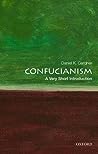
BOOKS: “Confucianism: A Very Short Introduction” by Daniel K. Gardner

Confucianism: A Very Short Introduction (Very Short Introductions)Confucianism: A Very Short Introduction by Daniel K. Gardner
My rating: 5 of 5 stars

Publisher Site – OUP

This is a brief guide to Confucianism from the early life of Confucius (孔子 -Kǒngzǐ) to the ups and downs the philosophy experienced in the twentieth century. It has chapters exploring the system’s thinking with respect to personal development as well as with respect to governance and also discusses how later thinkers (most notably Mencius and Xunzi) expanded on Confucius’s ideas — but also created schisms. The book examines the laudable elements of the philosophy such as its sanction of benevolence among leaders, but also its less laudable elements such as its unenlightened views on women and what they are capable of [and, of course, the many ideas in between that could be seen in varied lights.)

As with other books in this series, it has a few graphics as well as a bibliography and further reading section.

I found this book to be readable, well-organized, and of a level appropriate for its intended purpose. I’d highly recommend it for individuals looking for a concise introduction to Confucianism.

View all my reviews

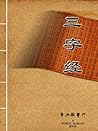
BOOKS: 三字经 by 王应麟 [“Three Character Classic” by Wang Yinglin]

三字经三字经 by 章炳麟
My rating: 5 of 5 stars

Available online — Project Gutenberg

This is a Confucian primer written in lines of three characters. It’s a children’s book in the sense that it’s aimed at children, but not necessarily with respect to being presented in a manner most conducive to childhood learning. (While it’s concise, the material isn’t presented in an interesting or memorable form. i.e. It’s intended for brute force rote memorization.)

The book consists of five sections, ranging between twenty-four and one hundred and six lines (72 to 318 characters per chapter.) The first introduces Confucian virtues. The second offers a broad overview of classics of Chinese philosophy. The third section lists the dynasties of China. The penultimate section describes ideal behavior from a Confucian perspective. The last, and briefest, section is largely a pep talk on studying hard.

As someone learning Mandarin Chinese, it’s interesting to see how sentences are formed in this sparse format, and this text offers insight into Chinese history and philosophy, in addition to providing a good early reader.

If you are interested in learning elementary Confucianism or you’re learning Chinese and looking for short and simple texts for reading, I’d recommend one look into the Three Character Classic.

View all my reviews

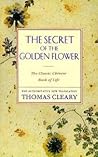
BOOKS: “The Secret of the Golden Flower” ed. / trans. by Thomas Cleary

The Secret of the Golden Flower: The Classical Chinese Book of LifeThe Secret of the Golden Flower: The Classical Chinese Book of Life by Lü Dongbin
My rating: 4 of 5 stars

Online – Archive.org

This is a manual on Taoist inner alchemy practices, particularly a meditative practice called “turning the light around.” The book has been attributed to Lü Dongbin, said to be an immortal who lived during the Tang Dynasty, though there are differing views about the manual’s actual origins. While it is nominally a Taoist manual, it also discusses the Buddhist approach extensively (and Confucian ideas to a lesser extent) such that it could be considered a Buddhist teaching as much as a Taoist one.

The Cleary translation seems to exist not merely to provide an English translation of this Chinese manual, but to combat the misunderstandings perpetrated by the earlier English translation, that of Richard Wilhelm, a translation famously associated with the psychoanalyst Carl Jung. Neither Wilhelm nor Jung had any depth of understanding of Taoist and Buddhist methods and philosophy, and Wilhelm’s grasp of the Chinese language, itself, seems to have been fairly rudimentary. (At least the Chinese of the 1600’s, which is when the edition that Wilhelm is believed to have worked from is dated.) Thus, there is a lot of peddling of the notion that the ideas of this manual were in line with twentieth century psychotherapy in ways that were really not true — either because Wilhelm was mistaken or wanted them to be true or some combination, thereof.

The translation, itself, is quite short and makes up less than half of the text length of this book. More than half consists of extensive notes as well as an Afterward. While I have complained many times about publishers padding out pamphlet length publications to make them salable at book prices, in this case I believe the “ancillary” matter is helpful to achieving a better understanding of the text. The translation itself is not only sparse but features a bit of Taoist and Buddhist arcana that is likely to be unfamiliar — even to those with some understanding of the traditions. The notes and afterward help one to comprehend this book’s ideas much better.

If you’re interested in Taoist inner alchemy or Buddhist meditative practices, this book is worth checking out. That said, it can be a bit of a tedious read, flipping between the translation and the notes to make sense of ideas that don’t readily translate.

View all my reviews

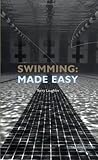
BOOKS: “Swimming: Made Easy” by Terry Laughlin

Swimming Made Easy: The Total Immersion Way for Any Swimmer to Achieve Fluency, Ease, and Speed in Any StrokeSwimming Made Easy: The Total Immersion Way for Any Swimmer to Achieve Fluency, Ease, and Speed in Any Stroke by Terry Laughlin
My rating: 4 of 5 stars

Google Books Page

I learned a lot from this book’s emphasis on how to smooth out and lengthen one’s strokes. The author describes his approach as teaching “fishlike” swimming, and effortlessness is emphasized.

The book covers all four of the strokes one sees in competitive swimming (i.e. crawl [a.k.a. freestyle,] backstroke, breaststroke, and butterfly.) For each stroke one learns how to improve balance, stroke length, and fluidness, as well as a bit about breath and coordination.

The book is presented in two parts. The first is the more theoretical bit and the second describes drills one can use to improve one’s technique. Part one is longer, more detailed, and written in more readable prose. Part two is shorter, more picture-laden, and tends to stick to bullet points. Photos are monochrome, mostly from above water level, and of varying degrees of clarity / informational value.

My biggest peeve with the book is that it frequently breaks into advertisement for other products (i.e. DVD’s [dates the book, as I’m pretty sure no one has an operational DVD player anymore] and gear.)

I’d recommend this book for readers interested in learning to swim more efficiently. The book is geared toward competitive swimmers interested in shaving time, rather than recreational swimmers who are just interested in a move pleasant experience (e.g. if one swims for fun, one will probably not be running a sequence of drills as that kind of defeats the fun of the activity.)

View all my reviews

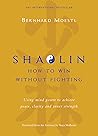
BOOKS: “Shaolin: How to win without fighting” by Bernhard Moestl

Shaolin: How to win without fightingShaolin: How to win without fighting by Bernhard Moestl
My rating: 4 of 5 stars

Publisher Site

This is a self-help book that nominally draws on the philosophy of Shaolin Kung fu and its Chan Buddhist underpinnings, but – more broadly – employs quotes and examples from many, mostly Eastern, sources. For example, the ideas and stories of Miyamoto Musashi are perhaps as common as any source (Musashi was Japanese, not Chinese, and was not noted for being Buddhist. In his own words, he respected the gods and buddhas, but didn’t expect their help.)

The book offers a fine discussion of Eastern philosophic thought in action, particularly that which arose from warrior sources, but it isn’t particularly ground-breaking in any way. For those who like homework, the book does include many exercises to make the reading a more interactive experience.

I enjoyed reading this book well enough, but it didn’t distinguish itself and will soon fall into the mind-space of a fuzzy amalgamation of similar books I’ve read over the years.

View all my reviews

BOOKS: “Jñāna-Yoga: The Way of Knowledge” by Ramakrishna Puligandla

Jnana-Yoga--The Way of KnowledgeJnana-Yoga–The Way of Knowledge by Ramakrishna Puligandla
My rating: 5 of 5 stars

Google Books Page

This is one of the most useful books I’ve read on the topic of Jñāna-yoga — the approach to yogic philosophy employed by the studious / inquisitive (in contrast to Bhakti-Yoga [the yoga of those for whom faith and devotion works] and Karma-Yoga [the yoga for those for whom a course of self-less action appeals.]) There are Jñāna-yogic Hindu sects and Buddhism — in general — can be thought of as a school of Jñāna-yoga. The author draws from the teachings of both, principally Sankara for Hindu thinking and Nagarjuna for the Buddhist approach.

A word of warning, the author is a scholarly philosopher, and so — while not as unreadable as many works of academic philosophy — it will be a slog for those who are not used to reading scholarly writing.

That said, Puligandla does a fine job of laying out what he views as the central tenets of Jñāna-yoga in a concise fashion and reviewing them at the end. This is not to say I would agree with all that he proposes, herein. In particular, his Chapter 3 conclusions about consciousness are insufficiently justified to be considered core principles of Jñāna-yoga (in my view.) Of course, the beauty of Jñāna-yoga is that it not only doesn’t insist upon coming to the same conclusions, it generates explanations as to how it’s perfectly possible / reasonable to come to different conclusions (see “The Principle of Superimposition,” herein.) Furthermore, since the author is reporting the ideas of Sankara and Nagarjuna, I can’t really hold these ideas against him.

If you’re interested in Jñāna-yoga, and can handle scholarly prose, I’d highly recommend this book.

View all my reviews

BOOKS: “How to Fight Tough” by Jack Dempsey

How to Fight ToughHow to Fight Tough by Jack Dempsey
My rating: 5 of 5 stars

Read online at Archive.org

This book was put out by the Coast Guard during World War II as a commando fighting manual. The lead on the project was heavyweight boxing champion Jack Dempsey, aided by a small team of others — all with varied bona fides in Combatives.

This is a fun book to read. It’s loaded with 1940’s slang, over-the-top reminders to fight tough and mean, and jokes that — while dated — still amuse with their quirky language. Seriously, the voice in my head was playing in Trans-Atlantic dialect (1940’s radio announcer voice) or as James Cagney playing a gangster the whole time I was reading this book.

That said, while the text was campy, the actual techniques are solid. The book consists of eighteen lessons that are built on well-established grappling and submission techniques such as hadaka jime (rear naked choke.) Also, while there is often only one (or — at most — a few) photos per technique, they seemed to put some effort into doing them conscientiously. (And they are almost full-page shots, so one can actually see a bit of detail.) The techniques include: unarmed v. various unarmed attacks, unarmed v. knife, unarmed v. gun (holstered, and front and rear approaches,) and unarmed v. bayonet.

I’d highly recommend reading this book. It’s a quick and amusing read with some useful techniques inside.

View all my reviews

BOOKS: “American Intellectual History: A Very Short Introduction” by Jennifer Ratner-Rosenhagen

American Intellectual History: A Very Short Introduction (Very Short Introductions)American Intellectual History: A Very Short Introduction by Jennifer Ratner-Rosenhagen


Publisher Site – OUP

This is a brief guide to the philosophies and major developments in United States’ academia from pre-colonial times to the 1990’s. But both of those end points require a bit of clarification. The discussion of pre-colonial scholarly history is largely a mea culpa for beginning with colonial history because Native American tribes weren’t big on recording their philosophical and other scholastic ideas in writing. There is an appendix that discusses America scholarship in the era of globalization (and beyond.) My point is that if you’re hoping for discussion of what’s happened in the last couple decades, you won’t find it herein. (There are a few bibliographic references from the 2010’s, but that’s it.) It is a history book, but some readers may be curious because there’s been a lot of talk of late about issues related to scholarship in America.

Overall, I believe the book covered the topic solidly. There is considerable discussion of the debates triggered by the ideas of Charles Darwin arriving on American shores. As one would expect, there is also quite a bit of discussion of Transcendentalism and Pragmatism, two philosophies closely associated with America. The author covered a wide swath of ground including both progressive and conservative thinkers and viewpoints. One conspicuous absence was any mention of Objectivism / Ayn Rand. I know that isn’t a popular topic in academic circles and is widely dismissed with contempt, but on the grounds of: a.) Objectivism’s considerable influence (e.g. we had a Federal Reserve Chairman – Alan Greenspan – who served almost 20 years under both Republican and Democratic Presidents who was from that school of thought,) b.) its distinctive Americanness, I’m shocked that it didn’t merit at least a sentence or any mention of a book in the bibliography.

All in all, it’s an interesting book that offers unique insight into the history of the United States.

View all my reviews

BOOKS: “The Book of Five Rings” by Miyamoto Musashi [trans. by Thomas Cleary] [w/ Yagyu Munenori’s “Book of Family Traditions”]

The Book of Five Rings: A Classic Text on the Japanese Way of the Sword (Shambhala Pocket Library)The Book of Five Rings: A Classic Text on the Japanese Way of the Sword by Miyamoto Musashi
My rating: 5 of 5 stars

Publisher Site – Shambhala Publications

This edition, i.e. The Shambhala Pocket Library edition, contains two guides to strategy, tactics, and philosophy of combat by famous early Edo Period swordsmen. The titular work is Miyamoto Musashi’s The Book of Five Rings, but the volume also contains Yagyu Munenori’s The Book of Family Traditions. The naming of the book is meant to capitalize on the continuing popularity of Musashi, who remains well-known to this day not only because of his own works and legend, but because of an afterlife in pop culture that ranges from Eiji Yoshikawa’s novel to a recent Netflix animated series. That said, one shouldn’t conclude Yagyu Munenori was some sort of slouch. He was, in fact, a martial arts teacher to the Shogun’s son, and he founded a branch of his family’s martial arts school that continues to this day.

It is interesting to see these two guides back-to-back, being by authors whose lifespans largely overlapped, though – in other ways – their lives were quite different. While there is some conceptual overlap in these guides, the two definitely show two very different minds at work, Musashi the pragmatic eccentric and Yagyu the Zen philosopher of noble standing.

Miyamoto Musashi is probably the most famous swordsman in Japan’s history. Oddly enough, he’s not known for his experience in battle (he lived at the tail end of the Warring States period and was only in a couple battles), but – rather – for his 62 duels. The Book of Five Rings and other works he left behind are certainly important factors in his continuing fame. Musashi was a bit of a renaissance man: painter, poet, and sculptor in addition to a swordsman. He also left behind a school of swordsmanship, Niten Ichi-ryū.

The Book of Five Rings is divided into five parts: earth scroll, water scroll, fire scroll, wind scroll, and void scroll.

The earth scroll provides an overview of martial science and an introduction to Musashi’s school, which is noted for its simultaneous use of both the large and short sword. A section is devoted the rhythm of martial arts, a crucial topic. It also includes what might be considered Musashi’s 9-point budō kun (a list of warrior precepts.)It’s worth mentioning a couple of these:
#7 Become aware of what is not obvious.
#9 Do not do anything useless.

The Water scroll describes Musashi’s approach to swordsmanship. It covers a range of elements of a martial art including footwork, the focus of one’s eyes, physical posture, mental posture, techniques, and approaches to cutting and thrusting.

The Fire scroll deals with the strategic or interactive aspects of the battle.

The Wind scroll explores other martial arts. Musashi discusses martial arts that use an unusually long sword, an atypically short sword, that focus on powerful strikes, and those that focus on many rapid strikes. He contrasts other martial arts with his own on subjects such as their focus with the eyes and their footwork.

The void scroll deals with, well, emptiness. It’s actually a short wrap-up.

Yagyu’s guide is much more philosophical and mind-centric. It’s not that Musashi doesn’t deal with such topics, but he also devotes considerable space to more practical nuts and bolts of swordsmanship and strategy. It’s also true that Yagyu gets into technical considerations such as control of distancing (if in a bit more poetic way than Musashi.) One can get a feel for the nature of Yagyu’s Book of Family Traditions [on the Art of War] by seeing how it is organized into three parts: “The Killing Sword,” “The Life-Giving Sword,” and “No Sword.” The latter two indicating the author’s belief in the importance of not equating warrior and killer (nor winning with killing) as well as not fixating on the sword.

These two men had great insight into strategy and the tactics of swordsmanship, their guides are worth being read and reread. And the two authors do offer two intriguingly different approaches to a similar subject.

View all my reviews