Wen Fu 2: “Introspection” [文賦二] by Lu Ji [陆机] [w/ Audio]

Close your eyes and listen with care.
Turn all your attention inside.
Let your soul ride the Eight Borders
At a galloping stride.

Inner space brightens, becomes more
Compact, as one views the expanse.
Words pour forth to cleanse the soul,
As the Six Arts lend a fragrance.

Float, swim, and dive in the abyss,
Heedful for words as it all soaks in...
Sometimes the right word must be hooked,
And hauled up where it can be spoken.
But, other times, words are like birds,
That fly themselves out of the clouds,
To be downed by one swift arrow --
Quite willingly freed of their shrouds.

Mine for lines lost ages ago --
Rhymes unsung for ten centuries.
Thank tight buds for the sweet flowers
That they - soon enough - will be.

See past and present concurrently,
At once, touch mountain and sea.

The Original in Simplified Chinese:

其始也,皆收视反听,耽思傍讯,精骛八极,心游万仞。

其致也,情曈曨而弥鲜,物昭晣而互进。

倾群言之沥液,漱六艺之芳润。

浮天渊以安流,濯下泉而潜浸。

于是沈辞怫悦,若游鱼衔钩,而出重渊之深;
浮藻联翩,若翰鸟缨缴,而坠曾云之峻。

收百世之阙文,采千载之遗韵。

谢朝华于已披,启夕秀于未振。

观古今于须臾,抚四海于一瞬。

Wen Fu 1: “Poetic Experience” [文賦一] by Lu Ji [陆机] [w/ Audio]

The poet stands in the Center
And stares into deep mysteries.
He's nourished by reading Classics
And tombs of the men in Histories.
He sighs as four seasons pass by
And thinks upon ten-thousand things.
He's saddened by Autumn's leaf drop
And gladdened by the tender Spring.
He feels Winter's frost on his heart,
Though his mind may be up in a cloud.
And when he sings of ancestors'
Heroic deeds, he belts the song aloud.
He combs through great literature
Just as he roams the forest wild,
But in search of a "natural" --
Shown in elegant phrase and style.
And it's just such thoughts and feelings
That set my brush and mind wheeling.

The Original Chinese:

佇中區以玄覽,頤情志於典墳。
遵四時以嘆逝,瞻萬物而思紛。
悲落葉於勁秋,喜柔條於芳春,
心懍懍以懷霜,志眇眇而臨雲。
詠世德之駿烈,誦先人之清芬。
游文章之林府,嘉麗藻之彬彬。
慨投篇而援筆,聊宣之乎斯文。

BOOKS: “A Man Was Going Down the Road” by Otar Chiladze

A Man Was Going Down the RoadA Man Was Going Down the Road by Otar Chiladze
My rating: 5 of 5 stars

Publisher Site

This is the English translation of a novel considered to be one of the most important literary works of Georgia (i.e. the country, not the state) in the twentieth century. The multigenerational tale adapts from Greek Mythology, most notably the story of Jason and the Golden Fleece and Daedalus and Icarus (the former taking place early in the book and the latter towards the end.)

Given its pacing, multigenerational sprawl, and the rambling ordinary life interactions between big events, this book isn’t of the highest readability, but that has its benefits. Supposedly, the author was taking digs at the Soviets and their invasions and operations in Georgia, but – apparently – the Soviet censors never made the connection due to the abstruse nature of the story. Otherwise, we might not have this book to read, today.

Regardless of my comments about readability, the book does have a number of positive things going for it. I found the translation to have some beautiful stretches of language. There was an opening paragraph of one of the latter chapters that floored me. Also, it’s not all soap opera, the more intensely plot-driven bits are compelling, most notably the Golden Fleece story.

I’d highly recommend this book for readers who don’t mind the challenge of literary fiction pacing and everyday minutiae.

View all my reviews

“Spring Rain” by Natsume Sōseki

Spring rain:
a walk amid
wet willows.

“Night Mooring” by Zhang Ji [w/ Audio]

The moon sets; crows caw below frosty skies.
Boats, moored to maples -- lamps glow like cat eyes.
Cold Mountain Temple, outside Gusu's bounds:
The midnight bell cuts off soft water sounds.

“Circular Portrait” by Ikkyū [w/ Audio]

The monk’s entire body is present
in this great circle.
Xutang’s true face and eye
emerge from it.
The blind singer’s love song delights
flowers for ten thousand springs.

Translation by Kazuaki Tanahashi and David Schneider in Essential Zen (1994) HarperSanFrancisco.

“What Was Her Blondness Like” by Juhász Gyula [w/ Audio]

What was her blondness like? I can't recall,
But I do know the blondness of the fields,
When the wheat fields' grain ripen in the Fall,
And in this blondness her presence I feel.

What were her blue eyes like, I can't recall,
But I do know the blueness of the sky,
September morn, or later in the Fall,
And then again I do feel her nearby.

What was her silky voice like? Can't remember,
But in springtime, when fields begin to sigh,
I feel that Anna's voice is calling, tender,
From a past Spring that's as far as the sky.

Translation by Frank Veszely in: Hungarian Poetry: One Thousand Years. 2023. Manitoba, CA: Friesen Press.

“The great road has no gate” by Tiāntóng Rújìng [w/ Audio]

The great road has no gate.
It leaps out from the heads of all of you.
The sky has no road.
It enters into my nostrils.
In this way we meet as Gautama's bandits,
or Linji's troublemakers. Ha!
Great houses tumble down and spring wind swirls.
Astonished, apricot blossoms fly and scatter -- red.

Translated by Mel Weitsman and Kazuaki Tanahashi; printed in: Essential Zen. 1994. HarperSanFrancisco, p. 136.

Note: While Rujing was Chinese he was teacher to the prominent Japanese Zen Teacher, Dōgen Zenji, the latter published this and other poems, hence the dual categorization of it as Chinese and Japanese Literature.

“Wine Spring” by Pan Lang [w/ Audio]

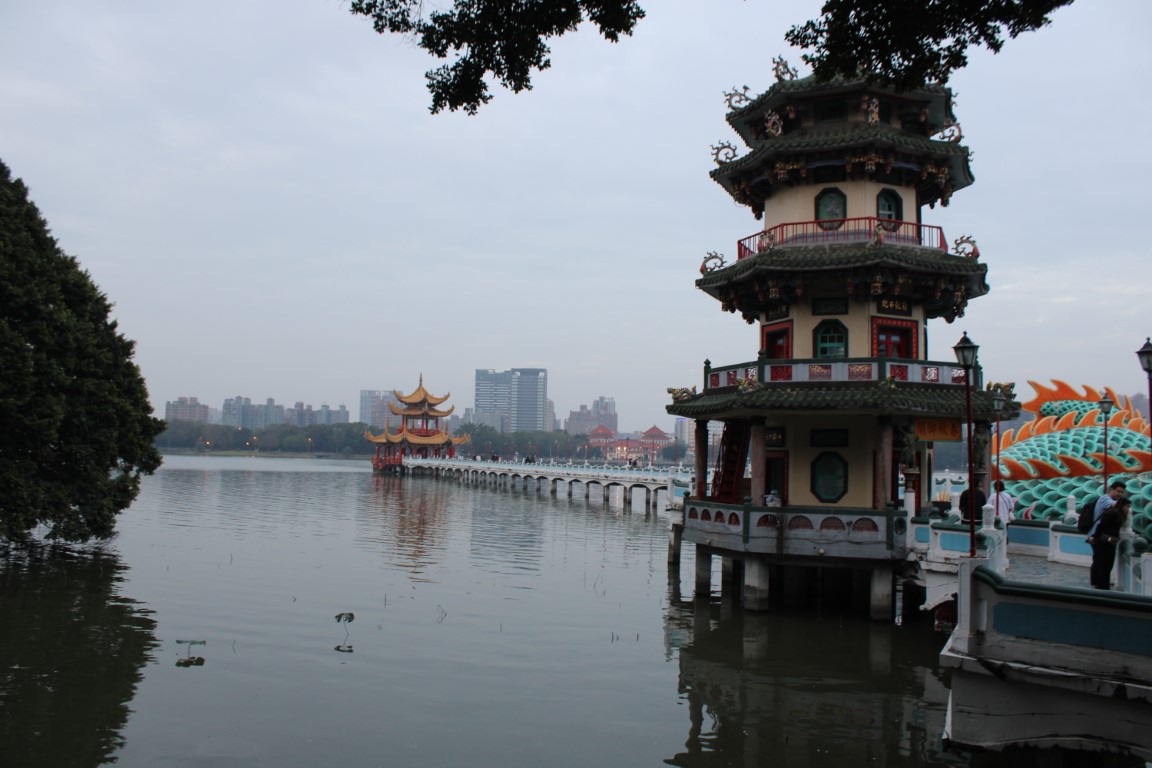
I remember viewing the West Lake
While leaning on a pagoda rail.
The boats all clustered in threes or twos.
The islets under deep Autumn blues.

Flute song arose from among the cattails.
And a line of white birds - overhead - sailed.
I planned to fix my old fishing pole,
but clouds on water had my mind & soul.

“Nightfall on the Tisza River” by Géza Gárdonyi [w/ Audio]

Up comes the Moon on the river,
Trees and grass quietly quiver.
Near Szeged a wooded island,
Od fishing barque, tied to the land.

By the moonlight, on this barque, old,
Sat a fisherman I am told,
Played a tune as well as he might,
Played it well, well into the night.

On the Tisza, velvet darkness,
Starry sky, the stars numberless,
Spread a shroud studded with diamonds
Radiating starry light fronds.

May have been this very spot, hark!
Right under this rickety barque,
In the very depths of the deep
An ancient king's sleeping his sleep.

His coffin is gold and silver,
Of iron is made its cover.
Up the river is glistening,
Down the ancient king, listening.

Translation by Frank Veszely in: Hungarian Poetry: One Thousand Years. 2023. Friesen Press: Altona, MB, Canada.