“The great road has no gate” by Tiāntóng Rújìng [w/ Audio]

The great road has no gate.
It leaps out from the heads of all of you.
The sky has no road.
It enters into my nostrils.
In this way we meet as Gautama's bandits,
or Linji's troublemakers. Ha!
Great houses tumble down and spring wind swirls.
Astonished, apricot blossoms fly and scatter -- red.

Translated by Mel Weitsman and Kazuaki Tanahashi; printed in: Essential Zen. 1994. HarperSanFrancisco, p. 136.

Note: While Rujing was Chinese he was teacher to the prominent Japanese Zen Teacher, Dōgen Zenji, the latter published this and other poems, hence the dual categorization of it as Chinese and Japanese Literature.

“Wine Spring” by Pan Lang [w/ Audio]

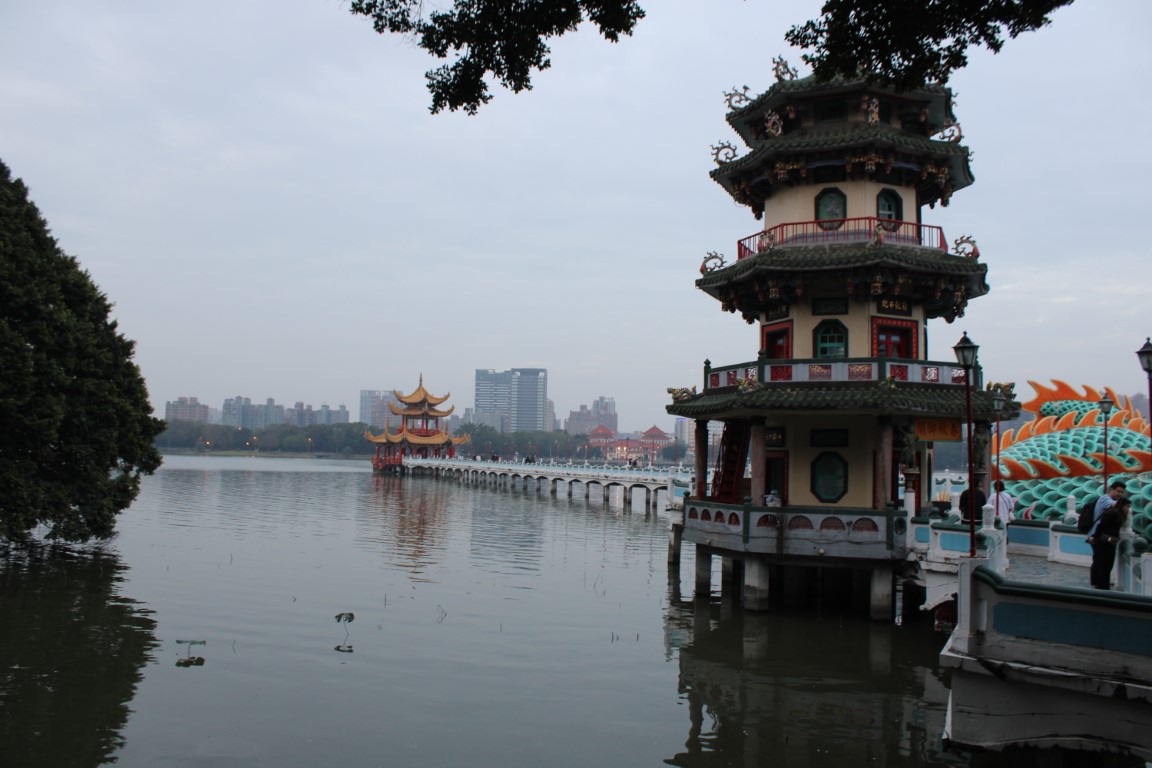
I remember viewing the West Lake
While leaning on a pagoda rail.
The boats all clustered in threes or twos.
The islets under deep Autumn blues.

Flute song arose from among the cattails.
And a line of white birds - overhead - sailed.
I planned to fix my old fishing pole,
but clouds on water had my mind & soul.

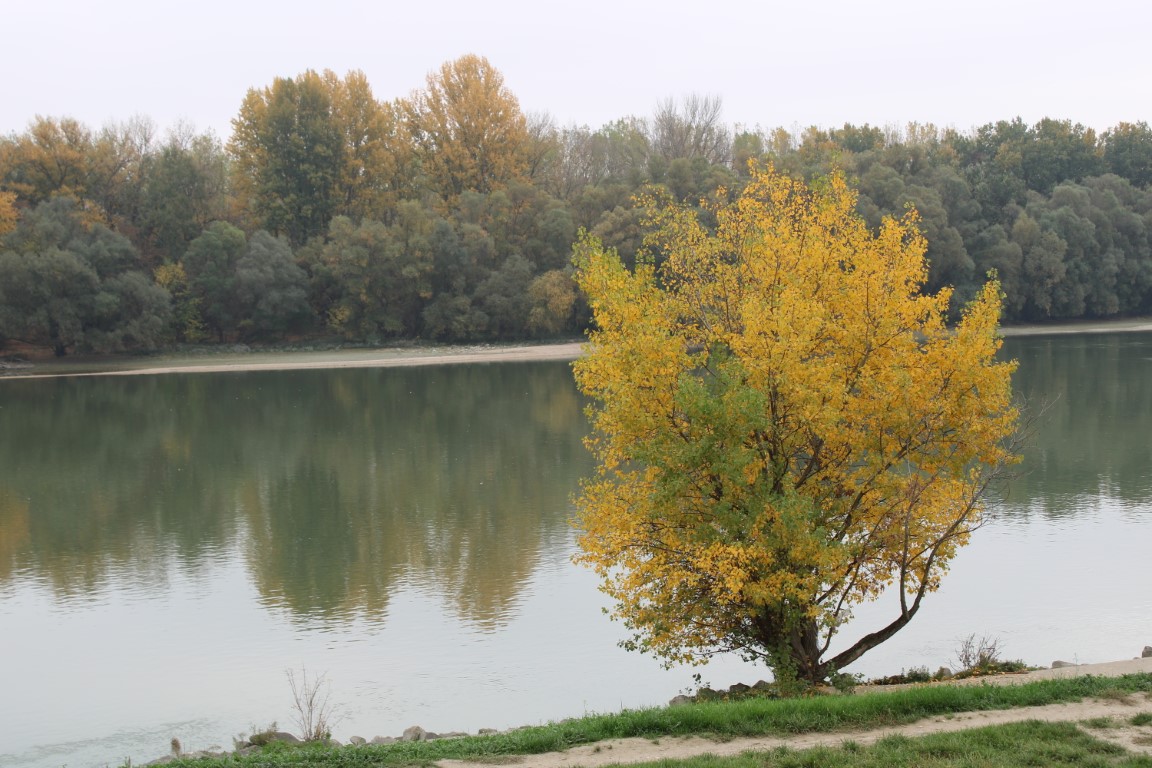
“Nightfall on the Tisza River” by Géza Gárdonyi [w/ Audio]

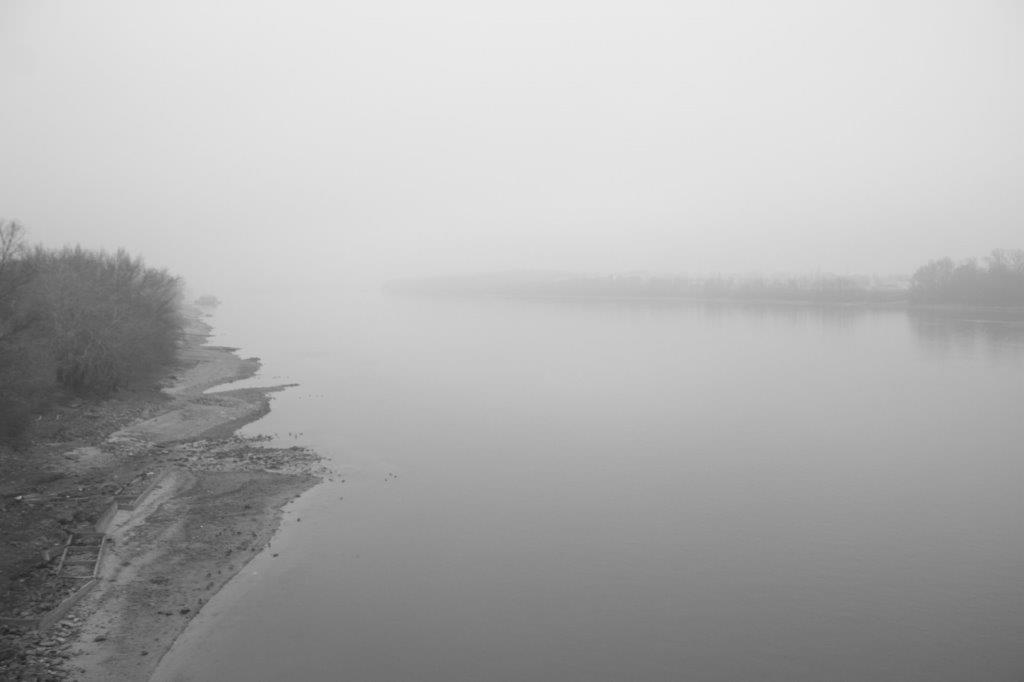
Up comes the Moon on the river,
Trees and grass quietly quiver.
Near Szeged a wooded island,
Od fishing barque, tied to the land.

By the moonlight, on this barque, old,
Sat a fisherman I am told,
Played a tune as well as he might,
Played it well, well into the night.

On the Tisza, velvet darkness,
Starry sky, the stars numberless,
Spread a shroud studded with diamonds
Radiating starry light fronds.

May have been this very spot, hark!
Right under this rickety barque,
In the very depths of the deep
An ancient king's sleeping his sleep.

His coffin is gold and silver,
Of iron is made its cover.
Up the river is glistening,
Down the ancient king, listening.

Translation by Frank Veszely in: Hungarian Poetry: One Thousand Years. 2023. Friesen Press: Altona, MB, Canada.

“Ox” by Ikkyū [w/ Audio]

Among other creatures this is what I was.
Abilities depend on the realm;
realm also depends on abilities.
At birth I forgot completely by which path
I came.
I don't know, these years, which school
of monk I am.

Translation by Kazuaki Tanahashi and David Schneider in Essential Zen. 1994. HarperSanFrancisco.

“I’ll be the tree…” by Sándor Petőfi [w/ Audio]

I'll be the tree, if you'll be its flower;
I'll be the flower, if you'll be the dew;
I'll be the dew, if you'll be the sunshine
That glistens as it unites we two.

If you, My Love, should become the Heavens,
I'd be reborn as a star on high.
Even if you turned into Hell, itself,
I'd be damned, and I'd gladly fry.

The Original Poem in Hungarian:

Fa leszek, ha fának vagy virága.
Ha harmat vagy: én virág leszek.
Harmat leszek, ha te napsugár vagy...
Csak, hogy lényink egyesüljenek.

Ha, leányka, te vagy a mennyország:
Akkor én csillagá változom.
Ha, leányka, te vagy a pokol: (hogy
Egyesüljünk) én elkárhozom.

“Water Dragon Chant” by Ge Changgeng [w/ Audio]

A screen of cloud veils the mountain,
And cold monkeys squawk from green pines.
Fungi abound, but seeds dormant,
Searching for sprouts -- alas, in vain.
Somewhere near there's a fairy cave
Where flutes and lutes are often played.
Its Way is overgrown with moss,
And the old stone gate yields no clue.
Where have all the fairy folk gone?

Looking back, there's an endless plain
Where flowers fall like streaming tears.
It's easy to grow old; Where is
the messenger to bring some news?
To tell who the Golden Phoenix charms?
Waking from a deep, restless dream
What remains are blooms on the stream.

“Jade Cup” by Zhang Ju [w/ Audio]

The West winds tumble fallen leaves;
Autumn 's yellow, though blooms are shy;
I brush at dust upon my sleeves;
The horses' hoofprints dot the frost;
Moonlit cocks crow amid grain sheaves;
The road to town: no passersby.

Fame 's not gained by effort or skill,
And would fade away ten years hence.
Please don't dance, but drink your fill.
Six Dynasty tales flow away:
Diluted as waters spread and spill.
The world feels like dream and pretense.

“With a Clean Heart” (Tiszta szívvel) by József Attila [w/ Audio]

Have no mother, have no dad,
have no country, have no God,
no cradle, no winding sheet,
no lover, no kisses sweet.

Haven't eaten for three days,
my head spins, the body sways...
Twenty years! My might, my gale,
twenty years are now for sale.

If there is no customer,
sell it to Devil in hell.
With a clean heart, I will steal,
If need be, I'll even kill.

They'll catch me and hang me up,
with soft earth cover me up,
and death-bringing grass will start
from my beautiful, clean heart.

Translation by Frank Veszely in Hungarian Poetry: One Thousand Years (2023) Altona, Manitoba: Friesen Press, pp. 156-157.

NOTE: This poem got Attila expelled from university and preemptively scuttled any possibility of a career in academia. (Hence, my affinity for it. Any poetry that extracts such a cost is probably excellent poetry.)

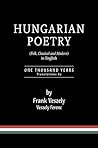
BOOKS: “Hungarian Poetry” trans./ed. by Frank Veszely

Hungarian Poetry (Folk, Classical and Modern) in English: 1000 yearsHungarian Poetry (Folk, Classical and Modern) in English: 1000 years by Frank Veszely
My rating: 5 of 5 stars

Author Site

This anthology of Hungarian poetry translated into English presents some interesting and evocative examples of Hungarian poetry, ranging from anonymous folk poetry of early kingdoms to 20th century pieces by still-living poets. I can’t speak to how the translations compare to the originals, but I will say that they were a pleasure to read and employed metering and rhyme to maintain some of the feel of the originals. This book introduced me to many poets with whom I was only familiar from names on subway stations, city squares, and parks, having traveled extensively in Hungary (plus a few of whom I’m sure I’ve never heard. Note: poetry is huge in Hungary, but because the Hungarian language is not broadly spoken, it remains largely a secret to outsiders.)

That said, the anthology is not so broad ranging as one might expect from its subtitle. The nineteenth and twentieth century selections take up the bulk of the volume. It does make sense that there is a much larger (and more likely to have survived) selection from recent times. However, there also aren’t as many poets included as one might expect. Ostensibly, one reason for this is that Veszely doesn’t shy away from including lengthier pieces. Whereas an anthology like this would often favor short pieces and / or excerpts (and, thus, might include more voices,) this one contains many multi-page poems. That said, while most of the biggest names seem accounted for (e.g. Vorosmarty, Csokonai Vitez, Arany, Petofi, Jozsef Attila, etc.,) there are conspicuous absences of prominent and important poets (and, perhaps, of categories of poets as well.)

Short bios of each of the contributing poets make this an introduction to many interesting figures scarcely known to non-Hungarians, as well as it is a sampling of their poetry. Each of the four sections also has some background historical information. This history is useful because there is a lot of nationalistic / jingoistic poetry in this volume, particularly among the nineteenth century poets (as was the style of the day.)

I should point out that some will find this book excessively nationalistic. (A book titled for the state can be expected to have some superpatriotic pieces, but this goes a bit beyond that.) For my part, I was not troubled by the poetry content, knowing that nineteenth century Hungarian poetry was notoriously nationalistic. Also, once one gets into the twentieth century poetry it gains much more diversity of content, e.g. nature, art, etc. My own concern about nationalism was more about the Part Four introduction, which paints Hungary as an innocent little lamb, always being victimized. Taking history from this introduction, one might think that Hungary was forced into the Axis and struggled to get free of it from the onset. This view would be more defensible if the invasion of Nazi Germany to firm up the Hungarian alliance had occurred in, say, 1941, instead of the spring of 1944 (when everyone knew the Third Riech was on its death bed.) In point of fact, Hungary’s leadership seem to have had their own ambitions (not to mention their own rampant antisemitism) going into this alliance.

I enjoyed these translations immensely, and felt I learned about the poets and the times in which they lived. That said, while I did like that Veszely included some longer pieces in full, it might have been nice to see a bit more diversity in the selection as well.

View all my reviews

“The Joy of Words” by Lu Ji [w/ Audio]

Writing is joy --
so saints and scholars all pursue it.

A writer makes new life in the void,
knocks on silence to make a sound,
binds space and time on a sheet of silk
and pours out a river from an inch-sized heart.

As words give birth to words
and thoughts arouse deeper thoughts,
they smell like flowers giving off scent,
spread like green leaves in spring;
a long wind comes, whirls into a tornado of ideas,
and clouds rise from the writing-brush forest.

Translation by Tony Barnstone and Chou Ping in The Art of Writing (1996) Boston: Shambhala.