Publisher’s Website
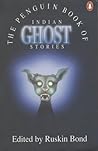
This is an anthology of stories of the supernatural set in India or built around characters and contexts of India. About half of the stories are by writers of non-Indian ancestry, though some were born or lived extensively in India (e.g. Rudyard Kipling and C.A. Kincaid.) Not all of the pieces are “ghost stories” in a technical sense, but they all revolve around the supernatural or surreal experience.
I enjoyed all the stories in this collection, but among my favorites were: “The Brown Hand” by Arthur Conan Doyle; “The Strange Ride of the Morrowbie Jukes” by Rudyard Kipling; “The Fire-Jogi” by A.C. Renny; “Fritz” by Satyajit Ray; “Anath Babu’s Terror” by Satyajit Ray; “The Yellow-Legged Man” by Sudhir Thapliyal, and “Topaz” by Ruskin Bond.
If you enjoy scary stories, I’d highly recommend this book.
Publisher’s Site
Language translation is one of those tasks that people take for granted is a straightforward endeavor — especially in the current era in which computers are starting to do a decent job of it. It turns out that translation isn’t at all straightforward, and a number of tradeoffs must be addressed through the act of translating — e.g. should one try to convey the original author’s meaning as closely as possible or should one make the writing as approachable and comprehensible to the readership as possible? This might seem like a false dichotomy, but because languages never map perfectly to each other and reflect differing worldviews, there is always some degree of trade-off necessary.
Reynolds addresses not only cases from literature, but also shows the role that translation (and mistranslation) can play in the legal, political, and business domains as well. I found this book to be interesting and useful in providing food-for-thought on the subject. It is particularly illuminating in its discussion of how translation is changing in an era of AI, and how profound an effect this will have on our future. (e.g. People worry about the death of languages with small followings, but if automated translation becomes cheap and ubiquitous, will the pressure to focus one’s efforts on one of the world’s major languages remain?)
If you are interested in issues of language translation, this is a fine book with which to begin one’s exploration.
Publisher Website
This is a bilingual collection of the poems of Teresa of Avila, one of history’s most influential Christian mystics, newly translated by Dana Delibovi. The collection contains about thirty poems, some ecstatic and some philosophic, in both English the original Spanish.
The book also offers an overall introduction and commentaries on each of the five sections by which the poems are grouped. This provides the reader, particularly a neophyte to the history and theology that inform these poems — such as myself — with background useful to better experiencing the poems. I do enjoy bilingual editions even when they are in a source language that I don’t read because they do allow some insight into rhyme, metering, and other considerations of sound. One can observe to what degree the translator emulates form, even if one remains ignorant of the degree to which meaning is captured.
I enjoyed this collection. If you are interested in the poetry of Christian mystics, I’d recommend you give it a read.
It was many and many a year ago,
   In a kingdom by the sea,
 That a maiden there lived whom you may know
   By the name of Annabel Lee;
 And this maiden she lived with no other thought
   Than to love and be loved by me.

I was a child and she was a child,
   In this kingdom by the sea,
 But we loved with a love that was more than love --
   I and my Annabel Lee --
 With a love that the winged seraphs of Heaven
   Coveted her and me.

And this was the reason that, long ago,
   In this kingdom by the sea,
A wind blew out of a cloud, chilling
   My beautiful Annabel Lee;
So that her highborn kinsman came
   And bore her away from me,
 To shut her up in a sepulchre
    In this kingdom by the sea.

The angels, not half so happy in Heaven,
   Went envying her and me ---
 Yes! -- that was the reason (as all men know,
   In this kingdom by the sea)
 That the wind came out of the cloud by night,
   Chilling and killing my Annabel Lee.

But our love it was stronger by far than the love
   Of those who were older than we --
   Of many far wiser than we --
 And neither the angels in Heaven above
   Nor the demons down under the sea
 Can ever dissever my soul from the soul
   Of the beautiful Annabel Lee;

For the moon never beams, without bringing me dreams
   Of the beautiful Annabel Lee;
 And the stars never rise, but I feel the bright eyes
   Of the beautiful Annabel Lee;
 And so, all the night-tide, I lie down by the side
   Of my darling -- my darling -- my life and my bride,
   In her sepulchre there by the sea --
   In her tomb by the sounding sea.
View flowers like a bandit;
  Let nature flow through you,
  Breathing in the Great Way
  As you let your crazy brew.
 Wander like the free winds --
  Sea and mountain in gray-blue.
  Feel true power overflow,
  As all nature lives through you.
 Before: sun, moon, and stars;
  Behind: the one from two.
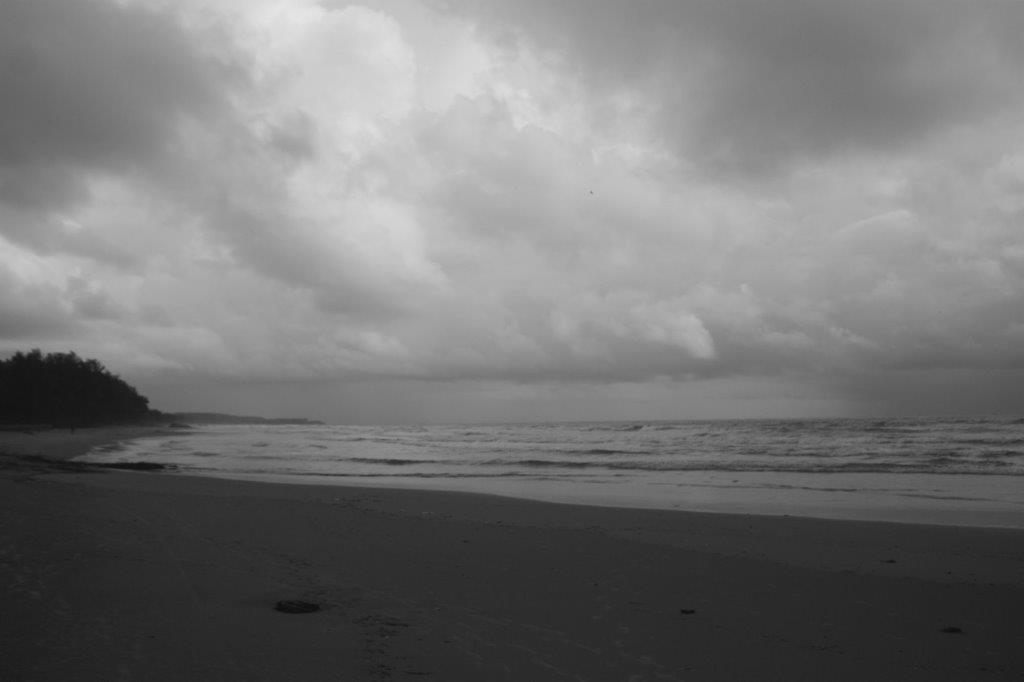
  By dawn, sea turtles have gone,
  Soak your feet where they withdrew.
NOTE: The late Tang Dynasty poet, Sikong Tu (a.k.a. Ssŭ-k‘ung T‘u,) wrote an ars poetica entitled Twenty-Four Styles of Poetry. It presents twenty-four poems that are each in a different tone, reflecting varied concepts from Taoist philosophy and aesthetics. Above is a crude translation of the eleventh of the twenty-four poems. This poem’s Chinese title is 豪放, which has been translated to “Free,” “Set Free,” and “Broad-minded” in various English language translations.
Project Gutenberg
This 1922 poetry collection is wide-ranging and beautifully composed. As the title hints, this is a product of that great literary and artistic movement known as the Harlem Renaissance.
The seventy-plus poems include sonnets and various other forms of poems, mostly lyric and rarely more than a couple pages in length. Besides being varied in form, they poems are also diverse of tone — from frank invectives on race to sweet love poems. They take New York as their home and tap into the verve of the day. The collection includes many of McKay’s best-known poems including: “If We Must Die,” “America,” and “Harlem Shadows.” Though bucolic beauties such as “Spring in New Hampshire” and “The Snow-Fairy” are not to be skipped over.
I enjoyed these poems and found them powerful and lyrical.
















 Tiger Riding for Beginners