PROMPT: Hated Question

Daily writing prompt
What is one question you hate to be asked? Explain.

Being a traveler who lives abroad, the answer is simple: “Where are you from?”

As a traveler, I can’t grasp tribal / jingoistic people’s obsession with where one fell out of one’s mom, and it always feels a bit xenophobic — as though, noticing one’s foreignness, there is a rush to determine whether one is one of the tolerable foreigners or one of the really bad ones.

As an introvert, the question offends my preference to be talked to by people who have something to say, and to be left alone by people who are just playing out social programming with the objective of breaking silence that they find objectionable (but which I, as a rule, find delightful.) (Even being highly introverted, I can converse for hours with someone who has something to say on a topic that is neither themselves nor me — i.e. I love ideas but hate small talk and interaction for the sake of interaction.)

Plus, it just gets annoying being asked the same question sixty times a day when I’m in more remote parts — a question, the answer to which will be forgotten in three minutes and is merely sound for sound’s sake. In the unlikely event that one hopes to have an actual conversation with me, one must start with something that is not your culture’s default socially programmed question. One must get to at least the second most commonly asked question, a question varies from person to person (in my case, it’s: “Why are you such an asshole?”)

FIVE WISE LINES [March 2025]

Would the world ever have been made if its maker had been afraid of making trouble?

george bernard shaw, PygMalion

Refrain from talk of others’ shortcomings; don’t rest on your strengths.
[罔谈彼短; 靡恃己长.]

Thousand Character classic [千字文]

The reasonable man adapts himself to the world: the unreasonable one persists in trying to adapt the world to himself. Therefore all progress depends on the unreasonable man.

george bernard shaw, Man and superman

A child is the most reliable measure of time. His daily growth is proof of your daily ageing and decline. The child’s gains are your losses, and the closer a child gets to anything, the farther you withdraw, as though you were tied to one another on opposite spokes of a wheel and the wheel, without your noticing it, turns. Dawn for the child is dusk for you.

Otar chiladze, A Man was going down the road

We are all dependent on one another, every soul of us on earth.

George bernard shaw, Pygmalion

PROMPT: Favorite People

Daily writing prompt
Who are your favorite people to be around?

People who take nothing seriously. A distant second goes to those who take everything seriously. And dead last, being people I avoid at all costs, are those who have a sizable set of ideas that they believe should be treated deadly seriously by everyone, while finding others’ serious stuff to be mockable.

Einstein said there are two ways of viewing the world, as if everything is a miracle or nothing is. I’m sure Einstein recognized that there were many people who, in fact, believed their own sect to have “legitimate miracles,” while believing the miracles of other sects were mere superstition. And what he was really getting at was that the latter stance is presumptuous, indefensible, and – quite frankly – ridiculous. Anyhow, my own spin is that there are two legitimate ways to view the world: to take nothing serious and to take everything seriously. All others are shades of petty narcissism.

[As I think of it, I guess I could have answered more simply with the single word: “Travelers.”]

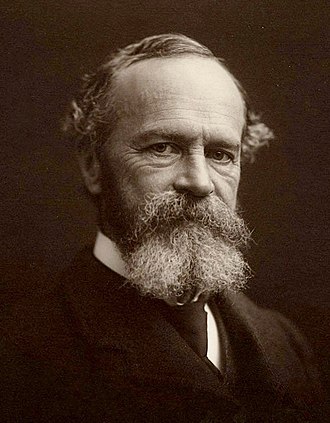
FIVE WISE LINES FROM WILLIAM JAMES [Feb. 2025]

Our view of the world is truly shaped
by what we decide to hear.

The greatest weapon against stress
is our ability to choose
one thought over another.

The art of being wise is
the art of knowing what to overlook.

We have grown literally afraid to be poor.
We despise anyone who elects to be poor
in order to simplify and save his inner life.

Whenever two people meet,
there are really six people present.
There is each man as he sees himself,
each man as the other person sees him,
and each man as he really is.

NOTABLE MENTIONS:

We may be in the Universe as dogs and cats
are in our libraries, seeing the books
and hearing the conversation,
but having no inkling of the meaning of it all.

My experience is what I agree to attend to.

PROMPT: Complain

Daily writing prompt
What do you complain about the most?

People. They’re the worst. Or, possibly, technology. It’s a close runner up, at least. Of course, on some level, it’s all one shitstorm. Humans are the technological animal, and technology facilitates the making of comfort junkies who avoid deep thought at all costs. (Which is at the core of my beef.)

FIVE WISE LINES [January 2025]

“Reality is that which, when you stop believing in it, does not go away.”

Philip k. dick

“The Wu and the Yue peoples hate each other. But in the same boat in a storm, they work together like left and right hands.”

SunZi in The ART of War

“Travel changes you. As you move through this life and this world you change things slightly, you leave marks behind, however small. And in return, life – and travel – leaves marks on you. Most of the time, those marks – on your body or on your heart – are beautiful. Often, though, they hurt.”

anthony bourdain

What allows great kings and generals to win, more frequently than ordinary men, is foreknowledge.
Foreknowledge cannot be attained by spirits or deduced or calculated.”

Sunzi in The ART of war

“Only those who risk going too far can possibly find out how far one can go.”

T. S. Eliot

FIVE WISE LINES [December 2024]

Today as in ancient times
it’s hard to write a simple poem.

Mei Yaochen in Poets’ Jade Splinters

To be undefeated lies with oneself;
to be victorious lies with the enemy.

Sunzi in The ART of War (孙子兵法)

A buddha is an idle person.
He doesn’t run around after fortune and fame.
What good are such things in the end?

Bodhidharma; Bloodstream Sermon

Not what we have, but what we enjoy, constitutes our abundance.

Epicurus

Take more time, cover less ground.

Thomas Merton

BOOKS: “American Intellectual History: A Very Short Introduction” by Jennifer Ratner-Rosenhagen

American Intellectual History: A Very Short Introduction (Very Short Introductions)American Intellectual History: A Very Short Introduction by Jennifer Ratner-Rosenhagen


Publisher Site – OUP

This is a brief guide to the philosophies and major developments in United States’ academia from pre-colonial times to the 1990’s. But both of those end points require a bit of clarification. The discussion of pre-colonial scholarly history is largely a mea culpa for beginning with colonial history because Native American tribes weren’t big on recording their philosophical and other scholastic ideas in writing. There is an appendix that discusses America scholarship in the era of globalization (and beyond.) My point is that if you’re hoping for discussion of what’s happened in the last couple decades, you won’t find it herein. (There are a few bibliographic references from the 2010’s, but that’s it.) It is a history book, but some readers may be curious because there’s been a lot of talk of late about issues related to scholarship in America.

Overall, I believe the book covered the topic solidly. There is considerable discussion of the debates triggered by the ideas of Charles Darwin arriving on American shores. As one would expect, there is also quite a bit of discussion of Transcendentalism and Pragmatism, two philosophies closely associated with America. The author covered a wide swath of ground including both progressive and conservative thinkers and viewpoints. One conspicuous absence was any mention of Objectivism / Ayn Rand. I know that isn’t a popular topic in academic circles and is widely dismissed with contempt, but on the grounds of: a.) Objectivism’s considerable influence (e.g. we had a Federal Reserve Chairman – Alan Greenspan – who served almost 20 years under both Republican and Democratic Presidents who was from that school of thought,) b.) its distinctive Americanness, I’m shocked that it didn’t merit at least a sentence or any mention of a book in the bibliography.

All in all, it’s an interesting book that offers unique insight into the history of the United States.

View all my reviews

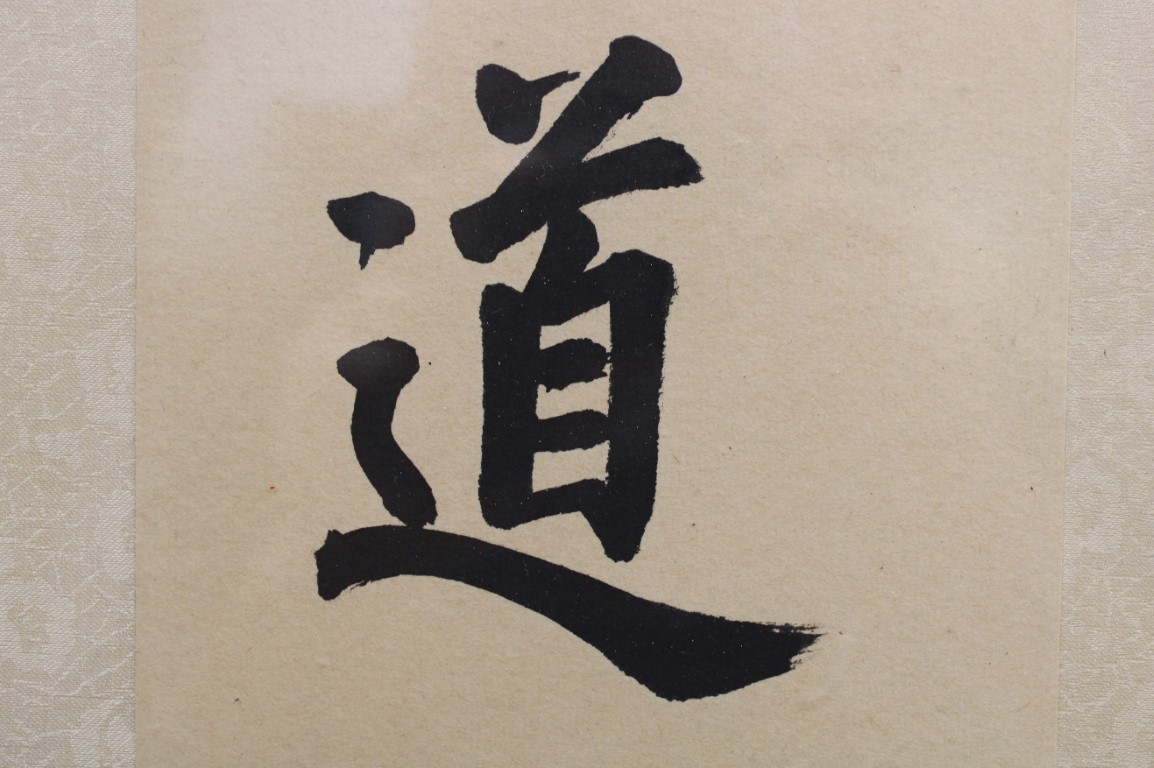
BOOKS: 道德经 by 老子 [a.k.a. Daodejing by Laozi]

老子道德经校释(简体中文版): 中华传世珍藏古典文库 (Chinese Edition)老子道德经校释(简体中文版): 中华传世珍藏古典文库 by 王弼
My rating: 5 of 5 stars

Available in Traditional & Simplified Chinese [w/ multiple translations] at YellowBridge

Packed into the 81 brief chapters of this book is the core Taoist philosophy on life, human relationships, governance, and war. Most often, it offers a wisdom that turns conventional wisdom on its head, advocating for inaction over action, less over more, simplicity over complication, and for recognizing the usefulness of what isn’t.

Some of the book’s central ideas are captured in these quotes:

上善若水。水善利万物而不争. “The greatest good is like water. It benefits all without fighting.” [Ch. 8]
金玉满堂,莫之能守 “A house full of jade and gold cannot be guarded.” [Ch. 9]
知人者智,自知者明。胜人者有力,自胜者强。“He who knows others is smart; he who knows himself is enlightened. He who conquers others has power; he who conquers himself is mighty.” [Ch. 33]
柔胜刚,弱胜强。“Softness overcomes hardness; weakness overcomes strength.” [Ch. 36]
道常无为而无不为。“The Dao is constant inaction, yet nothing is left undone.” [Ch. 37]
善者,吾善之;不善者,吾亦善之;德善。“The good, I treat well; the bad, I also treat well. Yeah Virtue!” [Ch. 49]
知者不言,言者不知。“He who knows does not speak; he who speaks does not know.” [Ch. 56]
千里之行,始于足下。“The journey of a thousand li (“miles”) begins with a single step.” [Ch. 64]
天之道,不争而善胜 “The way of heaven is to win without fighting.” [Ch. 73]
信言不美,美言不信。“True words aren’t pleasing; pleasing words aren’t true.” [Ch. 81]

I think this is one of those works that should be read and reread. It may help rewire your brain in useful ways.

View all my reviews

PROMPT: Change

Daily writing prompt
What is one thing you would change about yourself?

For a long time, I’d have said that I’d like to be less introverted. However, adjusting my attitude towards introversion, managing it, and recognizing / valuing the strengths that derive from it has been one of the most enlightening and empowering processes of my life. (So, I’m keeping it.)

However, I do have an ulnar impaction in my wrist that I’d be happy to get rid of (if anyone with such powers is taking requests.)