


The hot, molten core. Because it is hot, and molten… And because I am a fancy bag of water.
PROMPT: Never Visit
Reply

The hot, molten core. Because it is hot, and molten… And because I am a fancy bag of water.
My wife, movement, new & interesting ideas, play, and epiphanies.
[I’m presuming we’re using the word “thing” in the broadest possible sense — as a stand in for any noun. If it is meant in the narrower common usage of trinkets, gewgaws, baubles, and tchotchkes, then I’ve got nothing.]
That’s a tough one because while I see value in communities, I’m also concerned that there is a rising trend toward tribalism and nationalism that will not be good for anyone — not to mention a shift toward virtual communities where anonymity and disconnect lead to people to act as though they were raised by hyenas. (I do know that, in reality, that’s an insult to the marvelous hyena, but I think it makes a sort of point for the non-hyena expert.)
I’ve been amazed at how India manages to have an intense sense of community in such a vastly super-tribal environment. (I’m using “supertribe” in Desmond Morris’s sense — i.e. a community which is too big for everyone to know everyone else, and which has a group dynamic that reflects that fact.) But it’s not as though there isn’t a dark side to this intensity of community — patriarchy, sectarian conflict, disempowered societal segments, etc.
America, by comparison seems to be experiencing a dearth of true community, which is driving people toward virtual “communities,” and in virtual communities people seem to fall into the shittiest versions of themselves. Not to mention the lack of community’s contribution to what I’ve heard called a “mental health crisis.”
I guess my preferences would be that community be: 1.) real and not virtual. 2.) that it exploit the advantages of diverse membership instead of wallowing in homogeneity and group think. 3.) that it doesn’t create overclasses and underclasses. And that, 4.) Community norms minimally negate individual freedoms.
That said, I’m not at all sure that the above criteria can be reconciled. Maybe the tradeoffs are too strong. Maybe – in our super-tribal world – the closest-knit society will always be the most xenophobic [fearful / disliking of outsiders,] and maybe tolerance and egalitarianism will always be accompanied by societal degradation. I have observed a strong inclination for people to think of compassion as a zero-sum game.
As I said, a tough one.

Have you ever noticed that anybody driving slower than you is an idiot,
and anyone going faster than you is a maniac?
Isn’t making a smoking section in a restaurant
like making a peeing section in a swimming pool?
I don’t believe there’s any problem in this country,
no matter how tough it is,
that Americans,
when they roll up their sleeves,
can’t completely ignore.
Here’s all you have to know about men and women;
women are crazy,
men are stupid.
And the main reason that women are crazy
is that men are stupid.
I like it when a flower or a little tuft of grass grows through a crack in the concrete.
It’s so fuckin’ heroic.
Computational Fluid Dynamics. Also, Nuclear Lensing.
I’d say my first full-time martial arts teacher, because I was young enough to have considerable open domain in which said teacher could be influential and because the lessons were so diverse — from kinesthetics to ethics to culture to psychology.
By “most influential” I think one means having had either the broadest or most profound influence. (I favor the importance of the latter, the lessons that stick with one and which inform one’s philosophy of life.) This definition favors earlier teachers, but as I don’t remember any specific lesson taught by a specific elementary school teacher, they’re out (though I learned useful things from them and they ranged from competent to quite skilled as teachers go.) The earliest profound lesson I received through scholastic education, one that became a core tenet in my philosophy of life rather than just a skill, was in high school — and in my junior or senior year at that.
As with books, if I can take away one profound lesson from a teacher, I consider my experience well worth the time and energy. And most influential isn’t necessarily the prime criterion for a teacher — and certainly doesn’t necessarily mean best or most skilled or most in command of a diverse array of knowledge.
I don’t think that’s a question I can meaningfully answer. I think each person has more confidence and courage in some dimensions of life than in others. A given observer tends to see the person who is the most confident in the areas in which that observer is least confident and think of that person as the most confident — when that person might be quite lacking in confidence in areas to which the observer isn’t being attentive.
It was eye opening to read about Audie Murphy, a man who won the Congressional Medal of Honor for single-handedly taking on a unit of Nazis, a man who had a successful career in film, but also a man who was said to have been tremendously shy and awkward around strangers. It would be all in the context in which one saw Murphy that might make one think he was the most or least confident person around.
Quite frankly, the person who appears the most confident in all aspects of life is probably also the most full of shit.
Being a traveler who lives abroad, the answer is simple: “Where are you from?”
As a traveler, I can’t grasp tribal / jingoistic people’s obsession with where one fell out of one’s mom, and it always feels a bit xenophobic — as though, noticing one’s foreignness, there is a rush to determine whether one is one of the tolerable foreigners or one of the really bad ones.
As an introvert, the question offends my preference to be talked to by people who have something to say, and to be left alone by people who are just playing out social programming with the objective of breaking silence that they find objectionable (but which I, as a rule, find delightful.) (Even being highly introverted, I can converse for hours with someone who has something to say on a topic that is neither themselves nor me — i.e. I love ideas but hate small talk and interaction for the sake of interaction.)
Plus, it just gets annoying being asked the same question sixty times a day when I’m in more remote parts — a question, the answer to which will be forgotten in three minutes and is merely sound for sound’s sake. In the unlikely event that one hopes to have an actual conversation with me, one must start with something that is not your culture’s default socially programmed question. One must get to at least the second most commonly asked question, a question varies from person to person (in my case, it’s: “Why are you such an asshole?”)
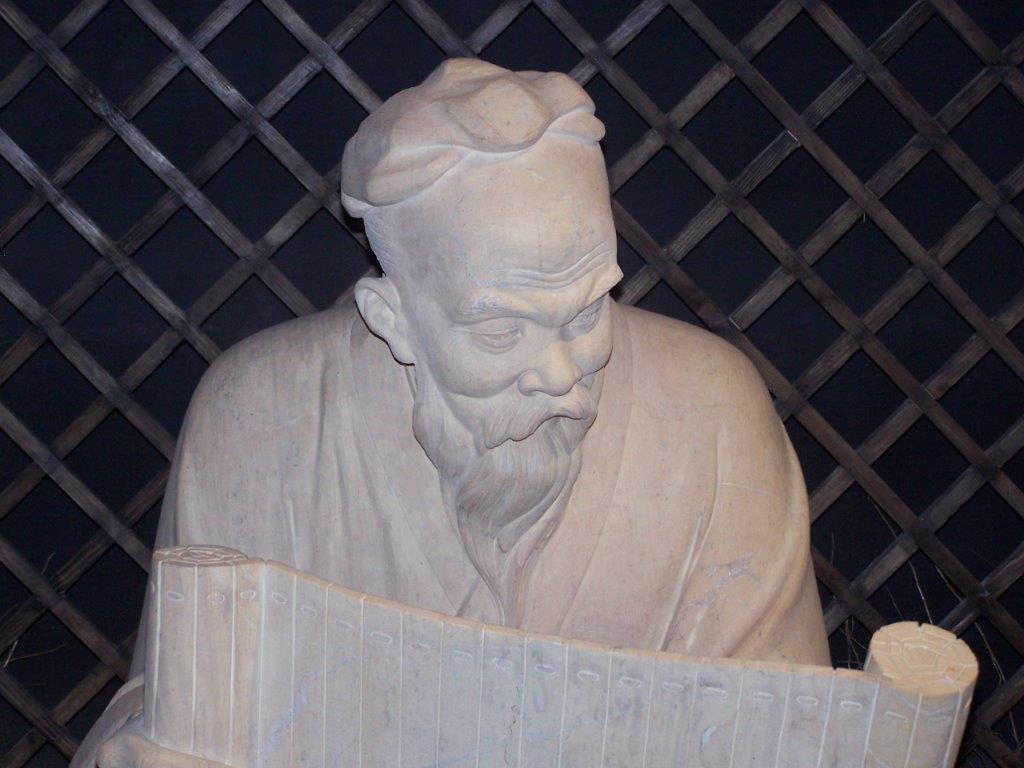
Would the world ever have been made if its maker had been afraid of making trouble?
george bernard shaw, PygMalion
Refrain from talk of others’ shortcomings; don’t rest on your strengths.
Thousand Character classic [千字文]
[罔谈彼短; 靡恃己长.]
The reasonable man adapts himself to the world: the unreasonable one persists in trying to adapt the world to himself. Therefore all progress depends on the unreasonable man.
george bernard shaw, Man and superman
A child is the most reliable measure of time. His daily growth is proof of your daily ageing and decline. The child’s gains are your losses, and the closer a child gets to anything, the farther you withdraw, as though you were tied to one another on opposite spokes of a wheel and the wheel, without your noticing it, turns. Dawn for the child is dusk for you.
Otar chiladze, A Man was going down the road
We are all dependent on one another, every soul of us on earth.
George bernard shaw, Pygmalion
People who take nothing seriously. A distant second goes to those who take everything seriously. And dead last, being people I avoid at all costs, are those who have a sizable set of ideas that they believe should be treated deadly seriously by everyone, while finding others’ serious stuff to be mockable.
Einstein said there are two ways of viewing the world, as if everything is a miracle or nothing is. I’m sure Einstein recognized that there were many people who, in fact, believed their own sect to have “legitimate miracles,” while believing the miracles of other sects were mere superstition. And what he was really getting at was that the latter stance is presumptuous, indefensible, and – quite frankly – ridiculous. Anyhow, my own spin is that there are two legitimate ways to view the world: to take nothing serious and to take everything seriously. All others are shades of petty narcissism.
[As I think of it, I guess I could have answered more simply with the single word: “Travelers.”]


