PROMPT: Historical Event

What historical event fascinates you the most?

It varies over time. For a long time, it was the Second World War and the Holocaust. How do you get the rise of Nazis and the horrors that sprang therefrom? Sadly, I think that question has been answered to my — for lack of a better word— satisfaction.

The execution of Socrates has spurred a great deal of thought.

In terms of what is not so much a historical event, but historical processes, I’m intrigued by the life of Buddha.

Then there are a lot of explorer / adventurer travels.

PROMPT: Historical Events

What major historical events do you remember?

From the Iranian Hostage Crisis onward, pretty much all of them — given they were considered “major” in whatever place I was living at the time.

DAILY PHOTO: Ukrainian National Museum [Chicago]

Limerick of the Portrait of Felix Rey

Van Gogh's doctor, a man named Felix Rey,
 was given a portrait -- much to his dismay.
   While Rey didn't grouse,
   the pic patched his henhouse,
 but it survived and 's worth millions today!

Columbus Limerick

There was an explorer named Christopher Columbus
 who entered the New World to fanfare of trumpets.
   He thought the Bahamans
   were Hindu Brahmins.
 His map wasn't so good as his compass.

The Fall [Lyric Poem]

Rome fell,
     the Mongols & Ottomans, too.
 Great powers fall
     often sans much ado.
     
     [Psst! someday yours will, too.]

They can't help but crumble;
     the foundations get rot.
 And there's too much weight
     to bear, without spurring plots.

Plots and schemes and pandering, 
     all throughout the State.
 Forget those Barbarians, the threat 's 
     inside the gates. 

BOOK REVIEW: Goa Travels ed. by Manohar Shetty

Goa Travels: Being the Accounts of Travellers from the 16th to the 21st CenturyGoa Travels: Being the Accounts of Travellers from the 16th to the 21st Century by Manohar Shetty
My rating: 5 of 5 stars

Amazon.in Page

I picked up this book because I’m now planning a trip to Goa — only my second trip to India’s smallest state and my first to the north beach area for which it has become such a popular destination in recent decades. It’s always good to get a literary feel for a place, perhaps receiving some insights one might otherwise miss. In a way, this is the perfect book for that purpose in that it offers outsider views of Goa across time. [In another way, it’s admittedly a skewed view.]

This book gathers written excerpts from travelers to Goa. It’s divided into three parts. The first part mostly covers the sixteenth and seventeenth centuries, back when Goa was a Portuguese colony. This is the largest section and includes twenty-one pieces by priests, sailors, merchants, and adventurers. This section shows a preoccupation with a few features of Goan culture that seized travelers’ attention. One of these was the terrifying practice of sati, in which a widow would throw herself on her deceased husband’s funeral pyre and be burned alive. Another was the obsessively guarded way wives were treated, generally barred from doing anything in public or with those who weren’t blood relatives.

The second section, also the shortest, features one piece on the Goan Inquisition, which was an extension of the Portuguese Inquisition and one of the major examples of horrifying behavior by the Roman Catholic church. While it’s alarming and gruesome to read about, it’s nonetheless fascinating.

The final section is about the modern era, which – for the purposes of this book – runs from about the 1950’s (after India gained independence from Britain, but while Goa was still a Portuguese colony,) through its days on the Hippie Trail, and on to more-or-less the present. I knew about Goa as a hippie hangout during that countercultural revolution, but I was less aware of what went on between Indian independence and Goa’s independence from Portugal. Among the seven pieces in this section, one also gets a feel for the challenges of having an intensely culturally conservative population packed into India’s smallest state with what is probably South Asia’s biggest party destination.

I learned a lot of fascinating facts from reading this book. It may be a bit sensationalist in some places and vaguely racist in others, but it’s not boring.


View all my reviews

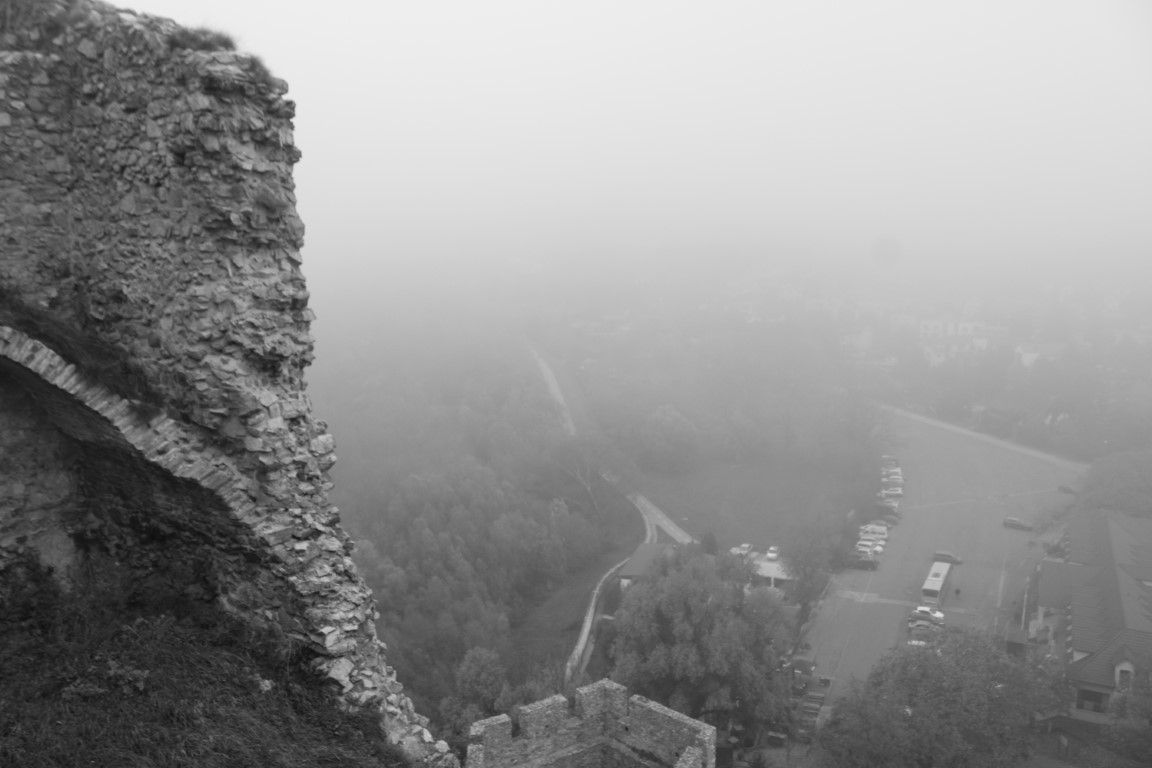
Eger Limerick

There was a cranky old man from Eger
who was prone to curse and to swear.
He was really a jerk
to Mongols and Turks,
billing them for medieval fortress repair.

BOOK REVIEW: Introducing the Enlightenment by Lloyd Spencer

Introducing the Enlightenment: A Graphic GuideIntroducing the Enlightenment: A Graphic Guide by Lloyd Spencer
My rating: 4 of 5 stars

Amazon.in Page

This brief illustrated guide offers a history of the Age of Enlightenment with a particular focus on the changing philosophical landscape and its opposition. It does dip into the literature and arts of the time, but most intensely with respect to philosophical novels. It also discusses a burgeoning scientific scene, but mostly with respect to Isaac Newton and his influence. The Enlightenment was an age in which religion’s hold on the populace was declining and tolerance of other sects was increasing, and at the same time there was increasing liberalization, rationality, and openness to new ideas. Therefore, much of the focus is on philosophy of religion and political philosophy, and Locke, Bacon, Rousseau, Diderot, and Voltaire are the most extensively discussed personalities. (Particularly Rousseau and Voltaire as their contrasting views offered insight to the breadth of views among Enlightenment philosophers.)

I felt this book did a fine job of delivering an overview of the era and the new ideas that informed it. It drew heavily on quintessential quotes of major figures of the day (particularly the very quotable Voltaire.) It’s a fine place to begin one’s examination of the topic and includes a “Further Reading” section as a means to direct those who would like deeper insight into the subject.


View all my reviews

BOOK REVIEW: The Gothic: A Very Short Introduction by Nick Groom

The Gothic: A Very Short IntroductionThe Gothic: A Very Short Introduction by Nick Groom
My rating: 5 of 5 stars

Amazon.in Page

Gothicness is the perfect kind of subject for the VSI series because it’s one of those areas about which everybody knows something, and yet knows nothing, really. Goth is [or has been] a people (or some people’s perception of other people,) an architectural style, a literary / cinematic genre, a contemporary lifestyle, and a political motif. Because of this diversity, even people who have a degree of expertise on some aspect of gothicness may have little understanding of other aspects or how these varied forms of gothicness relate (if they do, and – if they don’t — why enough people believe they relate to have made this well-formed, consensus view of connectedness.)

The downside of this diversity is that this book will almost certainly be dry, verging on tedious, at some point in the reading, depending upon one’s interests. For example, I found the portions on Gothic literature and cinema to be fascinating, but the part that dealt with gothicness in Whig politics to be boring. [With the architecture bit somewhere in between.] That said, one needs to follow this throughline to see how so many varied domains came to be Goth. Also, the book is quite short, so one isn’t likely to be bored to death because there’s not enough space spent on any one topic for that to happen.

I learned a lot about what it means to be “Goth” [or “goth”] from reading this book. It covers the history in some detail, but also brings it around to present-day movies and art. If you seek to know more about what “Gothic” means, you should definitely look into this brief guide.

View all my reviews