Unknown's avatar

About B Gourley

Bernie Gourley is a writer living in Bangalore, India. His poetry collection, Poems of the Introverted Yogi is now available on Amazon. He teaches yoga, with a specialization in pranayama, and holds a RYT500 certification. For most of his adult life, he practiced martial arts, including: Kobudo, Muay Thai, Kalaripayattu, and Taiji. He is a world traveler, having visited more than 40 countries around the globe.

Evangelists Meet Max Their Match

BING-BONG.

Without even looking up from his computer, Max knew it was church people. They came around trying to sell him a religion now and again. No one sold aluminum siding, encyclopedias, or ice cream door-to-door anymore. Evangelic proselytizers were the last bastion of door-to-door salesmanship. The sect varied; the approach did not. They were the only ones who ever disturbed his peace.  Well, the only ones who didn’t use the phone.

He went to the door. It was a zaftig woman and a clean-cut young man–both dressed in funeral-like attire.

“Hello!” the pair said with practiced exuberance.

“Hello,” Max parroted with a decided lack of exuberance. Then he added, “May I help you?”

Max didn’t feel like being helpful, but there was the off-chance that it was  a couple of his neighbors who were just looking to borrow a cup of sugar so they could bake cookies for whatever wake they were attending. If so, he’d help them out, but as far as he knew such a request hadn’t happened since 1955. Then he saw their name tags, and not the paper kind. These were black plastic bordered in gold with white letters.

“We’d like to talk to ya ‘bout the Bible,” the woman said.

“Unless it’s the racy bits, I don’t think you’ll hold my interest,” Max said.

“Excuse me?”

“Never mind.”

“Have you ‘cepted Jesus as your personal Lord and Savior?” the woman asked. The young man was silent, apparently just there in case the woman knocked on the door of a Jeffery Dahmer-type.

Max was distracted by the words “personal lord”, and how odd the phrase seemed. Can I get my Messiah in Mocha with a burgundy robe?

After an awkward pause, he said,  “No, I’m an atheologist.”

They gave a coordinated grimace as if he’d dropped a deuce at their feet. “You’re an atheist?”

“No. I said atheologist. An atheist is one who does not believe in God. I believe in God. I just don’t believe in religion.”

“You cain’t have Gawd without religion.” The woman said.

“I beg to differ.”

“How’d ya know Gawd, elsewise?” The woman continued.

Max swept his hand outward in a gesture meant to draw the pair’s attention to the flowering dogwood in his front yard and the sky beyond. Their forehead creases indicated that they were both perplexed. The meaning of his gesture was lost on them.

“You cain’t know Gawd without religion,” the woman repeated, as if Max just hadn’t heard her the first time and if she said it more emphatically he would get it.

“You can repeat a gratuitous assertion ad infinitum, and it will remain an assertion,” Max said.

Neither evangelist gave any indication that they understood what Max was saying.

He sighed, stepped out onto the porch with them, and said, “Look. First, let’s ask what God gives us.” He leaned out under the eaves to look at an azure sky feathered by white wisps of cirrus clouds. This time they followed his gesturing arm and looked out with him at the bounty of nature. “Now, let’s consider what religion offers us. May I?”  He said as he reached for the thin little magazine that they had prepared to leave with him.

Max was taking a risk. He couldn’t know exactly what it the magazine would contain, but he’d seen enough of them to make an educated guess. There it was, right on the cover. He didn’t even have to flip through in search of it. The cover artwork was a dark sketch of a treeless city with brooding clouds drifting at the tops of buildings. The buildings were in ruins, and there were human-shaped lumps on the ground –meant to be either corpses or homeless people. It was a story about the fall of man or the coming apocalypse or some doom upon whose cusp humanity sits.

“Here we have it. Religion doesn’t show us beauty. It wants me to be afraid. It wants to scare me. It wants carnage and chaos to be my lodestar. It shows me horrors so that it can be my life-preserver. It wants to be my life-preserver so that I’ll substitute its will and wisdom for my own. It wants me to believe its leaders are infallible so that I’ll feel good about giving up control. It wants me to behave as its people behave. Most insidiously, it wants me to hate the people who it hates… This is why I don’t believe in religion. Thank you for your time,” Max said as he handed the Doomsday Gazette back to the woman and walked back into his house, leaving the two slack-jawed proselytizers in his wake.

Sharing Stories of the Plaguepocalypse

[I’m recycling this from a Figment competition that I once entered–and lost.]

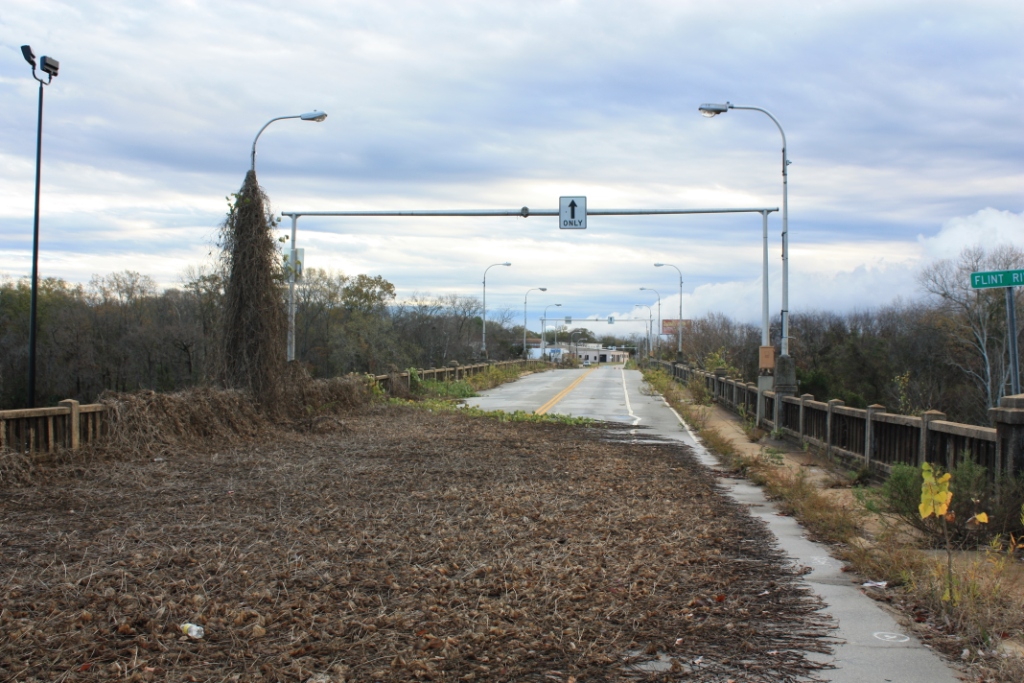
Day 100, Post-Apocalypse

Day 100, Post-Apocalypse

JB and I worked tediously to find and repair damaged insulation on the main from the solar farm down to our bunker. Breaks or cracks in the insulation meant lost energy that we could not afford, but we had to bury the cheap cable available to us because the Mojave sun degraded it too rapidly otherwise. Burying the line invited a whole new problem because burrowing critters then began to gnaw on it. Whenever there was a power drop, two of our trio had to come out and do line maintenance.  Output should have been at its maximum given it was mid-day during the hottest time of year, but, instead, we were experiencing a sixty percent drop in power.

We wore white from head to toe except for a slit in our ninja-like masks where sunglasses covered the unclothed region and protected our eyes from the harsh rays and glints.  This had always been a harsh land, but changes experienced in recent decades made it far hotter.  I sucked a mouthful of water from the bladder that lay next to my body under my baggy white clothes. The water was hot, like a freshly brewed cup of tea—sans the tea.

“Son-of-a…, sweat is stinging my eyes,”  JB said as he removed his sunglasses, and blotted his eyes with his sleeve.

“Put the shades back on. We can’t have you getting burned retinas,” I said.

“Yeah, yeah, if I go blind who’ll come out here with you to dig up line?” JB’s reply dripped sarcasm.

“Exactly, now you’re getting it,” I said.

JB wiped his eyes once more, and then put the glasses back on. Without the shades, the surroundings looked like the Mars of old movies – cast in a reddish hue.

“I think I’ve got it,” JB called out.

“Looks like it,” I replied, leaning over to look in JB’s newly-excavated hole.

A mole rat skeleton had its teeth buried in the insulation.

After removing the rodent, patching the insulation, and putting the sand back, JB and I walked back to the hatch of our bunker.

JB crouched over the opening. He touched the metal lip of the hatch and immediately yanked his hand away while screaming an expletive. The gloves were not thick; they were for keeping the sun off the skin while holding in as little heat as possible.

JB called down the shaft, “Brit!”

“What ‘cha want,”  Brittany replied.

“How’s our power level, we pulled a fried mole rat off the line,” I asked.

“Yum!…,  The power is back to normal,”  She called back.

I followed JB down the long ladder into the bunker. I pulled the hot hatch closed behind me and secured it against some unlikely foe.

“We need to protect that line somehow,” I said

“I’m just glad we didn’t have to hump out to the transmitter. The last time it broke down I was loopy with dehydration by the time I got back. You sure this is the only place for us to live?” JB said.

Brit came in with two cups of water and handed them to JB and myself.  She said, “I’ve got the loop broadcasting again and the receivers are turned up loud.”

“If you can come up with someplace else where we can tap into the energy necessary to keep broadcasting, I’m all ears,” I responded.

“That’s just it. We’ve been broadcasting all this time, and we’re not getting any reply,”  JB said.

“We also don’t know whether this climate is responsible for our good fortune,” I said.

JB had no response.

“Good fortune? Oh, my, I feel like such a princess.” Brit said curtseying with her fingertips bunched up and wrists kinked as if she were holding up a skirt.

“I mean being alive,” I clarified.

There was a silence.

Brit spoke up, “Remember people?… I love you guys, but I’d give anything to meet a stranger. Remember the last time you saw a crowd of strangers.”


I did, indeed, remember.

I was planning on going to Union Station to get out the Los Angeles. Before I left my apartment, I saw a news story showing the train station among all the other avenues of disembarkation that were thronged with people.  The streets outside the station were flooded with a throbbing, undulating mass of humanity. As in the mosh-pit of a rock concert, there were two primary classes of people: those who were screaming and those who were suffocating. Mixed in among these were glassy-eyed souls who had the good sense to realize they were the walking dead, and to behave accordingly.  There were images from packed train-less platforms, and the grandiose cavernous waiting area.

I packed my gear and donned boots so as to be prepared to hike out of town if necessary. It proved to be a wise move, because I when I arrived at the train station the wall of humanity was impenetrable.

I hated crowds. Crowds were noisy, hot, and chaotic.  My hatred of crowds saved my life. Nature has its weird ways. I had once read about ants that could take down a fully grown cow. They did this by covering the animal benignly, and then, upon a release of a pheromone from the ants on the creature’s head, they all stung at once. This malady, a hemorrhagic fever of some sort, was similarly impossibly intelligent and geared toward wiping out the entire species. It seemed to know when its victims were within a crowd, by what mechanism I cannot imagine, and it would then send them into sneezing and coughing fits that propelled droplets of virulent blood in a fine mist to those all around.

Now I missed crowds, because they were a sign that one’s species wouldn’t die with oneself.

JB and Brit had taken to telling each other their own last crowd stories, which we’d heard before. We’d heard all of each other’s stories.

Well there was one story that I kept for myself. It was the story of the day before I met up with Brit and JB. It was my nadir.

I had been hiking east from the city. My path merged with the I-40 corridor, and it was the most horrific day of my life. I’d always been an avid hiker and had spent long periods on my own before, but these times of solitude were without signs of humanity. As I came upon I-40, there were people all around -in cars and on the ground, but they were all stiff and had rivulets of brown or red running from their noses, mouths, ears, eyes, and presumably the unseen orifices.

When I saw a monastery on a hillside, I thought I was saved.  Surely the isolated monks or nuns were safe and would help out a weary uninfected traveler? I found an old stone church that was post and beam on the inside. Anyway, my hope faded when I found the pews had been used as hospital beds, and all, patient and caretaker alike, were bled out. The only signs of life were rats on the floor, weeds in the mortar joints, and birds in the rafters. That was my moment of greatest loneliness, for if God had abandoned his own house, what hope was there for me.

The Budō Fishbowl

I posted this on my martial arts blog, Jissen Budōka, but decided to re-post here.

fishbowlI’ve read and heard many quotes about the degree to which martial arts CAN’T be taught. At the extreme, there’s Miyamoto Musashi, who claimed to never have had a teacher of swordsmanship.

I recently found myself asking, “What if only 10% of budō is teachable?”

If that were the case, someone who was close to having all of the pieces that could be taught would think themselves a master–even if they were largely ignorant of the other 90%.

Such an individual would be like a fish in a fishbowl, thinking that there was nothing but emptiness above the waterline.

He would be like primitive man, thinking the stars were but pinpricks painted on a dome.

Or, in all likelihood, like the modern man who thinks that if we can just reconcile a couple sciencey bits–maybe experimentally validate string theory– that our picture of the universe would be complete.

TODAY’S RANT: Puny Machines

When the machines rise up against humanity, I will be high on their list of Homo sapiens to put through the chipper-shredder.

You may be asking, “How can such an unimportant person make such a self-important statement?”

Here’s my confession: I have killed more than my fair share of consumer electronics. Let it be known for posterity that these were all cases of manslaughter–or, I guess, machineslaughter. I never once had malicious intent, nor did I ever engage in premeditation. Furthermore, in a way, I mourned the loss of these machines more intensely than I did the death of granny.

Let me say, in my defense, machines are weaklings. The good news is that I don’t worry about them taking over just yet because you can always take out a marauding terminator with a can of soda–and even make it look like an accident.

The rant part of this post has to do with the divergence between what is advertised, and what is true.

Below is a video that Lenovo has put on YouTube to show how robust their computers are.

Here was my experience, avoiding the lunging paw of a hyper cat, I spilled a drop of milk the size of a quarter onto the upper mouse buttons. This killed my mouse instantaneously (I’m aware of the irony of me killing a mouse while my cat looked on in horror.) My entire laptop died a few weeks later from what I assumed to be related causes.

Your Experience May Vary

Your Experience May Vary

Since my last machineslaughter, I’ve  quelled my killing spree by implementing three simple rules.
1.) I don’t eat in the same room as my computer.
2.) I don’t drink within 12 feet of my computer.
3.) I must close the computer any time I leave the room, if a cat is present. (This is not so much to save the laptop as to prevent the cat from composing a witty coded email such as, “a;oreanrpwipfvchaqewutheiuancvpiwe. wpn2qeyt028hnfqv-,” and sending it out to my entire email list with his butt.)

Do I resent having to walk on eggshells around consumer electronics? A little. I’d like to be able to listen to my transistor radio while taking a bath. (Research notes: Do radios still have “transistors?” Do they still make radios?)

However, what I really resent is the manufacturer making it seem like its product is indestructible when, in fact, it’s really pretty puny.

That said, I like the fact that people are tougher than the forces of robopocalypse by virtue of the fact that we can get wet.  (Of course, by that logic, fish should be our gods.)

Until next time, keep your can of Coke at the ready (but don’t drink it, that stuff will kill you.)

DAILY PHOTO: Toccoa Falls, Georgia

About an 18 story drop

About an 18 story drop

In 1977, there was a flood here when a dam gave way, killing almost forty people.

POEM: Twisted Time

Six months a year
the river flows
away from the sea.
Entropy’s fall?

No.

The fits and starts
of progress are
not rooted in
twisted time.

Here,
blacksmiths exist.
The hammer bounces
on the anvil

Tap-Tap-CLANG
Tap-Tap-CLANG

Ordered repetition,
until the steel begins
to bend and twist
and flex and tear.
It tears like taffy,
taffy glowing orange.

Tap-Tap-CLANG
Tap-Tap-CLANG

What is time for
that glowing rod?
The fire makes
its molecules
race and feud.

The hammer spreads
time into an eternity

of

Tap-Tap-CLANG
Tap-Tap-CLANG

Taken in Hungary in 2008

Taken in Hungary in 2008

Tulip 7

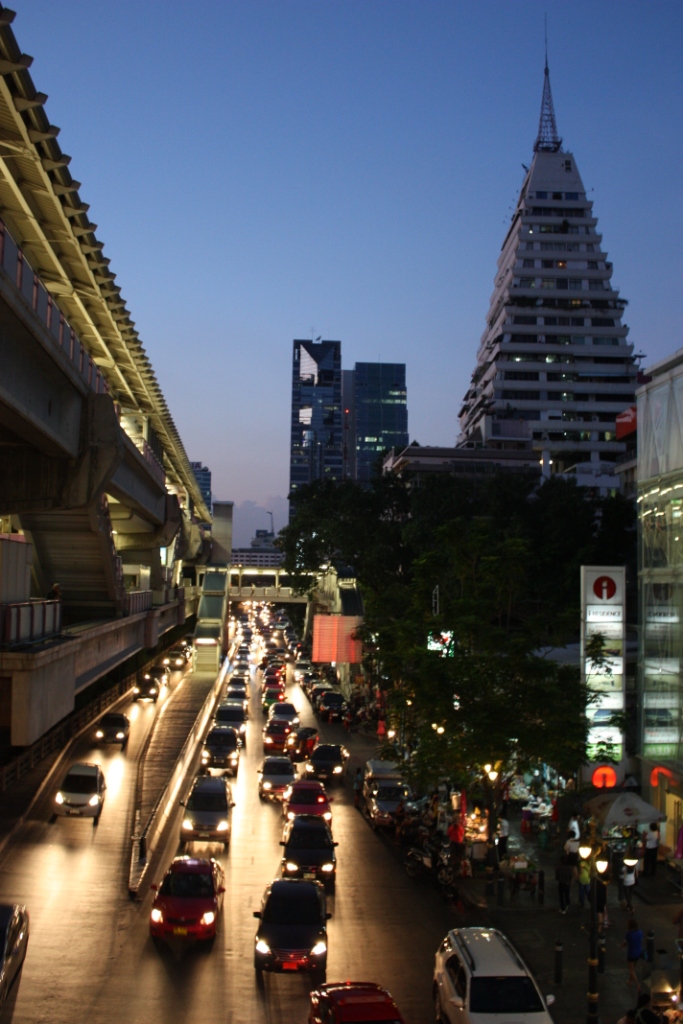
Night falls on Bangkok

Night falls on Bangkok

I’m speed-walking down the sidewalk off Sukhumvit Road like one of those elderly mall-walkers.  Like the mall-walkers, there’s an irony to my speedy step. I’m on vacation. I have no particular place to be, and no particular time by which I need to be there. Unlike the mall-walkers, my path is perilous. I have to weave around street-food vendors deepfrying springrolls or grilling satays (and fight my stomach’s urgings), evade the grasping taunts of idle tuk-tuk drivers, and wave off T-shirt vendors selling shirts featuring elephants, thaiboxers, and Singha beer.

I don’t know why I’m moving so quickly. It feels natural. It’s the pace of the city. To walk slow would be to swim against the current. If you want the truth, I walk fast because in the back of my mind, in the deep recesses of irrationality, I feel that if I slow down the city will collapse into me, forming a black-hole. It will start with a few tuk-tuk drivers, a beggar, a prostitute, and a few street vendors converging on me. They will create a gravity, attracting more vendors, beggars, drivers, and hookers. If I don’t walk fast, I fear that I will be crushed in the center of a dense mass of humanity.

Leaning against the marble wall of a bank façade, a master of timing, an Indian man blinks, touches his forehead, and grimaces–as if my approach causes him some sort of psychic pain. I brace myself for the scam. He steps away from the wall into my path, gently extending an arm.

He says, “Sometimes, you think too much.” He’s trying to convince me that he has insight into my soul by making a statement that, while perfectly correct, contains no information content whatsoever. He’s smooth in behavior and handsome of feature. I bet he makes a mint in his chosen profession.

An instantaneous battle rages inside of me. On the one hand, I’m an introvert– or perhaps a sociopath– something like that. Whatever my affliction, interacting with strangers is draining. On the other hand, I’m curious about everything. I know the man is a scam artist. It’s not that I was never on the turnip truck, but I fell off a couple of decades ago, and while it took me several bounces to come to a stop, I eventually became quasi-worldly. While I know he’s a scam artist, I don’t know what kind. I so desperately want to know that I stop.

After a greeting, he says, “I can tell your future. There are two women in your life, I can tell you how it will work out.” His speech is clear, and well-spoken, like he was born in Mumbai, but moved to Cincinnati when he was 15. He is, in all respects, a smooth operator.

However, he’s wrong already.  As I said, I’m not exactly a people person. It takes all my mental energy to even be monogamous, as opposed to nul-agamous. The idea that I’m maintaining two relationships would be a bit laughable to anyone who could really “see into my mind.” Whenever I hear about one of these guys who has two separate families, I always think, “How many hours a day did the good Lord grant you?” Because I can’t fathom living that way and not being in an utter state of exhaustion every minute of every day. I’d be a wreck.

However, I give him points for playing the odds. I’m a middle-aged man with a gray goatee walking down the street in Bangkok. I’m probably the only one fitting that description who hasn’t fallen desperately (and pathetically) in love with an “eighteen year old” bar girl who the man secretly thinks is 16, but who, in reality, is 29.

Incredulity must show in my face, because he changes tack. “Let me show you proof of my abilities.”

He extracts a flip-style pocket-notepad from the inner pocket of a tweed sport-coat that is grossly out-of-place in steamy Bangkok, but which lends credibility. He scribbles down something on a page so that I cannot see. He then tears off the strip of paper containing his writing. He wads the paper up.

“I want you to think of the English-language name of a flower. Have you got it?” he asks.

“Yeah,” I reply.

“Now think of a number between six and nine. Have you got it? Now think of them together.”

In my mind I see, Tulip 7.

He hands me the wadded up scrap. I unravel it. It reads, “Tulip 7.”

He then opens his day-planner and asks me to put in any amount that I feel is fair and he will tell me about my future.

What he doesn’t know is that I’m the exact wrong person to pitch his act to. As a skeptic, I make Descartes look like gullible. (After all, Descartes developed a “proof for the existence of God”–granted everyone deserves a nadir of thought, and that was clearly Descartes’.) The most fundamental thing that studying Economics and Political Science taught me was that humans are completely incapable of making meaningful predictions. I’d seen this guy’s act before from a guy named Professor Bruce Bueno de Mesquita, but instead of getting a few baht on the streets, the political scientist got millions of American tax dollars for convincing the CIA that he could tell the future.

As I walk away, he says, “You have an ailment. I can tell you about it.”

I think, Good one, that’s a true test of my powers of skepticism, and I continue to walk, thinking out how the mentalist scammer did his trick… and wondering if I have cancer.

DAILY PHOTO: Shark Ray Alley in Belize

A Disciplined School

A Disciplined School

This was taken with a cheap underwater camera while snorkeling off Ambergris Caye in Belize. The fish align themselves in the shadows of boats. The water is shallow there, and so the sun blazes off the white sand on the bottom. The fish apparently have a hard time getting fishtan lotion, and need to take advantage of any shadow they can get.

Your Life is Hard? Try Working with Ninjas,Pirates, and Smugglers!

Ninjas, pirates, and smugglers aren’t exactly chatty. They burn, or shred, their correspondence. They sow seeds of disinformation to confuse the authorities. They lurk in the inkiest of shadow worlds behind doors we don’t even know exist. Still, who wants to do a hatchet job on a pirate? Right?

Did I mention that these are characters in the novel that I’m currently revising (or did I let you believe I was talking about in-the-flesh smugglers so that you’d keep reading.) Sorry, no one ever accused me of NOT being a deceitful bastard. Well, my friend, you’re now more than Tweet deep in this post; that’s quite an investment; it’s the modern-day equivalent of having read The Iliad, so you might as well keep reading.

Kiss the Cobra (my third working title) features a cast of characters of not only the aforementioned occupations but also monks  (both the scholarly and  kick-ass kung fu varieties), an Emperor, a muay Thai master, and a secret society that makes ninjas look like chatty Cathys. Like all good lies, this novel begins with a seed of truth. That seed is the rescue of Emperor Go-Daigo from imprisonment by an evil (ok, quasi-evil) shogun in 1337.  From that seed, it’s my wild imagination run amok… or is it? The Emperor assigns the loyalist ninja who rescued him, Korando, to travel to Southeast Asia to acquire an artifact that legend has it will help him re-consolidate power.

Cut to the present day, a linguistically-talented young man, Matsuo (a.k.a. “Matt”), comes into possession of a scroll. The scroll is Korando’s journal, written and hidden as a confessional. Matt investigates Korando’s journal on an electronic bulletin board only to find himself being chased by nefarious characters. Matt discovers that there are still people willing to kidnap, kill, or commit treason for the secrets that Korando’s journal may possess.

The novel weaves the 14th century journal with this present-day cat and mouse game between the forces of good and evil. There’s murder and mayhem, love and betrayal, victory and defeat, virtue and vice; in short everything you love in a novel is densely crammed into this book.  There’s even one character who may or may not be a Zombie–I’ll let you be the judge.

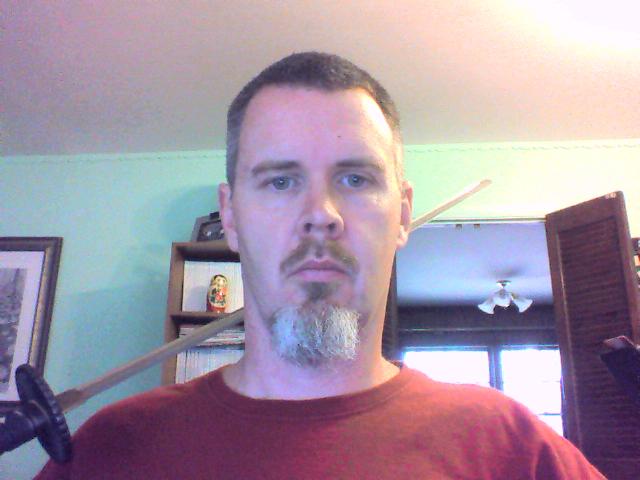
Now let me just add this screenshot of me to show you ho

Do you ever get a chill on the back of your neck?

Did you ever get an inexplicable chill on the back of your neck?

BOOK REVIEW: Smile When You’re Lying by Chuck Thompson

Smile When You're Lying: Confessions of a Rogue Travel WriterSmile When You’re Lying: Confessions of a Rogue Travel Writer by Chuck Thompson

My rating: 4 of 5 stars

Amazon page

Smile When You’re Lying gives the reader an insider’s view of the deceit rife in travel writing. In the process, Chuck Thompson tells a story of life on the vagabonding circuit. Instead of being a story of idyllic and pristine white sand beaches, it’s the story of drug- and booze-riddled expats and the prostitutes they frequent.

Thompson lived a colorful life. He tells of how his interest in Thailand began when he heard stories while in a jail in Alaska. He introduces cast of characters, such as Shanghai Bob, many of who are even more colorful than he. It’s this wild living that makes the book an interesting read, but, ironically, it also makes such stories impossible to sell to any of the travels magazines–all of which make money off of advertiser dollars, advertisers who have an interest in making travel seem safe, clean, and family-friendly.

Thompson tells of how he began teaching English in Japan, a common point of origin for expats taking to Asia. Japan has a large and well-developed program, called JET, that brings native English speakers to Japan to teach language or work in government offices as translators.

In addition to the intro on Thailand, a chapter on his Alaskan youth,and one on his JET days, there are chapters on Latin America, the Caribbean, the Philippines, and Eastern Europe. Furthermore, there is a chapter that lends travel advice for aspiring travel writers and one about what travel mags don’t want readers to know. It should be noted that besides having written for such magazines, Thompson did a stint as an editor as well.

Thompson also devotes a chapter to countering the myth that Americans are–on the whole–bigger travel bastards than the people of other Western nations.

If you are interested in travel writing or vagabonding, this is a worthwhile read.

View all my reviews