Long Gone Frog [Haiku]

water lily -
its pad held a frog,
but now it's gone

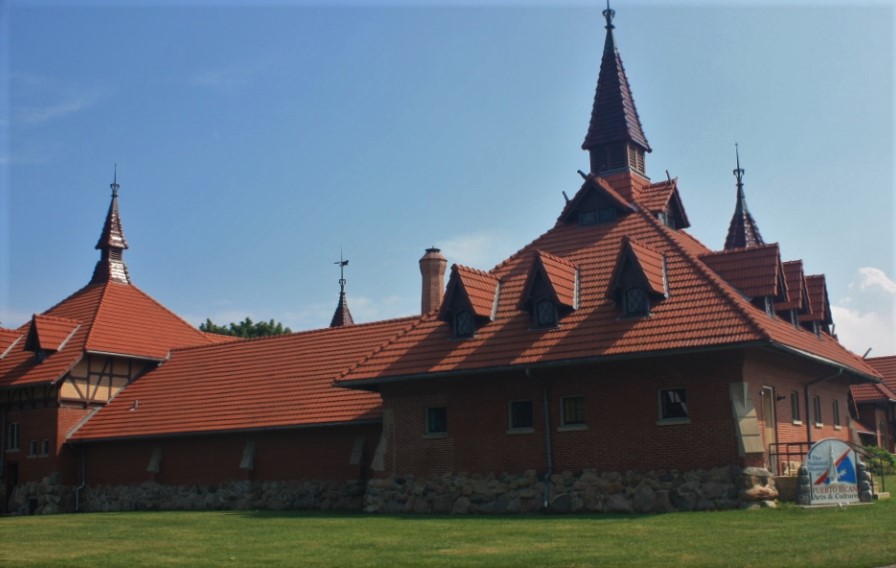
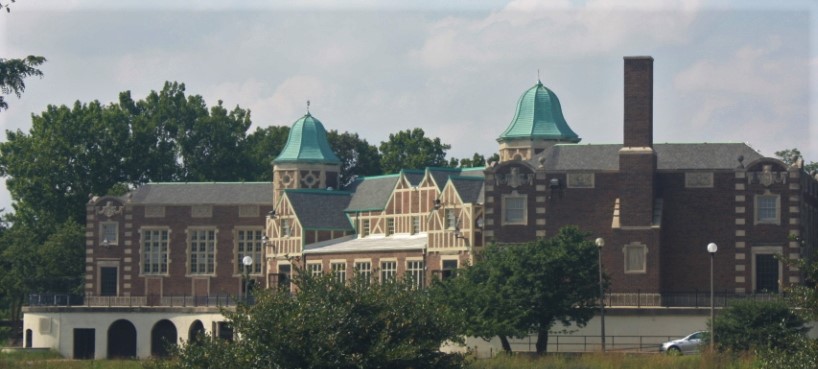
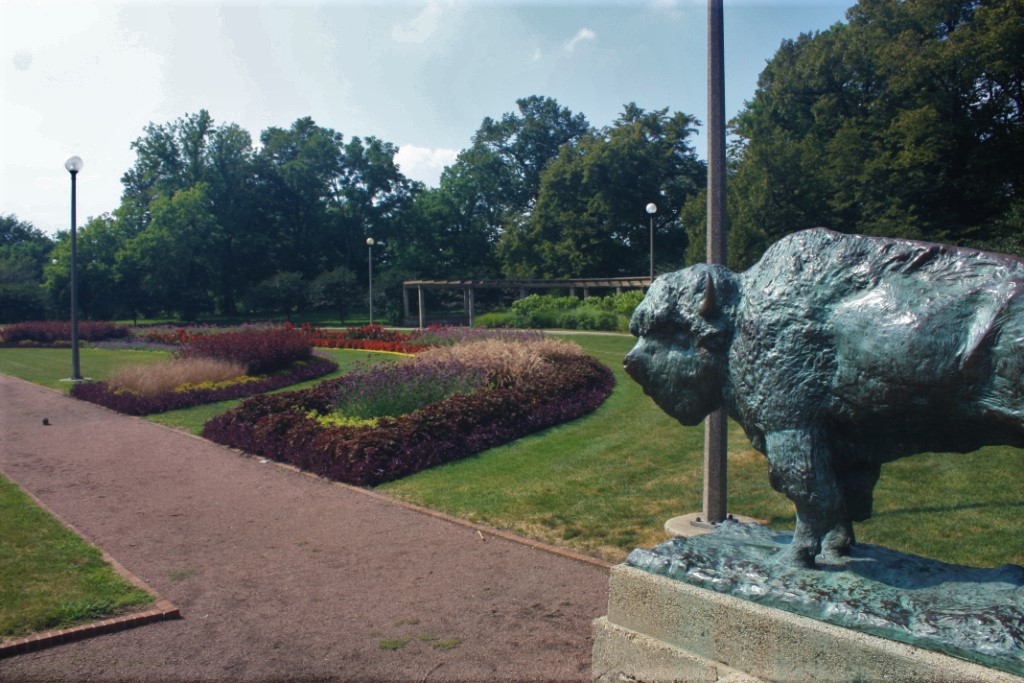
DAILY PHOTO: Scenes from Humboldt Park

The National Museum of Puerto Rican Arts & Culture
Humboldt Park Boathouse
Humboldt Park Bison

BOOK REVIEW: Proust & the Squid by Maryanne Wolf

Proust and the Squid: The Story and Science of the Reading BrainProust and the Squid: The Story and Science of the Reading Brain by Maryanne Wolf
My rating: 5 of 5 stars

Amazon.in Page

Time to get meta, and do some reading about reading. Wolf’s book explores the neuroscience of reading, the evolution of writing systems, and what keeps some children from learning to read as rapidly as most. If you’re wonder about the seemingly arcane title, Proust’s essay “On Reading” planted a seed of thought that would become this book. The squid bit reflects the aquatic creature’s famous neurological adaptability, which is also witnessed in the learning human brain. Reading as both a mystic experience and as the unanticipated consequence of an extremely plastic brain are among the book’s recurring themes.

Another recurring idea is that reading has a cost. This view was famously expressed by Socrates, who believed reading would contribute to diminished memory, intellectual laziness, and other problems. Wolf reflects upon Socrates’ criticisms, but also draws a parallel between Socrates’ ideas on the subject and the present-day argument that the internet / social media is driving us inexorably and inevitably toward an “Idiocracy” type world.

The parts of the book that deal with the neuroscience of reading do get a bit complicated. It would be hard for them not to as reading is a complex task unfolding within the most complex system that we know of. However, wouldn’t say that this book is any more dense or incomprehensible than most pop neuroscience books – especially as it’s mixed in with less challenging material.

My understanding of dyslexia (Ch. 7 & 8) grew considerably while reading this book. I learned that it isn’t a unitary affliction, but can come about at any of a number of cognitive tasks that have to transpire during reading.

If you’re interested in how humanity learned to read, the benefits and costs of this capacity, and what dyslexia really is, this book is definitely worth reading.

View all my reviews

DAILY PHOTO: Twisted Petals

Taken in Singapore in October of 2016
Frangipani

BOOK REVIEW: Neil Gaiman’s Neverwhere Adapted by Mike Carey

Neil Gaiman's NeverwhereNeil Gaiman’s Neverwhere by Mike Carey
My rating: 5 of 5 stars

Amazon.in Page

This is a graphic novelization of one of the greatest urban fantasy novels, ever. While it’s been a while since I read the novel, this adaptation felt true to my memories of the original (one of my all-time favorite novels.) Carey did make a perspective shift from the third-person in the book to first-person in the comic book, but, otherwise, the story is substantially unchanged.

The protagonist is Richard Mayhew, a seemingly preternaturally average middle-class Londoner. Mayhew is going about his life as a suit-and-tie office worker with a domineering fiancé when he almost literally stumbles across a wildly-dressed young woman on the sidewalk. Mayhew’s decision to help the young woman will force him to reckon with a London that exists in parallel to the one he knows, a London of Marquises and angels and monsters and magically-endowed thugs for hire – any (or all) of which may present hazards to his health and well-being. The young woman is the last remaining heir to an important aristocratic family of London Below, and her problems are more dire than being passed out on the sidewalk.

Despite having read the novel, I enjoyed the graphic novel immensely and found it well worth retaking this beautifully rendered trip through the looking-glass into the London that exists beyond our world. This hero’s journey offers a satisfying character arc and many turns and surprises. Even if you’ve read the novel, I’d recommend giving this adaptation a look.

View all my reviews

BOOK REVIEW: The Amazing Adventures of Kavalier & Clay by Michael Chabon

The Amazing Adventures of Kavalier & ClayThe Amazing Adventures of Kavalier & Clay by Michael Chabon
My rating: 5 of 5 stars

Amazon.in Page

Escaping 1939 Prague, Joe Kavalier moves in with family in Brooklyn, becoming fast friends with his younger cousin, Sam Clay. Combining their talents, Joe as artist and Sam as writer, the young men create a number of popular comic book characters. For those unfamiliar with comic book history, a major stream running through this story involves the trials of “work for hire.” Because of the nature of comic book publishing, creative types tended to work on salary (giving the publisher all rights to whatever was created – e.g. TV shows, toys, etc.) Because of this, the creators of some of the most lucrative characters and stories received little credit or financial reward (relative to the profits.) While these artists / authors didn’t lose their shirt if a title failed, there’s something offensive about Corporations (or actors) shoveling in money from a franchise while the creator lives a dank suburban existence.

If it were just about the unfair lives of comic book creators, the book would be interesting — but not 600+ pages interesting. What makes this a compelling story is that each of the titular characters has a darker challenge with which to deal. For Joe, it is an obsession with bringing as much of his family to safety as he can, and coping with his rage against the Nazis. For Sam, it is the fact that he is a closeted and conflicted gay man in 1940’s and 50’s America. The driving question is whether the two men will be able to avail themselves of the tripartite support network (themselves, plus Rosa – Joe’s girlfriend,) or whether either (or both) will self-destruct because of an inability to do so.

This is a well-crafted novel and I highly recommend it.

View all my reviews

BOOK REVIEW: Henry VI, Part 2 by William Shakespeare
Henry VI, Part 2Henry VI, Part 2 by William Shakespeare
My rating: 5 of 5 stars

Amazon.in Page

Project Gutenberg

Whereas the previous part of this trilogy was a war story largely set in France, this middle section is much about courtly intrigues and more local threats to the Crown. It does see the “War of the Roses” infighting between York and Somerset come to a head, as well as a successful plot by the new Queen and Suffolk (who might be making the beast with two backs) to get rid of the much beloved Gloucester (the King’s protector / advisor.) And there’s a brief but tumultuous rebellion led by a commoner who thinks himself kingly material, Jack Cade.

Despite the fact that the historical events of this play are among the latter half of those covered in Shakespeare’s histories – chronologically — it is believed that this is one of Shakespeare’s first (and, quite possibly, THE first.) Like other early Shakespearean works (e.g. “Titus Andronicus,”) it doesn’t have all the bells and whistles by way of beautiful language. That said, it’s loaded with tension and has elements one might recognize from latter works, such as the comedically capricious nature of crowds. (Shown when the people yo-yo between Cade’s rebellion and the aristocrats who argue for loyalty to the Crown.)

The possibility that this might be Shakespeare’s first may seem unlikely because it turned out to be “Part II.” However, one piece of supporting evidence is the play’s intense cliff-hanger. [Henry VI, Part 1 is comparatively self-contained, but this this part ends with the King being pursued by York’s forces — who’ve dominated in a skirmish against loyalist forces.]

This may be an early play, and – thus — not one of the Shakespeare’s most mellifluous works, but it’s engaging and definitely worth a read.

View all my reviews

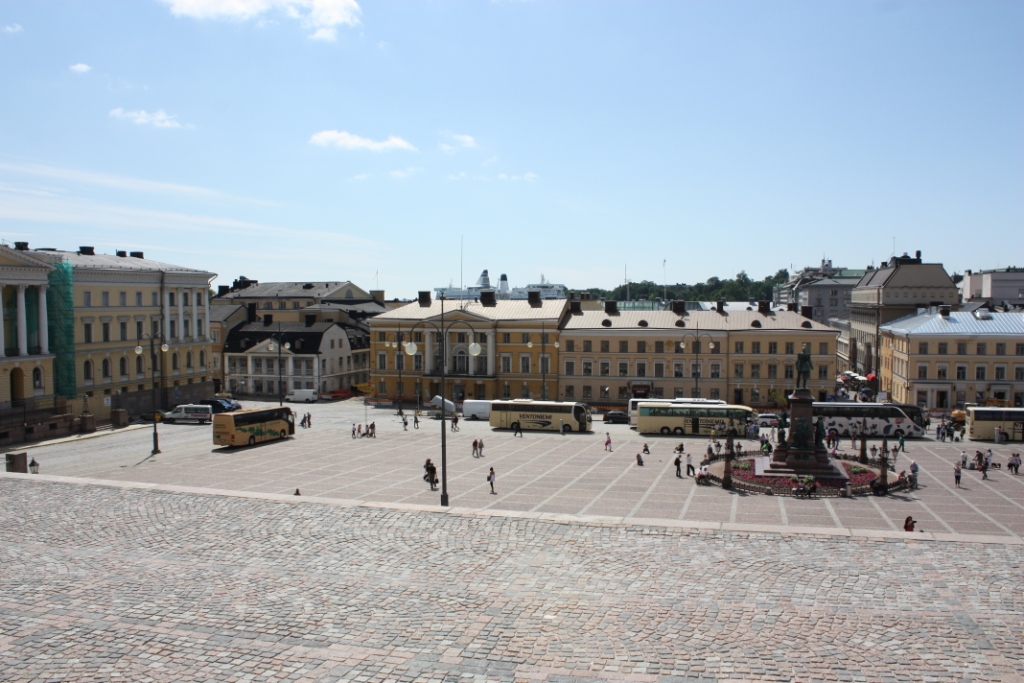
DAILY PHOTO: Senate Square, Helsinki

Taken in the summer of 2011 in Helsinki

BOOK REVIEW: Avadhūta Gītā by Dattātreya

The Avadhuta Gita - Song of the AsceticThe Avadhuta Gita – Song of the Ascetic by Dattātreya
My rating: 5 of 5 stars

Amazon.in Page

Free Online: Sankaracharya.com

An Avadhūta is a mystic who’s transcended a dualistic view of the world, avoiding distinctions between self and everything else. Often, these sages are compared to those of various spiritual traditions who display divine madness, theia mania, crazy wisdom, or whatever one wishes to call it (e.g. the Nyönpa of Vajrayana [Tibetan] Buddhism, or sages such as Ikkyu [Zen] or Saint Simeon [Christian.]) That’s because said individuals may behave in ways that seem strange because the conventions of society often doesn’t make sense in the context of the Avadhūta’s worldview.

“Avadhūta Gītā” translates to “Song of the Free Soul,” and it consists of eight chapters of poetry that read like sutras or epigrams (concisely stated bits of wisdom.) The poem can feel a bit redundant as it repeatedly hammers home the experience of a world free of duality and distinction, singing the virtues of oneness in oh so many ways. That said, other valuable lessons are eloquently conveyed throughout. For example, chapter two explains why one shouldn’t worry on the bona fides of one’s teacher, but rather take from him or her what is of use and not worry if a teacher doesn’t know everything. It makes the apt comparison that one doesn’t need a freshly-painted and ornately-trimmed boat to cross the river, anything with essential boat-like qualities will do.

There are many English translations of this poem. I compared two, and they read quite differently but conveyed the same gist. I’m not qualified to speak to how either compared to the original Sanskrit, but I didn’t feel either translation greatly outpaced the other in terms of conveying ideas (though one was more eloquently composed [though arguably with less clarity.])

If you’re interested in Yogic and Indian philosophy, I’d recommend giving this poem a read.

View all my reviews