
BOOKS: “Lost in the Twentieth Century” by Albert Szent-Györgyi

Lost in the Twentieth Century (Annual Review of Biochemistry Book 32)Lost in the Twentieth Century by Albert Szent-Györgyi
My rating: 5 of 5 stars

Available Online – NIH National Library of Medicine

This is the very brief autobiography of a fascinating man. Szent-Györgyi is most famous for work in biochemistry involving Vitamin C, work that won him a Nobel Prize. However, his life is not only notable for science before and after the Nobel (after he worked on the physiology of muscular activity, on electron activity in physiology, and on cancer.) He also performed important works outside the laboratory, notably he conducted an espionage / diplomatic mission during the Second World War (“Espionage” in that he traveled to Turkey under false pretenses, under cover of giving a lecture at a university, “diplomatic” in that the trip’s true objective was to negotiate with the Allied powers.)

Szent-Györgyi has some interesting quips and insights that make it worth reading this pamphlet-scale book, even though his Wikipedia page probably contains as much information. He had an interesting way of thinking about matters, both scientific and not, and was politically and socially engaged in the world.

If you’re curious about Szent-Györgyi or enjoy biographies, in general, I’d highly recommend reading this one.

View all my reviews

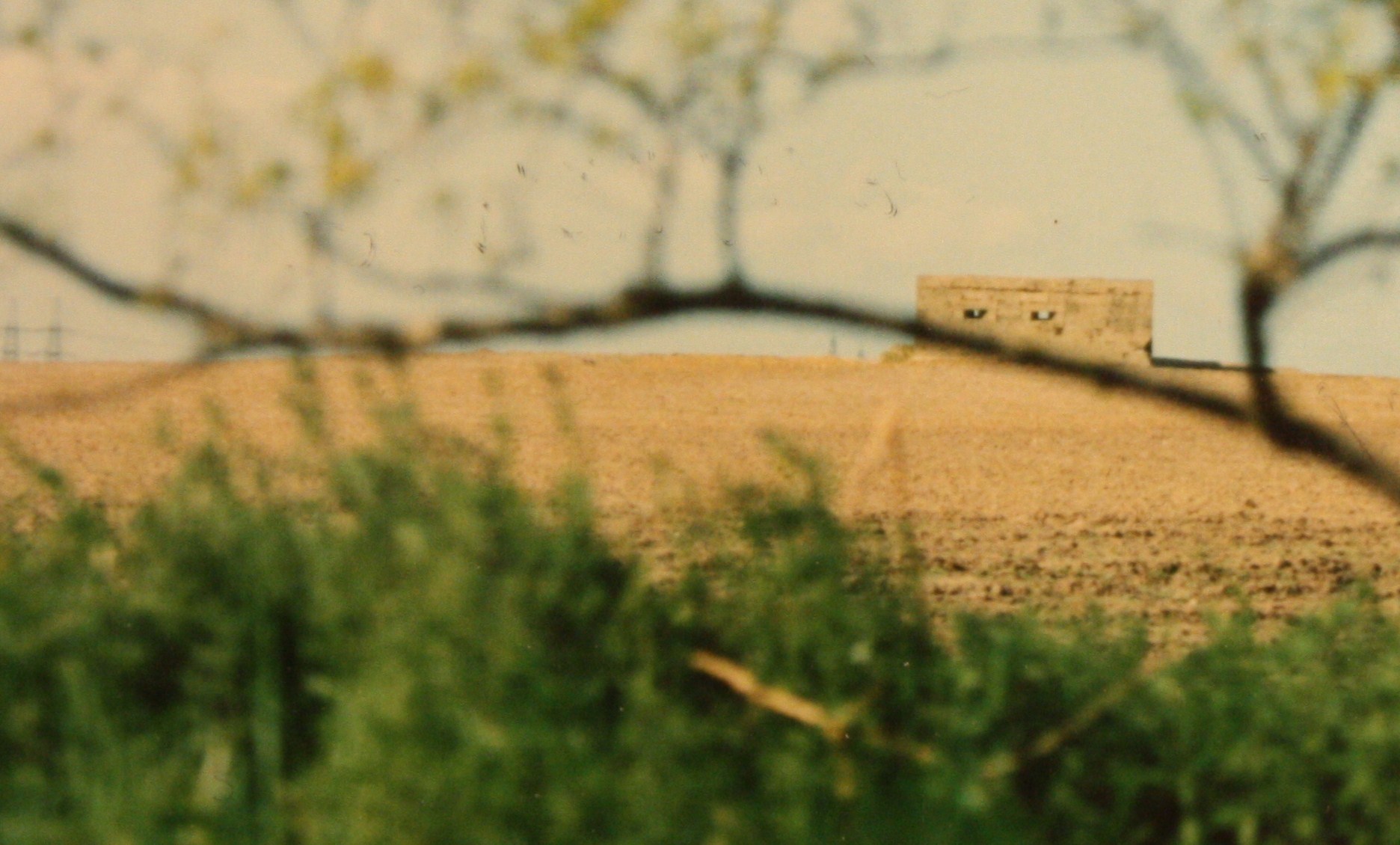
Pillbox Bunker [Tanka]

pillbox bunker from
a war a lifetime ago
sits in a field.
what the farmer must think
as he plants around it.

BOOKS: “The Last Brother” by Nathacha Appanah

The Last BrotherThe Last Brother by Nathacha Appanah
My rating: 5 of 5 stars

Publisher Site — Gray Wolf Press

When Mauritius made it onto my shortlist for upcoming travel, I needed to find an enlightening work of Mauritian literature, and this book was prominently discussed as one that might fit the bill.

The book is narrated by an old man telling a story from his boyhood. It is a poignant and riveting tale. The book’s title, The Last Brother reflects the protagonist’s (Raj’s) first tragedy, losing his two brothers in a natural disaster in Mapou, Mauritius. Raj’s family then moved south where his father got work in a prison.

Much of the book revolves around a strange historical event — the imprisonment of a large number of Jews on Mauritius during World War II. These Jews had fled Europe and were trying to make their way to Palestine but were not granted entry because of a lack of acceptable documentation. They were then sent to Mauritius where they were imprisoned in a detention camp.

The reader only sees this event through the relationship of Raj and David. Raj is taken to the prison infirmary after being beaten by his alcoholic father. There he meets David, a Jewish boy in the detention camp. It isn’t until the very end of the book that the author presents the facts of the historic event. I think this is a wise move, allowing the reader only knowledge of what the characters would know (which – as nine-year-olds – is not much.) The late reveal adds to the tension and makes some of the characters’ decisions more understandable.

The last part of the book is a little reminiscent of Huck Finn, except without Twain’s lightheartedness and with a more melancholic and tragic tone and ending, but featuring two young men on the lam for different reasons.

I found this novel to be a potent read and would highly recommend it for readers of global literature — especially if you expect to find yourself in Mauritius at some point.

View all my reviews

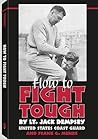
BOOKS: “How to Fight Tough” by Jack Dempsey

How to Fight ToughHow to Fight Tough by Jack Dempsey
My rating: 5 of 5 stars

Read online at Archive.org

This book was put out by the Coast Guard during World War II as a commando fighting manual. The lead on the project was heavyweight boxing champion Jack Dempsey, aided by a small team of others — all with varied bona fides in Combatives.

This is a fun book to read. It’s loaded with 1940’s slang, over-the-top reminders to fight tough and mean, and jokes that — while dated — still amuse with their quirky language. Seriously, the voice in my head was playing in Trans-Atlantic dialect (1940’s radio announcer voice) or as James Cagney playing a gangster the whole time I was reading this book.

That said, while the text was campy, the actual techniques are solid. The book consists of eighteen lessons that are built on well-established grappling and submission techniques such as hadaka jime (rear naked choke.) Also, while there is often only one (or — at most — a few) photos per technique, they seemed to put some effort into doing them conscientiously. (And they are almost full-page shots, so one can actually see a bit of detail.) The techniques include: unarmed v. various unarmed attacks, unarmed v. knife, unarmed v. gun (holstered, and front and rear approaches,) and unarmed v. bayonet.

I’d highly recommend reading this book. It’s a quick and amusing read with some useful techniques inside.

View all my reviews

BOOKS: “American Vampire, Vol. 3” by Scott Snyder

American Vampire, Vol. 3American Vampire, Vol. 3 by Scott Snyder
My rating: 5 of 5 stars

Publisher site

The third volume of the American Vampire series advances the story into the 1940’s — World War II to be precise. The book contains two distinct storylines, both involving missions behind enemy lines. The first, “Strange Frontier,” is set in the Pacific theater and centers on the character of Henry Preston (the non-vampire husband of benevolent American Vampire, Pearl Jones.) In it, Preston is assigned to an elite fighting squad dispatched to investigate an island that turns out to be infested with a new strain of vampire.

The second story, “Survival of the Fittest,” takes vampiric vampire-hunter Felicia Book as its lead as she is dispatched (in partnership with agent “Cash” McCogan) to Nazi-occupied Romania to investigate claims of a “mad” scientist’s vampire-related research, only to find herself in a completely unexpected and daunting scenario.

I’m enjoying this series. The stories are satisfying and well-crafted, and the books somehow manage to not be just another set of vampire stories. Moving through time allows the stories to be self-contained while making it possible to continue with ever fresh material. (A tactic that works owing to the long lifespans of vampires.) The books also use genre mixing brilliantly, be it detective noir or — in the case of this volume — the war story. Snyder has breathed new life into the vampire story, and I’d highly recommend this series for comic book readers.

View all my reviews

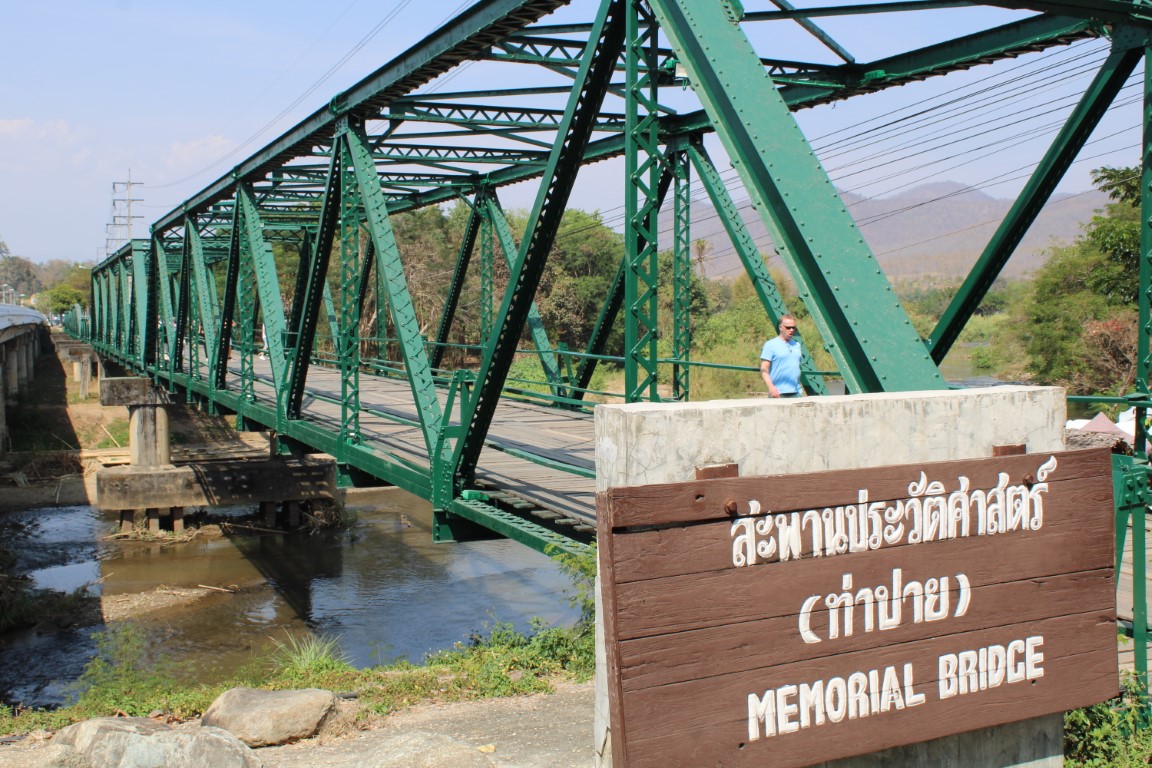
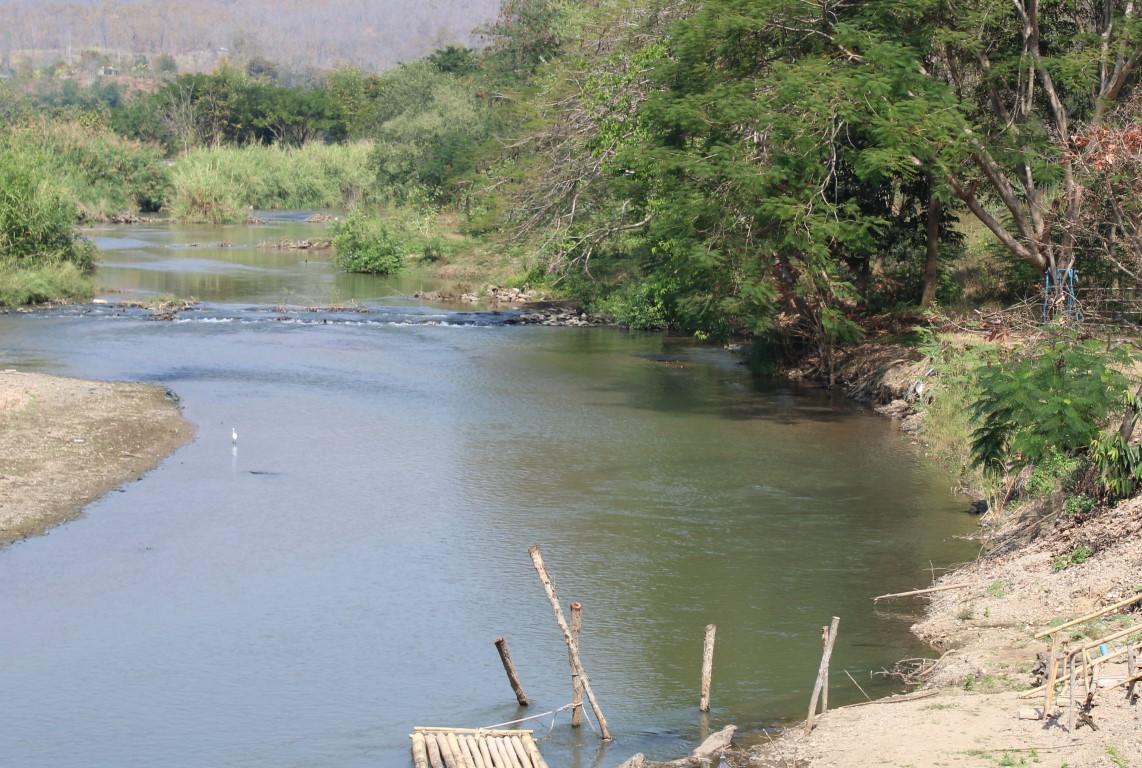
DAILY PHOTO: Pai Memorial Bridge

FORCED MARCH by Miklós Radnóti [w/ Audio]

Crazy. He stumbles, flops, gets up,     and trudges on again.
 He moves his ankles and his knees     like one wandering pain,
 then sallies forth, as if a wing     lifted him where he went,
 and when the ditch invites him in,     he dare not give consent,
 and if you were to ask why not?     perhaps his answer is
 a woman waits, a death more wise,      more beautiful than this.
Poor fool, the true believer:     for weeks, above the rooves,
 but for the scorching whirlwind,     nothing lives or moves:
 the housewall's lying on its back,      the prunetree's smashed and bare;
 even at home, when darkness comes on,     the night is furred with fear. 
Ah, if I could believe it!     that not only do I bear
 what's worth the keeping in my heart,     but home is really there;
 if it might be! -- as once it was,      on a veranda old and cool,
 where the sweet bee of peace would buzz,     prune marmalade would chill,
 late summer's stillness sunbathe     in gardens half-asleep,
 fruit sway among the branches,     stark naked in the deep,
 Fanni waiting at the fence     blonde by its rusty red,
 and shadows would write slowly out     all the slow morning said --
 but still it might yet happen!     The moon's so round today!
Friend, don't walk on. Give me a shout     and I'll be on my way.
Bolond, ki földre rogyván     fölkél és ujra lépked,
s vándorló fájdalomként     mozdít bokát és térdet,
de mégis útnak indul,     mint akit szárny emel,
s hiába hívja árok,     maradni úgyse mer,
s ha kérdezed, miért nem?     még visszaszól talán,
hogy várja őt az asszony     s egy bölcsebb, szép halál.
Pedig bolond a jámbor,     mert ott az otthonok
fölött régóta már csak     a perzselt szél forog,
hanyattfeküdt a házfal,    eltört a szilvafa,
és félelemtől bolyhos     a honni éjszaka.
Ó, hogyha hinni tudnám:     nemcsak szivemben hordom
mindazt, mit érdemes még,     s van visszatérni otthon,
ha volna még! s mint egykor     a régi hűs verandán
a béke méhe zöngne,     míg hűl a szilvalekvár,
s nyárvégi csönd napozna     az álmos kerteken,
a lomb között gyümölcsök     ringnának meztelen,
és Fanni várna szőkén      a rőt sövény előtt,
s árnyékot írna lassan     a lassu délelőtt, --
de hisz lehet talán még!     a hold ma oly kerek!
Ne menj tovább, barátom,     kiálts rám! s fölkelek!

NOTE: Originally titled, ERŐLTETETT MENET, and dated September 15, 1944 (in Bor, Serbia,) this poem was found on Radnóti’s person after his execution by fascists in 1944. The translation used is that of Zsuzsanna Ozsváth and Frederick Turner: i.e. Radnóti, Miklós. 2014. Foamy Sky: The Major Poems of Miklós Radnóti. ed. & trans. Zsuzsanna Ozsváth and Frederick Turner. Budapest: Corvina Books, pp. 228-229.

PROMPT: Historical Event

What historical event fascinates you the most?

It varies over time. For a long time, it was the Second World War and the Holocaust. How do you get the rise of Nazis and the horrors that sprang therefrom? Sadly, I think that question has been answered to my — for lack of a better word— satisfaction.

The execution of Socrates has spurred a great deal of thought.

In terms of what is not so much a historical event, but historical processes, I’m intrigued by the life of Buddha.

Then there are a lot of explorer / adventurer travels.

BOOK REVIEW: He Who Fights With Monsters by Francesco Artibani

He Who Fights With MonstersHe Who Fights With Monsters by Francesco Artibani
My rating: 4 of 5 stars

Amazon.in Page

Release date: August, 30, 2022

This graphic novel tells a story featuring the Prague Golem, a mighty protector figure from Judaic folklore – formed of clay and breathed to life by magic words. The setting is Nazi-occupied Prague, and the golem is brought to life after a great period of dormancy, having been stored in the rafters of a synagogue, in order to once more act as protector to the Jewish people.

It’s a gripping tale of wartime resistance, but with a flat ending. However, I’m not sure it could have concluded in a satisfying way. That’s the challenge of writing a story of a superhero versus Nazis. The Holocaust is such a colossal tragedy that to rewrite the it resets the book into some alternate reality fantasyland, striking a raw nerve and killing any poignancy in the process.

The artwork is skillfully rendered and captures the grim nature of a city under fascist occupation quite well.

I enjoyed the story, despite not really knowing how to process the ending. Maybe that’s the point, that one can’t turn such mindless brutality into a storybook satisfying ending [by satisfying I don’t mean happy, but rather concluded in the definitive and intrinsically reasonable – if horrifying – way of tragedies.] Still, one is left wondering about apparent changes in character motivation and whether they make any sense — because they don’t feel like they do.

If you’re intrigued by a historical fiction / fantasy mashup set in Prague during the Second World War, check this book out, but expect to be left in an uneasy space at the end.


View all my reviews

BOOK REVIEW: Freiheit! by Andrea Grosso Ciponte

Freiheit!: The White Rose Graphic NovelFreiheit!: The White Rose Graphic Novel by Andrea Grosso Ciponte
My rating: 4 of 5 stars

Amazon.in page

Out: March 4, 2021

This tragic story tells the tale of a small college-centric anti-Nazi resistance group, doing so in graphic novel form. While it touches upon the story of six White Rose members who were executed, special emphasis is given to the sister-brother duo of Sophie and Hans Scholl. White Rose was largely involved in distributing leaflets to encourage others to engage in resistance activities against the Nazis. (Note: the translated text of the White Rose pamphlets is included as an appendix.) There is so much attention given to the truly fascinating question of how a bunch of fascist lunatics managed to run a country into such diabolical territory that it can easily be missed that there was at least some resistance within Germany. I, for one, was oblivious to the story of White Rose before reading this book.

The arc of the story takes the reader from the upbeat stage during which White Rose was succeeding in distributing articulate and persuasive flyers, through some of their close calls and other frustrations (e.g. the Scholl’s father being arrested), and on to the bitter end. Much of what I’ve seen previously about resisters centered on communists. One sees in White Rose a different demographic. There are a number of religious references without the “workers of the world unite” lead that would be taken by leftist groups.

I believe the author overplayed the stoicism with which the executed individuals accepted their fate. This is based upon a true story, and so this may seem an unfair criticism because perhaps that’s how it appeared in reality. However, from a storytelling perspective, it felt surprisingly devoid of emotional content [given the events provide loads of potential for it.] There is a great tragedy in young people being executed by the State for asking others to resist fascism, but as a reader I didn’t really feel an intense visceral connection to events. As I said, I suspect this had to do with the author wishing to show that the Scholls took it in all in stride, but I think some display of angst or anger might have made for a more intense reading experience. I don’t know whether it was more a textual or graphic issue that left me unmoved.

All in all, the book was an interesting insight into resistance to the Nazis in an academic environment. I did find reading the pamphlet translations themselves to be insightful. The flyers give one insight into where the student-resisters were coming from, and what buttons wished to push in others. It might have been a bit more gripping, but it was an interesting telling of events.

If you’re interested in learning more about Germans who resisted the fascists, this book provides a quick example of how (and by whom) it was done, and I’d recommend you give it a read.

View all my reviews