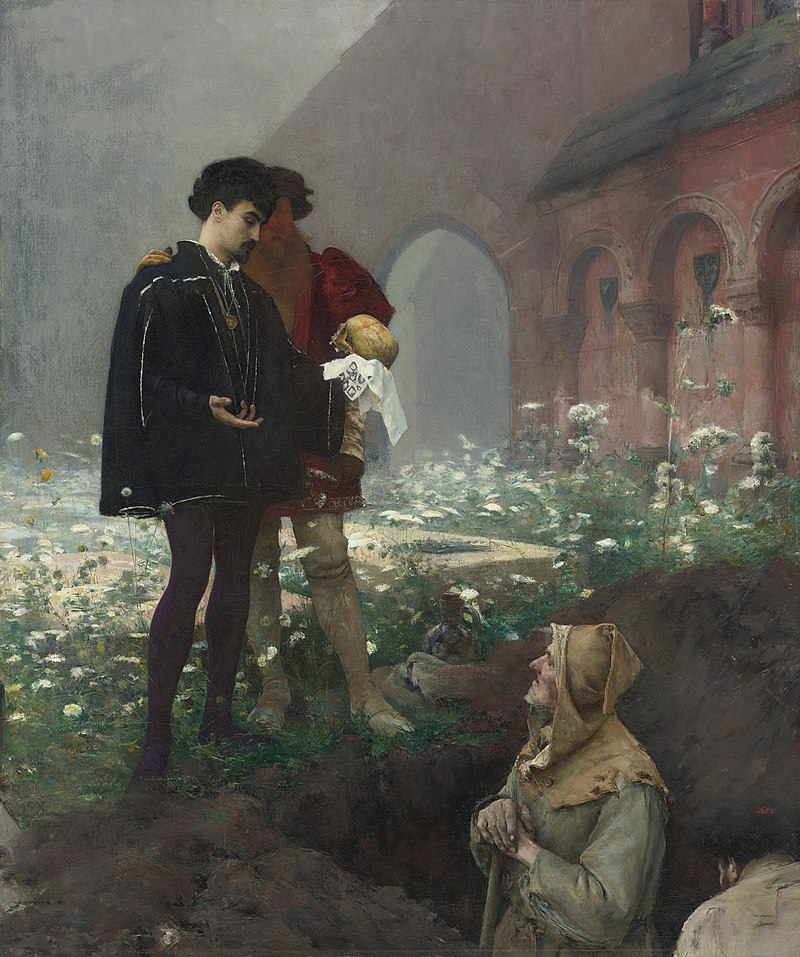
Five Wise Lines from Shakespeare’s Hamlet

We fat all creatures else to fat us and we fat ourselves for maggots… a king may go a progress through the guts of a beggar.”

HamLet to Claudius in Act IV, Sc. 3

One may smile, and smile, and be a villain.

Hamlet to Queen Gertrude in Act I, Sc. 5

I could be bounded in a nutshell and count myself a king of infinite space, were it not that I have bad dreams.

Hamlet to rosencrantz & Guildenstern in Act I, sc. 2

Brevity is the soul of wit.

Polonius to claudius & gertrude in act II, sc. 2

A knavish speech sleeps in a foolish ear.

hamlet to rosencrantz in act IV, Sc. 2

Five Wise Lines from Chōmei’s Hōjōki

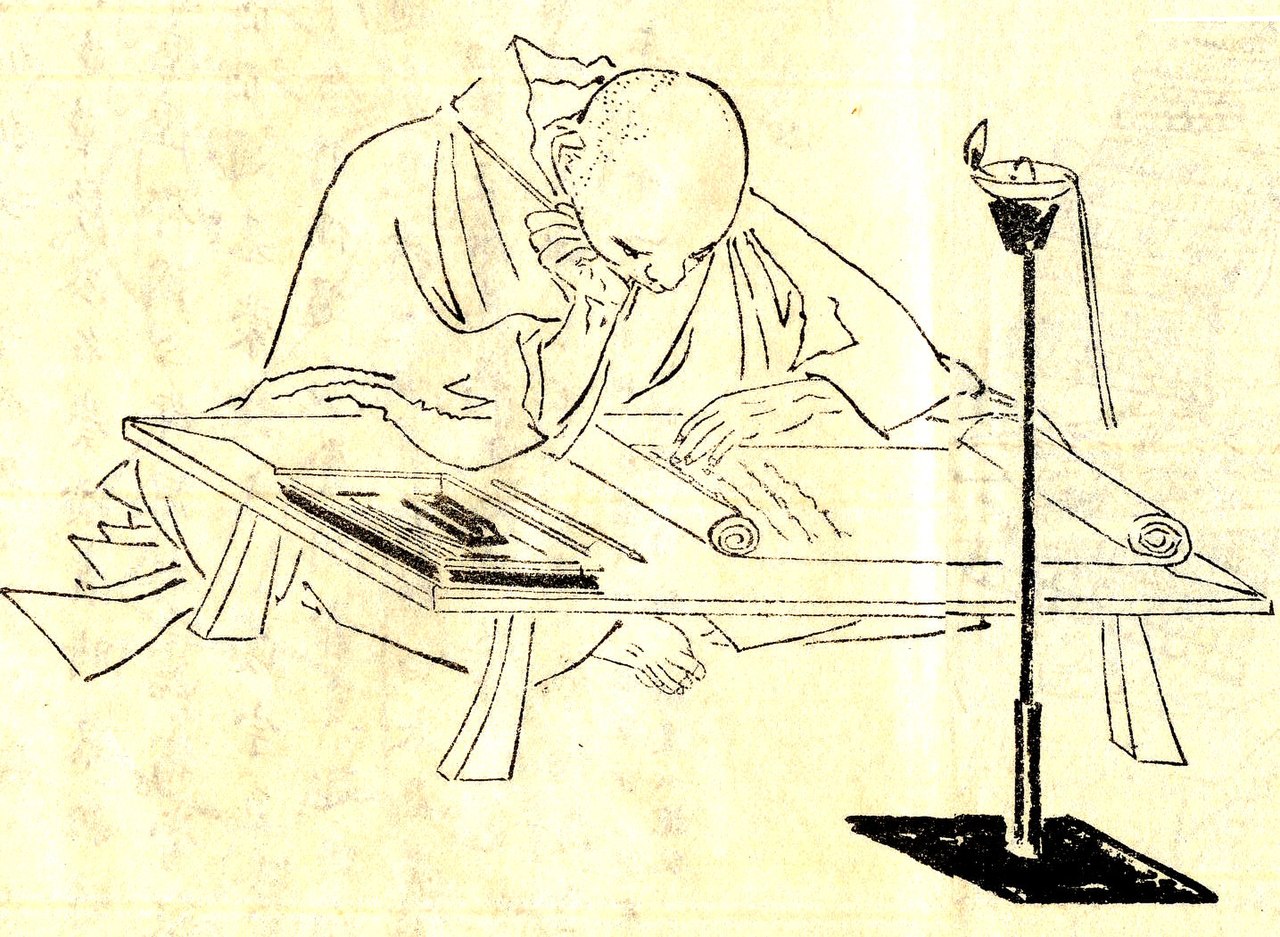
drawing by Kikuchi Yōsai

On flows the river ceaselessly, nor does its water ever stay the same.

 Kamo no Chōmei, Hōjōki

No one owns a splendid view, so nothing prevents the heart’s delight in it.

Kamo no Chōmei, Hōjōki

Knowing what the world holds and its ways, I desire nothing from it, nor chase after its prizes. My one craving is to be at peace; my one pleasure is to live free from troubles.

Kamo no Chōmei, Hōjōki

These days, I divide myself into two uses — these hands are my servants, these feet my transport.

Kamo no Chōmei, Hōjōki

When I chance to go down to the capital, I am ashamed of my lowly beggar status, but once back here again I pity those who chase after the sordid rewards of the world.

Kamo no Chōmei, Hōjōki

Reference: Saigyō Hōshi, Kamo no Chōmei, Yoshida Kenkō. 2021. Three Japanese Buddhist Monks. New York: Penguin Books. 112pp.

Available Here

Spared the Human Curse [Free Verse]

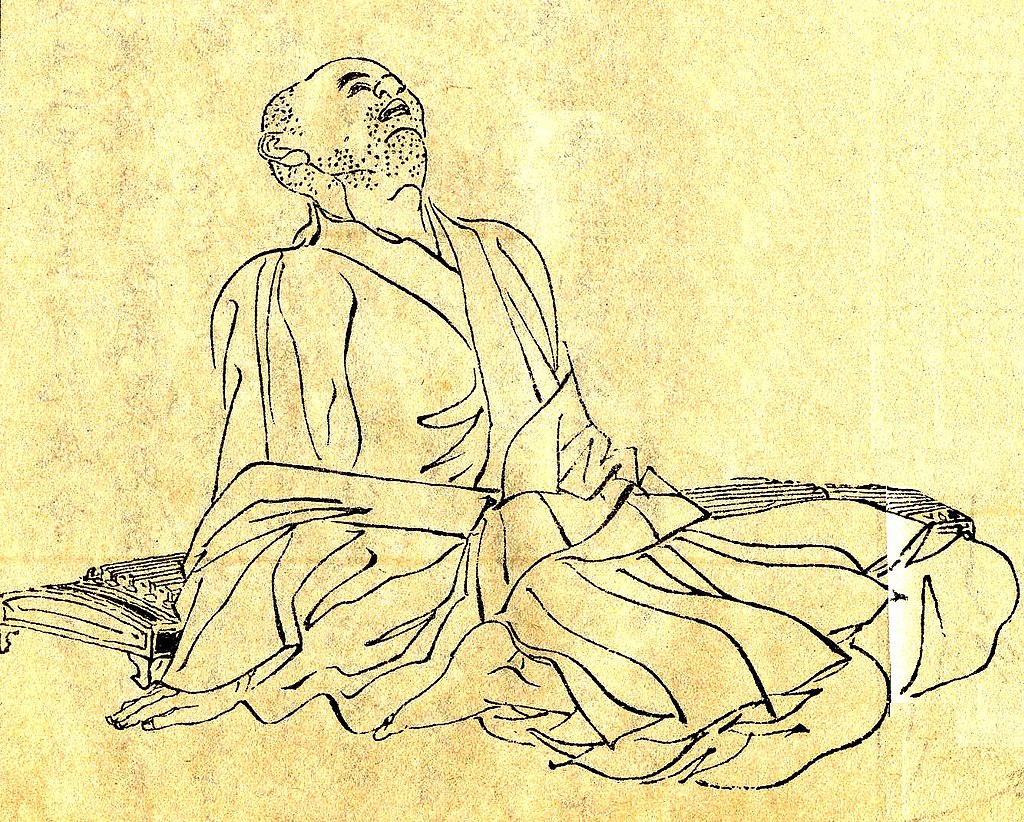
Seven Sages were spared the sickness
 of perceiving the possibility of perfection,
  a "perception" of the patently impossible --
   in truth, just dim and flimsy imaginings of mind,

   and, so, they didn't mind the inevitable
     flaws of the human world. 

Five Great Yarns from Kahlil Gibran’s The Madman

The MadmanThe Madman by Kahlil Gibran
My rating: 5 of 5 stars

Project Gutenberg Page

The Madman is a collection of poems and short fiction (often micro-fiction) of a philosophical nature. The protagonist claims he became a madman when a thief broke into his house and stole his masks, the masks that people wear to fit into society and appear “normal.” Beyond the thread created by this mad character, the entries meander along, each with its own moral and with little discernible overarching plot.

There are many clever stories in this collection, offering food-for-thought on religion, philosophy, and psychology. I’ll discuss five of my favorites:

“The Sleepwalkers” A mother and daughter are both sleepwalkers. When they are somnambulating, they speak to each other in horribly cruel terms, but when they wake up, they display (at least a veneer of) love and affection. Besides demonstrating the nature of the aforementioned masks, the loss of which gets one designated “crazy,” this story encourages the reader to discern the differences between conscious and subconscious mental activity.

“War” This one presents an analogy for war in which a thief breaks into the wrong building, walks into a machine, pokes his own eye out, and then takes the building owner to court seeking “justice” for his lost eye. The craftsman / shop-owner says he can’t lose an eye because he won’t be able to do his work, but he knows a neighboring craftsman who could have his eye removed without great loss of productivity. This story builds upon the well-known “An eye for an eye…” Bible verse with the added absurdity of violence being doled out randomly and without concern for whether the victim had anything to do with the events in question.

“The Wise King” A disgruntled witch poisons a city well with a substance that makes drinkers insane. The King avoids the well water and is spared insanity. However, the townspeople begin to plot against the king because, in their insanity, they believe him (as one who acts differently) to be insane. The king eventually drinks the well water in order to come back into synch with his subjects. This entry speaks to the arbitrary nature of classification of sane and insane, an idea that has been discussed in modern times by mental health experts such as R.D. Laing.

“The Two Cages” A bird is caged next to a lion. The bird’s confidence provides the central lesson, knowing they’re both imprisoned separately, the bird refers to the lion as “fellow prisoner.” The power dynamic has changed from that of the jungle. Perhaps, the bird has even happily exchanged its freedom — either for safety or to tear the lion down a little.

“The Eye” In this story, the other sense organs mock the eye after it comments upon how grand a mountain is. The ear can’t hear the mountain and the skin can’t feel the mountain. Therefore, the other senses assume that the eye is either lying or is delusional. This tale speaks to the risk of denying something based on one’s own limited perception.

This book was originally published in 1918 and is in the public domain (most places.) It’s definitely worth the short time investment required to read it.

View all my reviews

PROMPT: Quote

Do you have a quote you live your life by or think of often?

Four, actually:

Be kind, for everyone you meet is fighting a hard battle.

Plato (attributions vary)

There is nothing either good or bad, but thinking makes it so.

William Shakespeare (in HamLet)

Contentment comes not so much from great wealth as from few wants.

Epictetus

If you reject the food, ignore the customs, fear the religion, and avoid the people, you might better stay home.

James a. Michener

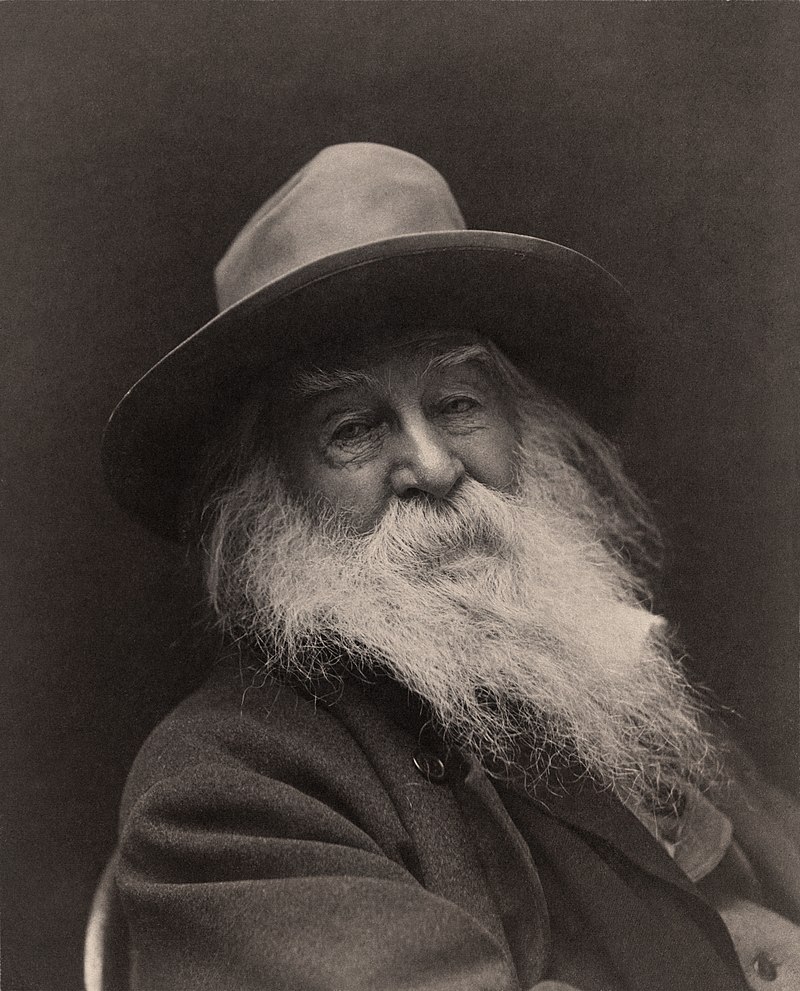
Five Wise Lines from Leaves of Grass

Why, who makes much of a miracle? As to me I know of nothing else but miracles.

Walt Whitman, “miracles”

The American contempt for statues and ceremonies, the boundless impatience for restraint…

Walt whitman, “Song of the Broad-axe”

I exist as I am, that is enough. If no other in the world would be aware I sit content. And if each and all be aware I sit content.

walt whitman, “Song of myself”

I am not the poet of goodness only, I do not decline to be the poet of wickedness also.

walt whitman, “song of myself”

If any thing is sacred the human body is sacred.

Walt whitman, “i sing the body electric”

NOTES: Numerous editions exist between the 1855 and 1892 (deathbed) edition. It’s available for free on Project Gutenberg at: https://www.gutenberg.org/ebooks/1322

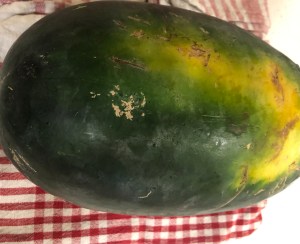
Fruit Beauty [Common Meter]

The flawless deep green melon rind
houses a pink, bland flesh.
The rind - pitted, yellowed, lumpy -
hides fruit: red, sweet, & fresh.

Five Wise Lines from Tagore’s Stray Birds

The stars are not afraid to appear like fireflies.

Stray birds — #48

By plucking her petals, you do not gather the beauty of the flower.

Stray birds — #154

The eyes are not proud of their sight but of their eyeglasses.

stray birds — #256

I carry in my world that flourishes the worlds that have failed.

stray birds — #121

Delusions of knowledge are like the fog of the morning.

stray birds — #14

CITATION: Tagore, Rabindranath (1916), Stray Birds, New York: McMillan, 92pp.

Available on Project Gutenberg at: https://www.gutenberg.org/ebooks/6524

What I Don’t Know… [Lyric Poem]

I know nothing
         of the sea-bottom,
         or of the darkest void.

I know nothing 
         of the ancients' lives
         or how most are employed.

I know nothing 
         of an atom's look,
         or how works, gravity.

I know nothing
         inside my organs
         or nasal cavity.

I can but know
         these simple truths
         that live within my mind.

That it's better
        being together, and
        to err toward being kind.

BOOK REVIEW: The Pocket Chögyam Trungpa by Chögyam Trungpa

The Pocket Chogyam TrungpaThe Pocket Chogyam Trungpa by Chögyam Trungpa
My rating: 5 of 5 stars

Amazon.in Page

This pocket-sized guide consists of 108 excerpts drawn from the writings of Chögyam Trungpa, a prolific — if controversial — teacher of Tibetan Buddhism. Chögyam Trungpa may have been most famous in the West for coining the English term “Crazy Wisdom,” and for founding Naropa University in Boulder, Colorado. [Note: while he coined the term “Crazy Wisdom,” he didn’t originate the concept, which existed already – arguably in multiple forms — in Vajrayana Buddhism from olden times.] Beyond basic Buddhist philosophy, he wrote extensively on Buddhist Psychology, Tantric Buddhism, and the Buddhist conception of warriorship.

The book is designed to be picked up at any point. There isn’t a formal grouping of concepts, but rather the book meanders around, revisiting ideas such as Enlightenment, Emptiness, emotional intelligence in multiple locations throughout the book. The entries are between a paragraph and a page long in most cases.

I found a great deal of food-for-thought in this book and would highly recommend it for those wishing to dip a toe into the teachings of Chögyam Trungpa.


View all my reviews