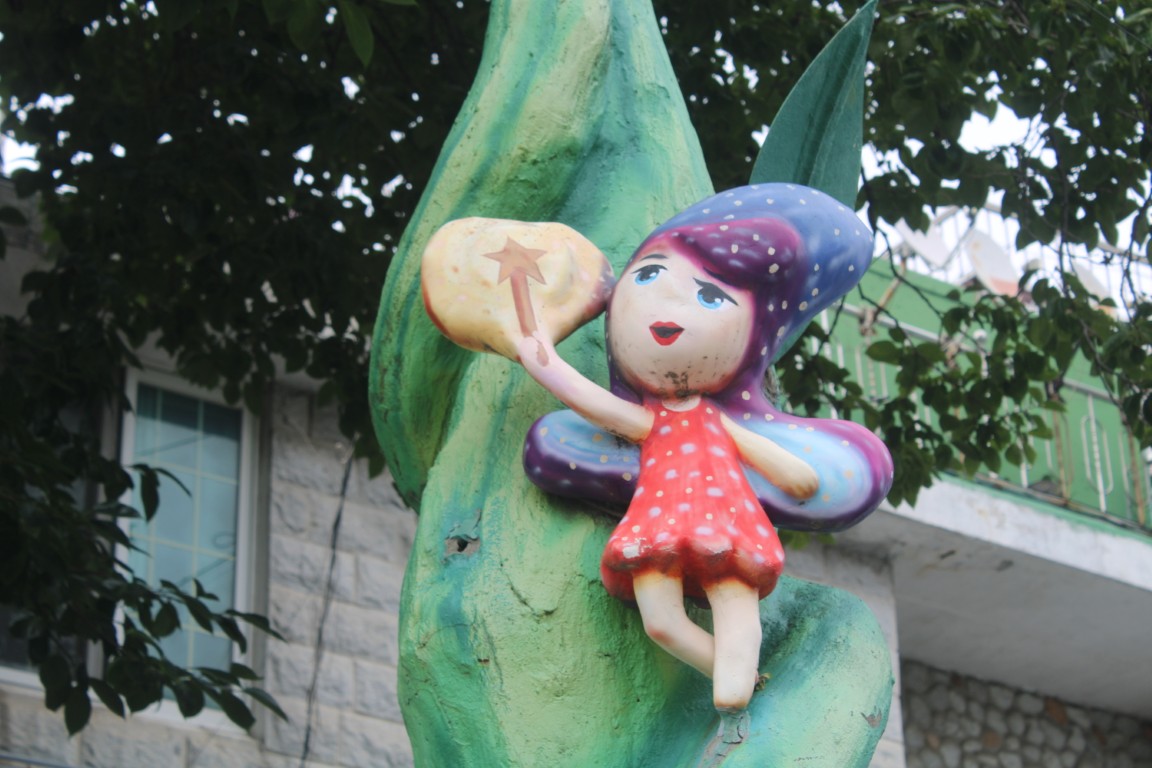
“Chemical Analysis” by Stephen Vincent Benet [w/ Audio]

She's slender hands and pretty lips,
And seafoam and rosemary.
Her ears are pointed at the tips,
She stayed so long in Fairy.

BOOK: “Zatanna” by Paul Dini, et. al.

ZatannaZatanna by Paul Dini
My rating: 4 of 5 stars

Publisher Site — DC Comics

Zatanna is a magician, both in the sense of being a professional stage illusionist and in the sense of making real magic offstage. The stories contained herein are about her heroic use of the latter magic, though they are often set to the backdrop of her professional life, i.e. clubs and other entertainment venues. Daughter to a deceased legend of stage prestidigitation, The Great Zatara, Zatanna makes magic through verbal spells.
 
This sixteen-issue run consists mostly of standalone stories. There are a couple story arcs that span three or four issues, but for the most part the stories are wrapped up within an issue. Some of these stories dedicate panels to what’s happening with Zatanna’s long-running nemesis, Brother Night, even when the main story is unrelated to him (presumably so as to keep the readers ready to receive some larger arc.)

The stories are good, light-hearted escapism — even – perhaps – when they don’t mean to be. By that I mean that the subject matter is often dark, dealing in demons and nightmares personified, but Zatanna is usually so overpowered compared to her enemies and the book attempts to maintain a quippy comedic effect, and so the reader never feels their heroine is at risk of true danger. That said, the authors do put Zatanna in dire situations, and so the stories often do hook one into a state of wonder about how she will escape some awful fate (even while not doubting for an instant that she will.) Zatanna does have weaknesses and there is some attempt to suggest that magic has risks and consequences (otherwise, the stories would devolve into lukewarm absurdism rather quickly.)

I enjoyed this run. The art is crisp and imaginative, and the stories are often clever — if rarely taut.

View all my reviews

BOOKS: “Magic: A Very Short Introduction” by Owen Davies

Magic: A Very Short IntroductionMagic: A Very Short Introduction by Owen Davies
My rating: 5 of 5 stars

Publisher Site – OUP

The first thing that a potential reader should be aware of is that this book isn’t about stage magic or sleight of hand, and that form of magic — in which all parties are aware that techniques are being used to exploit perceptual limitations so as to create the illusion of a supernatural occurrence — doesn’t even really come up as an aside. This book is about magic that (at least some) people believe is a demonstration of actual supernatural happenings in the world.

The book looks at the topic largely from a historical viewpoint; though special emphasis is given to the relationship between religion and magic, in both its congruous and adversarial aspects. That said, for the most part, it’s not arranged historically but rather topically. It does have one chapter on historical perspectives (ch. 3) and one that addresses the ways and degrees to which magical thinking still exists in the modern world (ch. 6.) But it also has chapters on the anthropology of magic (ch.1,) the shifting landscape of thinking about what magic actually is (given that it’s clearly something to many people but isn’t likely the actual exploitation of loopholes in the laws governing the physical world that believers feel it to be — ch. 3,) the role of language in magic (ch. 4,) and the practices of magic (ch. 5.)

The book does focus heavily on the Abrahamic world (Judeo-Christian-Islamic) and its Janus-faced relation to magic over time, but not exclusively so. It brings in African, Chinese, Caribbean, and Native American traditions here and there as well.

I found this book interesting and thought-provoking and would highly recommend it for anyone looking to gain a better insight into how humanity has thought about magic over time and how those beliefs have aligned – or conflicted with – religious beliefs and practices.

View all my reviews

BOOKS: “Dark Demon Rising” by Tunku Halim

Dark demon risingDark demon rising by Tunku Halim
My rating: 4 of 5 stars

Author Site

On one level this is a folklore-based tale of horror, but – on another level – it is a commentary on tribal village life versus modern life in the super-tribal metropole.

The lead character, Shazral, comes from a long line of Shaman — medicine men. However, in the opening chapter we find that he has moved to the big city, Kuala Lumpur, and has become a successful lawyer. He has a nice office, a big salary, and a fashionable sportscar. He thinks he has it all. Then he’s called to return to the village to see his dying father. Son and father haven’t been on speaking terms because the father wanted Shazral to continue the Shamanic line, but Shazral wanted to escape the village and the strained familial situation that existed since his mother died during his youth. His return sets events in motion, events that will both show his beloved city life isn’t all it seems, as well as drawing him into the family business.

I enjoyed the story and think it was well-crafted and evocative. The backstory provides powerful motive, and the characters are distinctive and worthy of the reader’s consideration. There were a number of typos in the edition that I read (none were detrimental to understanding the story, but they could break the flow of reading.)

I’d recommend this book for readers interested in tales of horror rooted in folklore (in this case Malaysian folklore) and shamanism.

View all my reviews

BOOKS: “Atlas of Paranormal Places” by Evelyn Hollow

Atlas of Paranormal Places: A Journey to the World's Most Supernatural PlacesAtlas of Paranormal Places: A Journey to the World’s Most Supernatural Places by Evelyn Hollow
My rating: 4 of 5 stars

Publisher Site

While I’m not much of a believer in the paranormal, I am always curious to learn more about the beliefs, folklore, and backstories of various destinations. Such information, even when immensely interesting, often remains hidden from the casual traveler. For example, had a not read this book I wouldn’t have known that Siquijor Island in the Philippines (a place I’ve been to) had a thriving witch market. I read this book not only because of an interest relevant to places I’ve been and also places I intend to go (e.g. Bhangarh Fort,) but — most importantly — to learn about new and fascinating locations that were not yet on my radar. The book did not disappoint.

The almost forty entries in this atlas are divided among six categories (ghosts, witches, sacred, mythic, nature, and cryptid/creatures.) It is a broad and varied selection of locations from around the world and will most certainly offer even vagabonds some new sites for their “to travel” lists.

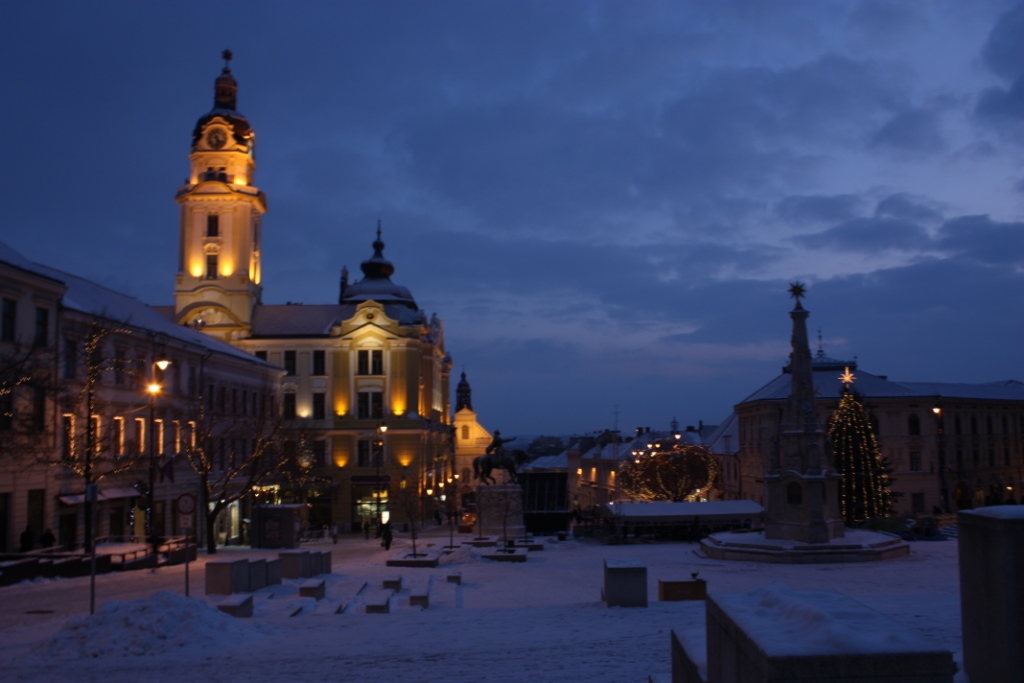
I appreciated the thoughtfulness of this book. I noticed this with the discussion of Báthori Erzsébet, a Hungarian noblewoman who was accused of mass murder and – literal – blood baths. Many paranormal authors, either out of an intense need to believe strange things or because of a desire to sell more books, would ignore the extensive evidence that Báthori was framed for purely political motives. Hollow presents said evidence despite the fact that it kind of undercuts her argument that Cachtice Castle is a locus of supernatural happenings.

I found this book compelling, well-written, and illustrated with fine maps and photographs. If you’re interested in the folklore and ghost stories of various locations, I’d check it out.


View all my reviews

BOOKS: “American Vampire, Vol. 2” by Scott Snyder

American Vampire, Vol. 2American Vampire, Vol. 2 by Scott Snyder
My rating: 5 of 5 stars

Publisher site

This six-issue volume, just like the first, intersperses the story of two American vampires, Skinner Sweet and Pearl Jones. For those who haven’t read Vol. 1, the American Vampire is mutated to have advantages of strength, speed, and UV resistance, but in vampire mode they are much more monstrous. The first four issues focus on a detective noir story set in 1930’s Las Vegas. Skinner Sweet could be said to be central to events in that arc, though not to be the lead character. (That would be the police detective trying to solve a string of gruesome murders.) The last two issues put the Pearl Jones story front and center. That arc is set during the same timeframe, but in Northern California. The first arc is tied up more successfully, but I suspect this has to do with the challenges of interspersing stories (the first arc also has twice as much space with which to work.)

There’s an interesting contrast between the stories. Skinner Sweet is villainous, was villainous before he became a vampire, and is even more so afterwards. The Pearl Jones story is more of a love story between Pearl and her human husband, Henry Preston — albeit a love story in which the couple is being hunted by nefarious forces and must fight to survive. She is trying to be free of the monster life as best she can.

I am enjoying this series. The journey through time and landscapes of America makes this not just another vampire story. If you enjoy comics that mix genres, I’d highly recommend this volume.

View all my reviews

“The Call” by Charlotte Mew [w/ Audio]

From our low seat beside the fire
Where we have dozed and dreamed and watched the glow
Or raked the ashes, stopping so
We scarcely saw the sun or rain
Above, or looked much higher
Than this same quiet red or burned-out fire.
To-night we heard a call,
A rattle on the window-pane,
A voice on the sharp air,
And felt a breath stirring our hair,
A flame within us: Something swift and tall
Swept in and out and that was all.
Was it a bright or dark angel? Who can know?
It left no mark upon the snow,
But suddenly it snapped the chain
Unbarred, flung wide the door
Which will not shut again;
And so we cannot sit here anymore.
We must arise and go:
The world is cold without
And dark and hedged about
With mystery and enmity and doubt,
But we must go
Though yet we do not know
Who called, or what marks we shall leave upon the snow.

Grave Reviews [Free Verse]

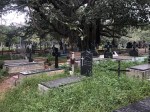
I click on Google Maps;
 a pin highlights for a cemetery,
  and, here, I stumble upon 
   graveyard reviews.

These reviews intrigue me because
 it seems to me that if one is capable 
  of writing a cemetery review,
    then one is unqualified.

And, if one is qualified to comment
 on the caliber of an eternal resting place,
  then one is unlikely to be capable of 
   posting a review.

I read one of the one-star reviews
 and see that the reviewer's principal complaint
 is an overabundance of "pocong."

"What is a 'Pocong?'" you may ask.
 It is a Javanese ghost that takes up
  occupancy in death shrouds.

Why is there a Javanese ghost
 infestation in a cemetery 4000 kilometers
  from Java, and -- as near as I can tell --
   with zero Javanese occupants?

The review does not say,
 but I love that someone panned 
  a cemetery based on the presence 
   of foreign ghosts

[and not because it is simultaneously
 phasmophobic and xenophobic.]

But because it shows an unbridled commitment 
 to one's imagination that is usually 
  only seen among children. 

BOOK REVIEW: Supernatural Shakespeare by J. Snodgrass

Supernatural Shakespeare: Magic and Ritual in Merry Old EnglandSupernatural Shakespeare: Magic and Ritual in Merry Old England by J. Snodgrass
My rating: 4 of 5 stars

Amazon.in Page

Like – I suspect – most of humanity, I’m a big fan of Shakespeare’s work, but I’m also not alone in feeling that I’ve missed a some of the depth and texture of his plays. Both language and the body of common / popular knowledge have evolved and migrated tremendously since the Elizabethan era. This makes a market for books that offer insight into the age and the role that the beliefs, norms, and daily life played in Shakespeare’s theatrical works. This book is one such work. It focuses on the role supernatural beings and various festivals play in the Shakespearean canon and why they do so.

Conceptions of the supernatural may be one of the areas in which human beliefs have changed most severely since Shakespeare’s day. The book has chapters on witches, ghosts, fairies, and enchanted forests that are interspersed among chapters that deal with various seasonal festivals of Pagan origin. I did find this leapfrogging around a bit odd, but I would speculate two possible reasons for it. First, the author may have wanted to build cyclicality into the overall organization, and thus put beings and creatures that seemed thematically related to a season near its festivals. Second, it may have seemed like a good idea to break up the festivals because that discussion could have felt tedious to a general reader if it’d been clumped together (as opposed to the “sexier” topics of witches and ghosts and the like.) This organization didn’t bother me; it just seemed a bit strange, but I could imagine it being for the best.

I learned a great deal from this book, and my newly gained knowledge wasn’t all about the supernatural elements of Shakespeare. The author dropped some fascinating facts regarding other domains as well – such as Elizabethan sexuality and lifestyles as well as biographical facts about Shakespeare. If you’re looking to expand your understanding of background information relevant to Shakespeare’s plays, this book is worth looking into.

View all my reviews

BOOK REVIEW: Miracles: A Very Short Introduction by Yujin Nagasawa

Miracles: A Very Short IntroductionMiracles: A Very Short Introduction by Yujin Nagasawa
My rating: 5 of 5 stars

Amazon.in Page

This concise guide to miracles is built around the intriguing observation that, according to polls, a majority of people believe in miracles, and yet we don’t witness supernatural events [at least not ones that can be confirmed by objective investigation.] There are coincidences (boosted in salience by selection bias and / or a lack of intuitive grasp of probability,) there are patterns that our minds turn into significant images (e.g. the Madonna on a taco shell,) and there are cases of spontaneous remission in which a serious medical condition disappears where treatments haven’t worked or weren’t tried (experienced by the devoutly religious, the marginally religious, the agnostic, and the atheistic, alike.) But those events can be explained more simply without resorting to the supernatural (i.e. probability, the human brain’s great skill at pattern recognition [re: which is so good that it often becomes pattern creation,] and the fact that under the right circumstances the human body’s immune system does a bang-up job of self-repair.)

The five chapters of this book are built around five questions. First, what are miracles – i.e. what criteria should be used, and what events that people call miracles fail to meet these criteria? Second, what are the categories of miracles seen among the various religious traditions [note: the book uses examples from both Eastern and Western religions, though generally sticks to the major world religions?] Third, how can one explain the fact that so many believe despite a lack of evidence? This chapter presents hypotheses suggesting we’re neurologically wired to believe. Fourth, is it rational to believe? Here, philosophers’ arguments (most notably and extensively, that of Hume) are discussed and critiqued. The last chapter asks whether non-supernatural events can (or should) be regarded as miraculous, specifically acts of altruism in which someone sacrificed their life for strangers.

I found this book to be incredibly thought-provoking, and it changed my way of thinking about the subject. I’d highly recommend it.


View all my reviews