PLAY: “A Streetcar Named Desire” by Tennessee Williams

A Streetcar Named DesireA Streetcar Named Desire by Tennessee Williams
My rating: 5 of 5 stars

Available online – Internet Archive

I’ve never seen the play, nor the movie. Of course, this is one of those works that has so scrawled itself across pop-culture that it’s impossible to go in without some reference from it kicking around in one’s brain, be it the pained shout of “STELLA!” or character names like “Blanche DuBois” or “Stanley Kowalski.” Even the name of the plantation on which the fallen socialite sisters grew up, Belle Reve, has been lent to a prison for supernatural villains in the world of DC Comics.

At the play’s heart are two sisters raised in a wealthy Southern family. One, Stella, has adapted well to the family’s fall from grace. Stella has married a fellow who is rough around the edges (to say the least,) Stanley, but Stella is satisfied that Stanley is a dependable provider — even if he does rough her up a bit now and again. The other sister, Blanche, hasn’t coped nearly so well. Blanche lies perpetually to try to shield herself from reality — and to present a more appealing reality to others. It is when Blanche, having nowhere else to go, moves into the small New Orleans apartment of Stanley and Stella that the tension is set to form the play’s story.

I enjoyed reading this play. It’s well-paced and effectively mixes comedy and drama. It’s in character building where the play shines. The main characters are well-defined and behave quite believably within the context of each one’s neuroses and vices. The constant conflict between Blanche and Stanley drives the story.

I’d highly recommend this for readers of plays and / or of American Literature.

View all my reviews

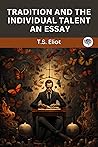
ESSAY: “Tradition and the Individual Talent” by T.S. Eliot

Tradition and the Individual Talent: An EssayTradition and the Individual Talent: An Essay by T.S. Eliot
My rating: 5 of 5 stars

Read for free at the Poetry Foundation

Amazon.in Page

While this is a controversial essay and I don’t accept it wholesale, myself, I would wholeheartedly recommend it as required reading for poets (and other artists.) What is Eliot’s controversial thesis? It’s that poetry should be less about the poet. That broad and imprecise statement can be clarified by considering two ways in which Eliot would make poetry less about the poet. First, Eliot proposes that poets should be in tune to the historic evolution of their art and — importantly — should not be so eager to break the chain with the past masters. He’s not saying a poet needs to be a literary historian, but rather that one be well-read in the poetry of the past. Second, Eliot advocates that a poet avoid packing one’s poetry with one’s personality, and – instead – let one’s personality dissolve away through the act of creation.

A quote from the essay may help to clarify — Eliot says, “Poetry is not a turning loose of emotion, but an escape from emotion; it is not an expression of personality, but an escape from personality.”

One can imagine the accusations of pretension and dogmatism that Eliot received in 1919 from the mass of poets who were moving full speed ahead into poetry that was suffused with autobiography, was avant-garde, and which was free of meter, rhyme and other compositional elements that had once been seen as the defining characteristics of poetry.

I don’t see this essay as being the map to our new home, but rather as the catalyst of a conversation that could move us to a more preferable intermediary location. I have, too often, picked up a collection by a young poet that was entirely autobiographical and (also, too often) of the “everybody hates me, nobody loves me, I think I’ll go eat worms” variety of wallowing in personal feelings. And I always think, when I want to read something depressing, I’ll read something from someone who has lived tragedy — e.g. a Rwandan refugee, not something from a twenty-four-year-old MFA student at some Ivy League school.

So, yeah, maybe we could use more connection to the past and a bit less autobiographical poetry from people who haven’t lived a novel-shaped life.

View all my reviews

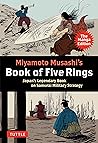
BOOKS: “Miyamoto Musashi’s Book of Five Rings: The Manga Edition” art by Koji Kondo; trans. by Makiko Itoh

Miyamoto Musashi's Book of Five Rings: The Manga Edition: Japan's Legendary Book on Samurai Military StrategyMiyamoto Musashi’s Book of Five Rings: The Manga Edition: Japan’s Legendary Book on Samurai Military Strategy by Miyamoto Musashi
My rating: 5 of 5 stars

Amazon.in Page

Release Date: April 30, 2024

As readers may suspect, this isn’t simply a graphically illustrated edition of The Book of Five Rings. That book, being written as an instructional manual, doesn’t lend itself to a literal manga adaptation. Rather, this work is a graphic novelization that puts Musashi’s strategic masterwork into a narrative context. While it does share many strategic and philosophical ideas from The Book of Five Rings, it’s more a telling of the story of how the manual came to be and how it was transmitted out into the world. It tells this story primarily by exploring how Musashi came to have three apprentices, and how he went about teaching them the lessons encapsulated in the manual. It also delves into Musashi’s most famous duel, the Ganryū-jima battle against Sasaki Kojirō, an event that formed a turning point in Musashi’s life.

I found this manga to be engrossing and highly readable. It is well worth reading, even if one has read one or more translations of The Book of Five Rings. The translation of ideas seemed clear and consistent with my understanding of Musashi’s worldview. I’d highly recommend this manga for readers interested in the history of martial arts, biographies of intriguing individuals, as well as strategic and philosophical ideas.

View all my reviews

BOOKS: The NEW Comedy Bible by Judy Carter

The NEW Comedy Bible: The Ultimate Guide to Writing and Performing Stand-Up ComedyThe NEW Comedy Bible: The Ultimate Guide to Writing and Performing Stand-Up Comedy by Judy Carter
My rating: 5 of 5 stars

Amazon.in Page

As the title suggests, this is a soup-to-nuts exploration of building a standup comedy act. While the bulk of the book discusses how to build jokes that work in a comedy club setting, it also gives helpful tips on relevant issues such as stage fright, hecklers, bombing and bomb recovery, set arrangement, and editing material. It offers many insights that may seem counterintuitive to a neophyte reader.

In writing, there is a common distinction made between “plotters” and “pantsers” (as in “by the seat of one’s pants.”) Plotters do a lot of research and outline everything thoroughly before beginning to write (as most people understand the writing process.) Pantsers like to get right into the typing and are willing to have a much messier process in exchange for greater feelings of spontaneity and surprise. A similar distinction seems to exist in standup comedy. Jerry Seinfeld might be the posterchild for the comedic plotter, writing and rewriting jokes on paper and having an already finely honed collection of jokes when he goes into the comedy club to revise through audience feedback. Other comedians seem to like to work by riffing and editing material on the fly. My point is: this book will definitely appeal most to plotters. That said, I think it has a lot of useful information that will save pantsers a great deal of trouble, but I suspect those with intense pantser proclivities will be skeptical of such a step-by-step approach.

The book is set up as a workbook woven into an instructional guide. That is, it has exercises throughout. It also presents a lot of jokes and partial bits by headlining comics to help the reader see how successful comics apply the principles in question.

I enjoyed reading this book and found it helpful. I thought that many of the exercises were quite helpful in triggering joke ideas. If you are looking for a book that deals in both joke writing and comedic delivery, I’d highly recommend this book.

View all my reviews

BOOKS: The Mind of Adi Shankaracharya by Y. Keshava Menon

The Mind of Adi ShankaracharyaThe Mind of Adi Shankaracharya by Y. Keshava Menon
My rating: 4 of 5 stars

Amazon.in Page

This book does a good job of that at which the title hints, offering the reader insight into the philosophy of Adi Shankaracharya. Along the way, Menon presents clear descriptions of Indian philosophical concepts such as Maya, Avidya, Antahkarana, etc., and also compares and contrasts Shankaracharya’s philosophy with those of other philosophers (from both the East and West) as a means to clarify ideas that can be subtle and complex.

That said, what the book isn’t is an unbiased and objective look at Shankaracharya’s ideas. While Menon doesn’t go as far as to support the supernatural myths of Shankaracharya’s life (which are only discussed in the Appendix,) and he skirts that 800-pound gorilla of Hindu philosophic controversy, caste, he does present the philosophy as an advocate for Shankaracharya rather than as an indifferent scholar who merely wishes to deliver arguments and ideas while inviting thought among his readers.

While the book deals with epistemology, ethics, and various aspects of metaphysics, the biggest single subject is Self. I found the explanation of this topic to be fascinating. I had previously understood that among the major differences between Shankaracharya and Buddha was on this question. While I still find the Buddhist approach to Self (or, more properly, lack of Self — i.e. Anatta) to be the more compelling and parsimonious explanation, I feel that I was provided with about as clear an explanation of the Hindu (generally) and Shankaracharyan (specifically) views on Self as one could wish for.

I’d recommend this book. If you’ve come away from reading about subjects like “Maya” (Is it illusion? Is it NOT illusion?) this book can definitely help offer clarification, and (as books on philosophy go) it’s readable and not too jargon-laden. That said, if one is looking for a book that is not advocating a philosophy but, rather, objectively providing ideas and contrasting explanations, this book may bias your views.

View all my reviews

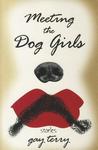
BOOK REVIEW: Meeting the Dog Girls by Gay Terry

Meeting the Dog Girls: StoriesMeeting the Dog Girls: Stories by Gay Terry
My rating: 3 of 5 stars

Amazon page

This collection consists of 30 pieces of short fiction that might be put in the bucket of speculative fiction. (“Speculative fiction” being defined as existing in a world unlike our own–i.e. sci-fi, horror, strange tales, and fantasy.) The stories are cross-genre, but “tales of the weird” is a common theme. Many of the pieces are too long for flash but on the short side of short story, though there are also a number that are of typical short story length.

It’s a mixed bag not only in terms of genre, but also in terms of the appeal. There were a few stories that I enjoyed, others that I didn’t care for, and—worst of all–a number that were utterly forgettable. Besides the strangeness, there’s another quality that might be called “quirky humor” that sparkles here and there throughout the collection.

Among the pieces that I found most interesting and readable were: “Spirit Gobs,” “Barbara Hutton Toujours,” “On Orly’s Border,” “Icon,” and “Meeting the Dog Girls.”

There’s a mini Tai Chi theme running across a couple of pieces, so I dig that.

If you enjoy tales of the strange and you can pick this book up at a good price, you just might like it.

View all my reviews

BOOK REVIEW: Marvel 1602 by Neil Gaiman (Art: Andy Kubert)

Marvel 1602Marvel 1602 by Neil Gaiman

My rating: 5 of 5 stars

Amazon page

This is anachronism done right by Neil Gaiman. The title gives one the jist of this graphic novel’s theme. It’s the Marvel Universe circa 1602. There’s a big cast of Marvel characters in this collection of eight comics. However, those who don’t follow comics might not recognize some of the characters because they are decidedly less comic-esque in this take. The characters mostly go by their given names rather than their superhero nom de guerre and not one of them wears spandex—and even capes are fairly few and far between. While the cast is large, there’re just a few main players and some major Marvel superheroes play only minor or unheroic roles.

The principal heroes in this book are Nicholas Fury (as head of the Queen’s Intelligence Service), Carlos Xavier (principal of a school for mutants), Virginia Dare (the first girl born in the Roanoke Colony), Rojhaz (the–decidedly Caucasian but–Native American protector of Dare), Stephen Strange (close to his modern-day namesake), Matthew Murdoch (think Daredevil), and a smattering of other X-men, Avengers, and Fantastic 4 members.

The principal villains are King James I (as himself), Count Otto Von Doom (similar to the modern character), The Inquisitor Enrique (a Magneto-esque character), David Banner (advisor to James I and–it would appear–the gray Hulk), and Natasha (think Black Widow). Before one bemoans the fact that the slate of heroes seems much stronger than the slate of villains, it should be noted that there is a threat that far exceeds the likes of Von Doom.

The world of Marvel 1602 is quite similar to Earth 1602, but there are differences such as the existence of pterodactyls and dinosaurs in some locales. The plot includes political intrigue in the form King James I of Scotland’s desire to nudge an ailing–but beloved—Queen Elizabeth I out-of-the-way. We soon find out that three assassins have been dispatched to target Fury, the Queen, and Virginia Dare, but finding out who hired them and why takes up a fair piece of story line. There’s a substory that features Matthew Murdoch and Natasha on a mission to retrieve what can only be described as a McGuffin (a highly sought after artifact whose value and purpose remain completely unknown until a big reveal, but for which characters are none-the-less willing to lay their lives on the line on pure faith) that offers its own intrigue. There is also the matter of strange weather that increasingly comes to be considered a harbinger of doom (not Von Doom the character, but actual doom.) Ultimately, this is a bigger threat than is presented by any of the human villains, and it can only be overcome through a combination of Richard Reed’s brilliance, Nicholas Fury’s courage, and Rojhaz’s sacrifice of what matters most to him.

I enjoyed this graphic novel. First, having a top-rate writer like Gaiman was certainly a help. There was none of the juvenile / poorly written dialogue that usually plagues comic writing. Gaiman is his usual clever, witty self. Second, while the anachronisms often border on silly (e.g. 1602 Reed’s noodling out Einstein’s discovery of 300+ years later), they are intriguing and recognize real science. Third, the last being said, there’s a lot of effort put into making the comic appropriate for the era in which it’s set. It’s not just putting frilly shirts on modern-day characters. The blending of fact into the fiction is thought-provoking.

If you read graphic novels–even sparsely–this is one that you should definitely check out.

View all my reviews

BOOK REVIEW: Into the Wild by Jon Krakauer

Into the WildInto the Wild by Jon Krakauer

My rating: 5 of 5 stars

Nature is a harsh teacher. That was the last lesson Chris McCandless ever learned. A recent college graduate, McCandless struck out for the Alaskan wilderness with minimal resources, his body was found by a party of moose-hunters several months after he’d begun his Alaskan adventure.

Into the Wild gives us a well-researched explanation for how McCandless died, but it also tells us a great deal about how he lived– and that story is fascinating in its own right. Many thought McCandless must have been crazy, but refusing to acquiesce to the work-a-day world is often incorrectly diagnosed as insanity.

McCandless had an obsessive desire to find out whether he could make it on his own, not just separate from his parent’s wealth but from all the trappings of modern society. McCandless’s most iconic indicator of insanity-by-way-of-thwarting-convention was when he gave away the entirety of his $25,000 savings account and burnt all the money in his wallet. He wanted to know whether he could survive if he was returned to the state of nature from whence mankind came. Sadly, the answer was no.

It would be easy to dismiss McCandless as a dumb kid who got in over his head. Though he certainly was that. On his deathbed, in a bus carcass in the remote Alaskan wilderness, McCandless likely had a revelation that most teenagers pass into adulthood without ever realizing, that he was mortal.

However, McCandless was more than a kid with an underdeveloped sense of his own mortality. He was a kid with the courage to confront a question that most of us just let nag in the back of our minds. That question being,do we have what it takes to live not as a cog in a machine but as a human in the natural world.

I know many are intrigued by this question in part because there are entire TV channels that are practically devoted to survival shows. Yet most people don’t take it beyond sitting on a couch contemplating whether they could survive. Will thinking man (Homo sapiens) be replaced by doing man (Homo effectus)?

View all my reviews

There was a movie based on this book. I didn’t see it, but here is its trailer.

BOOK REVIEW: Job by Robert Heinlein

Job: A Comedy of JusticeJob: A Comedy of Justice by Robert A. Heinlein

My rating: 4 of 5 stars

In “Job: A Comedy of Justice” the protagonist, Alexander Hergensheimer, finds himself randomly drifting from one alternative universe to another. After his initial shift, he’s joined by a lover, Margrethe, who knows him from her world as Alec Graham. The couple stay together through many other ill-timed world shifts, and are only separated when Hergensheimer finds himself in heaven. Facing the question of what he’d do to be reunified with the woman he loves, the novel really gets interesting.

As you may have expected, the name of the book is the Biblical name “Job” (i.e. rhymes with lobe) and not “job” as in an occupation.

Each time the couple shifts, they are poor anew. While geography remains unchanged, history and money are different from one world to the next. Hergenshiemer washes dishes to make a living because he can’t engage in his trade, preacher, in these worlds. He can’t do anything else without valid identification.

Just as Dante inadvertently convinces us that the first circle of hell is preferable to heaven (who wouldn’t rather be in the company of Socrates and Virgil than that of Jerry Falwell and Jimmy Swaggart,) Heinlein creates an afterlife that is a good deal more complex but also more just than the Biblical version.

I recommend this humorous and thought-provoking book.

View all my reviews

BOOK REVIEW: On Killing by David Grossman

On Killing: The Psychological Cost of Learning to Kill in War and SocietyOn Killing: The Psychological Cost of Learning to Kill in War and Society by Dave Grossman

My rating: 5 of 5 stars

Grossman’s work reports on a line of research started by Army historian and author of “Men Against Fire” S.L.A. Marshall. Grossman not only brings us up-to-date on this thesis, he shows us its ramifications for modern society-at-large.

A two-part thesis was advanced by Marshall and continued by Grossman and others.

First, humans, like other species, are reluctant to kill within their species. (Marshall noted that in World War II about 75% of soldiers would not fire on the enemy when they had the opportunity. There is evidence this was true for earlier wars as well.

Second, the percentage of soldiers firing on the enemy could be increased by training that conditions them to shooting targets that look more human. i.e. Instead of shooting bulls-eyes, they should at least shoot a shape that looks like the silhouette of a man’s head and shoulders.

It turns out that the ability to condition combatants proved correct. There was a progressive increase in genuine engagement of the enemy by soldiers in subsequent wars (i.e. the Korean and Vietnam Wars.)

Grossman goes on to say that this type of conditioning is not limited to soldiers and police officers. He suggests that video games in which gamers shoot at humans and humanoid creatures will desensitize players to trigger pulling. Many scoff at this idea because they think that he is saying that such games make killers. What he is suggesting is a bit more subtle than that. He is saying that a person who is pre-dispossessed to go on a killing spree will be less reluctant if they have undergone the conditioning of this type of gaming. In essence, an high barrier to going on a killing spree will be lowered.

Grossman covers many other issues related to killing, such as the importance of distance. One intriguing fact is that an infantryman that kills a single enemy soldier in war is more likely to have problems such as Post-Traumatic Stress Disorder (PTSD) than a bombardier who drops bombs that may likely resulted in hundreds or thousands of deaths.

The book also talks about the role of authority, famously addressed by the Milgram experiments. Stanley Milgram found that most people would turn a knob that they believed was delivering a severe shock to a complete stranger, if they were told to do so by someone who seemed to be an authority figure.

I highly recommend this book for those interested in the subjects of:
– PTSD
– the role of violent video games in mass killings
– the psychological effects of killing

View all my reviews