“The Dawn” by William Butler Yeats [w/ Audio]

I WOULD be as ignorant as the dawn,
That has looked down
On that old queen measuring a town
With the pin of a brooch,
Or on the withered men that saw
From their pedantic Babylon
The careless planets in their courses,
The stars fade out where the moon comes,
And took their tablets and made sums--
Yet did but look, rocking the glittering coach
Above the cloudy shoulders of the horses.
I would be -- for no knowledge is worth a straw --
Ignorant and wanton as the dawn.

“To Helen” by Edgar Allan Poe [w/ Audio]

Helen, thy beauty is to me
Like those Nicéan barks of yore,
That gently, o'er a perfumed sea,
The weary, way-worn wanderer bore
To his own native shore.

On desperate seas long wont to roam,
Thy hyacinth hair, thy classic face,
Thy Naiad airs have brought me home
To the glory that was Greece,
And the grandeur that was Rome.

Lo! in yon brilliant window-niche
How statue-like I see thee stand,
The agate lamp within thy hand!
Ah, Psyche, from the regions which
Are Holy-Land!

“Soft Snow” by William Blake [w/ Audio]

I walked abroad in a snowy day:
I ask'd the soft snow with me to play:
She play'd & she melted in all her prime,
And the winter call'd it a dreadful crime.

“Sometimes with One I Love” by Walt Whitman

Sometimes with one I love I fill myself with
rage for fear I effuse unreturn'd love,
But now I think there is no unreturn'd love,
the pay is certain one way or another
(I loved a certain person ardently and my
love was not return'd,
Yet out of that I have written these songs).

“Water Dragon Chant” by Ge Changgeng [w/ Audio]

A screen of cloud veils the mountain,
And cold monkeys squawk from green pines.
Fungi abound, but seeds dormant,
Searching for sprouts -- alas, in vain.
Somewhere near there's a fairy cave
Where flutes and lutes are often played.
Its Way is overgrown with moss,
And the old stone gate yields no clue.
Where have all the fairy folk gone?

Looking back, there's an endless plain
Where flowers fall like streaming tears.
It's easy to grow old; Where is
the messenger to bring some news?
To tell who the Golden Phoenix charms?
Waking from a deep, restless dream
What remains are blooms on the stream.

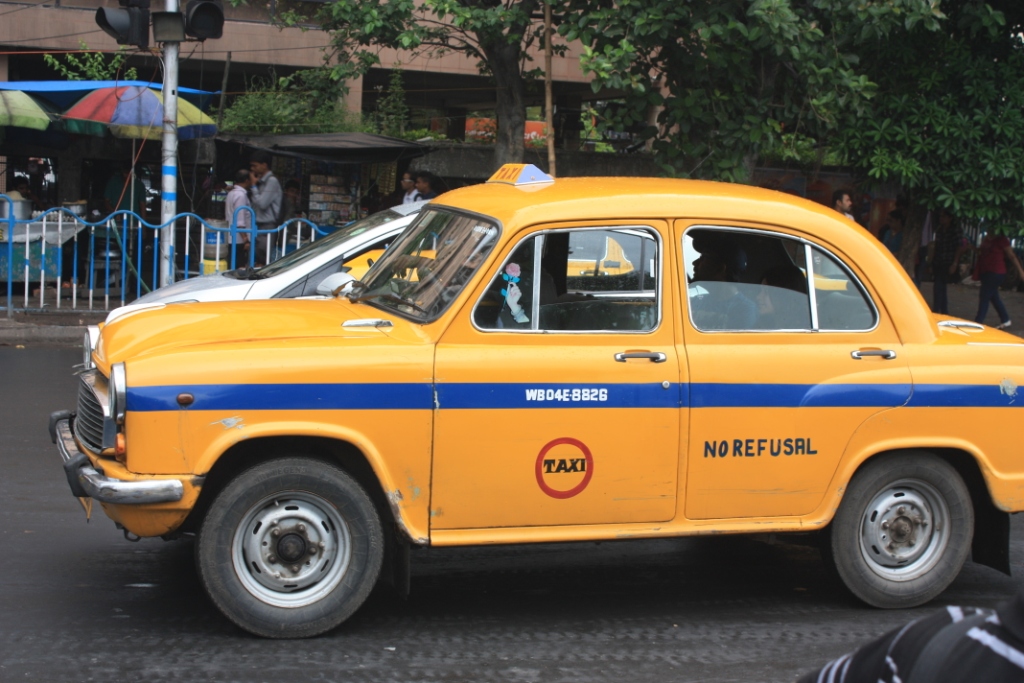
“The Taxi” by Amy Lowell [w/ Audio]

When I go away from you
The world beats dead
Like a slackened drum.
I call out for you against the jutted stars
And shout into the ridges of the wind.
Streets coming fast,
One after the other,
Wedge you away from me,
And the lamps of the city prick my eyes
So that I can no longer see your face.
Why should I leave you,
To wound myself upon the sharp edges of
the night?

“The Past” by Ralph Waldo Emerson [w/ Audio]

The debt is paid,
The verdict said,
The Furies laid,
The plague is stayed,
All fortunes made;
Turn the key and bolt the door,
Sweet is death forevermore.
Nor haughty hope, nor swart chagrin,
Nor murdering hate, can enter in.
All is now secure and fast;
Not the gods can shake the Past;
Flies-to the adamantine door
Bolted down forevermore.
None can re-enter there, --
No thief so politic,
No Satan with a royal trick
Steal in by window, chink, or hole,
To bind or unbind, add what lacked,
Insert a leaf, or forge a name,
New-face or finish what is packed,
Alter or mend eternal Fact.

“To a Marsh Hawk in Spring” by Henry David Thoreau [w/ Audio]

There is health in thy gray wing,
Health of nature's furnishing.
Say, thou modern-winged antique,
Was thy mistress ever sick?
In each heaving of thy wing
Thou dost health and leisure bring,
Thou dost waive disease and pain
And resume new life again.

“Difference” by Stephen Vincent Benét [w/ Audio]

My mind's a map. A mad sea-captain drew
it
Under a flowing moon until he knew it;
Winds with brass trumpets, puffy-cheeked
as jugs,
And states bright-patterned like Arabian
rugs.
"Here there be tygers." "Here we buried
Jim."
Here is the strait where eyeless fishes swim
About their buried idol, drowned so cold
He weeps away his eyes in salt and gold.
A country like the dark side of the moon,
A cider-apple country, harsh and boon,
A country savage as a chestnut-rind,
A land of hungry sorcerers.
Your mind?

--Your mind is water through an April
night,
A cherry-branch, plume-feathery with its
white,
A lavender as fragrant as your words,
A room where Peace and Honor talk like
birds,
Sewing bright coins upon the tragic cloth
Of heavy Fate, and Mockery, like a moth,
Flutters and beats about those lovely
things.
You are the soul, enchanted with its
wings,
The single voice that raises up the dead
To shake the pride of angels.
I have said.

BOOK: “Spring, Summer, Asteroid, Bird” by Henry Lien

Spring, Summer, Asteroid, Bird: The Art of Eastern StorytellingSpring, Summer, Asteroid, Bird: The Art of Eastern Storytelling by Henry Lien
My rating: 4 of 5 stars

Publisher Site

I enjoyed, and was stimulated in thought, by the first half of this book, as well as by sections of the latter half, especially in the fourth chapter. (It’s arranged into four chapters, echoing the book’s central idea of a unique four-act approach to storytelling prevalent in Eastern societies. I’ll get to why I was not so fond of Ch. 3 later.) The book employs exemplary works of literature, film, and even video games to support the claim that there’s not just one approach to sound story crafting — but, rather, that Eastern societies developed distinct modes of storytelling reflecting their values and worldview. (A note on the use of the word “Eastern”: while the book draws heavily on East Asian sources, it tries to make a broader case suggesting not only South Asia but also the Middle East [i.e. everyplace not big-W “Western”] fit this mold. The book might have made a stronger case sticking to East Asia, as – for example – it might be argued that Arabia / Persia of the time of One Thousand and One Nights, being Abrahamic, was closer to Europe than East Asia in values and worldview. To be fair, the author does argue that some parts of that book are believed to have come from farther East (India and, possibly, beyond.))

The book proposes that there are two (arguably three) styles of story construction that are distinctly Eastern. The first is a four-act structure that is far from just a rejiggering of the three and five act forms with which English Literature students will be familiar. Incidentally, the book’s rather unusual title maps to the elements of this four-act structure. The second involves circular and nested story structure. I don’t know that the author succeeds in (or even seeks to) convince the reader that this is a uniquely Eastern approach, but -rather – makes an argument as to why it is prominent in Eastern storytelling.

The author picked an excellent set of works to illustrate his points. Generally, the works are both well-known and well-received among diverse audiences. The films he employs as cases include Parasite, Everything Everywhere All at Once, and Rashomon (the latter also being a literary work.) Lien uses one of my favorite Haruki Murakami novels Hard-Boiled Wonderland and the End of the World as a critical example. I was not at all familiar with the video games he describes (beyond name,) but – given that I’d at least heard of them – I assume they are pretty popular (though I can’t speak to whether they have any discernable stories and will have to take that on faith.) [I’m not sure whether One Thousand and One Nights was a good choice for Eastern literature, though it is an excellent choice as of nested structure.]

As for why I didn’t care for the book’s third part. I should point out that is the most philosophical (and the least explicitly concerned with story) part of the book, and it aims to show how values and worldview vary across cultures such that there are differences in story structure and crafting between different parts of the world. That could be a laudable objective and germane to the book’s point and it’s not why I found this section to be muddled and ineffective. The problem is that the chapter oversimplifies the issue in a way that seems to undercut a broader central argument (that Eastern modes of storytelling are underrepresented outside of the East.) Instead of suggesting that people experience conflicts along continuums (e.g. individual to group identity) and that Easterners tend come to different conclusions than Westerners do based on differing values and cultural perspectives, it engages in an elaboration of the distinctions that seems to suggest there’s some unbridgeable gulf of understanding between cultures (and, quite frankly, kind of feels like it’s shifted from making the aforementioned point to just being a thinly veiled critique of Western culture — which is fine, but probably belongs in a different book — or maybe a manifesto.) But if there were no basis for stories to resonate across this gulf, then not only wouldn’t Parasite and Everything Everywhere All at Once have killed it at both the Oscars and American box office, there’d be no reason for artists to attempt to branch out and tells stories across tribal lines. Without establishing a basis for story resonance, it’s ridiculous to argue that Hollywood should use Eastern modes of storytelling and Eastern worldviews to a greater extent. (A profit pursuing entity is always going to seek the largest possible customer base.) I’m not attempting to negate the argument that there are different approaches to storytelling among different peoples nor that more diversity of approaches shouldn’t be seen across cultures. I’m saying that this chapter doesn’t well support the argument for greater representation of Eastern modes of storytelling outside of Eastern outlets (publishers, film studios, etc.) because it spends so much time arguing the cultural differences that it doesn’t indicate how cross-cultural story resonance is possible.

Overall, I found this to be an interesting and thought-provoking read, though it was – for me – a bit muddled in the middle.

View all my reviews