BOOK: “Old Master Q Chinese Idioms LOL 5” by Wong Chak

Old Master Q Chinese Idioms LOL 5Old Master Q Chinese Idioms LOL 5 by Wong Chak
My rating: 4 of 5 stars

Publisher Instagram – Ng Hing Kee

This collection of chengyu (four-character Chinese idioms) are presented by means of humorous comic strips. Each idiom takes up one page, which includes: the chengyu in both Traditional Chinese characters and pinyin (Romanized phoneticization,) very brief literal and colloquial definitions as well as a statement of the general circumstances under which the idiom might be used, and a four to six panel comic strip that shows the reader a humorous scenario for which the idiom is applicable.

The book is divided into five parts, and at the end of each part there are a few pages of exercises to test the reader’s understanding of that section’s material. (Answer keys are provided — upside-down at the end of each quiz.)

As someone learning Chinese, I found this book to be useful. However, it doesn’t require any Chinese literacy to learn. If you’re interested in compact bits of wisdom or quotes, you may find this book worthwhile.

View all my reviews

BOOKS: 千字文 [Thousand Character Essay] by 周兴嗣 [Zhou Xingsi]

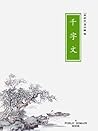
千字文千字文 by 周兴嗣
My rating: 4 of 5 stars

A version with English commentary can be found at the IFA Gallery

This short work, consisting of just one-thousand characters, is first and foremost a teaching tool for children. While it presents a thousand of the most important Chinese characters, it also delivers lessons on history, ethics, philosophy, and culture by way of short sayings.

It’s arranged into 250 4-character phrases (125 sentences) and reads as a lyric poem, though because it dates to the Sixth Century, the degree to which the rhyme scheme holds varies depending upon the which spoken language one speaks (e.g. Mandarin, Cantonese, or Hakka.)

There have been different versions of this work over the centuries.

This is a much beloved work of literature among Chinese, though its sayings do not necessarily hold up as well as works like Sunzi’s Art of War or Laozi’s Daodejing. Some do, but most are much less relevant than when written.

As someone learning Chinese, I’d highly recommend this work as a way to expose oneself to language while gaining insight into Chinese culture.

View all my reviews

PROMPT: Talk

Daily writing prompt
Who would you like to talk to soon?

I’d like to be able to talk to anyone in Mandarin soon, unfortunately my pace of learning is so glacial as to preclude talking “soon” — at least on broad and undefined topics. [Note: When I say “anyone” I mean anyone who speaks Mandarin and has interesting things to say.]

BOOKS: “Chinese Grammar Wiki BOOK: Intermediate” ed. by John Pasden, et. al.

Chinese Grammar Wiki BOOK: IntermediateChinese Grammar Wiki BOOK: Intermediate by John Pasden
My rating: 5 of 5 stars

Publisher Site – AllSet

I’ve found this series helpful in offering a basic guide to grammar for learning Mandarin through Simplified Characters and pinyin. It provides plenty of examples and is not dense with explanation and elaboration but rather focuses on the core principles as well as demonstrations of common pitfalls. It covers the B1 grammar points which is a designation used by, but not original to, the series. (As far as I can tell, it’s a European standard that has been applied across languages to organize the concepts one should be able to express at a given level of language learning.

This is the second book of the series that I’ve worked through (the third if one counts the “Just the Basics” level which is a subset of the Beginner level book,) and I intend to continue on to the “Upper Intermediate” guide.

This may not be the series you want if you’re a linguist looking for nuanced insight into Chinese grammar, but it’s excellent for your average language learner. [It also seems to be quite affordable compared to many competing grammar books and series.]

View all my reviews

“Spring Thoughts” by Li Bai [w/ Audio]

Yan grass shimmers like silken jade.
Qin mulberry trees' green leaves droop.
Your homecoming is now at hand
As heartbreak has me thin and stooped.
Spring Winds and I are strangers --
Why, past my curtains, the inward swoop?

Chinese Title: 春思; Original poem in Simplified Chinese:

燕草如碧丝, 秦桑低绿枝;
当君怀归日, 是妾断肠时。
春风不相识, 何事入罗帏?

Note: this is poem #7 in “300 Tang Poems” [唐诗三百首]

Wen Fu 2: “Introspection” [文賦二] by Lu Ji [陆机] [w/ Audio]

Close your eyes and listen with care.
Turn all your attention inside.
Let your soul ride the Eight Borders
At a galloping stride.

Inner space brightens, becomes more
Compact, as one views the expanse.
Words pour forth to cleanse the soul,
As the Six Arts lend a fragrance.

Float, swim, and dive in the abyss,
Heedful for words as it all soaks in...
Sometimes the right word must be hooked,
And hauled up where it can be spoken.
But, other times, words are like birds,
That fly themselves out of the clouds,
To be downed by one swift arrow --
Quite willingly freed of their shrouds.

Mine for lines lost ages ago --
Rhymes unsung for ten centuries.
Thank tight buds for the sweet flowers
That they - soon enough - will be.

See past and present concurrently,
At once, touch mountain and sea.

The Original in Simplified Chinese:

其始也,皆收视反听,耽思傍讯,精骛八极,心游万仞。

其致也,情曈曨而弥鲜,物昭晣而互进。

倾群言之沥液,漱六艺之芳润。

浮天渊以安流,濯下泉而潜浸。

于是沈辞怫悦,若游鱼衔钩,而出重渊之深;
浮藻联翩,若翰鸟缨缴,而坠曾云之峻。

收百世之阙文,采千载之遗韵。

谢朝华于已披,启夕秀于未振。

观古今于须臾,抚四海于一瞬。

BOOKS: “Troublesome Words” by Bill Bryson

Bryson's Dictionary of Troublesome Words: A Writer's Guide to Getting It RightBryson’s Dictionary of Troublesome Words: A Writer’s Guide to Getting It Right by Bill Bryson
My rating: 5 of 5 stars

Publisher Site – Penguin Books

This is a guide to English words (and loanwords) that challenge even professional writers. It’s organized as a dictionary, and – in fact – the earliest edition of the book was entitled The Penguin Dictionary of Troublesome Words. However, the entries are far from mere definitions, and typically include examples of grammatical, stylistic, or spelling offenses, examples that are sometimes humorous (as are Bryson’s explanations.)

The most common classes of troublesome words are those that are redundant (or otherwise fail to add information) and pairs or groups of words that are frequently confused because of similar spellings or close — but not identical — meanings. That said, there are many other varieties of linguistic challenges confronted by the book, such as spelling mistakes and migrating meanings.

The book is dated. For some readers, that will make the book obsolete, but students of language may find it’s even more useful in showing the evolution of the language. This can be seen with respect to migrating meanings, words whose meanings started out being one thing but against the efforts of grammarians and other linguistic guardians were dragged into an alternate meaning by the force of mass usage. There are some instances where Bryson advises one to honor the original meaning and other cases where he points out that the ship has sailed and to just go with the flow. I’m sure these positions would shift if this book were to be updated again. (Originally written in the 1980’s, the book was revised and update in the early 2000’s, but language has continued to shift in these 20+ years.) In several cases words for which he suggests we stick to the original meaning have now completed their slide. (And many of the words he tells us to accept the changed meaning of are now so far past that original meaning that few readers will be aware the word ever meant something different.)

That being said, the book isn’t completely obsolete. As mentioned above, one of the most common classes of offenses are redundant and meaningless words, and these are almost all still relevant to writers today.

Bill Bryson has a unique relationship to the language, being both British and American, and one nice feature of the book is that he points out differences in spelling and usage that exist between the two countries.

There is an appendix discussing proper punctuation, a bibliography, and a glossary of linguistic terms.

If you’re reading this out of an interest in language, I’d recommend it. It’s light and humorous. However, if you’re in the market for a reference guide, you can surely find a more up to date (if less humorous) guide.

View all my reviews

BOOKS: “Literary Theory: A Very Short Introduction” by Jonathan Culler

Literary Theory: A Very Short IntroductionLiterary Theory: A Very Short Introduction by Jonathan D. Culler
My rating: 4 of 5 stars

Publisher site – OUP

This brief guide tries to bring some clarity to the question of what literary theory is, a question which is a great deal more convoluted that it is in science (or even the social sciences) where the scientific method shapes our understanding of the term. Often when one hears about literary theory it’s in the context of Marxists, Feminists, or Psychoanalysts, and one might be forgiven for wondering whether those scholars don’t have a discipline of their own (not to mention how much can a Marxist – for example – illuminate The Little Prince or the poetry of Li Bai.)

I thought the book was well-arranged to shed as much light on the topic as possible. Of its nine chapters, the first two explore competing ideas of what constitutes “theory” and “literature,” respectively. There is a chapter (Ch.3) that distinguishes the field from the overlapping discipline of cultural studies. The remaining six chapters cover topical components of the field, including: language / meaning, rhetoric / poetics, story, performative language, identity, ethics, and aesthetics.

This book does a good job of offering some clarity and has a sense of humor as it does so (notably through satirical cartoons that illustrate the book.) If you’re looking for a layman’s guide to the subject, this one is readable and insightful.

View all my reviews

Spillage [Free Verse]

What spills from the brush?
What shapes are made
on the page?

What curves? What lines?
What crosses? What binds?

Who will chase after the sparks
of meaning in those wild marks?

Evolution [Free Verse]

Anywhere copies are made, 
but copies aren't exact,
selection will take place.

Some erroneous copies will
be more beloved than others.
Some errors will propagate.
Some errors will die out.

Thus is language,
thus is chemistry,
and thus is life.
