BOOKS: In Praise of Shadows by Jun’ichirō Tanizaki

In Praise of ShadowsIn Praise of Shadows by Jun’ichirō Tanizaki
My rating: 5 of 5 stars

Amazon.in Page

Tanizaki’s essay on Japanese aesthetics doesn’t just show the reader the simple, rustic, and weathered traits of Japanese beauty, it fully submerges them in an otherworldly place ruled by different principles of seeing. So enamored with this pre-modern Japanese aesthetic was Tanizaki that we are convinced he would give up all present-day conveniences to see the world this way (but, alas, he recognizes the impossibility of maintaining a household or business in today’s world that way.)

While the book is principally a tour of this Japanese shadow world, moving from architecture to toilets to lacquerware to Noh plays to skin tones to hotels (with other stops along the way,) it is also a critique of modernity, and particularly a modernity shaped by the West by virtue of Western countries building a lead in a number of key technologies. The most crucial of these technologies, and the one Tanizaki most decries, is electric lighting, which does away with the artistic beauty that derives from the interplay of varied toned shadows (and occasionally a little bit of light.) [I should say, he’s not bashing the Western technology or ways, but rather how poorly they work with maintaining Japanese aesthetic ways.]

I’d highly recommend this book for all readers. If you’re interested in aesthetics, art, architecture, culture, or “things Japanese,” then all the more so, but I can’t remember the last time description pulled me into a book as hard as this one. The essay can be a bit rambling and shifts from euphoria to rant and back, rapidly, but that is part of its magic.

View all my reviews

BOOKS: A Few Rules for Predicting the Future by Octavia Butler

A Few Rules for Predicting the Future: An EssayA Few Rules for Predicting the Future: An Essay by Octavia E. Butler
My rating: 5 of 5 stars

Amazon.in Page

Release Date: April 16, 2024

This brief essay by one of science fiction’s greats, Octavia Butler, discusses her thoughts about forecasting the future and why it’s worth doing even though it’s so difficult (at some level of precision– even impossible.) Butler tells a few stories about questions from fans, being prescribed medication, and growing up during the space race and Cold War, stories that cleverly present her thoughts on the challenging art of anticipating the future.

It should be pointed out that this is a very short work. Even the sixty-ish page count is deceptive as that is accomplished with lots of white space, with large fonts, and even with colorful blank pages (and / or artwork.) If you’re paying full book price for it, be forewarned that, as clever and quotable as it is, it’s essentially magazine article length (and not a long article at that.)

If you can get your hands on this essay for a price commensurate with its word count, I’d highly recommend reading it.

View all my reviews

Five Wise Lines from Chōmei’s Hōjōki

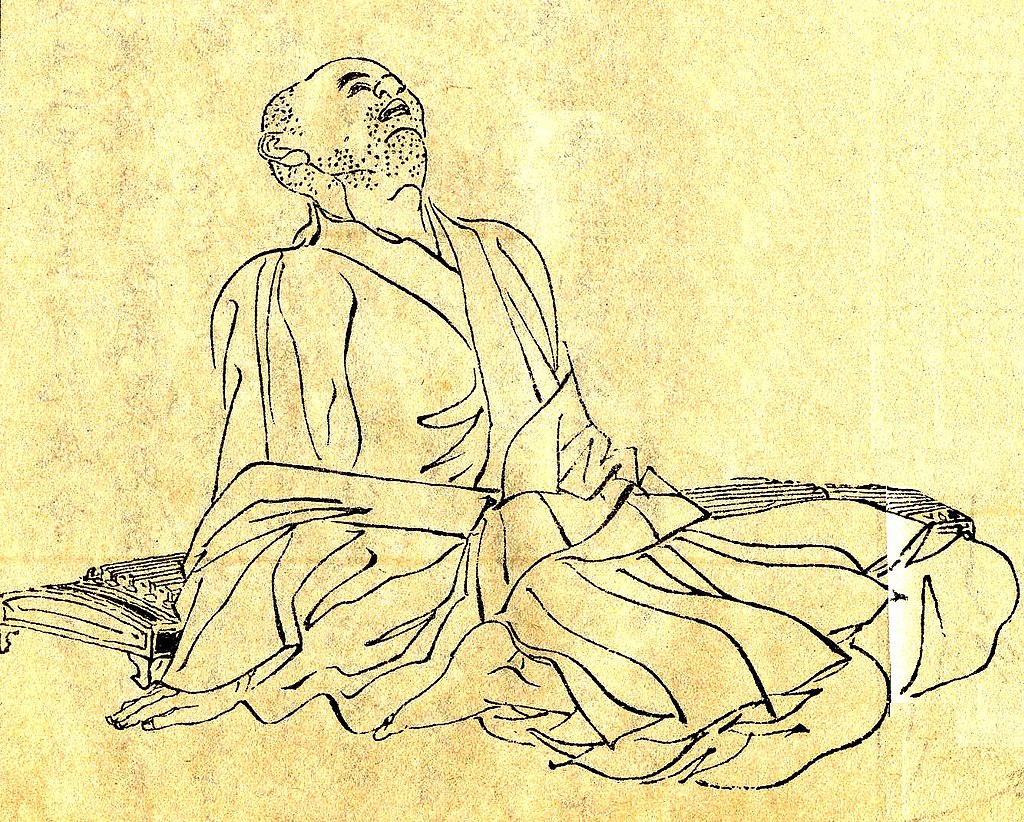
drawing by Kikuchi Yōsai

On flows the river ceaselessly, nor does its water ever stay the same.

 Kamo no Chōmei, Hōjōki

No one owns a splendid view, so nothing prevents the heart’s delight in it.

Kamo no Chōmei, Hōjōki

Knowing what the world holds and its ways, I desire nothing from it, nor chase after its prizes. My one craving is to be at peace; my one pleasure is to live free from troubles.

Kamo no Chōmei, Hōjōki

These days, I divide myself into two uses — these hands are my servants, these feet my transport.

Kamo no Chōmei, Hōjōki

When I chance to go down to the capital, I am ashamed of my lowly beggar status, but once back here again I pity those who chase after the sordid rewards of the world.

Kamo no Chōmei, Hōjōki

Reference: Saigyō Hōshi, Kamo no Chōmei, Yoshida Kenkō. 2021. Three Japanese Buddhist Monks. New York: Penguin Books. 112pp.

Available Here

BOOK REVIEW: The Abolition of Man: Deluxe Edition Carson Grubaugh, et. al.

The Abolition of Man: The Deluxe EditionThe Abolition of Man: The Deluxe Edition by Carson Grubaugh
My rating: 4 of 5 stars

Amazon.in Page

Release Date [for Deluxe Ed.]: July 25, 2023

This is marketed as the first comic book illustrated by an AI. That makes it a very different beast from the usual graphic novel or comic book, and it means the purpose for reading it is entirely different. If I were to rate this for someone who wanted to read an entertaining story (the usual purpose of a graphic novel,) I would rate it “horrible,” “worst-ever,” “unreadable,” – zero stars. However, if you bothered to read the book blurb, you probably aren’t still considering this book for the purposes of entertaining story.

What other reasons might one have for reading this book? I can think of two: one major and one minor. The major purpose is to see what an AI does with illustrations, how it “thinks” (for lack of a better word,) and how it fails. For this purpose, I’d say the book was fascinating to peruse. As a complete neophyte to both AI and graphic arts, I was struck by the “glimpse-comprehensible / close look-grotesque” nature of the illustrations. That is, if one just took a quick look, there tended to be something that felt like it made sense in the panel, but then when you looked closer it was a cabinet of curiosities freak show.

The minor reason for reading this is because one has an interest in the philosophy of mankind in the modern world, a topic that informs the first and last issues (or the philosophy of information, which informs the appendiceal essays.) In this regard the book made some thought-provoking points.

The base text the AI was fed to come up with illustrations varied across the five issues. The first was the eponymous C.S. Lewis book — i.e. “The Abolition of Man.” While this didn’t present the Lewis text word-for-word, it was certainly the most readable portion of the book. The second and third comics drew on text from a comic written by Grubaugh. I assume the AI processed this text somehow because the text presented was often incomprehensible, was full of typos (or what seemed like them,) but had a couple amusing lines by virtue of what I can only assume was unintended sexual innuendo. The fourth issue is almost textless, but what few text bubbles exist were supposedly composed by AI (they don’t have much information value.) [FYI- this penultimate issue is the stuff of nightmares. In places, it looks like a guide to fatal birth defects.] The final issue is a philosophy essay on the role of human dignity in privacy expectations. It’s an interesting enough read, but the graphics are like a PowerPoint by someone who took, but failed, a course on PowerPoint graphic design.

If you’re curious about how close AI is to drawing graphic novels and have an interest in philosophy of humanity and / or information, you’ll find this book to be a worthwhile read. If you’re expecting an interesting story, you’ll be sadly disappointed. If you’re a budding Andy Warhol, looking for a way to make the next artistic breakthrough requiring little effort or creativity on your own part, you might see the next big thing.


View all my reviews

BOOK REVIEW: Singing and Dancing Are the Voice of the Law by Busshō Lahn

Singing and Dancing Are the Voice of the Law: A Commentary on Hakuin's “Song of Zazen”Singing and Dancing Are the Voice of the Law: A Commentary on Hakuin’s “Song of Zazen” by Bussho Lahn
My rating: 5 of 5 stars

Amazon.in Page

Release Date: December 20, 2022 [In India, may be out in your area.]

This book consists of a collection of essays inspired by the poem, “Song of Zazen,” written by the 18th century Zen master, Hakuin. Hakuin’s poem is brief (about forty lines,) and the essays composed by a present-day Zen priest (Lahn) offer commentary on a stanza-by-stanza basis. The book is divided into fourteen chapters, though the final chapter isn’t a stanza commentary.

I enjoyed reading this book and learned a great deal from it. The book benefits from the fact that the author is not rigidly sectarian. Therefore, the book is not doctrinaire, which warms the reader to the teachings. It’s also useful because it allowed the author to freely draw examples and quotes from a variety of sources, some of which may be more familiar or relatable to neophyte readers.

The last chapter offers a discussion of the fundamentals of zazen (seated meditation) as well as some other ancillary information that may be useful to readers new to Zen Buddhism, its practices, and its sutras. If you’re interested in Zen Buddhist meditation and philosophy, you may want to give it a look.


View all my reviews

BOOK REVIEW: A Transcendental Journey by Stephen Evans

A Transcendental JourneyA Transcendental Journey by Stephen Evans
My rating: 4 of 5 stars

Amazon.in Page

Release date [for 25th Anniversary ed.]: September 10, 2022

Get Speechify to make any book an audiobook

A Transcendental Journey intersperses a quirky travelogue of a rambling road-trip through America with a book report on selected essays of Ralph Waldo Emerson. On a positive note, the book offers genuinely funny lines within a generally amusing wandering discussion of events, and there’s something authentic about the voice – you may find yourself hearing the words in the voice of someone you know (or a character) who is idiosyncratic and nerdy in a way that is not uncommon in America. I did. In addition to the funny lines, there are statements that feel profound and are definitely thought-provoking.

Some of the offbeat elements go a bit too far, reaching the point of distraction. For some reason, the author decided to note not only each time he drank a Coca-Cola, but the size of the beverage. At first, it’s just a bit of weirdness that seems to contribute to the aforementioned authentic voice, but eventually one is made sad by the idea that this guy is giving himself diabetes and involving you, as reader, in the process. I can’t say that the philosophy bit is particularly well integrated into the travelogue, and the author often seems like an Enlightenment guy more than a Transcendentalist. (Transcendentalism being an offshoot of Romanticism, a philosophy meant to counteract the perceived cold, hard rationality of Enlightenment thinking and take a more mystical / spiritual [though not necessarily religious] view of the world.) That said, I can’t fault an inability to keep these schools of thought in boxes, as my own philosophy and worldview are fairly ala carte. My point is just that someone who picked up the book expecting to have a clearer view of what distinguishes Transcendentalism from other philosophies might come away confused.

If you enjoy travelogues, particularly of the United States, you’ll find this book a fun read. If you’re familiar with the works of Emerson, I wouldn’t expect any deep philosophical insight, but there are some fine quotes and discussions to remind you of Emerson’s great ideas and beautiful language. (And there are certainly many varied insights to ponder.)

View all my reviews

ESSAY REVIEW: The Kentucky Derby is Decadent and Depraved by Hunter S. Thompson

The Kentucky Derby Is Decadent and DepravedThe Kentucky Derby Is Decadent and Depraved by Hunter S. Thompson
My rating: 5 of 5 stars

Online Available Free: Grantland

Available within the collection: The Great Shark Hunt

This story is cited as the first work of gonzo journalism, a highly entertaining style of immersion journalism which takes liberties with objectivity and factual detail for comedic effect or heightened narrative impact. The Kentucky Derby is more setting than subject of the story. It’s Thompson attempting to throw together coverage of the horse race at the last minute for Scanlan’s Monthly, a magazine that existed less than a year. So, the story is as much Thompson racing around trying to con his way into some press passes as he and the graphic artist sent by the magazine go on a booze-fueled junket on and around the race track grounds.

The story is laugh-out-loud funny in places, and features Thompson’s irreverent and fast-paced style throughout. It really was something new. Thompson, apparently, thought he’d failed completely when he sent in the story, but the response indicated that – rather – he’d invented something new, something for which there would be a huge market.

It’s definitely worth reading this story, just don’t expect deep insight into the horse racing tradition of Kentucky.

View all my reviews

ESSAY REVIEW: Confessions of a Book Reviewer by George Orwell

Confessions of a Book ReviewerConfessions of a Book Reviewer by George Orwell
My rating: 5 of 5 stars

Amazon.in Page

Available free through the Orwell Foundation

An amusing essay that reveals the dirty secrets of book criticism, while proposing that the vast majority of books don’t merit a review. Just a few pages long.

View all my reviews

BOOK REVIEW: An Essay on Criticism by Alexander Pope

An Essay On CriticismAn Essay On Criticism by Alexander Pope
My rating: 5 of 5 stars

Amazon.in Page

View free at The Poetry Foundation

This essay is a poem, i.e. heroic couplets in iambic pentameter, to be precise. It advises both poets and critics of some of the mistakes made in their respective pursuits (though at the outset he warns that bad criticism is a bigger sin than bad poetry.) To critics, Pope advises against nit-picking, as well as failure to recognize the tradeoffs inherent in poetry – i.e. sometimes the better sounding line is grammatically strained, or the wittier line may be less musical. To poets, he lays out a range of insights from stylistic to psychological, and it is an essay both about improving the product of writing as well as improving the relations between writers and critics.

Those unfamiliar with the essay will still be aware of a few of its lines, these include: “A little learning is a dang’rous thing;” “To err is human, to forgive, divine.” “For fools rush in where angels fear to tread” and anyone who’s learned to write iambic pentameter (and the sins, thereof) will remember: “And ten low words oft creep in one dull line.”

But those everyday aphorisms are by no means the full extent of this essay’s wise words and its clever phrasing. My favorite couplets of the poem include:

“Some neither can for wits nor critics pass, // As heavy mules are neither horse nor ass.”

“Trust not yourself, but your defects to know, // Make use of ev’ry friend – and ev’ry foe.”

“For works may have more wit than does ‘em good, // As bodies perish through excess of blood.”

“Words are like leaves; and where they most abound, // Much fruit of sense beneath is rarely found.”

“True ease in writing comes from art, not chance, // As those move easiest who have learn’d to dance.”

“Some praise at morning what they blame at night; // But always think the last opinion right.”

“Unhappy wit, like most mistaken things, // Atones not for that envy which it brings.”

“All seems infected that th’ infected spy, // As all looks yellow to the jaundic’d eye.”

“’Tis best sometimes your censure to restrain; // And charitably let the dull be vain:”

I delighted in this poem. It’s full of food-for-thought, and reads remarkably well for a piece from the year 1711.


View all my reviews

BOOK REVIEW: The Critic as Artist by Oscar Wilde

The Critic as Artist: With Some Remarks Upon the Importance of Doing NothingThe Critic as Artist: With Some Remarks Upon the Importance of Doing Nothing by Oscar Wilde
My rating: 5 of 5 stars

Amazon.in Page

Free to Read Online

In this dialogue, the characters of Ernest and Gilbert reflect upon the value, nature, and limits of artistic criticism. Ernest serves largely as foil and questioner, taking the everyman view that critics are failed artists and that criticism is a puny endeavor that isn’t good for much. Gilbert, on the other hand, defends criticism of art as an art unto itself, and a difficult one at that, one that requires revealing elements and ideas of the artistic piece that the artist didn’t put in the piece in the first place. Throughout, Gilbert lays down his counterintuitive bits of wisdom about the job of the critic, the characteristics of good critics, and – also – about artists and art, itself. [Ideas such as that all art is immoral.]

Oscar Wilde was famed for his wit, quips, and clever – if controversial – turns of phrase, and this dialogic essay is packed with them. A few of my favorites include:

“The one duty we owe to history is to re-write it.”

“Conversation should touch everything, but should concentrate itself on nothing.”

“If you wish to understand others you must intensify your own individualism.”

“Let me say to you now that to do nothing at all is the most difficult thing in the world, the most difficult and the most intellectual.”

“Ah! don’t say that you agree with me. When people agree with me I always feel I must be wrong.”

“…nothing worth knowing can be taught.”

This is an excellent essay, and I’d highly recommend it for anyone who’s interested in art, criticism, or who just likes to noodle through ideas. You’re unlikely to complete the essay as a convert to all of Gilbert’s tenets, but you’ll have plenty to chew on, mentally speaking.


View all my reviews