Five Wise Lines from Tsurezuregusa by Kenkō

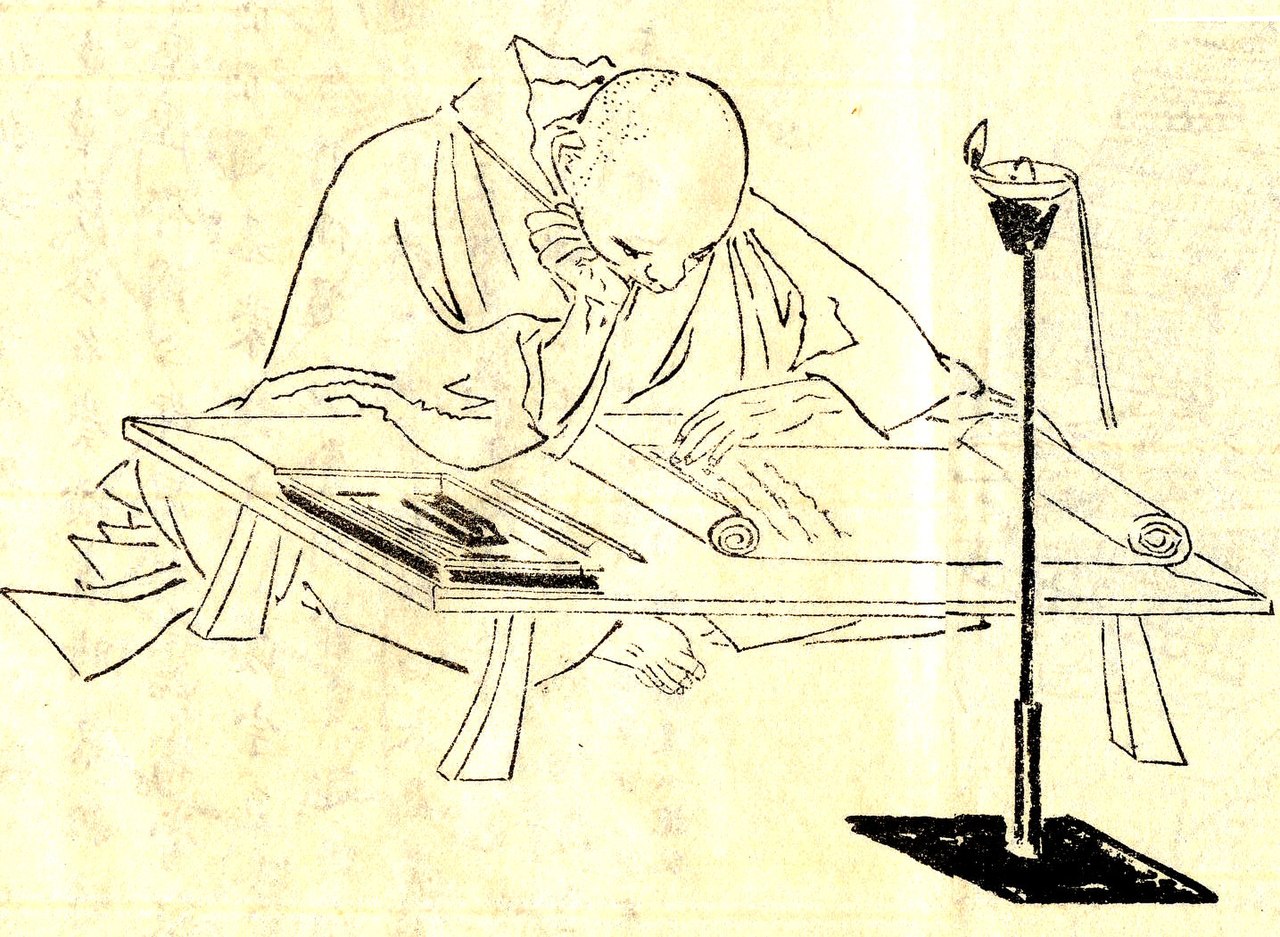
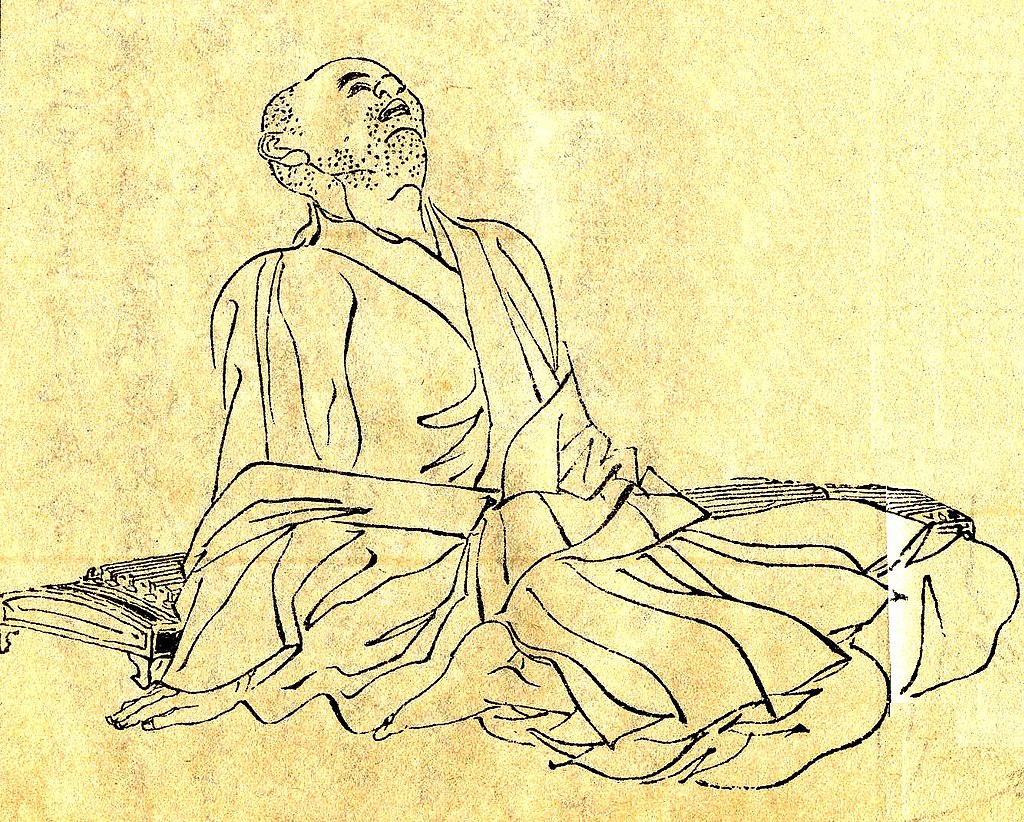
Yoshida Kenkō by Kikuchi Yosai [Date Unknown]

There is much to admire, though, in a dedicated recluse.

Kenkō Yoshida, Essays in Idleness (No. 1)

Going on a journey, whatever the destination, makes you feel suddenly awake and alive to everything.

Kenkō Yoshida, Essays in IdleNess (No. 15)

You can find solace for all things by looking at the moon.

Kenkō Yoshida, Essays in Idleness (no. 21)

Something left not quite finished is very appealing, a gesture toward the future.

Kenkō Yoshida, Essays in Idleness (No. 82)

It’s in easy places that mistakes will always occur.

Kenkō Yoshida, Essays in Idleness (No. 109)

CITATION: Kenkō Yoshida & Kamo no Chōmei. 2013. Kenkō and Chōmei: Essays in Idleness and Hōjōki. London: Penguin. 206pp.

BOOK REVIEW: A Boy Named Rose by Gaëlle Geniller

A Boy Named RoseA Boy Named Rose by Gaëlle Geniller
My rating: 4 of 5 stars

Amazon.in Page

Release Date: July 18, 2023

This is the story of a preternaturally likeable and enthralling young cabaret dancer, the titular boy named Rose. Rose’s entire life has been lived in the cabaret that his mother runs, and much of the story revolves around his introduction to the broader world as his fame grows.

It is eye-catchingly illustrated in a way that creates and facilitates a unique feel for the story.

As stories go, it’s not particularly emotionally rousing. I suspect that is partly because, as is common with literary fiction, it’s more character-driven than story-driven, and this presents a challenge for the graphic novel format in which the reader has more direct exposure to the characters’ external happenings. One may see a character being pensive, but without insight into that individual’s mental world one doesn’t feel it as intensely as one would with a novel that allows one some internal insight.

That said, a world is presented that is so foreign to most of us, life inside a cabaret, that it generates interest in that sense.

Overall, it was an enjoyable, light-hearted read.

View all my reviews

Five Wise Lines from Chōmei’s Hōjōki

drawing by Kikuchi Yōsai

On flows the river ceaselessly, nor does its water ever stay the same.

 Kamo no Chōmei, Hōjōki

No one owns a splendid view, so nothing prevents the heart’s delight in it.

Kamo no Chōmei, Hōjōki

Knowing what the world holds and its ways, I desire nothing from it, nor chase after its prizes. My one craving is to be at peace; my one pleasure is to live free from troubles.

Kamo no Chōmei, Hōjōki

These days, I divide myself into two uses — these hands are my servants, these feet my transport.

Kamo no Chōmei, Hōjōki

When I chance to go down to the capital, I am ashamed of my lowly beggar status, but once back here again I pity those who chase after the sordid rewards of the world.

Kamo no Chōmei, Hōjōki

Reference: Saigyō Hōshi, Kamo no Chōmei, Yoshida Kenkō. 2021. Three Japanese Buddhist Monks. New York: Penguin Books. 112pp.

Available Here

BOOK REVIEW: Asimov’s Foundation and Philosophy ed. by Heter Joshua & Josef Thomas Simpson

Asimov's Foundation and PhilosophyAsimov’s Foundation and Philosophy by Heter Joshua
My rating: 5 of 5 stars

Amazon.in Page

Release Date: August 24, 2023 [Paperback; ebook is out]

When I was a budding social science grad student, I learned that Asimov’s “Foundation” series was impetus for many young nerds of the previous generation to enter fields like Economics and Poli-Sci. The reason? At the heart of the story is a fictional discipline called Psycho-history, a mathematical field that’s premised on the idea that [while one can’t reliably forecast what an individual (or even small groups) will do,] given a large enough population one can make grand over-arching predictions about what will happen to society as a whole. It’s an idea that Asimov drew from his education in Chemistry, a field where one couldn’t say much about individual molecules but you could accurately model collective parameters (e.g. temperature.) It turns out that humans and their interactions are more complicated than gas molecules and so Psycho-history only works as a powerful plot device (a fact that Asimov discovered himself, supposedly driving mid-course corrections in the limited space he had to make them.) Anyhow, the idea that one might predict the unfolding of societal, economic, and international events was a powerful scholarly aphrodisiac for individuals who might otherwise have dismissed study of the social world as hopelessly and absurdly chaotic.

With that background generating curiosity and having read a number of Asimov’s books, I was eager to investigate this book that explores the philosophic underpinnings of Asimov’s fictional world. I was not disappointed. The imaginative “Foundation” series of books provides plenty of situations and ideas to which one can apply the lens of philosophy, from the limitations of reason and symbolic logic as tools to solve humanity’s problems to the morality of manipulation and questions of transparency that follow from it to what kind of free will — if any — can exist in a universe where Psycho-history works. This anthology of essays considers questions of mind, logic, morality, free will, identity, and existence, as well as various ideas from the Philosophies of History, Religion, and Science. The twenty-one essays are grouped into six parts by philosophic subdiscipline.

There are so many of these “pop culture meets philosophy” books out there, but I think this one does better than most because Asimov’s creative mind really offered such a rich assortment of ideas upon which to reflect.

View all my reviews

PROMPT: Childhood Book

Daily writing prompt
Do you remember your favorite book from childhood?

I remember an adaptation or condensed version of Defoe’s Robinson Crusoe. The castaway theme probably resonated with my introverted nature.

BOOK REVIEW: Mindfulness in Wild Swimming by Tessa Wardley

Mindfulness in Wild Swimming: Meditations on Nature & Flow (Mindfulness series)Mindfulness in Wild Swimming: Meditations on Nature & Flow by Tessa Wardley
My rating: 4 of 5 stars

Amazon.in Page

Release Date: June 13, 2023

As the title suggests, this is a book about combining mindfulness and swimming in natural bodies of water. It’s part of a large series of “Mindfulness and …” books, and this particular volume is a re-release of a title that came out a couple years back.

While the book does provide an overview the basic methods and considerations for both mindfulness meditation and wild swimming, it’s largely a peptalk or enticement to take up wild swimming as a means to improve awareness (as well as to bolster physical health and mental well-being.) That said, some of this peptalk is artfully, almost poetically, written, and the book is a pleasure to read.

The book discusses solo swims versus those in a group, and it even explores using onshore experiences to bolster mindfulness — e.g. using the sensory experience of the water as a focal point for practicing awareness. The around- (v. in-) water discussions are probably in part because the book uses seasons as a secondary mode of organization, and long and leisurely winter swims in lakes and rivers aren’t an option for people in many parts of the world.

I picked up some interesting food-for-thought in the book, and — as I say — it made for enjoyable reading.

View all my reviews

PROMPT: Three Books

Daily writing prompt
List three books that have had an impact on you. Why?
Leaves of Grass by Walt Whitman

This poetry collection teaches that most challenging of human skills: how to be insanely confident that you can do anything without being a jerk about it. (Also, how to see beauty beyond the societal consensus of what’s beautiful.)

Zhuangzi by Zhuangzi

The virtues of a carefree, spontaneous, minimalist, and down-to-earth approach to living explained through tiny stories.

The Tragedies of William Shakespeare by William Shakespeare

A master class in things that can turn a life into a tragedy.

Titus Andronicus: Live by the sword = tragedy (An eye for an eye, and everyone dies.)

Romeo & Juliet: Grudges (+ Lust) = tragedy

Julius Caesar: handing your adversary the mic (/ the fickleness of crowds) = tragedy

Hamlet: indecisiveness = tragedy (i.e. On or off the crazy-bus.)

Othello: jealousy = tragedy

Macbeth: excessive ambition = tragedy

King Lear: needing gratuitous signs of affection = tragedy

Timon of Athens: expectations of reciprocity = tragedy

Anthony & Cleopatra: mixing one’s love and work lives = tragedy

Coriolanus: a crotchety old warrior in peace time = tragedy

BOOKS: The Mind of Adi Shankaracharya by Y. Keshava Menon

The Mind of Adi ShankaracharyaThe Mind of Adi Shankaracharya by Y. Keshava Menon
My rating: 4 of 5 stars

Amazon.in Page

This book does a good job of that at which the title hints, offering the reader insight into the philosophy of Adi Shankaracharya. Along the way, Menon presents clear descriptions of Indian philosophical concepts such as Maya, Avidya, Antahkarana, etc., and also compares and contrasts Shankaracharya’s philosophy with those of other philosophers (from both the East and West) as a means to clarify ideas that can be subtle and complex.

That said, what the book isn’t is an unbiased and objective look at Shankaracharya’s ideas. While Menon doesn’t go as far as to support the supernatural myths of Shankaracharya’s life (which are only discussed in the Appendix,) and he skirts that 800-pound gorilla of Hindu philosophic controversy, caste, he does present the philosophy as an advocate for Shankaracharya rather than as an indifferent scholar who merely wishes to deliver arguments and ideas while inviting thought among his readers.

While the book deals with epistemology, ethics, and various aspects of metaphysics, the biggest single subject is Self. I found the explanation of this topic to be fascinating. I had previously understood that among the major differences between Shankaracharya and Buddha was on this question. While I still find the Buddhist approach to Self (or, more properly, lack of Self — i.e. Anatta) to be the more compelling and parsimonious explanation, I feel that I was provided with about as clear an explanation of the Hindu (generally) and Shankaracharyan (specifically) views on Self as one could wish for.

I’d recommend this book. If you’ve come away from reading about subjects like “Maya” (Is it illusion? Is it NOT illusion?) this book can definitely help offer clarification, and (as books on philosophy go) it’s readable and not too jargon-laden. That said, if one is looking for a book that is not advocating a philosophy but, rather, objectively providing ideas and contrasting explanations, this book may bias your views.

View all my reviews

BOOKS: The Slow Traveller by Jo Tinsley

The Slow Traveller: An intentional path to mindful adventuresThe Slow Traveller: An intentional path to mindful adventures by Jo Tinsley
My rating: 4 of 5 stars

Amazon.in Page

Out: June 13, 2023

This book, gorgeously illustrated with photographs, consists of a series of essays on a different approach to travel, an approach familiar to travelers but not so much to tourists, an approach that is the antithesis of leaping from one postcard panorama to the next, packing a couple weeks’ vacation with maximum sights seen.

Most of the chapters / essays look at a specific mode of travel – i.e. the road trip, hiking / pilgrimage, train travel, and water travel. However, a few of the chapters tack from different angles to look at local food-centric travel, sheltering with permanent structures like bothies and teahouses, and urban slow travel.

There are some interesting insights in this book, it has stunning photography, and I even picked up some book recommendations. If you’re interested in changing your approach to travel to go deeper / less broad, this book is worth reading.

View all my reviews

BOOKS: Echo & Critique by Florian Gargaillo

Echo and Critique: Poetry and the Clichés of Public SpeechEcho and Critique: Poetry and the Clichés of Public Speech by Florian Gargaillo
My rating: 4 of 5 stars

Amazon.in Page

Out Now (May 10, 2023)

This book examines seven poets’ attempts to halt the proliferation of clichés, euphemisms, doublespeak, etc., words and phrases that not only corrupt the language but are often used to disguise bad behavior or to camouflage dismaying truths. It focuses on a technique, echo and critique, in which the poet employs one or more of these disconcerting words or phrases (or clever variants of them,) but does so in a way that reveals the chicanery within them.

The poets whose work is discussed are: Auden, Randall Jarrell, Langston Hughes, Claude McKay, Robert Lowell, Josephine Miles, and Seamus Heaney. These poets go head-to-head with cliché and doublespeak in the form of bureaucratese, propaganda, political speak, and business talk — with particular emphasis on war, race, and politics.

The book makes some interesting points. There are more readable discussions of the subject of corruption and manipulation of the English language, though none that I’m aware of on this particular approach to combating it. This volume is largely aimed at scholars, and not so much the popular readers. That said, I found it well worth reading.

View all my reviews