PROMPT: Book

Daily writing prompt
What book are you reading right now?

Forty-Three Ways of Looking at Hemingway by Jeffrey Meyer; a biography of Ernest Hemingway that is written in an interesting and creative way. Rather than a chronological telling of life events, the book relates Hemingway’s life to a series of other individuals and events.

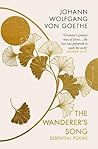
BOOK: “The Wanderer’s Song” by Johann Wolfgang von Goethe [trans. by John Kent]

The Wanderer's Song: Essential Poems (Pushkin Press Classics)The Wanderer’s Song: Essential Poems by Johann Wolfgang von Goethe
My rating: 4 of 5 stars

Publisher Site — Pushkin Press Classics

This is a new translation of select poems of Johann Wolfgang von Goethe. It’s a clever and varied set of poems by one of German literature’s all-time greats, a polymath of the 18th and early 19th centuries.

It can be a challenge for a general poetry reader to relate to this work. Over two hundred years since most of these poems were composed, the collection reflects a worldview quite different from that which one finds today. That said, the translations are readable and pleasant and don’t feel strained or clunky, and the collection has instances of sublimity. Having no background in German Literature, I can’t say how true the translations are to source material, but they stood solidly as poems in their own right. The book does offer a substantial introduction by the translator for individuals who are particularly interested in the German literature, translation decisions, or the life of Goethe.

I would recommend this for poetry readers, even though casual readers may find it a bit archaic. If you like the Romantic poets, and haven’t given Goethe a try, it’s well worth the time investment.

View all my reviews

BOOK REVIEW: “War is a Racket” by Smedley D. Butler

War is a Racket: The Antiwar Classic by America's Most Decorated SoldierWar is a Racket: The Antiwar Classic by America’s Most Decorated Soldier by Smedley D. Butler
My rating: 5 of 5 stars

PDF available online

This impassioned essay is a call for a more restrained — some would call it isolationist — application of military force. Regardless of how one might feel about the isolationist stance, you’ll likely be moved by the essay’s central premise that we have too much war because it’s profitable — not profitable for those who fight and die in wars but for businessmen and politicians.

Butler, a US Marine Corps General, was a fascinating character — a two-time Congressional Medal of Honor recipient who served in the Philippines, Tianjin (during the Boxer Rebellion,) at various places across Central America and the Caribbean, and in the First World War in Europe. He was also a whistleblower about a plot to unseat FDR. Butler writes in a conversational style that exudes a commanding presence.

I’d highly recommend this essay for its critical insights by one of the most impressive Marine Corp officers of all time.

View all my reviews

BOOK: “Hell’s Angels” by Hunter S. Thompson

Hell's AngelsHell’s Angels by Hunter S. Thompson
My rating: 5 of 5 stars

Publisher Site – Penguin

This, the first published book of Hunter S. Thompson, is said to be from his pre-Gonzo period, but it bears many of the hallmarks Thompson would later be famous for: inventive colorful language, immersion in scenes of debauchery, and insight into the American cultural landscape.

The book is part exposé of the Hell’s Angels motorcycle gang, an organization shrouded in a reputation that was as much myth as reality and whose tightknit inner circle made obtaining an accurate picture a challenge. It would take someone as fearless / crazy as Thompson to get close enough to learn about the gang and then to tell enough truth to make at least some of the members unhappy.

The book also takes the temperature of America and reports on what ails the country. One might think this would not be worth reading, given that its insight of America is from the late sixties (it came out in ’67.) However, as I read the penultimate chapter, I was surprised to find how much of what was being said could be seen as prophetic. Thompson wrote about the Angels not as a romantic throwback to wild west outlaws (as many saw them,) but as a class of people who were ill-equipped to make a living in an ever more technologically advanced America, leaving them with little money and loads of resentment. He wrote of them as “prototypes,” and his description connects up to the latest model. It was at that point that I started seeing Thompson not only as a brilliant creative writer, but — perhaps — as a prophet.

I’d highly recommend this book for anyone curious about the Hell’s Angels or American outlaws, more generally.

View all my reviews

PROMPT: Book from Childhood

Do you remember your favorite book from childhood?

Green Eggs and Ham is the earliest children’s book that made an impression — mostly for its catchy lyricism. Robinson Crusoe was the first story that resonated.

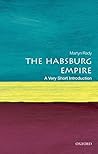
BOOKS: “The Habsburg Empire: A Very Short Introduction” by Martyn Rady

The Habsburg Empire: A Very Short IntroductionThe Habsburg Empire: A Very Short Introduction by Martyn Rady
My rating: 5 of 5 stars

Publisher Site – OUP

“Habsburg” is one of those names recognized as a big deal, but if one isn’t a history buff one might know nothing – or near nothing – about them. For many, the Habsburg Empire is synonymous with Austro-Hungary, but – in its heyday – the Empire controlled territory as far-flung as the Philippines and Mexico through marriages with the Iberian Peninsula royals. This guide hits the highlights of the Habsburgs from their 11th century beginnings to their demise in the wake of World War I.

Rady drops a lot of fun facts in this book in order to make it more than the dry retelling of war and marriage that often make up histories. Because this is a concise guide, these fun facts aren’t necessarily elegantly introduced, but sometimes appear to be tucked in willy-nilly, as with the sentence:

“Franz Ferdinand, besides being a maniacal huntsman who bagged an estimated 270,000 creatures (mostly partridges, but including two elephants), was convinced that the Habsburg Empire depended for survival on its comprehensive reorganization.”

What does the clause about being an avid hunter have to do with the discussion at hand? Absolutely nothing as far as I can tell, but it does capture one’s attention.

I feel I came away from this book with a better understanding of the Habsburgs, as well as with a few fascinating tidbits stuck in my brain — such as about the strangely long jaw bones of inbred royals. If you know nothing about the Habsburgs, but would like to, I’d highly recommend this book.

View all my reviews

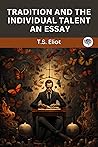
ESSAY: “Tradition and the Individual Talent” by T.S. Eliot

Tradition and the Individual Talent: An EssayTradition and the Individual Talent: An Essay by T.S. Eliot
My rating: 5 of 5 stars

Read for free at the Poetry Foundation

Amazon.in Page

While this is a controversial essay and I don’t accept it wholesale, myself, I would wholeheartedly recommend it as required reading for poets (and other artists.) What is Eliot’s controversial thesis? It’s that poetry should be less about the poet. That broad and imprecise statement can be clarified by considering two ways in which Eliot would make poetry less about the poet. First, Eliot proposes that poets should be in tune to the historic evolution of their art and — importantly — should not be so eager to break the chain with the past masters. He’s not saying a poet needs to be a literary historian, but rather that one be well-read in the poetry of the past. Second, Eliot advocates that a poet avoid packing one’s poetry with one’s personality, and – instead – let one’s personality dissolve away through the act of creation.

A quote from the essay may help to clarify — Eliot says, “Poetry is not a turning loose of emotion, but an escape from emotion; it is not an expression of personality, but an escape from personality.”

One can imagine the accusations of pretension and dogmatism that Eliot received in 1919 from the mass of poets who were moving full speed ahead into poetry that was suffused with autobiography, was avant-garde, and which was free of meter, rhyme and other compositional elements that had once been seen as the defining characteristics of poetry.

I don’t see this essay as being the map to our new home, but rather as the catalyst of a conversation that could move us to a more preferable intermediary location. I have, too often, picked up a collection by a young poet that was entirely autobiographical and (also, too often) of the “everybody hates me, nobody loves me, I think I’ll go eat worms” variety of wallowing in personal feelings. And I always think, when I want to read something depressing, I’ll read something from someone who has lived tragedy — e.g. a Rwandan refugee, not something from a twenty-four-year-old MFA student at some Ivy League school.

So, yeah, maybe we could use more connection to the past and a bit less autobiographical poetry from people who haven’t lived a novel-shaped life.

View all my reviews
BOOKS: “Hōjōki” by Kamo no Chōmei; Trans. by Matthew Stavros

Hojoki: A Buddhist Reflection on Solitude: Imperfection and Transcendence - Bilingual English and Japanese Texts with Free Online Audio RecordingsHojoki: A Buddhist Reflection on Solitude: Imperfection and Transcendence – Bilingual English and Japanese Texts with Free Online Audio Recordings by Kamo no Chōmei
My rating: 5 of 5 stars

Amazon.in Page

Release Date: May 7, 2024 [for Tuttle’s bilingual edition]

This is the Japanese Walden, except that it was written several hundred years before Thoreau’s essay and was predominantly philosophically informed by Buddhism rather than Transcendentalism. (Though those philosophical systems do agree on a number of points, most relevantly that materialism is not a sound route to happiness.) Like Walden, Hōjōki is an autobiographical promotion of the hermitic lifestyle. Both works sing the virtues of life in a simple, rustic cabin in a natural setting, a life of minimalism and subsistence living.

There are many translations of this work available, and so I’ll spend the remainder of this review on what differentiates this edition from the two others that I’ve read. First and foremost, the other versions I’m familiar with were presented as prose essays. This edition is presented in verse, which I understand to be the form that the original Japanese work employed. I should say that in some places the work comes across as poetic in the conventional sense, though in others it seems like a versified essay.

Secondly, this edition has a few handy ancillary features. One is that it is bilingual. Romanized Japanese allows the reader to experience the sound quality of the original. This edition also has graphics in the form of maps, artwork, and photographs. Some of the graphics support or expand upon the information delivery while others seem to be more a matter of creating atmospherics. Also, there are explanatory endnotes that help readers unacquainted with Kamakura Period Japan to understand some of the book’s references that might otherwise remain unclear.

I enjoyed and benefited from reading this edition, even having read others. If you are looking for insight into the ascetic life, I’d highly recommend it.

View all my reviews

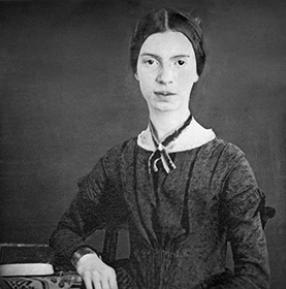
“There is no Frigate like a Book” (1286) by Emily Dickinson [w/ Audio]

There is no Frigate like a Book
To take us Lands away
Nor any Coursers like a Page
Of prancing Poetry --
This Traverse may the poorest take
Without oppress of Toll --
How frugal is the Chariot
That bears the Human Soul --

Hawk Bank [Haiku]

the hawk swoops & banks;
i feel its flapping wings
as it passes.