BOOKS: “The Man with the Compound Eyes” by Wu Ming-Yi

The Man with the Compound EyesThe Man with the Compound Eyes by Wu Ming-Yi
My rating: 5 of 5 stars

Amazon.in Page

This book is at once a work of eco-fiction, literary fiction, and speculative fiction. The story revolves around a pair of characters whose worldlines become intertwined when the Pacific Trash Vortex is spun out, crashing into the Eastern shore of Taiwan. “Riding” the trash vortex is Atile’i, a member of a remote Pacific Island where second sons (of which he is one) are exiled to the sea to ensure the tiny island’s population doesn’t outstrip its resources. Atile’i is found by Alice, an academic who moved to a rural area of the Eastern shore and who is in an extended period of grieving the loss of her son and [common law] husband. Their union helps them each in the process of finding closure for their respective traumas.

There is a secondary story involving supporting characters, but at its heart, the book is about how an unlikely pair is brought together by environmental factors. That said, the secondary story does offer the reader insight into the indigenous population of Taiwan, a number of tribes whose relation to the island has been overshadowed by both the huge numbers of Chinese immigrants and the various agents of colonization (i.e. Europeans and the Japanese.)

I found this book to be highly readable. It manages to highlight environmental perils without being preachy in a way that detracts from the intensity of the story (and, thus, which reduces the effectiveness as a tool of persuasion.) [This being a line that some other eco-fiction writers have been unable to walk, such that they dissipate the power of story through a need to virtue signal, tribe signal, and finger-point.]

I’d highly recommend this book for readers of literature in translation, eco-fiction, literary fiction, or anyone who likes an interesting story.

View all my reviews

“Sonnets from the Portuguese 43” by Elizabeth Barrett Browning [w/ Audio]

How do I love thee? Let me count the ways.
 I love thee to the depth and breadth and height
My soul can reach, when feeling out of sight
 For the ends of being and ideal grace.
I love thee to the level of every day's
 Most quiet need, by sun and candle-light.
I love thee freely, as men strive for right;
 I love thee purely, as they turn from praise.
I love thee with the passion put to use
 In my old griefs, and with my childhood's faith.
I love thee with a love I seemed to lose
 With my lost saints. I love thee with the breath,
Smiles, tears, of all my life, and, if God choose,
 I shall but love thee better after death.

PROMPT: Future Past

Do you spend more time thinking about the future or the past? Why?

I spend the most time trying to figure out how to live mostly in the present. The past is dead and the future is unknowable, so I might as well settle into this moment.

White-Out [Free Verse]

snow falls
 all night long,
 silently piling.

i awaken
 to a place
unrecognizable
 as the one
in which i took to slumber:

the world's detail erased...
 temporarily.

Marching Macaques [Haiku]

macaques on the march:
lockstep / shoulder-to-shoulder;
 a crash in the trees.

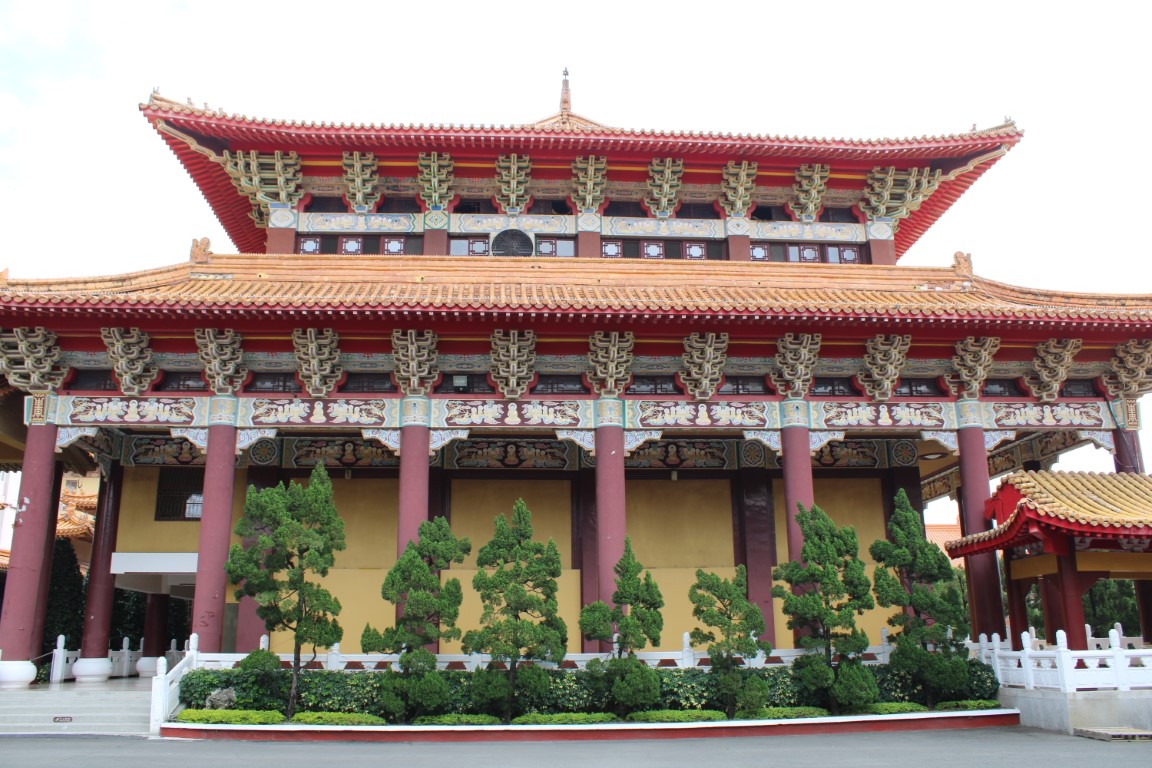
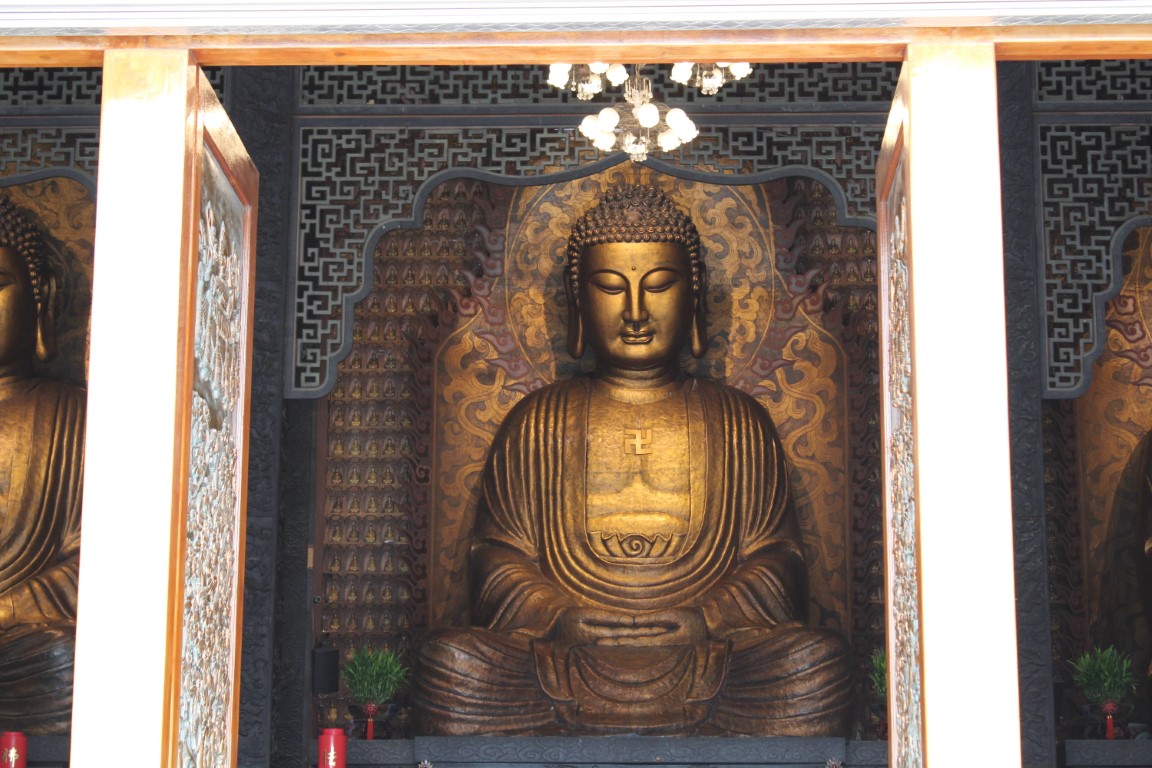
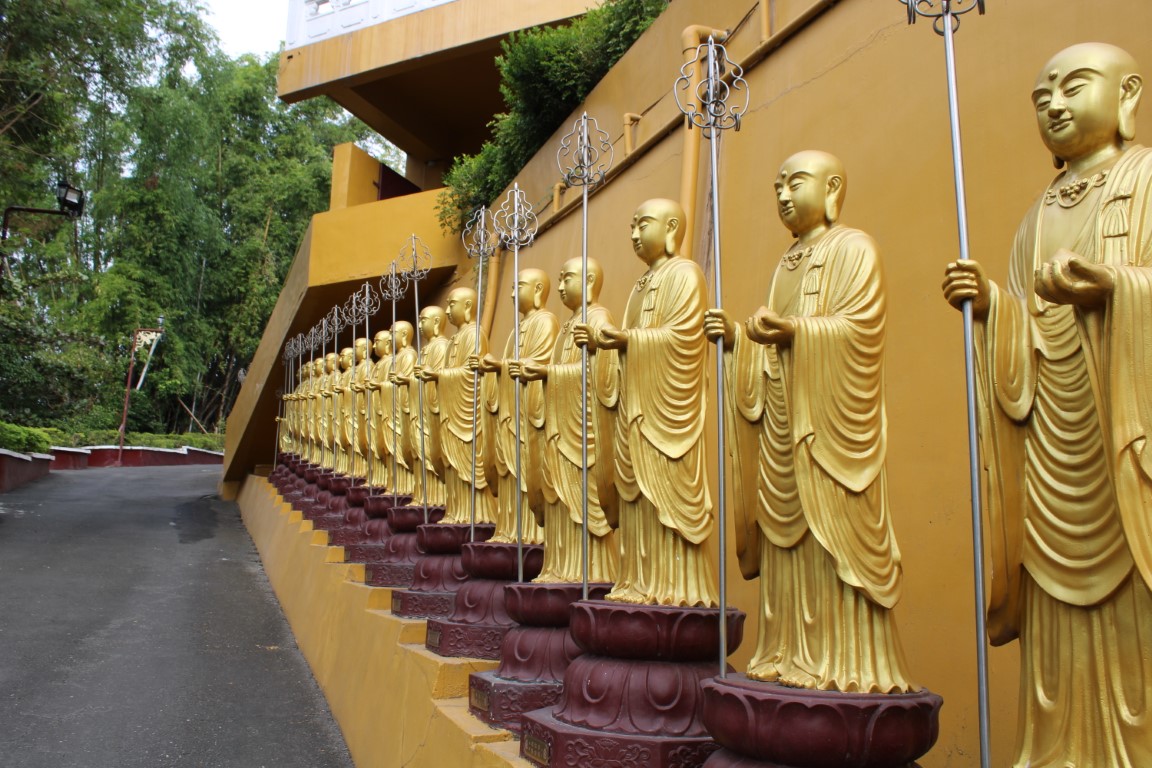
DAILY PHOTO: Gangtiangong, Hualien

“Bright Star” by John Keats [w/ Audio]

Source: NASA
Bright star, would I were stedfast as thou art --
 Not in lone splendour hung aloft the night
And watching, with eternal lids apart,
 Like nature's patient, sleepless Eremite,
The moving waters at their priestlike task
 Of pure ablution round earth's human shores,
Or gazing on the new soft-fallen mask
 Of snow upon the mountains and the moors --
No -- yet still stedfast, still unchangeable,
 Pillow'd upon my fair love's ripening breast,
To feel for ever its soft fall and swell,
 Awake for ever in a sweet unrest,
 Still, still to hear her tender-taken breath,
 And so live ever -- or else swoon to death.

PROMPT: Gift

What is the greatest gift someone could give you?

A better understanding of the world or how I can best operate within it.

Dramatic Entrance [Haiku]

an egret flares
to a dramatic landing
in a sunny grass patch.

BOOKS: “The Banished Immortal” by Ha Jin

The Banished Immortal: A Life of Li Bai (Li Po)The Banished Immortal: A Life of Li Bai by Ha Jin
My rating: 5 of 5 stars

Amazon.in Page

Li Bai is considered to be one of China’s best poets of all time, writing during the Tang Dynasty (618-907 AD,) a time swole with poetic greats. However, it’s not just a prolific collection of extant masterpieces that make Li Bai worthy of a biography intended for a general audience. Li Bai was also a compelling character. He was, at once, a drunk and a genius; a swordsman of some skill and a card-carrying Daoist. It’s not just that he could edit drafts into brilliant poems, but he was said to be gifted at spontaneously spouting clever verse. He was constantly struggling to gain a post in government, but failed time and again. Even when his poetic renown became so great that he was given a post in the Imperial court, he was disappointed to find that it was largely ceremonial and that he would have no great impact on anything. He had a stunning fall from grace when he aligned with the wrong side during a civil war and was lucky to have been exiled rather than executed.

Ha Jin, a prominent present-day Chinese author best known for the novel Waiting, does an excellent job of exploring Li Bai’s life. What I particularly enjoyed is that Ha Jin (a poet himself) discusses how events in Li’s life spurred some of his great poems (which are often included in whole or in part.) Ha Jin is also careful to make clear when biographical accounts diverge, and there are many unknown or disputed details of Li’s life. In fact, there is a bit of a mythology around Li Bai, as one might guess from the title – which refers to a nickname bestowed upon the poet based on the belief that he was a Daoist immortal.

I’d highly recommend this book for readers of biography, those interested in Chinese history, or those who are intrigued by rebellious poetic souls.

View all my reviews