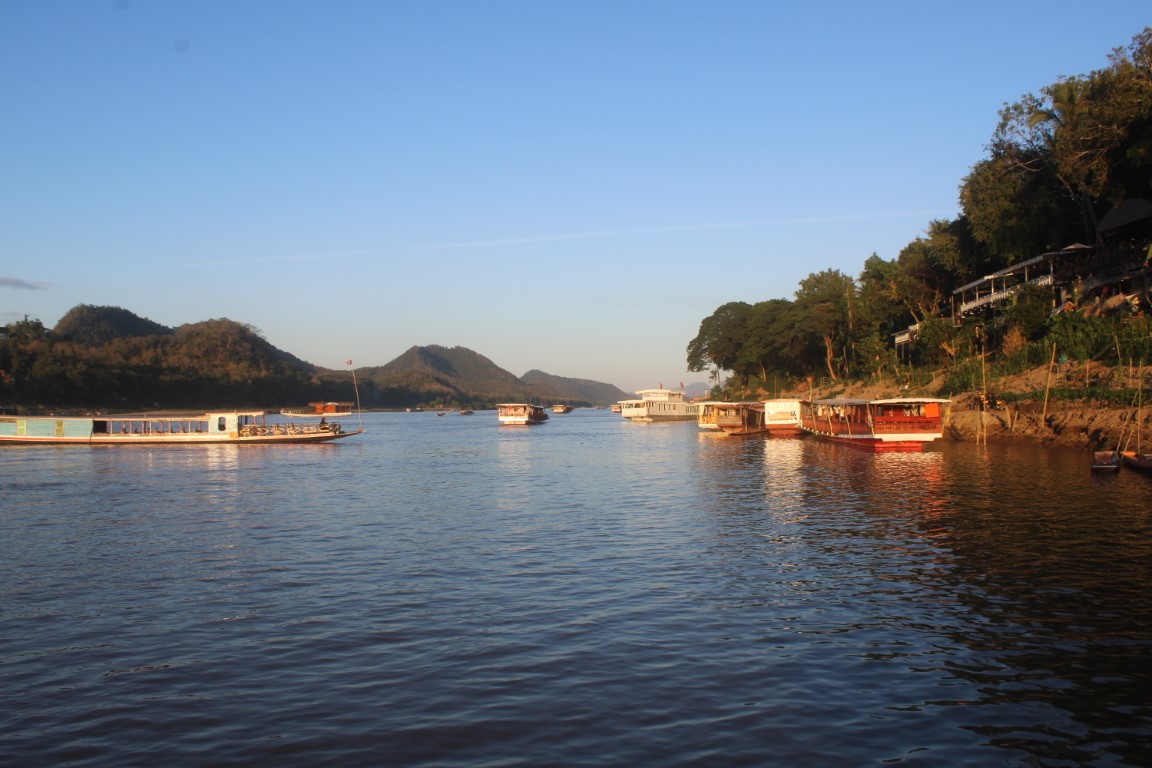
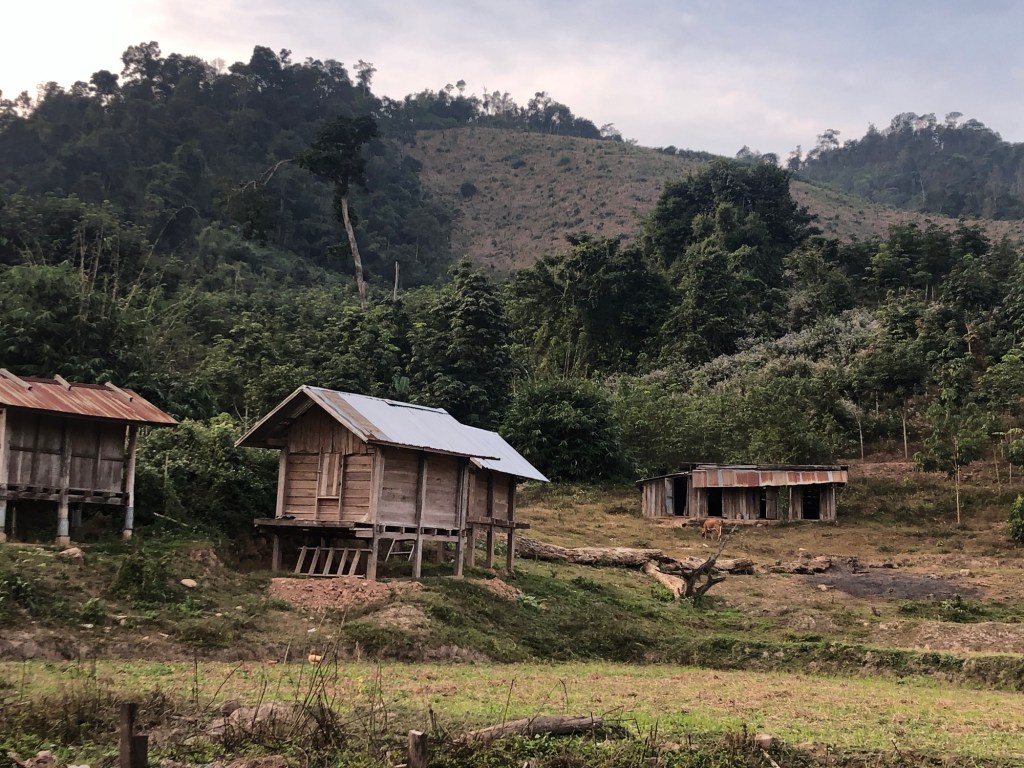
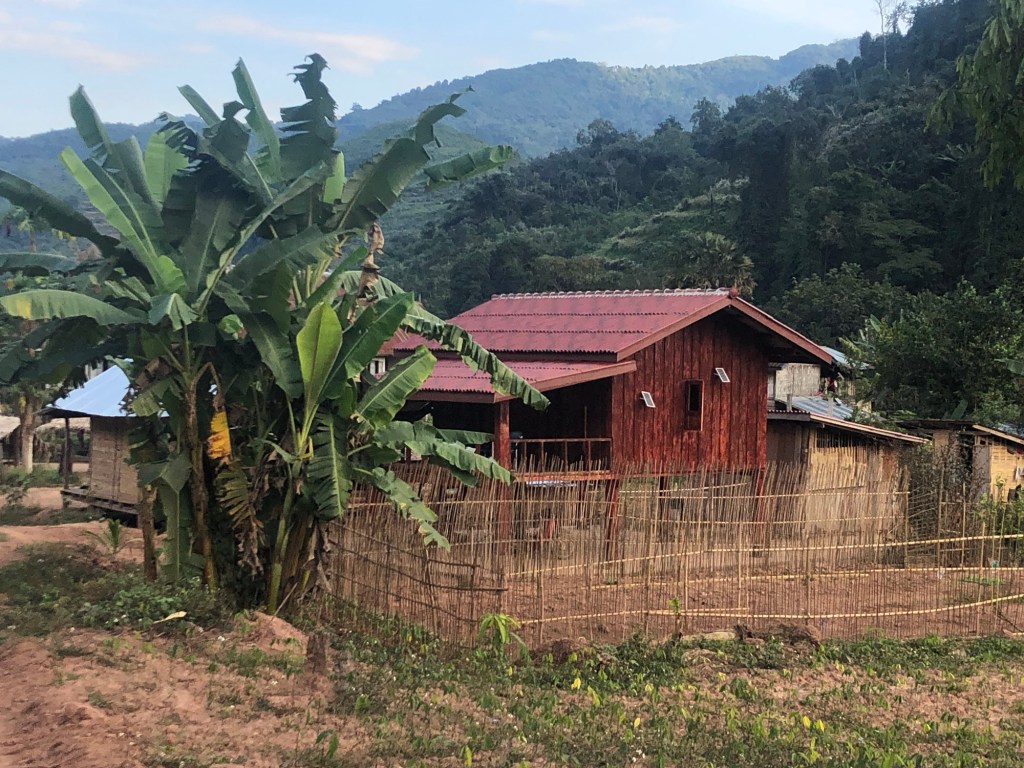
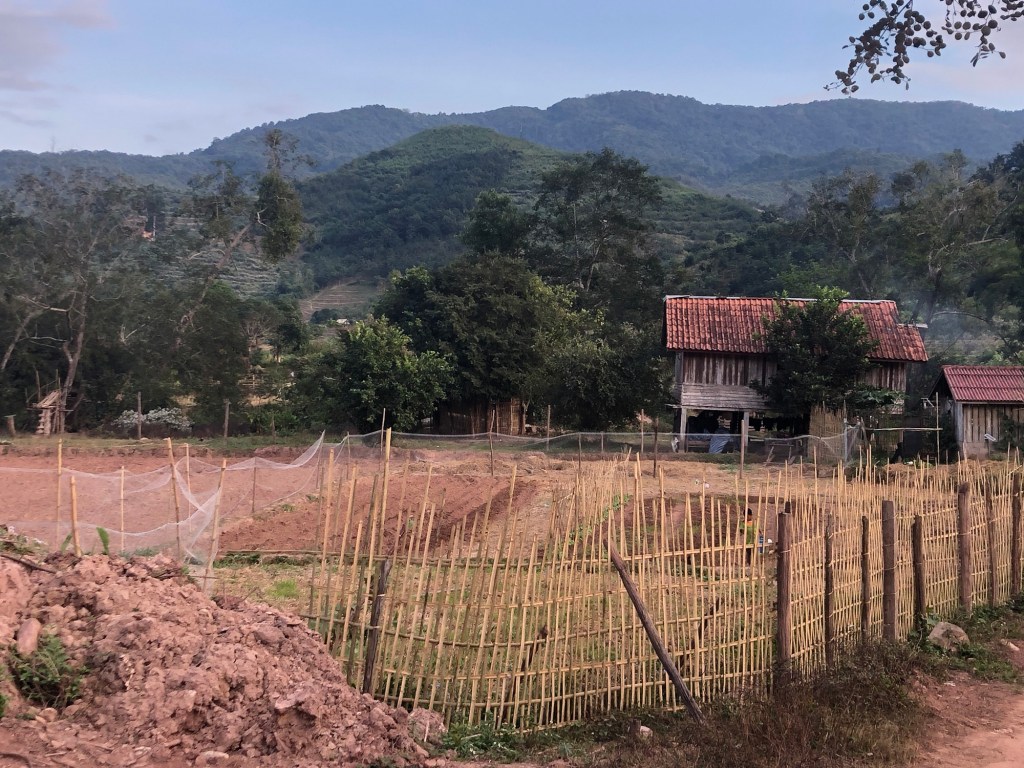
horses graze upon
dandelions and green grass,
under snowy heights.
Blue Sky Perspective [Lyric Poem]
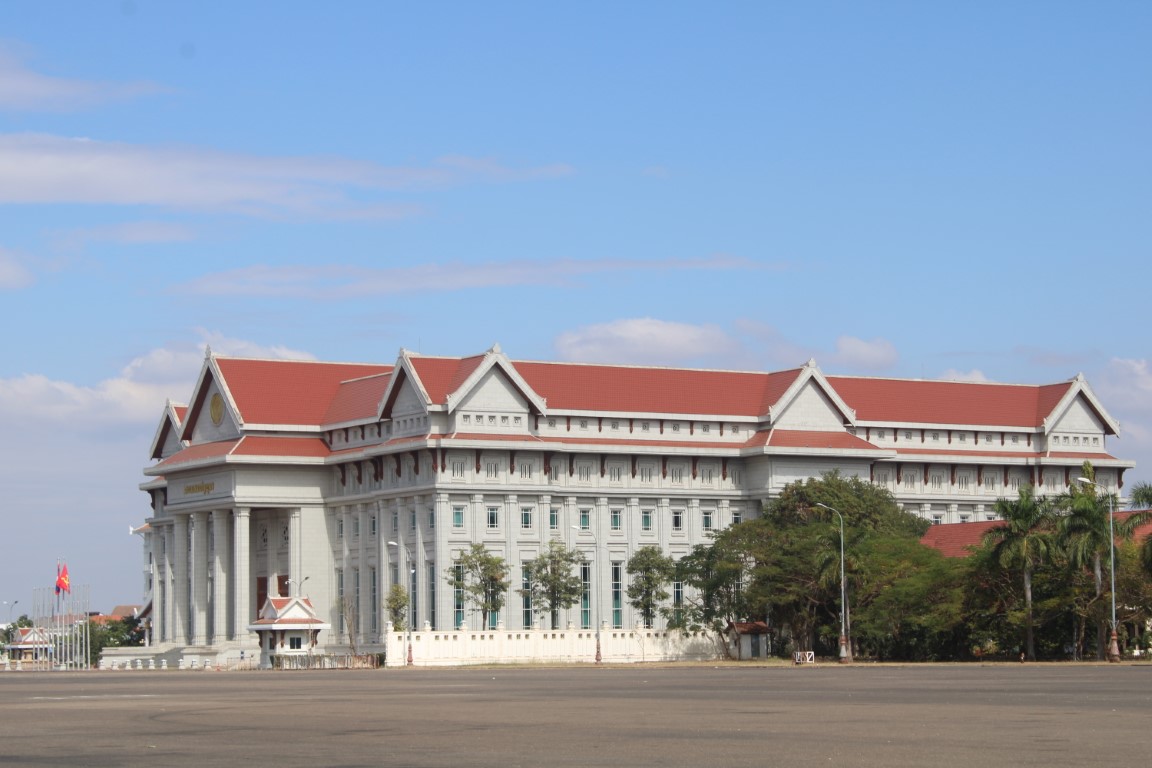
DAILY PHOTO: Two Views of Europe Square, Tbilisi
“Sparse” [Poetry Style #15 (疏野)] by Sikong Tu [w/ Audio]
Ah, make nature your home;
Be true and be unchained.
Enrichment by control
Can never be sustained.
Build your hut in the pines:
Toss your hat and read verse.
Know the dawn from the dusk,
But not time -- cradle to hearse.
If your life suits you well
Why must you strive and strain?
If you're unbound as sky,
This style you have attained.
NOTE: The late Tang Dynasty poet, Sikong Tu (a.k.a. Ssŭ-k‘ung T‘u,) wrote an ars poetica entitled Twenty-Four Styles of Poetry. It presents twenty-four poems that are each in a different tone, reflecting varied concepts from Taoist philosophy and aesthetics. Above is a crude translation of the fifteenth of the twenty-four poems. This poem’s Chinese title is 疏野 and it has been translated as “Seclusion” [Giles,] “The Carefree and Wild Style” [Barnstone / Ping,] as well as, “Unrestricted,” “Seclusion,” and “Sparse Wilderness.”
BOOKS: “A New Interpretation of Chinese Taoist Philosophy” by You-Sheng Li
A New Interpretation of Chinese Taoist Philosophy by You-Sheng LiMy rating: 4 of 5 stars
Google Books Page
By the author’s admission (and the title, for that matter) this is not so much an overview of Taoist philosophy as a philosophical rendering that attempts to not only be consistent with the Taoist tradition, but also with our present-day understanding of the world. This fact has positive and negative ramifications for readers, and results in a book that will be more useful for the purposes of some readers than others.
The biggest positive is that this interpretation of Taoism is consistent with a modern rationalist worldview. Taoism is a huge system of thought and includes a lot of magical, supernatural, and astrological thinking. In short, a book on Taoist thought could contain a great deal of woo woo, but this one does not. It has not much to say on demons, deities, magic, alchemy (in the narrow, original meaning,) etc., and to the degree these subjects do crop up they do so in a way that is not arcane and doesn’t insist on belief in unsupported ideas. I think this makes this book important, as it fills a niche. Most of the central texts of Taoism were written in times that were different from our own and in which magic and the supernatural were taken for granted. So, if you want a text that draws on major ideas of Taoism but presents them in a way that is consistent with science, you may want to give this book a look.
The biggest negative is that when the book is not explicitly describing the teachings of historical figures, one doesn’t necessarily have a good way of knowing how much Li’s ideas are or aren’t consistent with Taoist tradition. There are extended discussions of ideas such as evolutionary biology and existentialism, and — unless one has a great depth of knowledge of Taoism to begin with — it can be hard to see whether Li’s views on these subjects are in line with Taoist philosophy or whether twists are being made. The most extensively discussed / cross-cutting idea of the book is that of differentiating primary from secondary society and proposing a primacy of primary society in Taoist thought. I can’t say I’ve read much elsewhere that would suggest this was a core idea for Taoists, but the political philosophy of Taoism is not an area with which I’m at all well-acquainted.
I found this book interesting and thought-provoking. I also felt it was much needed to have a scientifically consistent approach to Taoism. If you are looking for such discussion, I’d recommend this book.
View all my reviews
DAILY PHOTO: Armenian Green Hills
PROMPT: Grudge
No. It’s not that I’m insufficiently petty, but rather that I lack the requisite memory and passion for such things.
I once read about a psychopath who claimed that when he was wronged, he would hold onto it, bide his time, and get his nemesis with a commensurate reply at a later date — often years later when other person had completely forgotten about the matter. Quite frankly, I don’t know how he had the mental energy.
BOOKS: “Idle Thoughts of an Idle Fellow” by Jerome K. Jerome
Idle Thoughts of an Idle Fellow by Jerome K. JeromeMy rating: 5 of 5 stars
Project Gutenberg Site
This is a collection of fourteen humorous essays on a range of topics related to human existence. Besides the titular topic of living a life of idleness, other discussions include: love, poverty, vanity, attire, eating, pets and babies. (The latter two being distinct topics addressed in different chapters, though not with an altogether different attitude.)
Much of the humor holds up well considering this book originally came out almost a hundred and forty years ago. That said, it must be acknowledged that some of the humor and a number of the attitudes have not aged well and will not necessarily be relatable.
If you’re looking for a collection of essays on life that are humorous, if not contemporary, this book is worth looking into.
View all my reviews
“I have never seen ‘Volcanoes’ –” (175) by Emily Dickinson [w/ Audio]
I have never seen "Volcanoes" --
But, when Travellers tell
How those old -- phlegmatic mountains
Usually so still --
Bear within -- appalling Ordnance,
Fire, and smoke, and gun,
Taking Villages for breakfast,
And appalling Men --
If the stillness is Volcanic
In the human face
When upon a pain Titanic
Features keep their place --
If at length the smouldering anguish
Wil not overcome ---
And the palpitating Vineyard
In the dust, be thrown?
If some loving Antiquary,
On Resumption Morn,
Will not cry with joy "Pompeii"!
To the Hills return!