BOOKS: “The Art of Writing” Trans. / Ed. by Tony Barnstone and Chou Ping

The Art of Writing: Teachings of the Chinese MastersThe Art of Writing: Teachings of the Chinese Masters by Tony Barnstone
My rating: 5 of 5 stars

Publisher Website

This thin volume is packed with insights on writing — especially, but not exclusively, poetry. It consists of four chapters. The first two are the ars poetica of Lu Ji and Sikong Tu, respectively (i.e. The Art of Writing and The Twenty-Four Styles of Poetry.) The second half of the book consists of two chapters of collected sayings and poetry commentary excerpts.

I haven’t read a book so dense with quotable lines in a while. Some of the advice offered is universal and timeless (e.g. avoid cliches and read voraciously,) but some of it reflects a uniquely Chinese perspective rooted in Taoist and Zen sentiments (e.g. how to use wu wei [effortlessness] in one’s writing and so forth.)

There is a preface and each of the sections has its own editorial opening, but these never feel like padding (which often happens with books that come out to less than a hundred pages of content.) Instead, this ancillary material is concise and helps to offer historic and cultural context.

I’d highly recommend this book for writers and those interested in Eastern aesthetics and literature. That said, you don’t necessarily have to be interested in both. Any writer could pick up some beneficial tips while reading this book, and it’s compact, highly readable, and even humorous in places.

View all my reviews

Fēnggān [Senryū]

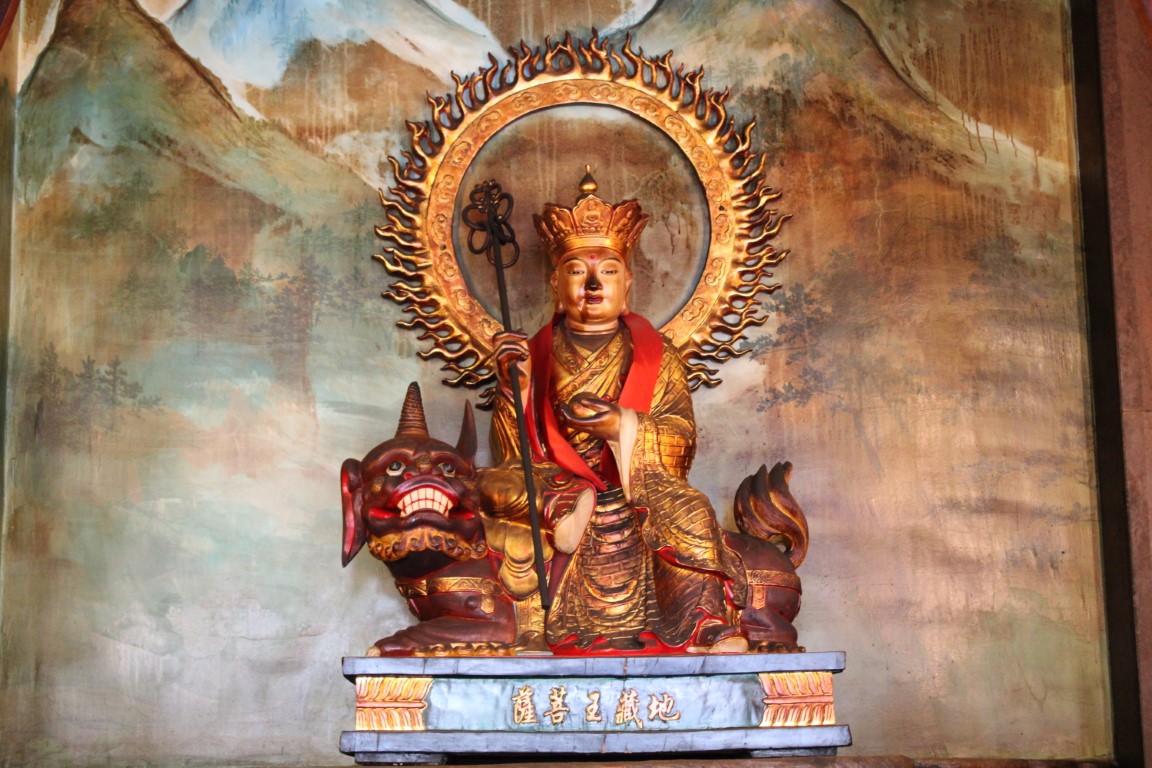
the monk rode in
on a bright-eyed tiger, and
started hulling rice.

FIVE WISE LINES [October 2024]

If any thing is sacred the human body is sacred

walt whitman; Leaves of grass; “I sing the body electric”

Strong in their softness are the sprays of the wisteria creeper;
The pine in its hardness is broken by the weak snow.

Saying of Master Jukyo as Translated by Trevor Leggett in Zen and the Ways

When there is mutual ignorance, confidence indeed is king.

Trevor leggett; Zen and the Ways

Do not see the gate and think it is the house. The house is something which is reached by passing through and going beyond the gate.

YAgyu Munenori’s Art of War (As translated by trevor leggett in Zen and the ways)

Students of the Ways must see clearly that in an untrained man the intellect is like a barrister. It argues clearly and logically, but the aim is not truth, but to reach a predetermined conclusion.

Trevor Leggett; Zen and the Ways

BOOKS: “Zen and the Ways” by Trevor Leggett

Zen and the WaysZen and the Ways by Trevor Leggett
My rating: 5 of 5 stars

Open Library Page

This book is the most densely populated with interesting insights that I’ve read in some time. It’s not new, being first published in 1978, but it takes a variety of approaches to give the reader a better understanding of Zen and the application of Zen mind to martial arts and other activities that found benefit in stillness and clarity. By “the Ways,” Leggett is referring to those arts and activities benefiting from Zen, which include: tea ceremony, flower arranging, painting, poetry writing, and all manner of martial arts. [Often represented by ending “do” in Japanese.] (The latter are dealt with most extensively, but not exclusively.)

The book is arranged in six parts, the first half of which focus mostly upon Zen Buddhism and, particularly, the Kamakura school that found a huge following among warriors and other artists. Those first three chapters take a big to small approach, examining Zen from ever finer levels of detail, starting with an introduction to Zen Buddhism broadly, moving on to the Kamakura developments, and then finally focusing on one particular practice — that of Koans (stories that present riddles which the student can only “solve” in a non-intellectual fashion.)

The second half of the book investigates the ways Zen has been applied to various arts. This is where one sees the varied approaches used to explore the confluence of Zen and artistry. Part Four consists of a series of essays explaining concepts such as ri (universal truth) and ji (formal technique,) ki (vital energy,) and isshin (single-heartedness) / zanshin (lingering awareness.) Part Five consists of historic martial arts scrolls and excerpts, including Yagyu Munenori’s Art of War and Chozan Shisai’s “Tengu’s Guide to the Martial Arts.” The final part consists of stories that illustrate crucial ideas in a readable and memorable fashion.

I was extremely pleased to stumble across a copy of this book in a second-hand bookshop. I’d long ago heard a fascinating story about murders in Edo era Japan of high-level martial artists, all killed in the same manner. They never found the killer, but they figured out how the murders were done easily enough. The killer exploited his knowledge of that school’s techniques to lay a fake that exploited their own technique to create an opening. It’s a cautionary tale that drilling muscle memory is not the end-all be-all of martial arts, and that it can create its own problems. At any rate, I’d never been able to find the source… until now. There is a detailed discussion of it in this book.

For readers interested in how state of mind influences artistic performance, I’d highly recommend this book.

View all my reviews

PROMPT: Attention

What details of your life could you pay more attention to?

When I chop carrots, I should chop carrots; when I walk in the park, I should walk in the park; when I poop, I should poop.

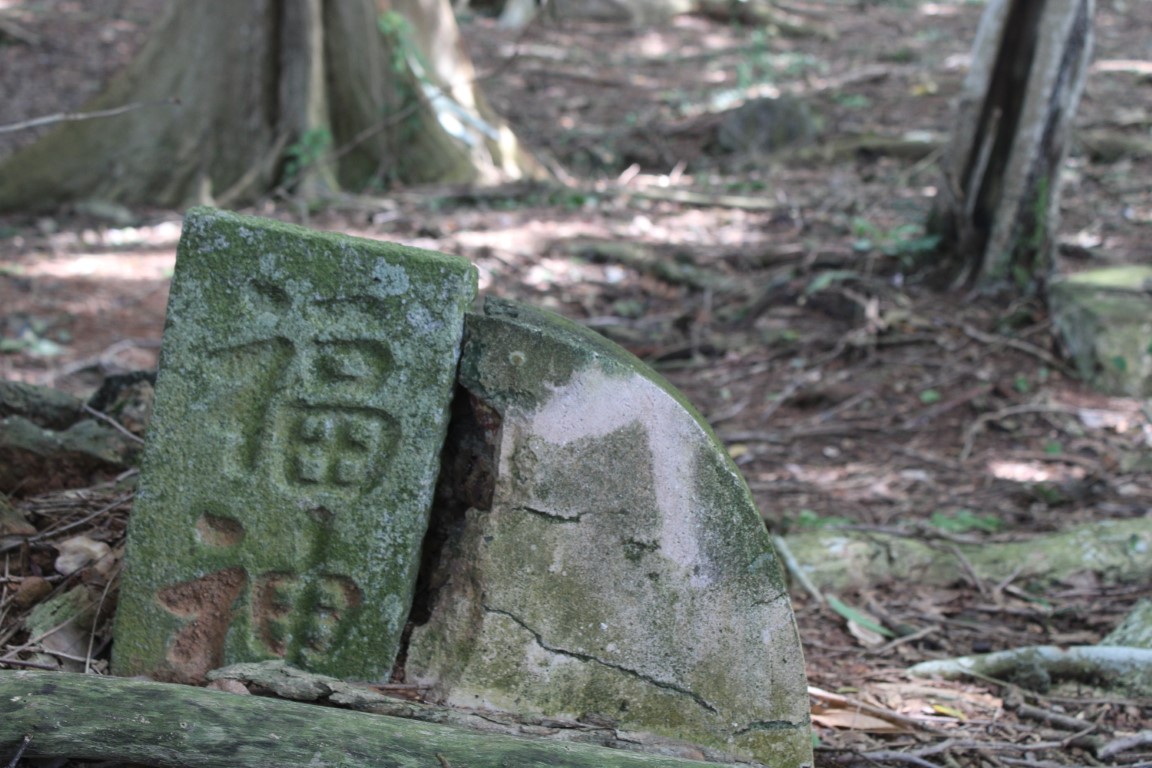
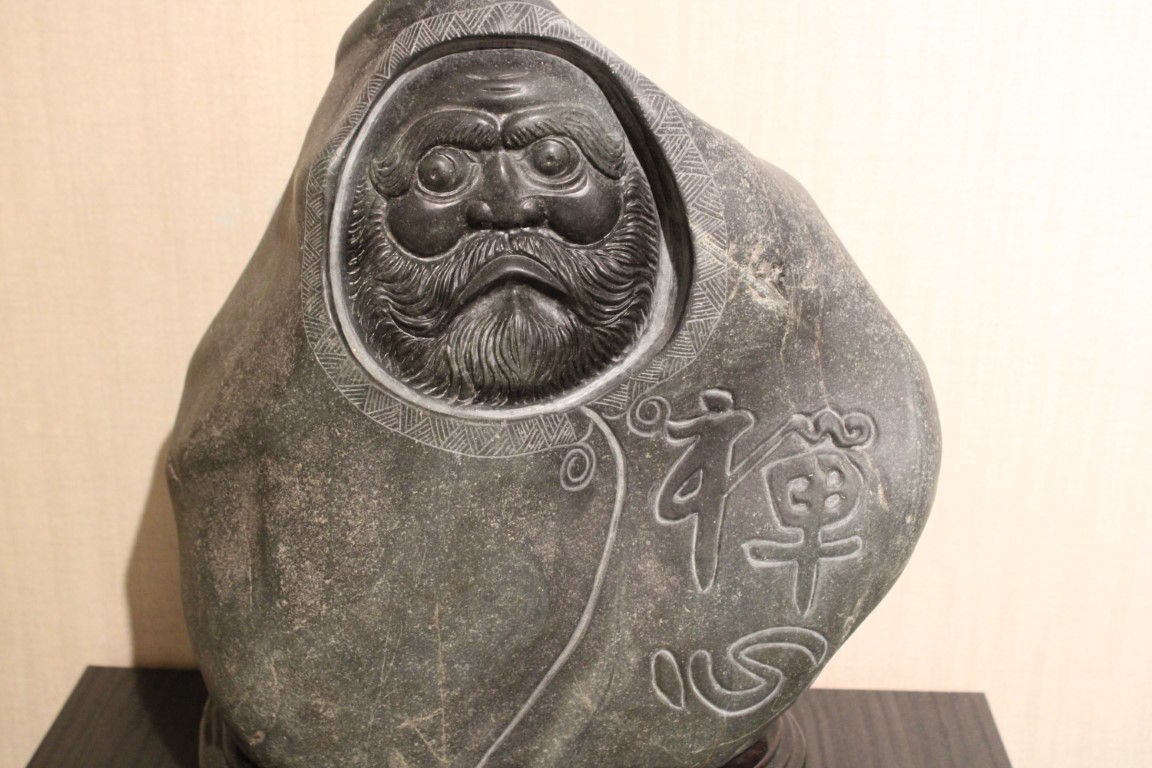
Stone Damo [Lyric Poem]

The stone Bodhidharma,
Meant as more than likeness.
It tries to copy Damo's
Stillness & uprightness.

BOOKS: “The Zen Teaching of Bodhidharma” Translation by Red Pine

The Zen Teaching of Bodhidharma (English and Chinese Edition)The Zen Teaching of Bodhidharma by Bodhidharma
My rating: 5 of 5 stars

Publisher’s Site

Bodhidharma was a Buddhist Monk who is credited with bringing an approach to Buddhism to China that would become Zen. This book presents four of his surviving lectures in their entirety: “Outline of Practice,” “Bloodstream Sermon,” “Wake-up Sermon,” and “Breakthrough Sermon.” It is a bilingual edition, featuring Traditional Chinese script juxtaposed with the English translation.

Bodhidharma was an intriguing and important character in the history of Buddhism, so much so that a legend has grown up around him that is in all likelihood substantially false. The most well-known element of the legend is that he taught monks the martial art that became Shaolin Kung Fu. (Historians refute the likelihood of this because there was no evidence of it in the documentation in the centuries immediately after Bodhidharma’s death. The story came along much later and caught on like gangbusters, so much so that it is routinely repeated today as if established fact. For elaboration, see Meir Shahar’s “The Shaolin Monastery.”) There is simply not a lot known about Bodhidharma (or even the extent which there was a Bodhidharma,) and what is known is not without controversy. Popular accounts put his homeland in Tamil Nadu, India, but dissenting accounts put it as far away as Persia (Iran.)

The reason I mention all this is because some potential readers may expect a kind of fabled story, full of kung fu and magic, and — in point of fact — these teachings offer a clear and straightforward approach to the practice of Buddhism. I’d highly recommend the book for readers interested in Buddhism, Zen, and meditational practices – generally. It is a clear and thought-provoking work. But, if you’re expecting a thrilling recitation of legend and woo-woo, this isn’t it.

View all my reviews

Zen Garden [Haiku]

little Zen Garden
evokes a craggy cliff
despite scale issues.

BOOKS: “Improv Wisdom” by Patricia Ryan Madson

Improv Wisdom: Don't Prepare, Just Show UpImprov Wisdom: Don’t Prepare, Just Show Up by Patricia Ryan Madson
My rating: 4 of 5 stars

Publisher’s Website

One might expect this to be a book about how to perform improvisational comedy, but it’s better described as a philosophy of life that employs lessons from improv. There are books that take a much more tailored approach to building an improv act. This one, rather, broadens its target demographic from those interested in theater and comedy to everybody. It discusses applying lessons such as default to positivity (the famous “Yes, and…” of improv) both on and beyond the stage.

Each of the thirteen chapters is built around a maxim that might be heard in an improv theater or troupe. The crux of the matter is building the confidence and sense of freedom to be able to behave spontaneously in an environment that’s stressful and somewhat chaotic. Most of the lessons approach an aspect of the problem of surrender and free response action, though there are broader lessons such as the benefits of gratitude and helpfulness. While I call the book’s content a philosophy of life, the author doesn’t spend a lot of time drilling down into established philosophies, with the exception of Buddhism — specifically of the Zen variety. As one might imagine, Zen — with its emphasis on non-attachment and avoidance of overthinking — has a substantial overlap with the approach to living that Madson is proposing.

“Improv Wisdom” is set up as a self-help book, featuring not only lesson-based organization but also offering a few exercises in each chapter.

This is a quick read and might prove to be of great benefit to those who have never thought much about the challenges and lessons of improv. The book can’t be said to be groundbreaking in terms of the lessons it presents, but its focus on what improv elucidates about these lessons is interesting and unique.

View all my reviews

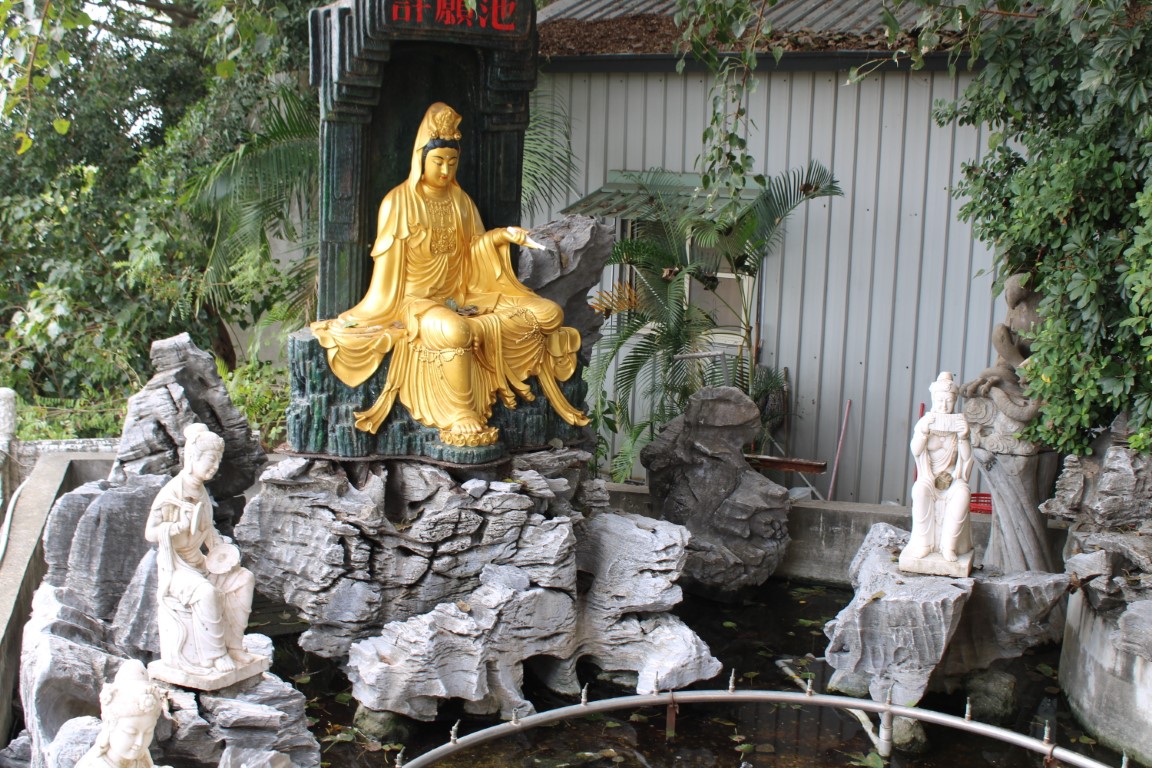
Zen Garden [Lyric Poem]

I see those serene figures sit
 amid Zen Garden evergreens.
Like Benkei, they don't move a whit,
 Their minds are free of thoughts & dreams.

The moss is growing on them, now,
 and birds have left their fecal splat.
Don't envy how they've found the Dao,
 but how they have no need of hats.