How do you manage screen time for yourself?
Many ways, really: e.g. Go for a walk or otherwise move. Forget it exists. When the WiFi goes down, take it as a sign from the universe. Juggle. Do something productive.
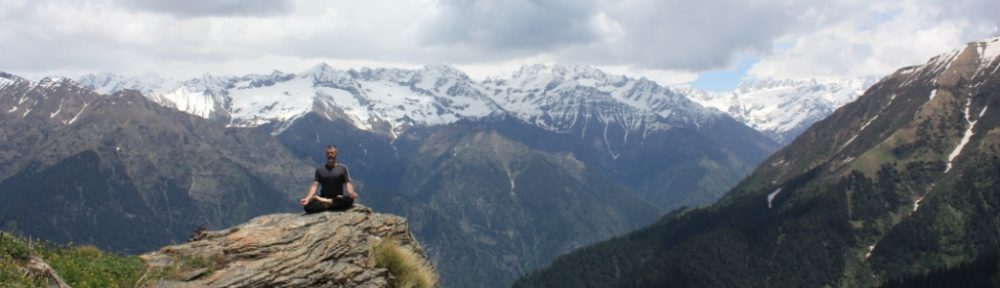
How do you manage screen time for yourself?
Many ways, really: e.g. Go for a walk or otherwise move. Forget it exists. When the WiFi goes down, take it as a sign from the universe. Juggle. Do something productive.
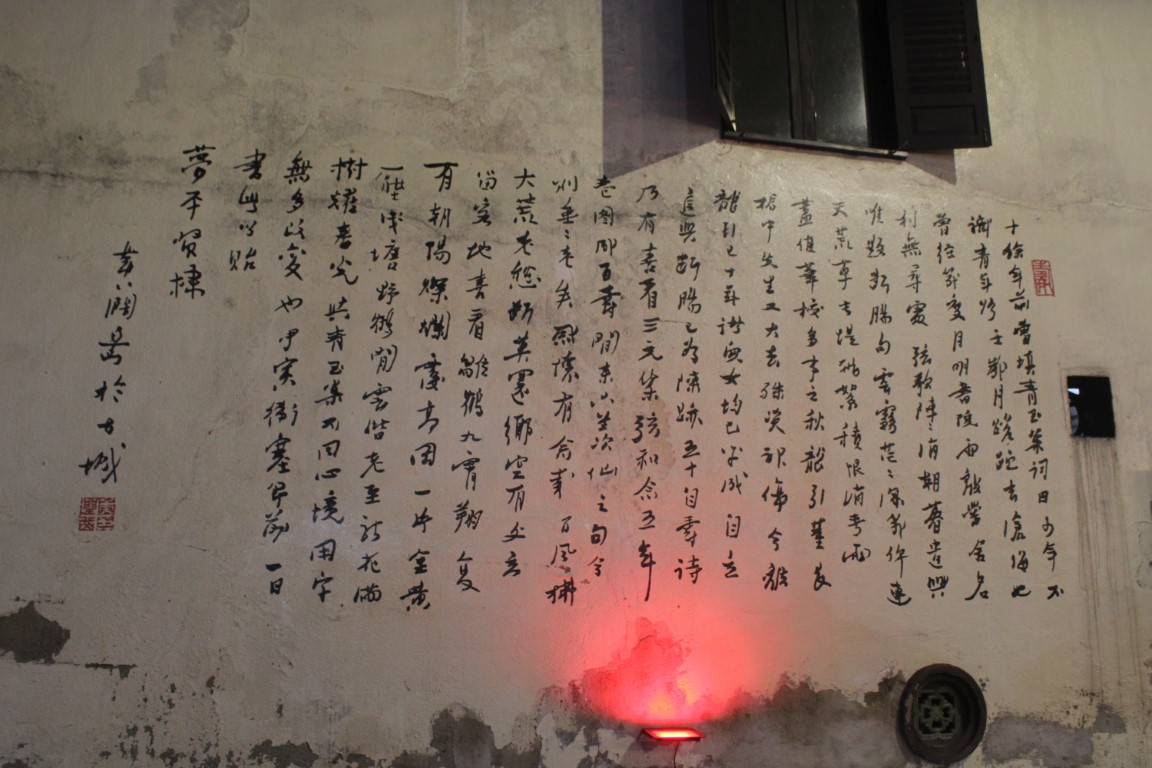
I see the writing on the wall,
 and find it untrustworthy
 because of all the stories
 of valiant warriors
 framed for treason
 with forged poems
 scrawled on tavern walls.

And of the virtuous men
 who did write rancorous poems,
 but did so while blackout drunk.

And I wonder whether the words
 I am seeing are forged or written
 under the influence
 of intoxicants,
 or -- possibly -- they are the truth.

But I cannot read them,
 so I find them irrelevant,
 though they may convey
 crucial information,
 such as:
 - the existence of a vampire infestation, or
 - the presence of cholera in the town well.

So, I can see the writing on the wall,
 but I find it neither trustworthy
 nor relevant --
 (though my life may depend
 on its contents.)
They shut me up in Prose --
   As when a little Girl
 They put me in the Closet --
   Because they liked me "still" --

Still! Could themself have peeped --
   And seen my Brain -- go round --
 They might as wise have lodged a Bird
    For Treason -- in the Pound --

Himself has but to will
   And easy as a Star
 Look down opon Captivity --
   And laugh -- No more have I --
I don’t collect favorites. I like reading, hiking, writing, swimming, playing, exercise, traveling, cooking… each in its due time for its due time.
I usually don’t find it too difficult. I find reading and free writing conducive to relaxation. In cases in which I’m wound up, I move and / or exercise intensely. If I ever need to achieve relaxation expeditiously, I use Visama Vritti Pranayama or PMR (progressive muscle relaxation.)
Why do you blog?
A quick and easy fix of creative output.
That said, by the original definition of “blog,” it could be argued that I don’t blog and never did much of it, as my posts are not of a journaling / thoughts on “X” variety and rarely have been.
If I’m being entirely honest, everything that’s come out of this enterprise has been of selfish motive — even those activities that seem like they have broader purpose. For example, I started book reviewing because: a.) I found it disheartening how many books I read that I had virtually no recollection of a couple years down the line, and b.) because, while I felt I knew good writing when I read it, I couldn’t really say what it was that made it good or bad without taking a more analytical look into the matter. (And I was pretty sure good writing wouldn’t come to me osmotically — merely by reading good writing — if I didn’t understand why it was good writing.)
I started recording classic poems to get a better sense of the sound quality of well-crafted poetry (and to become more comfortable with the sound of my own voice.)
I guess the honest answer is that I hope to be smarter and more capable as a result of the practice. It is continuing education, a fostering of the Beginner’s Mind.
When do you feel most productive?
When the internet is down.

We are pattern seekers, believers in a coherent world, in which regularities appear not by accident but as a result of mechanical causality or someone’s intention.
Daniel kahneman; Thinking, Fast and slow
If you win, do not boast of your victory; if you lose, do not be discouraged. When it is safe, do not become careless; when it is dangerous, do not fear. Simply continue down the path ahead.
Kanō Jigorō; Founder of Jūdō
A writer makes new life in the void, knocks on silence to make a sound, binds space and time on a sheet of silk and pours out a river from an inch-sized heart.
Lu Ji; Wen Fu (261 – 303)
The worst kind of Virtue never stops striving for Virtue, and so never achieves Virtue.
Laozi
Moonlight floods the whole sky from horizon to horizon. // How much it can fill your room depends on its windows.
Rumi
You’re writing your autobiography. What’s your opening sentence?
“From humble beginnings would come humbling ends.”


 Tiger Riding for Beginners