6.) Thor & Loki in the Land of Giants (Norse): There’s no shame in putting a mere dent in the impossible.
5.) Rama & Sita (Hindu / from the Ramayana): Careful with your assumptions. You may end up looking like a jerk even if you’ve proven yourself generally virtuous.
4.) Anansi the Trickster (Ghanan / Akan): Don’t do favors for tricksters.
3.) Arachne the Weaver (Greek): Don’t be arrogant, even if you’re the best.
2.) Izanagi & Izanami (Japanese [creation myth]): Hell hath no fury…
1.) White Buffalo Calf Woman (Native American / Lakotan): Don’t let your lust get away from you and be careful in your assumptions.
Category Archives: wisdom
BOOK REVIEW: The Journey to the East by Hermann Hesse
The Journey to the East by Hermann Hesse
My rating: 5 of 5 stars
This lesser-known Hesse work adopts a theme common throughout the author’s books in that it’s philosophical man-versus-himself fiction. The book’s protagonist, H.H., is a member of a secretive league [called “The League”] with whom he is undertaking a journey of self-discovery. H.H. fails to complete the expedition, and that fact haunts him into old age. Ultimately, H.H. finds Leo, a servant who’d been on the journey with him, with whom H.H. had a great affinity, and whose disappearance (along with some loot) led to H.H.’s abandonment of the trip. In the process, the lead discovers that nothing was what it seemed.The book examines how vulnerable people are to disillusionment and how quickly they can lose their passion, and it urges the reader to consider from what source one draws one’s strength.
This novella is a little under a hundred pages, and is told in five chapters. The first couple of chapters describe the ill-fated journey. The third chapter is a pivot in which H.H. is considering his inadequate attempt to chronicle events, and is advised to get closure by tracking down Leo. In the last two chapters, H.H. does find Leo, receives the man’s wisdom, and ultimately finds out what really happened.
I enjoyed this book. It’s a quick and simple read, but is extremely thought-provoking. I’d recommend this book for anyone who likes to think about life’s big questions.
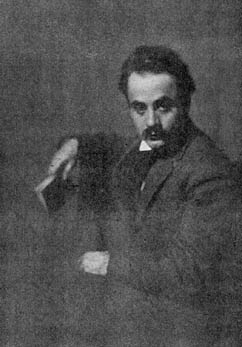
BOOK REVIEW: The Prophet by Kahlil Gibran
The Prophet by Khalil Gibran
My rating: 5 of 5 stars
This is a combination of a narrative poem and a collection of morality poems. The story of the narrative poem is that a wise man (i.e. the Prophet), Almustafa, is about to sail away from his recent — but temporary — home on Orphalese, and he’s asked to speak on a range of topics so the people of Orphalese can gather his wisdom before he goes.
In 26 chapters, the prophet expounds on each topic upon which he is questioned. Topics include relationships, possessions, laws, religion, teaching, and death. The wisdom presented is practical, profound, and reflects a mystic sentiment (i.e. the idea that the divine is within us rather than something separate.) This is an extremely quotable volume. Among his responses, the Prophet says that one should not be too controlling in relationships, that one should not live life under the dictates of fear, that it’s not for one to determine what is moral for another, and that one should not engage in morality or worship for show.
I’ll keep my review short as the book is tiny and certainly worth your time. I’d recommend this book for all readers. I think it has some insight to offer just about anyone.
[Note: Some spell the author’s first name “Kahlil” and others “Khalil.” I picked one at random.]
10 Great Quotes from “The Prophet” by Kahlil Gibran
10.) “But let there be spaces in your togetherness.
“And let the winds of the heavens dance between you.”
-on Marriage
9.) “He who wears his morality but as his best garment were better naked.”
-on Religion
8.) “And you would accept the seasons of your heart, even as you have always accepted the seasons that pass over your fields.”
-on Pain
7.) “What of the ox who loves his yoke and deems the elk and deer of the forest stray and vagrant things?
“What of the old serpent who cannot shed his skin and calls all others naked and shameless?”
-on Laws
6.) “If he is indeed wise he does not bid you enter the house of his wisdom, but rather leads you to the threshold of your own mind.”
-on Teaching
5.) “For if you should enter the temple for no other purpose than asking you shall not receive.”
-on Prayer
4.) “And if it is a fear you would dispel, the seat of that fear is in your heart and not in the hand of the feared.”
-on Freedom
3.) “For what are your possessions but things you keep and guard for fear you may need them tomorrow?”
-on Giving
2.) “Only then shall you know that the erect and the fallen are but one man standing in the twilight between the night of his pygmy self and the day of his god self.”
-on Crime and Punishment
1.) “Or have you only comfort, and the lust for comfort, that stealthy thing that enters the house as guest, and then becomes a host, and then a master.”
-on Houses
POEM: Little Wisdom
There’s so little that I know.
Banal advice: “Don’t tell, show!”
But I’ve learned a thing or two worth learning.
Enough to feel the warmth of a dream burning.
Feel grateful more often than superior.
Feel contented more often than inferior.
Mother nature offers no free rides.
You won’t find your line by riding tides.
I’m not the best. I’m not the worst.
Though I’ve been loved, loathed, cradled, and cursed.
And known hunger, and burned with thirst.
Foot to fire, you’ll find fear a liar.
It steals will as life’s great briar.
Creature comfort is overrated.
It casts away the moment sated.
Feeling you have the right to live as me.
Is not a laudable love of the free.
It’s just personal pan tyranny.
BOOK REVIEW: Trying Not to Try by Edward Slingerland
Trying Not to Try: The Art of Effortlessness and the Power of Spontaneity by Edward Slingerland
My rating: 5 of 5 stars
This book’s paradoxical title is perfect for its paradoxical subject matter, which is famously expressed in such quotes as, “When nothing is done, nothing is left undone” [ver. 48 of the Tao Te Ching.] Slingerland lays down the ancient Chinese wisdom of wu-wei and de, but provides something novel by putting it in the context of the positive psychology and neuroscience of today. Wu-wei literally means “no doing,” but can be more meaningfully defined as “effortless action.” De (pronounced “duh”) is a charisma seen in people who have mastered the effortlessness and spontaneity of wu-wei.
While the book is built around the varied approaches of four Chinese philosophers—two Confucians (i.e. Confucius and Mencius) and two Taoists (i.e. Laozi and Zhuangzi)—the author relates this philosophy to the present-day thinking found in Daniel Kahneman’s “Thinking, Fast and Slow,” Mihaly Csikszentmihalyi’s conception of Flow, and the neuroscience of the subconscious.
The book consists of eight chapters. The introduction and the first two chapters outline the concepts of wu-wei and de using both Chinese and Western stories and examples to help clarify these arcane ideas and put them in the context of the social and spiritual spheres. Chapter 1 offers an extensive discussion of the operation of the brain as it relates to the discussion of effortlessness and spontaneity.
Chapters three through six make up the core of the book, and present the approach and thinking of Confucius, Laozi, Mencius, and Zhuangzi, respectively. This “boy-girl-boy-girl” Confucian-Taoist organization offers the reader sound insight into the varied approaches and allows one to see the evolution of thinking. Confucius gets the first cut, but his approach to effortlessness and spontaneity involves a great deal of effort and planning. It might seem that Laozi’s approach–which does away with effort and planning–might be more apropos, but it’s hard to imagine anything of benefit actually being spawned by such a loosy-goosy approach. The more nuanced approaches of Mencius and Zhuangzi offer additional insight, but do not eliminate the paradox. It’s this paradox that’s the subject of chapter seven.
The final chapter examines what the reader can take away–given that the paradox of wu-wei seems inescapable. The author proposes that, paradox or not, there is value in pursuit of effortlessness and spontaneity, and progress can be made by understanding and accepting said paradox.
The book has no graphics, but is annotated and has a bibliography–as well as an appendix table that summarizes the various approaches to wu-wei.
I enjoyed this book and found it fascinating. It’s highly readable, having humor and a wide range of examples from ancient myths to pop culture. The book offers a great value-added by considering the relevance of modern science and psychology to this ancient concept. I’d highly recommend this for individuals interested in Chinese / Eastern philosophy, as well as anyone hoping to bring a little more effortlessness and spontaneity into his or her life.
5 Insightful Sentences from Literature
![]()
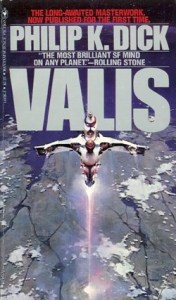
It is sometimes an appropriate response to reality to go insane.
Philip K. Dick in VALIS
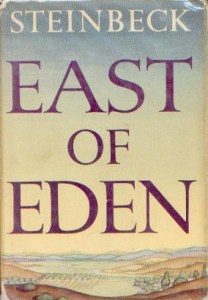
And now that you don’t have to be perfect, you can be good.
John Steinbeck in East of Eden
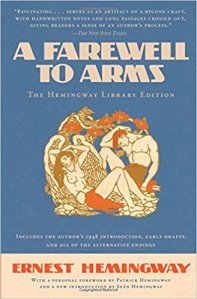
Anger was washed away in the river along with any obligation.
Ernest Hemingway in A Farewell to Arms
There is a sense in which we are all each other’s consequences.
Wallace Stegner in All the Little Live Things
There are some things that are so unforgivable they make other things easily forgivable.
Chimamanda Ngozi Adichie in Half a Yellow Sun
BOOK REVIEW: The Way of the Bodhisattva by Shantideva
The Way of the Bodhisattva: A Translation of the Bodhicharyavatara by Śāntideva
My rating: 4 of 5 stars
A bodhisattva is one who achieves enlightenment but sticks around to help others pursue the path. Shantideva was a Buddhist monk who lived [mostly] in the 8th century in the part of India that is today in the state of Bihar. Shantideva’s lesson on how to be a good bodhisattva is delivered via 10 chapters of verse, mostly in four-line stanzas. This instructional poem makes up almost 240 pages of the edition of the book put out by Shambhala as translated by the Padmakara Translation Group, and the rest is front matter, appendices, notes, and a bibliography.
The chapters of Shantideva’s poem are: 1.) The Excellence of Bodhichitta (lit. “enlightened mind”); 2.) Confession (fear is a major theme in this statement of modesty); 3.) Taking Hold of Bodhichitta; 4.) Carefulness (discussion of what to avoid.); 5.) Vigilant Introspection (on the need to keep one’s attention concentrated, and to not let the mind roam.); 6.) Patience (on not being focused on self, but on all those suffering.); 7.) Diligence (on avoiding hedonism and being industrious.); 8.) Meditative Concentration (avoidance of getting caught up in the material / physical world.); 9.) Wisdom (karma, illusion, and, particularly, the illusion of self.); 10.) Dedication.
As mentioned, there’s a lot of ancillary matter in this edition of the book. There’s a forward by the Dalai Lama, an extensive introduction (which is helpful as even a modern translation requires background), three appendices (a brief biography, a discussion of equalizing self and other, and a meditation on exchanging self and other), notes (which are also necessary give the nature of a 21st century global reader spoken to by an 8th century Indian monk), and a bibliography. There are no graphics (except a single line-drawn panel) but none are needed.
I had mixed feelings about this work. There was a great bit of wisdom, and the meditation described in the final appendix (based on Shantideva’s discussion) seems to be tremendously valuable. One the other hand, there was a lot of degradation and abasement of the physical body. Granted, I know that Shantideva is talking to an audience of primarily monks and he’s trying to keep them from being horn-dogs or otherwise being distracted by physicality. However, I’m always turned off by those who fail to recognize the tremendous awesomeness and beauty of the human body. There’s also the pessimism. Buddhists are often accused of being pessimistic. Starting with an opening statement of “life is suffering,” this might not be a surprise. Of course, Buddhists counter by saying that they aren’t pessimistic because they are offering a solution to the fact that life is misery, to which non-Buddhists tend to say, “Yes, but the defining characteristic of life need not be agony in the first place.” I won’t weight in on that debate, but the reader should be prepared for a certain dismal tone here and there.
I found this book to be loaded with food for thought. The introduction and notes are extremely beneficial, and this is one of those few cases in which they don’t just feel like padding to hit a desired page count. The verse is readable, and can be understood by a general audience.
I’d recommend this for those interested in Buddhist philosophy.
BOOK REVIEW: Modern Buddhism: Vol. 1 (Sutra) by Geshe Kelsang Gyatso
Modern Buddhism: The Path of Compassion and Wisdom – Volume 1 Sutra by Geshe Kelsang Gyatso
My rating: 4 of 5 stars
This is the first book in a three-volume overview of Buddhism that is available for free (or for the minimum Kindle book price on Amazon.) The book is written by a Tibetan Buddhist scholar-monk, and, therefore, emphasizes the Mahayana approach and specifically that of the Gelug school. (I’m a neophyte, but I don’t think this book goes into so much detail as to be controversial among Tibetan Mahayana Buddhists, but if you are thinking you’ll learn about, say, Zen or Theravadan Vipassana, not so much.) The theme of this volume is an overview of the Limram, which is a sutra describing the path to enlightenment.
The book is divided into four sections. The first offers a broad overview of Buddhism with particular discussion of the Kadam Lamrim (the specific sutra discussed) and Kadampas (which is the name for an individual who pursues practice of the Kadam Lamrim.) The other three sections describe the information needed by an initiate, middling practitioners, and advanced practitioners, respectively.
The section on persons of initial scope (i.e. initiates) emphasizes the need to recognize the limited scope of a human life, to reflect upon one’s imminent death, and to consider the importance of avoiding lower rebirth.
The section on persons of middling scope echoes the four noble truths. They are discussed by way of the four questions: 1.) What one should know? 2.) What one should abandon? 3.) What one should practice? And 4.) What one should attain? In essence, it suggests one understand suffering, the path to is cessation, and that one follow that path.
The largest section, by far, is the portion on individuals of great scope. It is divided into four parts. The first part describes the need to revise one’s approach to love by taking oneself out of the center and practicing loving-compassion for those that one doesn’t know. The second subsection outlines the six perfections (giving, moral discipline, patience, effort, concentration, and wisdom) and the importance of each. The third section is about emptiness and truth. The final section is a brief description of the Lamrim practice.
There are a small number of line drawn illustrations of important figures in the tradition. There are no notations, citations, or ancillary material.
I found this book to offer a concise overview of the subject of Buddhism—specifically from the perspective of the Gelug tradition of Tibetan Buddhism. While there are some historical stories, such as those drawn from the life of Milarepa, the book is not designed to be entertaining reading. It’s a straightforward transmission of knowledge. In that regard it does a fine job, it’s clear and concise.
I’d recommend this book for one who’s interested Tibetan Buddhism, but one should be aware that it’s not a nonsectarian overview of Buddhism as the title might suggest to a reader.
5 Bits of Wisdom from The Matrix Movies
5.) Wisdom: Choice is not as it seems.
Quote: No, you’ve already made the choice. Now you have to understand it.
Said by the Oracle to Neo in “The Matrix Reloaded” as they discuss a dream in which he sees Trinity falling.
Interpretation: Studies in neuroscience have repeatedly validated the notion that by the time we think we’re making a decision at a conscious level, we’ve already made it on a subconscious level. While many suggest this means that the verdict is in and free will is completely illusory, another way of looking at it is that one must understand one’s decisions in order to begin to regain the rudder on one’s life.

4.) Wisdom: Courage elevates: or, if you don’t run, he won’t chase you.
Quote: He’s beginning to believe.
Said by Morpheus to Trinity in explanation of why Neo isn’t running from Agent Smith in the subway.
Interpretation: My mother used to say, “If you don’t run, he won’t chase you” with respect to being chased by my older brother. It seemed like insane advice at the time; the alternative to being chased being beaten down. However, now I can see that even taking a butt-whooping elevates one’s spirit over engaging in prey behavior.

3.) Wisdom: Rationality is a thin veneer.
Quotes: Beneath our poised appearance we are completely out of control. & It is remarkable how similar the pattern of love is to the pattern of insanity.
Said by the Merovingian to Morpheus, Trinity, and Neo.
Interpretation: While one might like to dismiss the Merovingian’s comments as the cynicism of a hedonist, the undeniable fact is that we have animal biology and it influences us more than we pretend.

2.) Wisdom: The world contains more Cyphers than not.
Quote: Ignorance is bliss.
Said by Cypher to Agent Smith as he plots his subversion in order to be put back into the Matrix.
Interpretation: Most people are happy with their illusions, rely on them as coping mechanisms, and will respond unfavorably to attempts to strip them way. The illusion in question may not be so much that the world is completely fake as much as biases such as the self-serving bias (i.e. people attribute successes to their inherent awesomeness but blame failures on external sources.)

1.) Wisdom: There are limits to being cerebral.
Quotes: Don’t think you are, know you are. & There’s a difference between knowing the path and walking the path.
Both are said by Morpheus to Neo. The former quote is delivered in the sparring program when Neo isn’t performing up to his potential. The latter is said after Neo & Trinity rescue Morpheus and Neo tries to tell Morpheus what the Oracle revealed, but Morpheus quiets him with said words.
Interpretation: I hope I haven’t muddled this bit of wisdom by choosing quotes in which Morpheus uses the word “know” in two different ways. In the first quote, Morpheus contrasts knowing with thinking, and he means that Neo must not treat it as an intellectual exercise, but rather feel its inherent truth deep down. In the second quote, he contrasts knowing with doing, and in this case “knowing” is the cerebral / thinking activity in comparison to doing (i.e. “walking the path.”) However, the gist is the same, you must approach some things–to use the Oracle’s words–balls to bones.