5 Insightful Sentences from Literature


It is sometimes an appropriate response to reality to go insane. 

Philip K. Dick in VALIS


And now that you don’t have to be perfect, you can be good.

John Steinbeck in East of Eden


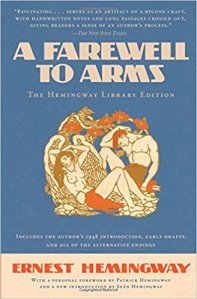
Anger was washed away in the river along with any obligation.

Ernest Hemingway in A Farewell to Arms


There is a sense in which we are all each other’s consequences.

Wallace Stegner in All the Little Live Things


There are some things that are so unforgivable they make other things easily forgivable. 

Chimamanda Ngozi Adichie in Half a Yellow Sun

BOOK REVIEW: The Way of the Bodhisattva by Shantideva

The Way of the Bodhisattva: A Translation of the BodhicharyavataraThe Way of the Bodhisattva: A Translation of the Bodhicharyavatara by Śāntideva
My rating: 4 of 5 stars

Amazon page


A bodhisattva is one who achieves enlightenment but sticks around to help others pursue the path. Shantideva was a Buddhist monk who lived [mostly] in the 8th century in the part of India that is today in the state of Bihar. Shantideva’s lesson on how to be a good bodhisattva is delivered via 10 chapters of verse, mostly in four-line stanzas. This instructional poem makes up almost 240 pages of the edition of the book put out by Shambhala as translated by the Padmakara Translation Group, and the rest is front matter, appendices, notes, and a bibliography.

The chapters of Shantideva’s poem are: 1.) The Excellence of Bodhichitta (lit. “enlightened mind”); 2.) Confession (fear is a major theme in this statement of modesty); 3.) Taking Hold of Bodhichitta; 4.) Carefulness (discussion of what to avoid.); 5.) Vigilant Introspection (on the need to keep one’s attention concentrated, and to not let the mind roam.); 6.) Patience (on not being focused on self, but on all those suffering.); 7.) Diligence (on avoiding hedonism and being industrious.); 8.) Meditative Concentration (avoidance of getting caught up in the material / physical world.); 9.) Wisdom (karma, illusion, and, particularly, the illusion of self.); 10.) Dedication.

As mentioned, there’s a lot of ancillary matter in this edition of the book. There’s a forward by the Dalai Lama, an extensive introduction (which is helpful as even a modern translation requires background), three appendices (a brief biography, a discussion of equalizing self and other, and a meditation on exchanging self and other), notes (which are also necessary give the nature of a 21st century global reader spoken to by an 8th century Indian monk), and a bibliography. There are no graphics (except a single line-drawn panel) but none are needed.

I had mixed feelings about this work. There was a great bit of wisdom, and the meditation described in the final appendix (based on Shantideva’s discussion) seems to be tremendously valuable. One the other hand, there was a lot of degradation and abasement of the physical body. Granted, I know that Shantideva is talking to an audience of primarily monks and he’s trying to keep them from being horn-dogs or otherwise being distracted by physicality. However, I’m always turned off by those who fail to recognize the tremendous awesomeness and beauty of the human body. There’s also the pessimism. Buddhists are often accused of being pessimistic. Starting with an opening statement of “life is suffering,” this might not be a surprise. Of course, Buddhists counter by saying that they aren’t pessimistic because they are offering a solution to the fact that life is misery, to which non-Buddhists tend to say, “Yes, but the defining characteristic of life need not be agony in the first place.” I won’t weight in on that debate, but the reader should be prepared for a certain dismal tone here and there.

I found this book to be loaded with food for thought. The introduction and notes are extremely beneficial, and this is one of those few cases in which they don’t just feel like padding to hit a desired page count. The verse is readable, and can be understood by a general audience.

I’d recommend this for those interested in Buddhist philosophy.

View all my reviews

BOOK REVIEW: Modern Buddhism: Vol. 1 (Sutra) by Geshe Kelsang Gyatso

Modern Buddhism: The Path of Compassion and Wisdom - Volume 1 SutraModern Buddhism: The Path of Compassion and Wisdom – Volume 1 Sutra by Geshe Kelsang Gyatso
My rating: 4 of 5 stars

Amazon page


This is the first book in a three-volume overview of Buddhism that is available for free (or for the minimum Kindle book price on Amazon.) The book is written by a Tibetan Buddhist scholar-monk, and, therefore, emphasizes the Mahayana approach and specifically that of the Gelug school. (I’m a neophyte, but I don’t think this book goes into so much detail as to be controversial among Tibetan Mahayana Buddhists, but if you are thinking you’ll learn about, say, Zen or Theravadan Vipassana, not so much.) The theme of this volume is an overview of the Limram, which is a sutra describing the path to enlightenment.

The book is divided into four sections. The first offers a broad overview of Buddhism with particular discussion of the Kadam Lamrim (the specific sutra discussed) and Kadampas (which is the name for an individual who pursues practice of the Kadam Lamrim.) The other three sections describe the information needed by an initiate, middling practitioners, and advanced practitioners, respectively.

The section on persons of initial scope (i.e. initiates) emphasizes the need to recognize the limited scope of a human life, to reflect upon one’s imminent death, and to consider the importance of avoiding lower rebirth.

The section on persons of middling scope echoes the four noble truths. They are discussed by way of the four questions: 1.) What one should know? 2.) What one should abandon? 3.) What one should practice? And 4.) What one should attain? In essence, it suggests one understand suffering, the path to is cessation, and that one follow that path.

The largest section, by far, is the portion on individuals of great scope. It is divided into four parts. The first part describes the need to revise one’s approach to love by taking oneself out of the center and practicing loving-compassion for those that one doesn’t know. The second subsection outlines the six perfections (giving, moral discipline, patience, effort, concentration, and wisdom) and the importance of each. The third section is about emptiness and truth. The final section is a brief description of the Lamrim practice.

There are a small number of line drawn illustrations of important figures in the tradition. There are no notations, citations, or ancillary material.

I found this book to offer a concise overview of the subject of Buddhism—specifically from the perspective of the Gelug tradition of Tibetan Buddhism. While there are some historical stories, such as those drawn from the life of Milarepa, the book is not designed to be entertaining reading. It’s a straightforward transmission of knowledge. In that regard it does a fine job, it’s clear and concise.

I’d recommend this book for one who’s interested Tibetan Buddhism, but one should be aware that it’s not a nonsectarian overview of Buddhism as the title might suggest to a reader.

View all my reviews

5 Bits of Wisdom from The Matrix Movies

5.) Wisdom: Choice is not as it seems.

Quote: No, you’ve already made the choice. Now you have to understand it.
Said by the Oracle to Neo in “The Matrix Reloaded” as they discuss a dream in which he sees Trinity falling.

Interpretation: Studies in neuroscience have repeatedly validated the notion that by the time we think we’re making a decision at a conscious level, we’ve already made it on a subconscious level. While many suggest this means that the verdict is in and free will is completely illusory, another way of looking at it is that one must understand one’s decisions in order to begin to regain the rudder on one’s life.


4.) Wisdom: Courage elevates: or, if you don’t run, he won’t chase you.

Quote: He’s beginning to believe.
Said by Morpheus to Trinity in explanation of why Neo isn’t running from Agent Smith in the subway.

Interpretation: My mother used to say, “If you don’t run, he won’t chase you” with respect to being chased by my older brother. It seemed like insane advice at the time; the alternative to being chased being beaten down. However, now I can see that even taking a butt-whooping elevates one’s spirit over engaging in prey behavior.



3.) Wisdom: Rationality is a thin veneer.

Quotes: Beneath our poised appearance we are completely out of control. & It is remarkable how similar the pattern of love is to the pattern of insanity.
Said by the Merovingian to Morpheus, Trinity, and Neo.

Interpretation: While one might like to dismiss the Merovingian’s comments as the cynicism of a hedonist, the undeniable fact is that we have animal biology and it influences us more than we pretend.



2.) Wisdom: The world contains more Cyphers than not.

Quote: Ignorance is bliss.
Said by Cypher to Agent Smith as he plots his subversion in order to be put back into the Matrix.

Interpretation: Most people are happy with their illusions, rely on them as coping mechanisms, and will respond unfavorably to attempts to strip them way. The illusion in question may not be so much that the world is completely fake as much as biases such as the self-serving bias (i.e. people attribute successes to their inherent awesomeness but blame failures on external sources.)


1.) Wisdom: There are limits to being cerebral.

Quotes: Don’t think you are, know you are. & There’s a difference between knowing the path and walking the path.
Both are said by Morpheus to Neo. The former quote is delivered in the sparring program when Neo isn’t performing up to his potential. The latter is said after Neo & Trinity rescue Morpheus and Neo tries to tell Morpheus what the Oracle revealed, but Morpheus quiets him with said words.

Interpretation: I hope I haven’t muddled this bit of wisdom by choosing quotes in which Morpheus uses the word “know” in two different ways. In the first quote, Morpheus contrasts knowing with thinking, and he means that Neo must not treat it as an intellectual exercise, but rather feel its inherent truth deep down. In the second quote, he contrasts knowing with doing, and in this case “knowing” is the cerebral / thinking activity in comparison to doing (i.e. “walking the path.”) However, the gist is the same, you must approach some things–to use the Oracle’s words–balls to bones.

Aaaannd Buddha’d

“This is going on your permanent record, young man!”

“All is impermanent.”


“I want you to get up there and clean your room.”

“Desire is the root of all suffering.”


“There’s a big spider in the corner, kill it!”

“Nothing can harm you as much as your own thoughts.”


“My left sock has static cling.”

“You only lose what you cling to.”


“HELP! My sleeve got caught in this threshing machine.”

“No one saves us but ourselves. No one can and…[cringes]”


“I wonder where the Professor is, he’s usually not late.”

“When the student is ready, the teacher will appear.”


“I’m feeling like a jelly doughnut.”

“What we feel, we attract.”


“I’m thinking a jelly doughnut would be good, too.”

“What we think, we become.”


“I’m furious with you.”

“Holding onto anger is like drinking poison and expecting the other person to die.”


“Well, speak up. Explain yourself!”

“He who doesn’t understand one’s silence will probably not understand one’s words.”


“HELP! My sleeve got caught in this threshing machine.”

“Be patient. Everything comes to you in the… [cringes]”


“It’s time to take the trash out.”

“If anything is worth doing, do it with all YOUR heart.”


“No. I’m sorry, I can’t go to your Solar eclipse gala bash. I have to take my grandmother to chemotherapy.”

“Three things cannot be long hidden: the sun, the moon, and the truth.”

5 Ways to Fake It til You Make It

5.) Adopt a power posture: There’s been a lot of research in recent years suggesting that posture isn’t a one-way street–i.e. body doesn’t necessarily have to follow our mental state. One can reverse the flow, improving one’s mental state by adopting a strong  and confident posture.

One of the most thorough discussions of this phenomena is in Amy Cuddy’s book Presencewhich famously mentions the “Wonder Woman” pose. However, another widespread example is using the up-and-outward fist pumping posture that is widely seen among humans and even other primates (i.e. with arms outstretched as Usain Bolt is seen above.)


I got my eye on you

4.) Master eye contact: This is dreadfully difficult for an introverts such as myself. We tend to look anywhere but the eyes.

If one is traveling in risky places, it’s important to have a grasp of the fine art of eye contact. If one doesn’t make any eye contact, then one risks looking zoned out–potentially inviting aggression. If one rapidly  looks away, offering too short an eye contact period, one appears intimidated–potentially inviting aggression. However, if one’s eye contact is too long, it may trigger some primal fight impulse, or–at a minimum–suggest you have taken more interest in the individual–which may invite aggression. This means one has to balance a fine line that says, “I see you, you know I saw you. Now I’m going to do me and let you do you.”


3.) Adopt the opposing viewpoint:  Say you find yourself obsessing about some perceived slight or wrong.  While you want to address this issue, you want to be calm enough to avoid saying or doing something you’ll regret. You want to be seen as a sensible individual while being persuasive. The key is seeing both sides, and taking a moment to realize that your opposition is probably not the black-hearted villain of his own story. He likely has some reason for his behavior. Maybe it’s even a reason you can empathize with, given your own experience–i.e. being overworked and distracted, facing a decision that only allows for a best worst option, etc.


2.) Visualize it: It may seem as though anything that occurs solely in the mind can’t have that much force, but–in fact–it can. Visualizing can help one get over one’s anxieties. By systematically considering how events will unfold, one can break the cycle of worst-case scenario creation that the brain readily falls into. This will make an activity seem less intimidating and more manageable.


1.) Start small: Often when a person would like to be more kind or compassionate, she’s flummoxed or overwhelmed by the scale of the problem. She sees problems that she can’t make a dent in. So schedule one small act of kindness in a week or maybe a bigger one monthly, or as is possible. Do it, see its value, and be content.

One also sees a need for starting small with advanced physical practices. If you can’t do a yogasana or martial arts move, figure out what capacity building or modifications one needs to get to the end goal. Then take it on bit-by-bit. There are many videos on how to systematically build up to challenging maneuvers like the press handstand or planche, moves that almost no one can do with out a great deal of prep work.

BOOK REVIEW: How Enlightenment Changes Your Brain by Andrew Newberg and Mark Waldman

How Enlightenment Changes Your Brain: The New Science of TransformationHow Enlightenment Changes Your Brain: The New Science of Transformation by Andrew Newberg
My rating: 5 of 5 stars

Amazon page


This book busted me over the head with some profound food for thought. I’d been skeptical of the notion of Enlightenment. [Note: the authors distinguish big-E Enlightenment as a permanent and substantial brain change, in contrast to the little-e enlightenment which is just a momentary epiphanies or insight—a number of which may precede the big-E Enlightenment.] It’s not that I disbelieved that some people had life-changing and / or perspective-changing experiences, but rather that such events represented permanent change. My skepticism was influenced by the many gurus who have been said to be Enlightened, but who behaved to all appearances like petty, materialistic douche-bags. It’s not that I couldn’t believe that these teachers achieved some momentary heightened state of consciousness during their youth, but—if they had—they clearly couldn’t maintain it under the pressure of being idolized. I’d, therefore, come to think that life is a perpetual struggle to try to be a better version of oneself, and backsliding can and will happen at any moment. This book, however, suggests there is a possibility for permanent brain changes. [Though Dalberg’s “Absolute power corrupts absolutely” seems to still apply.]

Andrew Newberg is a neuroscientist who has made a career out of conducting brain imaging studies of people engaged in various spiritual, religious, and meditative activities. His co-author is a psychologist, Mark Robert Waldman, who works on applying neuroscientific understanding to positive psychology. In this book, the two examine what Enlightenment is from a neuroscientific standpoint and then try to cull the common features across a population of cases of Enlightenment / enlightenment. Discovering the common elements of Enlightenment is no easy task. While it seems everybody is theoretically capable of achieving Enlightenment, it also seems that the experience is different for everybody and the collection of systems (religious, spiritual, and secular) by which it’s pursued is vast. However, the authors present a five-step outline by which readers can prime themselves to achieve Enlightenment, and it can be personalized depending upon one’s beliefs (or lack thereof—Enlightenment occurs among agnostics and atheists as well as religious practitioners) and background.

The book consists of 12 chapters divided among three parts. Part I (Ch. 1 to 5) lays the groundwork for readers to understand what Enlightenment is, how it feels, how it’s experienced between people with radically varying belief (and disbelief) structures, and it presents a model of human awareness that is crucial to the later discussion. Part II (Ch. 6 to 9) considers what happens in the brain during various practices by which individuals advance towards Enlightenment. Concepts like unity, surrender, and belief are explored in detail. Part III (Ch. 10 to 12) describes the process by which readers can pursue Enlightenment for themselves. If one is inclined to chart one’s own path, versus adopting an existing program, one has all the insight and tools to begin constructing one’s personal method by the time this section is complete.

The book has graphics as necessary (e.g. brain diagrams) that largely consist of line diagrams. There is an appendix that consolidates tools and resources, and the book is annotated by chapter.

I found this book to be both interesting and potentially beneficial to readers who take it beyond a popular science book and into the realm of self-help. The authors do a great job of navigating the waters between religion and science. Obviously, they are scientists and are agnostic about that which cannot be proven, but they don’t question other people’s beliefs and–if anything–error on the side of being open-minded. Still, I suspect that there will be religious types offended by the very notion that all humans are biologically primed to achieve this heightened state. It should be pointed out that the book could be supremely useful for such individuals because it points out the need to engage in exercises to challenge one’s most closely held beliefs. (Those with less mental flexibility and capacity for tolerance seem to be less likely to achieve Enlightenment.)

I’d recommend this book for anyone trying to figure out how to be the ultimate version of oneself.

View all my reviews

POEM: Not All Journeys Have Routes; Not All Journeys Are Mapped

Struggling to give birth to bliss,

the proud parent fears it’ll flee

–never to return.

He heard his guru chanted the

the mantra one thousand times

–pow, Enlightenment.

Chanting the mantra 999 times

he waits expectantly for his gift

–pow, Nothing.

They told him that it was a path.

A guru told him he had the map.

 False analogy.

Teacher’s destination is not yours.

Don’t buy a map to the unknown.

Dead reckon it.

Be a scientist, leaving the detritus

of failed experiments in one’s wake.

Inching closer.

The rules of space do not apply here.

No seekers have the same beginning.

& destinations vary.

Seekers must make their own path.

Chasing footprints is a fool’s errand.

Step forward.

BOOK REVIEW: The First and Last Freedom by Jiddu Krishnamurti

The First and Last FreedomThe First and Last Freedom by Jiddu Krishnamurti
My rating: 4 of 5 stars

Amazon page


The edition of the book I’m reviewing is the Harper Collins e-book with a Forward by Aldous Huxley and in which more than half of the page count consists of appendices of Krishnamurti’s answers to various broad-ranging questions (i.e. What is the meaning of life, and such?) Jiddu Krishnamurti was a philosopher of Indian origin who passed away in 1986. This was one of his early books (first published 1954, though this is a 2010 edition) and it covers quite a bit of philosophical ground.

Krishnamurti’s teaching attracted a unique audience and existed in a unique space—at least back in his time. The topics he addressed were traditionally in the domain of spiritual philosophy, theology, or theosophy, but Krishnamurti downplayed belief and spiritualism. His teachings were attractive to those who were interested in developing their minds and selves, but who were dismayed by religiosity and all that such proclivities brought with it. Like mysticism, his ideas are about turning inward, but sans the notion that there’s a deity residing inside. In Krishnamurti’s writings, one hears echoes of Emerson’s suggestion that one must trust oneself and not get tangled up in the ideas of others—though, again, Emerson was clearly a believer. There’s also overlap with the ideas of some secular humanists, though they tend to be more scientists and less interested in meditations of the sort that have usually been relegated to spirituality in the past. (This has, of course, changed considerably in the decades since Krishnamurti’s death. Now this is a thriving space.)

The book itself consists of 21 chapters, and then there are 38 question-appendices. The chapters are 140+ pages and the appendices are cumulatively the same length. The appendices may be offered to attract readers who read the original book in a different edition. (It’s not so much a padding situation, because the 21 chapter book is long enough to stand as a book in print edition in and of itself.) The question section offers past readers a substantial amount of new material while providing an opportunity to reread the book.

There’s too much material covered by this book to make it worth accounting for it all. The overall theme of looking within to find one’s answers plays out across topics like fear, desire, the tension between individual and society, etc.

There’s good and bad news about readability. The good news is that, as one might expect of a book with almost 60 chapters (or chapter-like appendices) in a book of less than 300 pages, the information is delivered in bit-sized chunks. The bad news is that Krishnamurti was a thinking-man’s thinker. He’s not troubled to employ story-telling, humor, or the spinning of interesting language. This is raw philosophizing, and so it reads incredibly dryly unless one is a philosophy-lover to the core.

I would recommend this book for philosophy lovers.

View all my reviews

BOOK REVIEW: Stealing Fire by Steven Kotler and Jamie Wheal

Stealing Fire: How Silicon Valley, the Navy SEALs, and Maverick Scientists Are Revolutionizing the Way We Live and WorkStealing Fire: How Silicon Valley, the Navy SEALs, and Maverick Scientists Are Revolutionizing the Way We Live and Work by Steven Kotler
My rating: 5 of 5 stars

Amazon page


“Altered states of consciousness” conjures visions of rogue scientists hitting hallucinogens and then sealing themselves up in sensory deprivation tanks until they either have a breakthrough or a breakdown. This book may touch on such activities, but it’s about something else. It’s about the states of consciousness in which the part of the mind that is critical, overly cautious, and always creating worst case scenarios fades into the background, allowing one to be more effective, happier, and to drop one’s neurotic tendencies. Kotler and Wheal refer to this as ecstasis, borrowing from the Greek word meaning “to get outside oneself.” They differentiate it from the Flow of Mihaly Csikszentmihalyi with which it clearly has overlap. (One of the authors, Kotler, wrote a great book on the exploitation of Flow by extreme athletes entitled “The Rise of Superman.”) [I’d love to see a Venn diagram of how they see these states overlapping, but—alas—one isn’t provided, though there is some discussion of it.]


The book is organized into three parts. The first part consists of three chapters and it both explores what ecstasis is and why it’s so hard to find. The story of how the Navy SEALs designs training to build group Flow states on command is illuminating as is the second chapter’s discussion of how Jason Silva found ecstasis through freewheeling philosophizing. The third of the chapters describes three prominent barriers to achieving these states of mind. These barriers are among the reasons for the rarity of these altered states even though they’re available to everyone.


The heart of the book is the second part which describes four avenues by which people pursue these altered states of consciousness: psychology, neurobiology, pharmacology, and technology. The chapter on psychology uses a dialogue series between Oprah and Eckhart Tolle as a stepping off point, probably more because of what it tells us about the scale of yearning for ways to get outside of one’s head than because of the dialogues’ value in facilitating that condition. Positive psychology as recipient of a mantle once held by religion and spiritualism is an important theme in this chapter.


The neurobiology chapter isn’t just about the biology of the brain and nervous system; it’s about the integration of brain and body. In it, we learn about how expressions, postures, and gestures can influence our state of mind.


Many apparently believe that the story of pharmacology is a much bigger part of this book than it actually is, but it’s a part that’s hard to ignore. As one who seeks non-pharmacological approaches to Flow (I’m more about yoga, meditation, and movement) I still found this chapter fascinating, and perhaps most so in its discussion of other species’ pursuit of chemically induced highs [particularly that of dolphins.]


The technology discussed covers a range of approaches from biofeedback devices designed to help one navigate one’s way into the zone, to gear to help one engage in trigger activities at lower risk. For example, the mix of defiance of gravity and high-speed gliding experienced wing-suiting seems to be a potent trigger for ecstasis. It also seems to kill anyone who keeps doing it long enough. So the question is whether one can create the sensation and still achieve the trigger without inevitably experiencing an untimely demise.


The grimness of that last paragraph is an apropos lead-in to discussion of the book’s final part, which considers how one can organize one’s pursuit of ecstasis without running into the many pitfalls that coexist with it—from becoming a pleasure junky to dropping out of life to killing oneself. The first of three chapters in the final part discusses the Burning Man festival phenomena in great detail as well as other avenues by which people find themselves drawn into the pursuit of altered consciousness. The next chapter describes how both government and commercial firms have sought to exploit the bliss of these altered states. The last chapter is about how to merge daily life and pursuit of ecstasis in a balanced way so one avoids becoming a pleasure junky who runs his life aground on rocky shoals in pursuit of the next ecstasis fix.


The book is endnoted, and has some nice ancillary features—a number of which are available online with the link being given at the back of the book. An appendix that I found interesting was one entitled “Notes on Inside Baseball.” This section discussed a number of controversies that were outside the scope of the book, but which readers might wish to research in greater detail.


I found this book to be highly engaging. The authors use the narrative approach throughout to keep it interesting, while at the same time conveying complex ideas in an approachable fashion. They scour many disparate realms in search of this altered consciousness, and so there’s never a dull moment.


I’d recommend this book for anyone interested in learning more about how to shut down that perpetually critical and gloomy part of the brain so that one can achieve one’s optimal potential.

View all my reviews