Pillbox Bunker [Tanka]

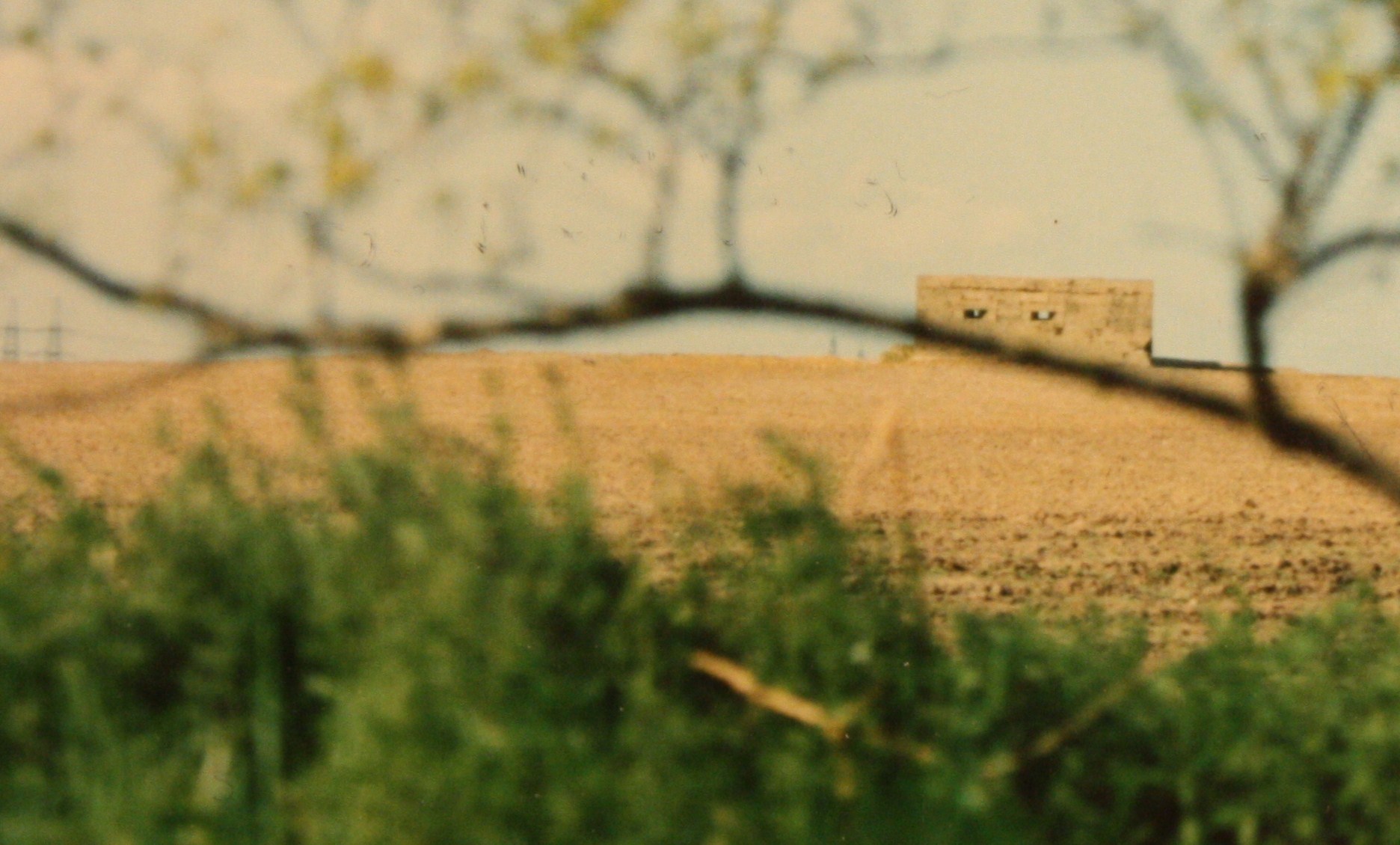
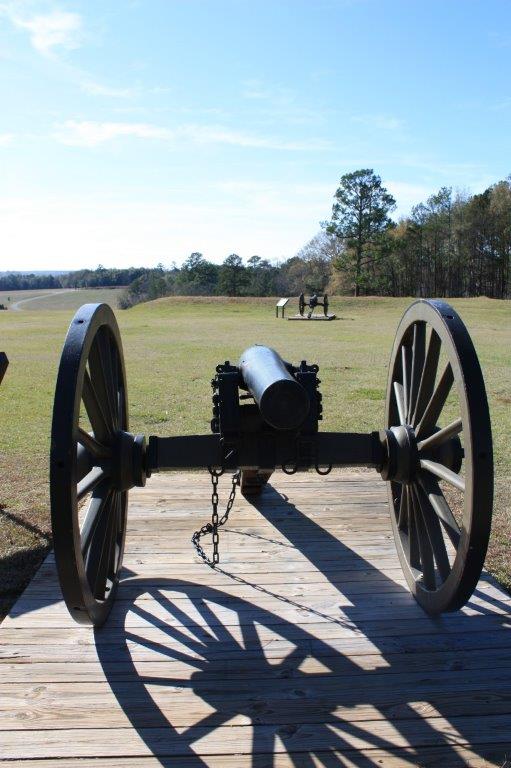
pillbox bunker from
a war a lifetime ago
sits in a field.
what the farmer must think
as he plants around it.

BOOKS: “The Last Brother” by Nathacha Appanah

The Last BrotherThe Last Brother by Nathacha Appanah
My rating: 5 of 5 stars

Publisher Site — Gray Wolf Press

When Mauritius made it onto my shortlist for upcoming travel, I needed to find an enlightening work of Mauritian literature, and this book was prominently discussed as one that might fit the bill.

The book is narrated by an old man telling a story from his boyhood. It is a poignant and riveting tale. The book’s title, The Last Brother reflects the protagonist’s (Raj’s) first tragedy, losing his two brothers in a natural disaster in Mapou, Mauritius. Raj’s family then moved south where his father got work in a prison.

Much of the book revolves around a strange historical event — the imprisonment of a large number of Jews on Mauritius during World War II. These Jews had fled Europe and were trying to make their way to Palestine but were not granted entry because of a lack of acceptable documentation. They were then sent to Mauritius where they were imprisoned in a detention camp.

The reader only sees this event through the relationship of Raj and David. Raj is taken to the prison infirmary after being beaten by his alcoholic father. There he meets David, a Jewish boy in the detention camp. It isn’t until the very end of the book that the author presents the facts of the historic event. I think this is a wise move, allowing the reader only knowledge of what the characters would know (which – as nine-year-olds – is not much.) The late reveal adds to the tension and makes some of the characters’ decisions more understandable.

The last part of the book is a little reminiscent of Huck Finn, except without Twain’s lightheartedness and with a more melancholic and tragic tone and ending, but featuring two young men on the lam for different reasons.

I found this novel to be a potent read and would highly recommend it for readers of global literature — especially if you expect to find yourself in Mauritius at some point.

View all my reviews

BOOK REVIEW: “Becoming Ghost” by Cathy Linh Che

Becoming Ghost: PoetryBecoming Ghost: Poetry by Cathy Linh Che
My rating: 5 of 5 stars

Publisher Site – Simon & Schuster

This collection is built around the surreal emotionality of the author’s parents having both lived through the war in Vietnam and also having served as extras in the film, Apocalypse Now. [For those unfamiliar, Apocalypse Now was a Francis Ford Copp0la film based loosely (and partially) on Joseph Conrad’s novel,Heart of Darkness. The film follows a military officer sent upriver to assassinate a rogue Special Operations colonel during the Vietnam War, and shows the war from various perspectives as the would-be assassin travels through the country to complete his mission.]

At times, the poems read like a poem-shaped biography, but that’s not all there is to the book. There are points that imagery and language are used to shoot beyond a mere telling of events, in order to create emotional resonance with the core strangeness of living through a traumatic event only to portray a background individual (someone like one’s own past self) in a fictional retelling of events based on those through which one lived.

The poetic forms vary somewhat, though all within the modern, free verse style. Most notably, the author uses the golden shovel approach of Terrence Hayes extensively.

This collection grabbed me both with its clever language and its thought-provoking central premise. I’d highly recommend it for readers of poetry.

View all my reviews

“Concord Hymn” by Ralph Waldo Emerson [w/ Audio]

By the rude bridge that arched the flood,
Their flag to April's breeze unfurled,
Here once the embattled farmers stood
And fired the shot heard round the world.

The foe long since in silence slept;
Alike the conqueror silent sleeps;
And Time the ruined bridge has swept
Down the dark stream which seaward creeps.

On this green bank, by this soft stream,
We set today a votive stone;
That memory may their deed redeem,
When, like our sires, our sons are gone.

Spirit, that made those heroes dare
To die, and leave their children free,
Bid Time and Nature gently spare
The shaft we raise to them and thee.

Sung at the Completion of the Battle Monument, July 4, 1837

BOOKS: “How to Fight Tough” by Jack Dempsey

How to Fight ToughHow to Fight Tough by Jack Dempsey
My rating: 5 of 5 stars

Read online at Archive.org

This book was put out by the Coast Guard during World War II as a commando fighting manual. The lead on the project was heavyweight boxing champion Jack Dempsey, aided by a small team of others — all with varied bona fides in Combatives.

This is a fun book to read. It’s loaded with 1940’s slang, over-the-top reminders to fight tough and mean, and jokes that — while dated — still amuse with their quirky language. Seriously, the voice in my head was playing in Trans-Atlantic dialect (1940’s radio announcer voice) or as James Cagney playing a gangster the whole time I was reading this book.

That said, while the text was campy, the actual techniques are solid. The book consists of eighteen lessons that are built on well-established grappling and submission techniques such as hadaka jime (rear naked choke.) Also, while there is often only one (or — at most — a few) photos per technique, they seemed to put some effort into doing them conscientiously. (And they are almost full-page shots, so one can actually see a bit of detail.) The techniques include: unarmed v. various unarmed attacks, unarmed v. knife, unarmed v. gun (holstered, and front and rear approaches,) and unarmed v. bayonet.

I’d highly recommend reading this book. It’s a quick and amusing read with some useful techniques inside.

View all my reviews

PROMPT: Technology

What technology would you be better off without, why?

That’s a tough question. While not a Luddite, I do think there are a number of technologies that are out of control, figuratively (or may – literally – become so.) But that doesn’t mean I think they should be gone altogether (it just makes me wishful that people can find a way to moderate their use.)

I’ll go with nuclear weapons, the one technology whose only use lies in not being used. I choose them because they result in low-level existential dread and inflated tax bills. [There is the argument that they may have staved off a colossal Third World War, but one can also argue that two really shitty wars in rapid succession led to institutions (e.g. UN agencies & permanent alliances) and approaches (e.g. low-intensity proxy wars) to avert such a war as well (Those things also being extremely expensive, but not so much with the existential dread.)]

“Shiloh: A Requiem” by Herman Melville [w/ Audio]

Skimming lightly, wheeling still,
The swallows fly low
Over the field in clouded days,
The forest-field of Shiloh--
Over the field where April rain
Solaced the parched ones stretched in pain
Through the pause of night
That followed the Sunday fight
Around the church of Shiloh--
The church so lone, the log-built one,
That echoed to many a parting groan
And natural prayer
Of dying foemen mingled there--
Foemen at morn, but friends at eve--
Fame or country least their care:
(What like a bullet can undeceive!)
But now they lie low,
While over them the swallows skim,
And all is hushed in Shiloh.

BOOKS: “Thirty-Six Stratagems” by Sun Bin [or Anonymous]

Thirty-Six Stratagems: Bilingual Edition, English and Chinese 三十六計: The Art of War Companion, Chinese Strategy Classic, Includes PinyinThirty-Six Stratagems: Bilingual Edition, English and Chinese 三十六計: The Art of War Companion, Chinese Strategy Classic, Includes Pinyin by Sun Bin
My rating: 3 of 5 stars

This is a collection of idioms on strategy with brief explanatory commentaries on each. The idioms, themselves, are thought-provoking and worth studying, but the book is problematic in a couple of regards. First, some of the work seems to either be plagiarized or has been plagiarized. Let me explain that accusation, because the actual thirty-six stratagems are clearly in the public domain, dating to the Sixth Century AD. However, while checking out the Wikipedia site to learn more about the author (incidentally, attribution of this work to Sun Bin is not accepted by consensus,) I discovered that the whole English translation of commentaries is verbatim the same as in Wikipedia. (Wikipedia has a tag on the article that it may contain original research and solicits further information.) I further noticed that the commentaries aren’t straight translations of the original Chinese text, but rather are reformulations written to be understandable to a present-day reader of English with no particular insight to Classical Chinese culture and history (which they are.) I can’t say whose work it is or whether it isn’t a misunderstanding that would be cleared up with additional information, but my point is that I wouldn’t recommend forking over any money to the publisher without knowing that the actual work (not the copy / pasting, but the intellectual work) either belongs to them or is in the public domain. Especially, given that it’s freely available on the internet.

That brings me to a second problem, a problem that is clearly on the publisher. There is a very limited sense in which this is a bilingual edition. Yes, the idioms themselves are presented in Chinese characters with pinyin as promised, but the commentary is wholly in English. The idioms, themselves, are largely Chengyu and other forms of Chinese idiom (so 4 characters, give or take, are all that is in Chinese for each.) So, if you’re purchasing this book to work on learning to read Chinese, it’s of limited benefit, and you’ll have to go elsewhere to get the Chinese commentary.

There is an appendix that explains a little about Classical Chinese. I can’t say whether this is original work or exists elsewhere on the internet. I can say that it also isn’t presented in a bilingual fashion either, excepting a few characters for some of the vocabulary. The appendix does have some interesting information.

My recommendation to readers would be not to buy this text when you can read both the Chinese and the exact English translation on Wikipedia for free. My recommendation to the publisher would be, if the commentaries are their original work, to put in a complaint to Wikipedia to pull it as copyright infringement. (And if they were the ones who lifted the text, to stop it already.)

View all my reviews

Survivor [Free Verse]

What a thing to return from war --
a survivor --
To find that so little has survived:
Not the grass, nor garden,
Not the roof, nor lintels...

The homestead, an overgrown ruin:
Like a remnant of a once great
Civilization that was one's
Peace of mind.

“Success is counted sweetest” (112) by Emily Dickinson [w/ Audio]

Sucess is counted sweetest
By those who ne'er succeed.
To comprehend a nectar
Requires sorest need.

Not one of all the purple Host
Who took the Flag today
Can tell the definition
So clear of victory

As he defeated -- dying --
On whose forbidden ear
The distant strains of triumph
Burst agonized and clear!