What bores you?
I believe boredom is the product of a weak mind.
There’s always something noteworthy happening. It just sometimes takes more mental energy and broadened interests to experience it.

What bores you?
I believe boredom is the product of a weak mind.
There’s always something noteworthy happening. It just sometimes takes more mental energy and broadened interests to experience it.
Well, they were Timberland hiking boots, a pair that was comfortable and had served me well on a number of hikes in various parts of the world. Then, on the Goechala Pass Trek in Sikkim, I learned that they were only held together by some planned-obsolescent glue.
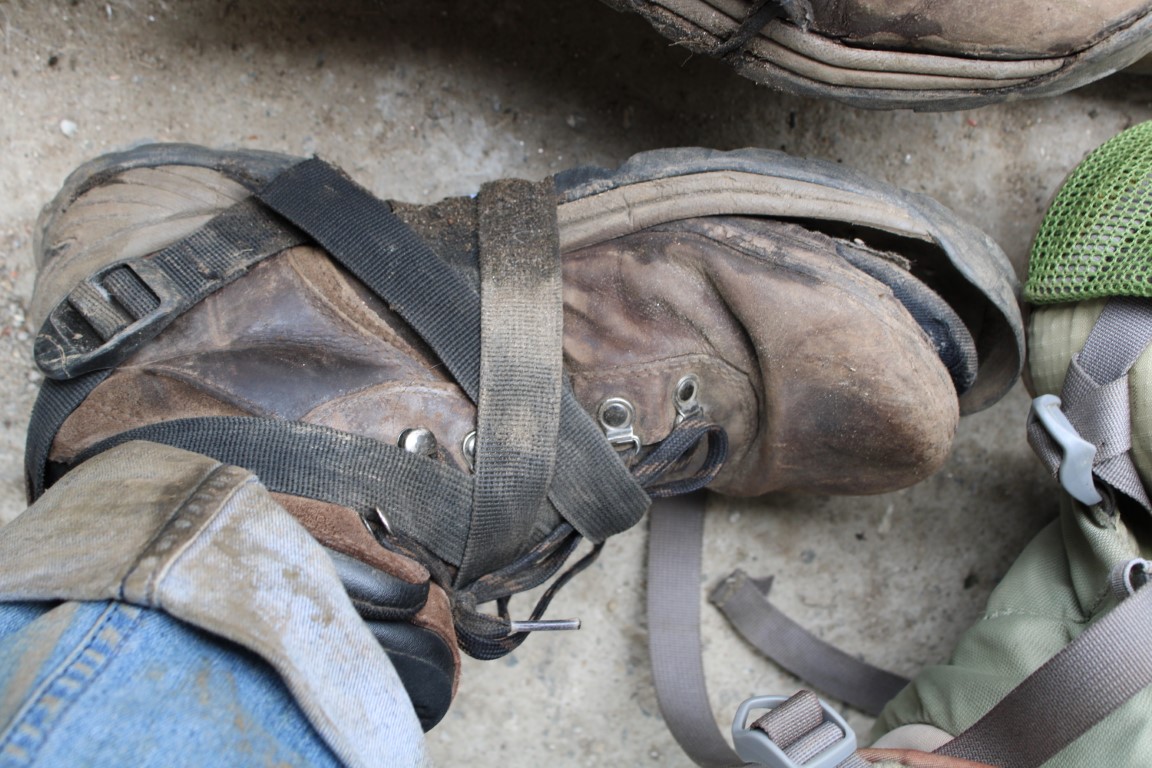
I had to hike six days with one of the soles strapped to my foot for one of the boots, and five days for the other. Yes, after so many miles of hiking in various environments, they fell apart within one day of each other. I guess the glue has a finite number of puddle steps in it, and I hit that number one day earlier with one boot than the other. That’s when I realized there’s nothing special about a shoe. It’s just a bunch of the lowest cost materials stuck together in the lowest cost assembly method and designed so you’ll have to buy a new pair every few months to years, depending upon the type of shoe, its use, and its price point. If there were a monopoly on shoe production, no pair would last more than a week. It’s only competition that allows for some halfway decent pairs to exist. I’m happy with any shoe that protects my feet, and — once it doesn’t — it’s dead to me.
Are you patriotic? What does being patriotic mean to you?
I certainly was as a young man, but increasingly I have shifted towards a more “citizen of the world” worldview. I’m no doubt influenced by my admiration for the life of Socrates (such as we know it,) who was said to have been a valiant and fearsome hoplite warrior in his youth but came to call himself a Citizen of the World. As one becomes governed less by passions and more by reason, it becomes easier to have a logically consistent ethics by doing so.
Consider the question: “Is it wrong to stab a person in the back without warning, a person who you do not know, a person who doesn’t know a thing about you and has never done you any personal wrong, a person who to your knowledge has always lived a good and virtuous life?”
Of course, the immediate impulse is to say that that act is clearly wrong. Really, the only case we can attempt to successfully counter argue would be a soldier in war or a military action acting on lawful orders against an enemy combatant. But everything becomes messy. Is it enough that the soldier is operating on “lawful orders?” In that case, is the soldier a moral individual, if he lacks agency? To what degree can a infantryman or spec ops soldier know that it is – in fact – a lawful order? Can a lawful order be morally and ethically reprehensible and indefensible? The questions abound, and that’s why I suspect Socrates – lover of questions as he might have been – had a shift in philosophy about the matter over the course of his life.
It may seem I’m arguing that this is growth or betterment, but maybe it’s just the natural progression of a life. Maybe we need more passion in our youth and more agency as we age.
Of course, in those elder / “citizen of the world years,” the Athenians straight up murdered their onetime hero, so maybe I have not picked the best role model.
Write about your dream home.
Must be portable, because it needs to be movable if it’s to be expected to keep up.
Do you need a break? From what?
I travel for a break from the ordinary. I spend time at home (wherever that might be) for a break from novelty.
 Hojoki: A Buddhist Reflection on Solitude: Imperfection and Transcendence – Bilingual English and Japanese Texts with Free Online Audio Recordings by Kamo no Chōmei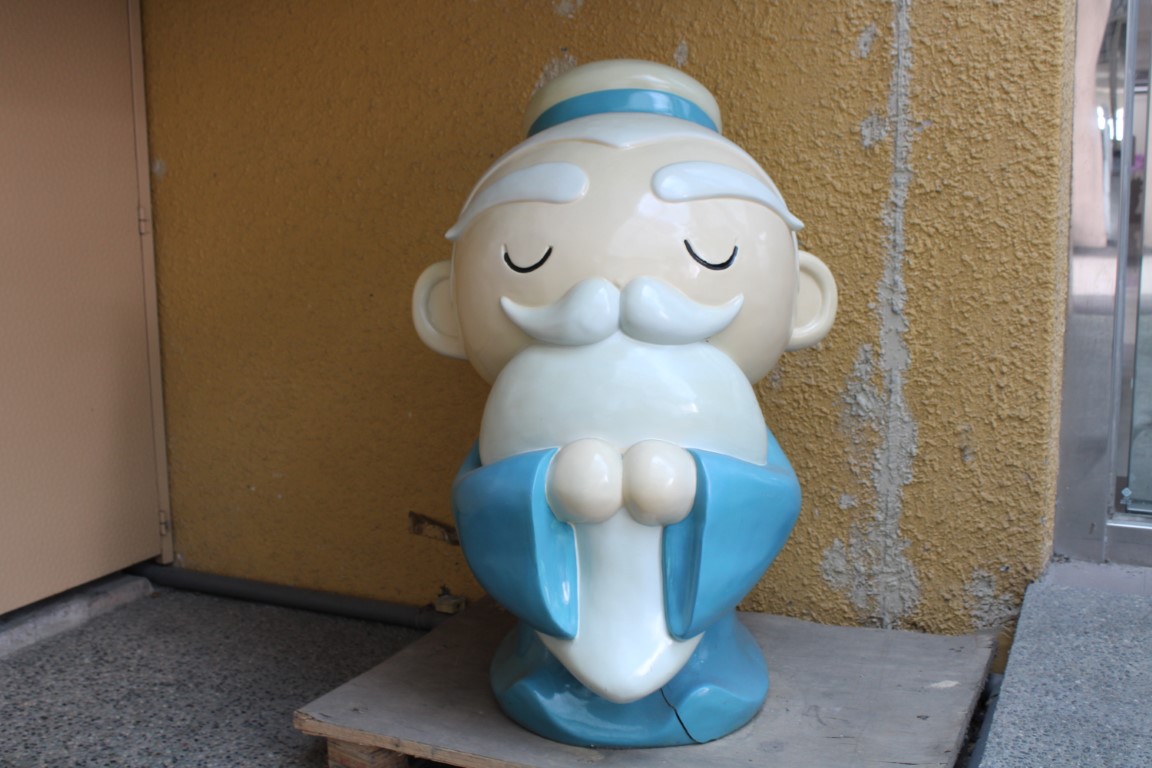
“If one conforms to the world,
Kamo no Chōmei, Hōjōki; [Stavros Trans.]
He’s bound to suffer.
If he doesn’t,
He’s considered mad.
But nothing ever bores me. So much the worse for those who are moulded of boredom.
Salvador Dalí, Hidden Faces
All of humanity’s problems stem from man’s inability to sit quietly in a room alone.
Blaise pascal
I am in no way interested in immortality, but only in the taste of tea.
Lú Tóng (Poet of the Tang Era)
The man who wears the shoe knows best that it pinches and where it pinches, even if the expert shoemaker is the best judge of how the trouble is remedied.
John Dewey
Bonus Quote:
If you have a garden and a library, you have everything you need.
Marcus tullius cicero
I am no priest of crooks nor creeds,
 For human wants and human needs
 Are more to me than prophets' deeds;
 And human tears and human cares
 Affect me more than human prayers.

Go, cease your wail, lugubrious saint!
 You fret high Heaven with your plaint.
 Is this the "Christian's joy" you paint?
 Is this the Christian's boasted bliss?
 Avails your faith no more than this?

Take up your arms, come out with me,
 Let Heav'n alone; humanity
 Needs more and Heaven less from thee.
 With pity for mankind look 'round;
 Help them to rise -- and Heaven is found.
If you could un-invent something, what would it be?
Being acquainted with the Law of Unintended Consequences, there isn’t a thing I’d un-invent. You start arrogantly messing in the natural progression of things, and you never know what kind of monster you’ll birth.
Once upon a time, I might have said nuclear weapons (still a strong contender for ender of our species.) Then again, who knows what kind of horrific World War III we might have had, had we not been forced to sober up a little.
Every so often I run into a sentence that blows my mind a little bit. Here are a few recent examples:
We may be in the universe as dogs and cats are in our libraries, seeing the books and hearing the conversation, but having no inkling of the meaning of it all.
William james
One must read ten thousand books and travel ten thousand miles to be an educated man.
Old chinese adage (As Translated by ha jin in The Banished Immortal)
Poetry is an echo asking a shadow to dance.
Carl Sandburg
Distrust of grammar is the first requisite of philosophizing.
Ludwig wittgenstein
He who knows only his own side of the case knows little of that.
John stuart mill


 Tiger Riding for Beginners