I suppose I do. Without it, instead of life being one thing after the other, it would be everything all at once. The latter seems chaotic. But maybe one could get used to being timeless. I have no basis for comparison. I’ve always been just in time. Come to think of it, it would be nice not to have to conjugate verbs.
3.) One’s subjective experience is not determined by the state of the world.
4.) Nobody grasps enough truth to be intolerant.
5.) Uncertainty is the root of all fear.
6.) Fear is the root of all hatred.
7.) Hatred is a subjective experience (See #3.) Also, uncertainty is the root of all hatred (by the transitive property,) hence the benefit of travel.
8.) Any who: a.) has suffered a string of hardships; b.) allows themselves to believe that some “other” is wholly responsible for said hardships; and c.) who lacks a sufficient sense of self-empowerment to avoid surrendering entirely to a group identity can (and likely will) become a Nazi (or the equivalent of their day.)
9.) No one can predict the future. [Regardless of how much we all love to try. (See #5.)]
10.) Entropy increases (ultimately, in a closed system.)
NOTE: I remain ready to abandon any certainty in the face of better information.
To surrender to my ignorance. If one can never know exactly what game one is playing, it becomes much easier to avoid getting worked up about whether one is playing it right or whether one will “win” or not.
Raise chaos:
   That's the job of intelligent life,
      to make nice & orderly things
      so they can crack and shatter
      and eventually end up pulverized
      to dust --
   A fine, granular dust that will blow
      across the universe.

First, the bowl must be made:
   Some potter must shape and glaze
      and fire it with care,
   Turning sandwiches into art...
      and waste heat --
         entropy slow and fast.

All so someone can crack or chip it
   (with ease and lack of intention,)
   starting it on a path to being sand
   grains a world away.
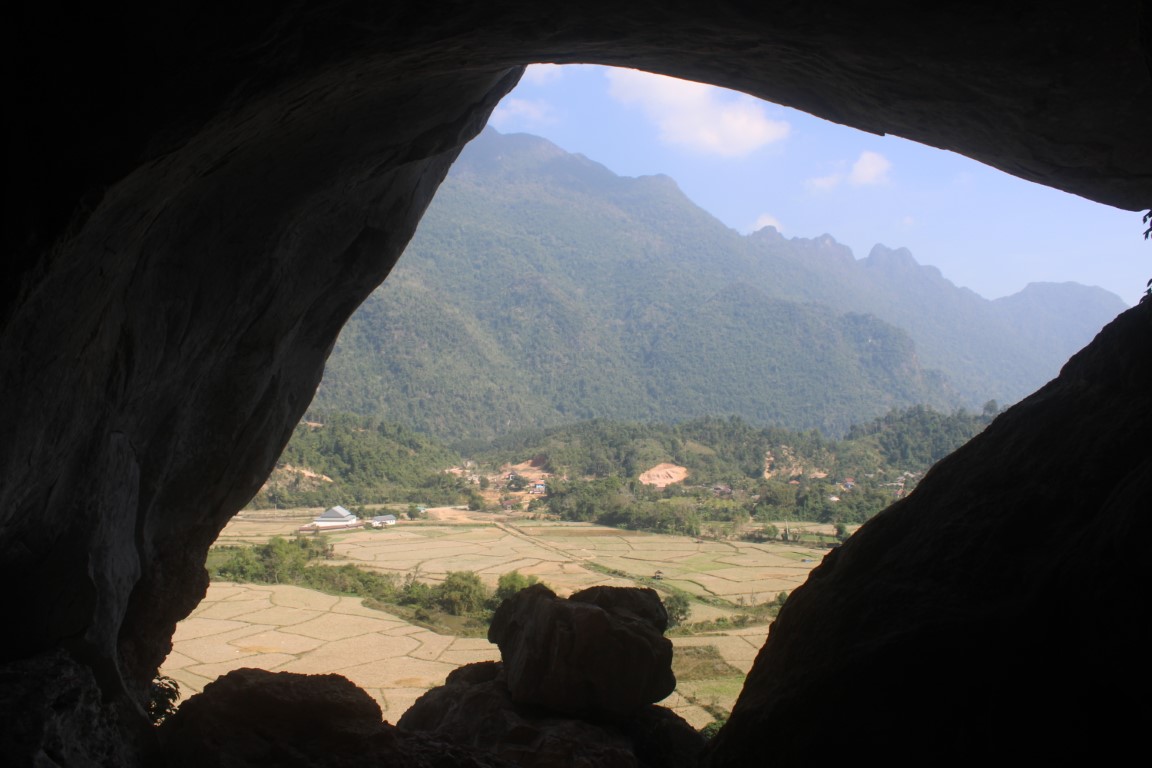
Jagged window on the world: All light and sound deadened, but from one opening -- The cave mouth.
From behind nothing stirs, nothing glows, shadows are subsumed by shadow.
Eyes and mind frame the cave mouth, making the mind a cave within a cave: layered silence layered remoteness, and all input of a single, common source.
Google Books Page
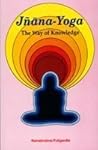
This is one of the most useful books I’ve read on the topic of Jñāna-yoga — the approach to yogic philosophy employed by the studious / inquisitive (in contrast to Bhakti-Yoga [the yoga of those for whom faith and devotion works] and Karma-Yoga [the yoga for those for whom a course of self-less action appeals.]) There are Jñāna-yogic Hindu sects and Buddhism — in general — can be thought of as a school of Jñāna-yoga. The author draws from the teachings of both, principally Sankara for Hindu thinking and Nagarjuna for the Buddhist approach.
A word of warning, the author is a scholarly philosopher, and so — while not as unreadable as many works of academic philosophy — it will be a slog for those who are not used to reading scholarly writing.
That said, Puligandla does a fine job of laying out what he views as the central tenets of Jñāna-yoga in a concise fashion and reviewing them at the end. This is not to say I would agree with all that he proposes, herein. In particular, his Chapter 3 conclusions about consciousness are insufficiently justified to be considered core principles of Jñāna-yoga (in my view.) Of course, the beauty of Jñāna-yoga is that it not only doesn’t insist upon coming to the same conclusions, it generates explanations as to how it’s perfectly possible / reasonable to come to different conclusions (see “The Principle of Superimposition,” herein.) Furthermore, since the author is reporting the ideas of Sankara and Nagarjuna, I can’t really hold these ideas against him.
If you’re interested in Jñāna-yoga, and can handle scholarly prose, I’d highly recommend this book.
Take this kiss upon the brow!
 And, in parting from you now,
 Thus much let me avow --
 You are not wrong, who deem
 That my days have been a dream;
 Yet if hope has flown away
 In a night, or in a day,
 In a vision, or in none,
 Is it therefore the less gone?
 All that we see or seem
 Is but a dream within a dream.

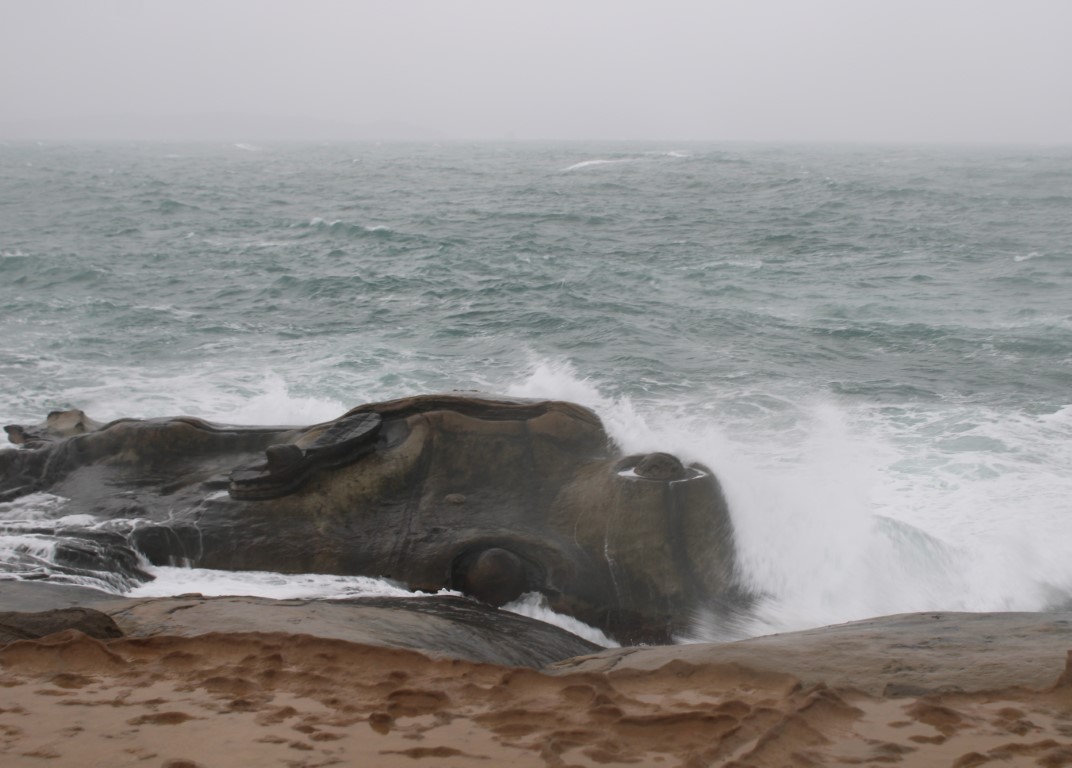
I stand amid the roar
 Of a surf-tormented shore,
 And I hold within my hand
 Grains of the golden sand --
 How few! yet how they creep
 Through my fingers to the deep,
 While I weep -- while I weep!
 O God! Can I not grasp
 Them with a tighter clasp?
 O God! can I not save
 One from the pitiless wave?
 Is all that we see or seem
 But a dream within a dream?
Many particles to the atom, Many atoms to the molecule, Many molecules to the cell, Many cells to the tissue, Many tissues to the organ, Many organs to the system, Many systems to the organism...