BOOKS: “The Man with the Compound Eyes” by Wu Ming-Yi

The Man with the Compound EyesThe Man with the Compound Eyes by Wu Ming-Yi
My rating: 5 of 5 stars

Amazon.in Page

This book is at once a work of eco-fiction, literary fiction, and speculative fiction. The story revolves around a pair of characters whose worldlines become intertwined when the Pacific Trash Vortex is spun out, crashing into the Eastern shore of Taiwan. “Riding” the trash vortex is Atile’i, a member of a remote Pacific Island where second sons (of which he is one) are exiled to the sea to ensure the tiny island’s population doesn’t outstrip its resources. Atile’i is found by Alice, an academic who moved to a rural area of the Eastern shore and who is in an extended period of grieving the loss of her son and [common law] husband. Their union helps them each in the process of finding closure for their respective traumas.

There is a secondary story involving supporting characters, but at its heart, the book is about how an unlikely pair is brought together by environmental factors. That said, the secondary story does offer the reader insight into the indigenous population of Taiwan, a number of tribes whose relation to the island has been overshadowed by both the huge numbers of Chinese immigrants and the various agents of colonization (i.e. Europeans and the Japanese.)

I found this book to be highly readable. It manages to highlight environmental perils without being preachy in a way that detracts from the intensity of the story (and, thus, which reduces the effectiveness as a tool of persuasion.) [This being a line that some other eco-fiction writers have been unable to walk, such that they dissipate the power of story through a need to virtue signal, tribe signal, and finger-point.]

I’d highly recommend this book for readers of literature in translation, eco-fiction, literary fiction, or anyone who likes an interesting story.

View all my reviews

“Grass of the Ancient Plains” by Bai Juyi [w/ Audio]

Lush grass covers the plains.
  One year it withers; the next, it thrives.
Wildfires burn, but not to eradication.
   With Spring winds, it's rejuvenated.
Its aroma floats in to subdue derelict paths.
  Vivid green overtakes the ghost town.
I say farewell to departing friends
  as intense feeling swells within.
In Chinese [Simplified]:

离离原上草  一岁一枯荣
野火烧不尽  春风吹又生
远芳侵古道  晴翠接荒城
又送王孙去  萋萋满别情

“Happy the Man” by Horace; Translated by John Dryden [w/ Audio]

Happy the man, and happy he alone,
He who can call today his own:
He who, secure within, can say,
Tomorrow do thy worst, for I have lived today.
Be fair or foul, or rain or shine
The joys I have possessed, in spite of fate, are mine.
Not Heaven itself, upon the past has power,
But what has been, has been, and I have had my hour.

Four Haiku by Kobayashi Issa [w/ Audio]

muddy clogs
beside each gate;
Spring is here.
"don't swat!"
the fly rubs its hands,
then rubs its feet.
autumn rain,
a small sumo wrestler
pushes through.
sleeping in a row,
the Shinano mountains:
under snow blanket.
In Japanese:


門門の下駄の泥より春立ちぬ


やれ打つな蠅が手を摺り足をする


秋の雨小さき角力通りけり


寝ならぶやしなのの山も夜の雪


From: Wilson, William Scott. 2023. A Beginners Guide to Japanese Haiku. North Clarendon, VT: Tuttle Publishing, 224pp.

“Out beyond ideas of wrongdoing and rightdoing” by Rumi [w/ Audio]

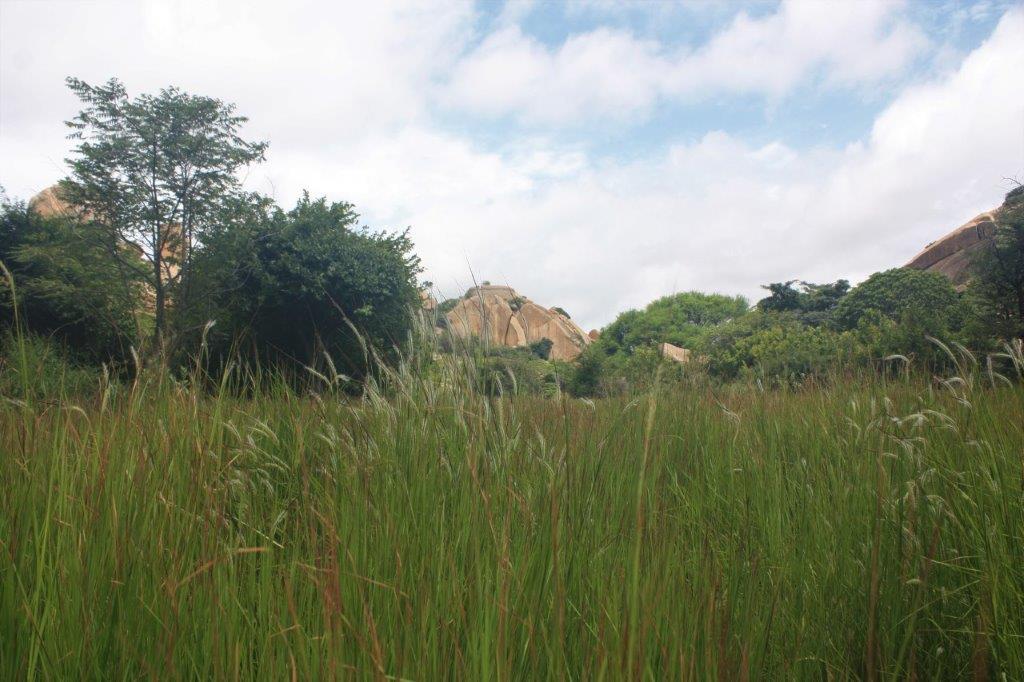
Out beyond ideas of wrongdoing and rightdoing,
there is a field. I'll meet you there.
When the soul lies down in that grass,
the world is too full to talk about.
Ideas, language, even the phrase each other
doesn't make any sense.

NOTE: Translation from Persian by Coleman Barks & John Moyne in The Essential Rumi published by Harper Collins.

The Essential Rumi GoodReads Page

River Snow by Liu Zongyuan [w/ Audio]

From one thousand mountains, birds have vanished.
Over ten-thousand paths, not one footprint.
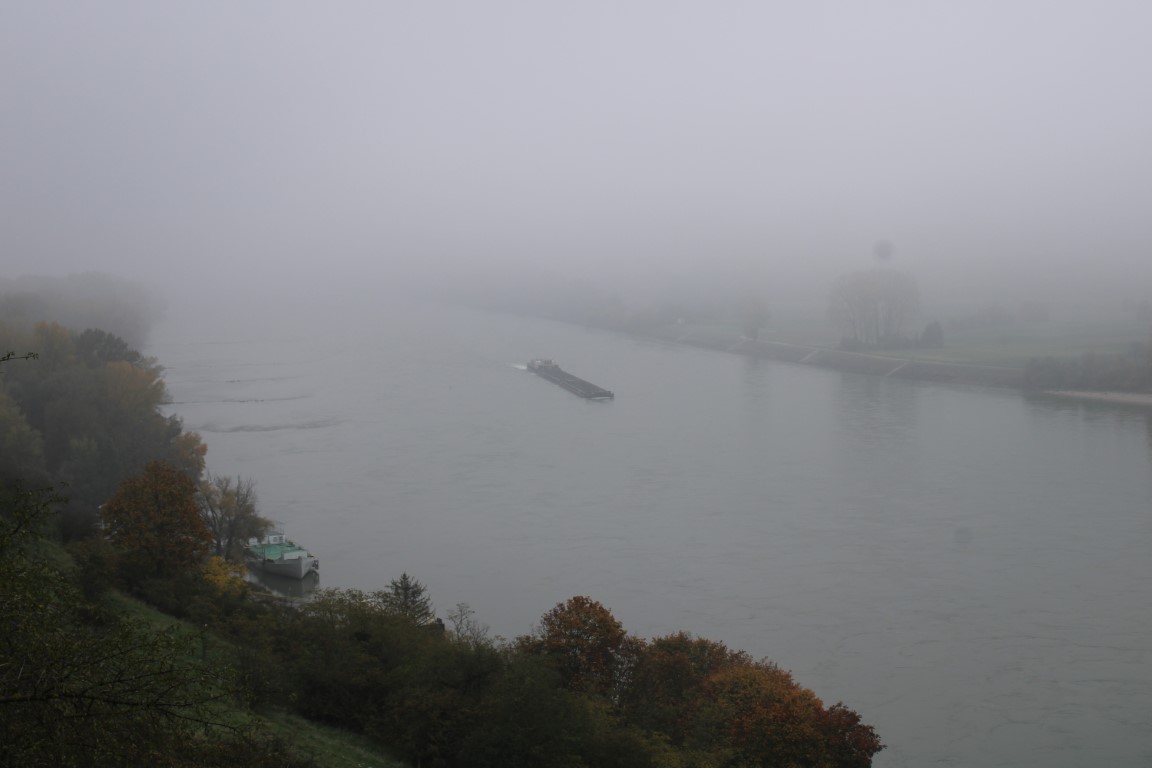
A lone boat, an old man in coarse cloak and hat:
Just he, fishing in the cold, river snow.

Original Chinese:

千山鳥飛絕
萬徑人蹤滅
孤舟蓑笠翁
獨釣寒江雪

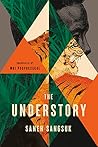
BOOKS: The Understory by Saneh Sangsuk

The UnderstoryThe Understory by Saneh Sangsuk
My rating: 5 of 5 stars

Amazon.in Page

An elderly monk tells stories from his life to the kids living in a small [and fictitious] Thai village. This is one of those works of literary fiction that you have to give a chance. The pacing, the subject matter, and the approach of the first part of the book is such that anyone without an intense interest in Thai village life or the thoughts of a Thai monk on the state of Buddhism in India (almost non-existent) will find it a bit of a slog. However, as the story shifts to the young man’s (pre-monk) life, adolescence through life as a newly married man expecting his first child, it becomes an intensely gripping story.

In the early parts, there’s a lot of violation of that old chestnut, “show, don’t tell” and — like much literary fiction — it’s not clear that there will be a story (versus exposition, character development, and description of events of a non-story like nature.) However, this transitions into the evocative story of how the narrator came to be a monk after a tragic farming householder experience. I can’t even give an accurate description of how far in I think the book makes this swing because my reading pace in the second part was so much quicker and more compelled than early on.

The book has hints of supernatural elements in it but can be read as realism in an environment of intense superstition.

I’d highly recommend this book for those who enjoy literature in translation. Give it a chance to win you over. It will, soon enough.

View all my reviews

BOOKS: MONKEY, Vol. 4: Music ed. by Ted Goossen & Motoyuki Shibata

MONKEY New Writing from Japan: Volume 4: MUSICMONKEY New Writing from Japan: Volume 4: MUSIC by Ted Goossen
My rating: 5 of 5 stars

Amazon.in Page

Release Date: November 14, 2023

This is the fourth volume in a series of translated Japanese short creative writing (mostly poems and short stories.) The series (and this edition, in particular) features some of the best-known Japanese authors (e.g. Haruki Murakami and Meiko Kawakami.) Beyond a few major pieces at the beginning, this edition has a theme of music that runs through it.

Among my favorite pieces were: the novel excerpt Yoshiwara Dreaming about a young girl who is sold into the redlight district and becomes a helper in a brothel; Transformer: Pianos which is a work of surrealist fiction; The Zombie is Haruki Murakami’s fresh take on the zombie story; I also enjoyed many of the inclusions in the section entitled Eight Modern Haiku Poets on Music.

It’s a varied collection of writings. Not only does it include all forms of creative writing — prose and poetic — but the broad selection of writers and translators ensure that there is a diversity of styles and genres. That said, there isn’t a great diversity in quality level. It’s all strong writing, though some works will appeal to any give reader more than others. There’s something for everyone.

I’d highly recommend this volume for readers of literature in translation.

View all my reviews

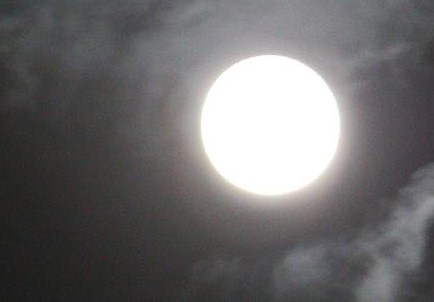
Drinking Alone by Moonlight by Li Bai [w/ Audio]

A pot of wine, under blossoms.
   I drink alone, no friends in sight.
 I raise a cup to lustrous Moon:
   Me, Moon, and Shadow will make three.
 But Moon is a teetotaler.
   And Shadow just skulks at my feet.
 Still, Moon & Shadow are my chums.
   We need a bash before Spring's end.
 But my singing makes Moon recoil.
   And Shadow flops hard when I dance.
 At first, we have a grand old time,
   But we part ways when I drift off.
 We should keep this epic friendship rolling,
   and meet again in the River of Stars.

NOTE: I produced this “translation” / arrangement, using translations by Arthur Waley, Ezra Pound, and that of “The Anchor Book of Chinese Poetry” [ed. by Tony Barnstone and Chou Ping] to get varied takes on the source poem.

BOOK REVIEW: The Translations of Seamus Heaney by various [Trans. by Seamus Heaney / Ed. by Marco Sonzogi]

The Translations of Seamus HeaneyThe Translations of Seamus Heaney by Seamus Heaney
My rating: 5 of 5 stars

Amazon.in Page

Release Date: March 21, 2023 [for the reviewed edition]

I’d read Heaney’s approachable yet linguistically elegant translation of Beowulf long ago, and was excited to see this collection of his translations coming out. The one hundred pieces gathered make for a diverse work, from single stanza poems to epic narratives and timed from Ancient Greece through modernity. The pieces include works from well-known poets such as Baudelaire, Cavafy, Dante, Brodsky, Horace, Sophocles, Ovid, Pushkin, Rilke, and Virgil. But most readers will find new loves among the many poets who aren’t as well-known in the English-reading world, including Irish and Old English poets. I was floored by the pieces by Ana Blandiana, a prolific Romanian poet who’s a household name in Bucharest, though not so well-known beyond.

I’d highly recommend this anthology for poetry readers. Besides gorgeous and clever use of language, the power of story wasn’t lost on Heaney and his tellings of Antigone (titled herein as “The Burial at Thebes,) Beowulf, Philoctetes (titled “The Cure at Troy,”) and others are gripping and well-told.


View all my reviews