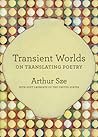
BOOK: Transient Worlds by Arthur Sze

Transient Worlds: On Translating PoetryTransient Worlds: On Translating Poetry by Arthur Sze
My rating: 5 of 5 stars

Publisher Site — Copper Canyon

Release Date: April 14, 2026

Just as people are fond of saying, “the book is always better than the movie,” there is an idea — widely accepted as truism — that goes, “a translation can never be as good as its source poem.” I don’t buy either of those views, but there’s certainly truth to the notion that a poetic translation can never perfectly echo style, tone, sound quality, and meaning at once. Each language is unique, and the more different two languages are the more one has to make decisions about what one will emulate and what one will craft. It’s also true that any translation will represent a drift away from the culture of the original (which is not identical to being worse.) In short, any poetry translation that seeks to be good had better be a work of art unto itself.

The current US Poet Laureate (as of this writing,) Arthur Sze, has written a book to help readers intelligently navigate the troubled waters of poetic translation. Sze certainly has insight, having not only translated Chinese poems himself, but also being Professor Emeritus at the Institute of American Indian Arts, he has multiple cultural lenses with which to view poetry.

This book consists of fifteen chapters exploring poems and poetry excerpts from around the globe — and their translations. The twelve diverse source languages include: Chinese, Navajo, French, Ancient Greek, Hebrew, Danish, and Russian. The original poets include Tao Qian, Guillaume Apollinaire, Homer, Kobayashi Issa, Pablo Neruda, Marina Tsvetaeva, Aime Cesaire, Najwan Darwish, and Mirabai. Many of the chapters include multiple translations, offering the reader a means to see how different translators take to the task. Others offer only a single translation but turn their attention to specific considerations of translation. In one case, there is an interview with the translator. I enjoyed this varied approach to the exploring the topic. It made for a book with zero monotony and many facets.

If you are a poet or a poetry reader who enjoys reading poetry from varied languages or source languages, I’d highly recommend this book.

View all my reviews

Peach Blossoms [Lyric Poem]

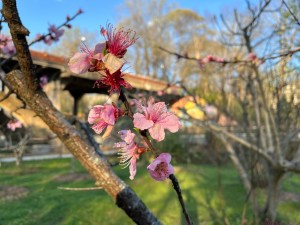
Photograph of Peach Blossoms taken in early March in Atlanta's Piedmont Park.
I see the Peach Blossoms of Spring,
And think of old Li Bai’s answer.

In wordless replies, the world sings;
In unpeopled worlds, there’s a dancer.

The referenced poem by Li Bai [李白] is entitled Question and Answer in the Mountains [山中问答] and is crudely translated as:

I'm asked why I live in mountains.
I laugh while giving no reply.

Peach Blossoms flow from sight & mind;
Beyond men, another Earth & Sky.

Or, in Chinese:

问余何意栖碧山,
笑而不答心自闲。

桃花流水窅然去,
别有天地非人间。

“Drinking Wine, no. 5” [饮酒·其五] by Tao Qian [陶潜] (a.k.a. Tao Yuanming [陶渊明])

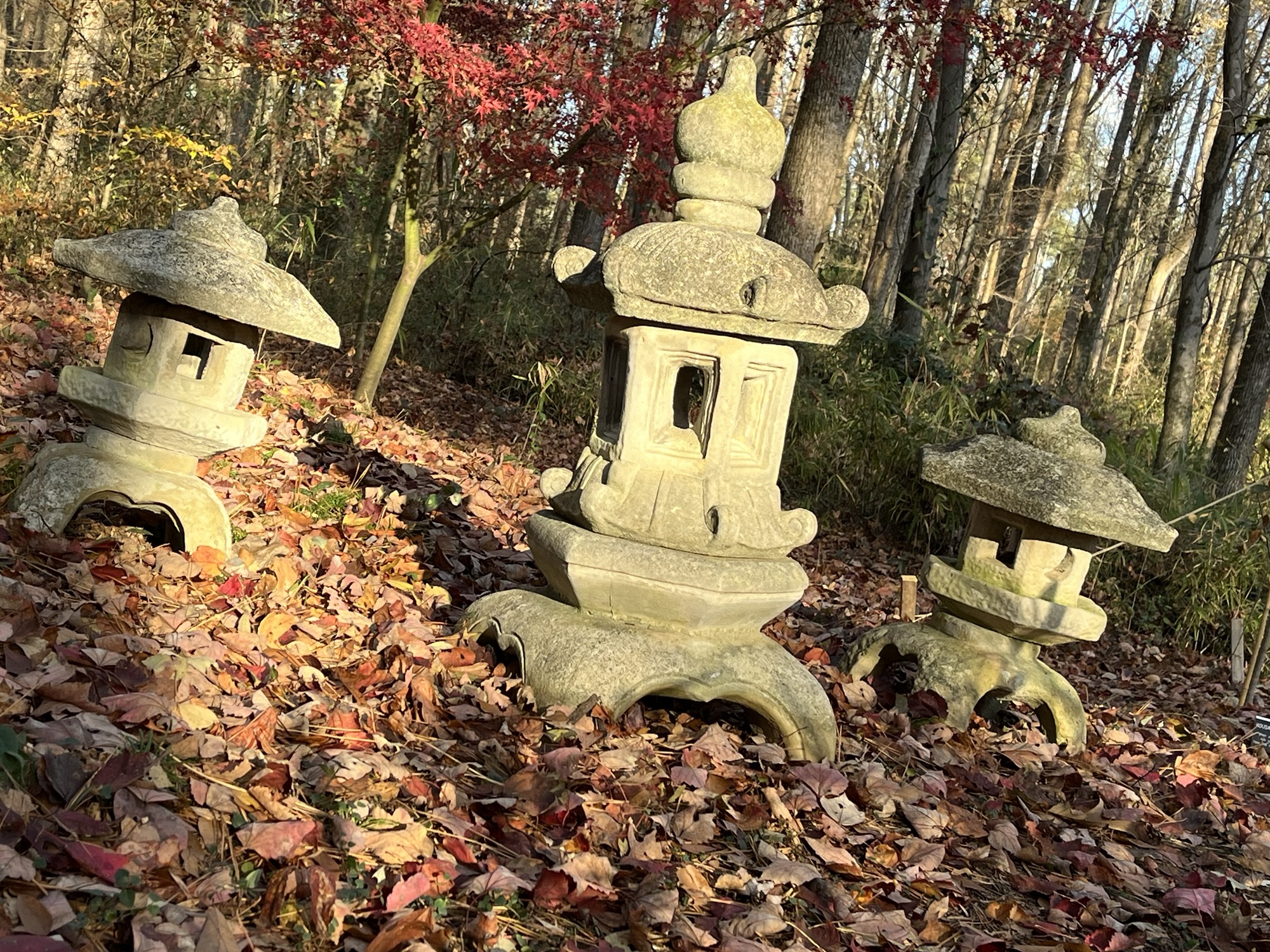
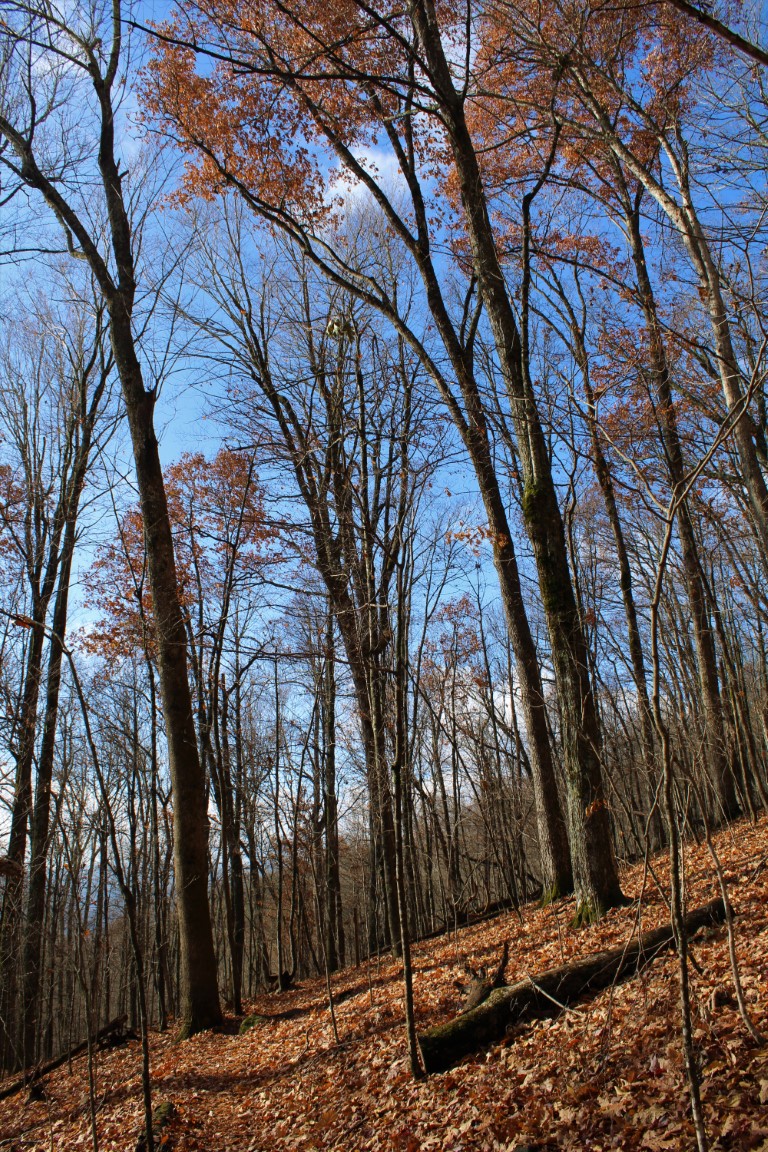
Taken in Hartwell, Georgia.
I live amid a busy town,
But traffic sounds are never heard.

How can this possibly be true?

Deep in the mind, all is remote.

Picking 'mums by the eastern fence,
I peer at distant South Mountains.
Sunset flares in garish color.
Birds flock home in lines and clusters.
The scene conveys some great meaning,
But words to express it fail me.

NOTES: “Drinking Wine, no. 5” [饮酒·其五] is one of Tao Qian’s [陶潜] “Twenty Poems on Drinking Wine” [饮酒二十首.] It is the best-known piece from the collection. The original poem in Simplified Chinese script is:

结 庐 在 人 境,
而 无 车 马 喧.
问 君 何 能 尔?
心 远 地 自 偏.
采 菊 东 篱 下,
悠 然 见 南 山.
山 气 日 夕 佳,
飞 鸟 相 与 还.
此 中 有 真 意,
欲 辨 已 忘 言.

I’ve started reading a review copy of Arthur Sze’s Transient Worlds (from Copper Canyon Press, due out April 14, 2026.) The first chapter discusses this poem and various translations of it, encouraging readers to make their own translation. This is mine. For more information about the book, see: https://www.coppercanyonpress.org/books/transient-worlds-arthur-sze/

BOOK: “The Dragon King’s Daughter” Trans. by Yang Xianyi and Gladys Yang

The Dragon King's Daughter: Ten Tang Dynasty StoriesThe Dragon King’s Daughter: Ten Tang Dynasty Stories by Gladys Yang
My rating: 5 of 5 stars

Google Book Site

This thin anthology contains ten stories from varied writers of the Tang Dynasty. The stories include a mix of speculative fiction, political fiction, and love stories — some being cross-genre pieces that mix elements of more than one of these categories.

I found a wide variation in how engaging the stories were. The best of them were quite good. The Spendthrift and the Alchemist, The White Monkey, and the titular The Dragon King’s Daughter were among my favorites. Each of those stories included a supernatural element, but also a thought-provoking premise.

If you enjoy Tang Dynasty literature and would like to try some of this golden literary age’s short fiction, this book is a quick and pleasant read.

View all my reviews

BOOK: “This and That” by Ryōkan [trans. by Stan Ziobro and John Slater]

This and That: Selected Short Poems of Zen Master RyokanThis and That: Selected Short Poems of Zen Master Ryokan by Ryōkan
My rating: 5 of 5 stars

Publisher Site — Monkfish Books

Release Date: March 24, 2026

This is a new selection of Ryōkan’s short poetry (haiku, tanka, and Chinese-Style poems) as translated by Stan Ziobro and John Slater. Ryōkan was a Buddhist monk who lived across the late 18th / early 19th century. These translations are evocative and present the sometimes whimsical and sometimes haunting work of Ryōkan well. While the forms are just three, i.e. haiku, tanka, and kanshi [Japanese Poetry in the Chinese Style,] the style varies, some being imagist and some being more philosophical. Being a monk, Ryōkan’s work is heavily influenced by a Buddhist worldview, as well as by philosophies that interacted with Buddhism — e.g. Taoism.

While I usually have no basis to judge a translation as translation and am left to reflect on it purely as stand-alone verse, in this case, I have enough experience reading translations of Ryōkan to have a feel for his work. I immediately recognized some of Ryōkan’s more famous poems: e.g. the one’s translated in this book as, “Poems? no way // when you see that my // poems aren’t poems // then we can talk poetry” or “Left behind by thief // bright moon // in my window” Yet, at the same time, I felt the translators left some of their own imprint on the poems, and their influence / voice resonated with me.

The book does have front matter to set the stage for readers, and there is a “Notes” section that includes useful background on the poems. I found this ancillary matter useful, but not excessively verbose or intrusive.

If you enjoy Japanese poetry or Buddhist influenced poetry, I’d highly recommend this selection.

View all my reviews

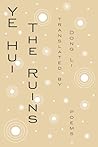
BOOK: “The Ruins” by Ye Hui [Trans. by Dong Li]

The Ruins: PoemsThe Ruins: Poems by Hui Ye
My rating: 5 of 5 stars

Publisher Site — Deep Vellum

This is a Chinese-English bilingual edition of Ye Hui’s first poetry collection. The poems use stark imagery with occasional instances of philosophizing and surreal statements to create a vivid and provocative set of poems.

As I’m learning Chinese, it was nice to have the original poems in Simplified Chinese script next to the English translations. While I’m not up to a reading level sufficient to taking on Modern Poetry (any poetry for that matter,) it was useful to peruse the Chinese text. I did appreciate how much vibrance the author wrings out of a relatively simple vocabulary.

I’d highly recommend this collection for poetry readers.

View all my reviews

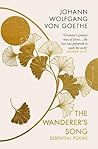
BOOK: “The Wanderer’s Song” by Johann Wolfgang von Goethe [trans. by John Kent]

The Wanderer's Song: Essential Poems (Pushkin Press Classics)The Wanderer’s Song: Essential Poems by Johann Wolfgang von Goethe
My rating: 4 of 5 stars

Publisher Site — Pushkin Press Classics

This is a new translation of select poems of Johann Wolfgang von Goethe. It’s a clever and varied set of poems by one of German literature’s all-time greats, a polymath of the 18th and early 19th centuries.

It can be a challenge for a general poetry reader to relate to this work. Over two hundred years since most of these poems were composed, the collection reflects a worldview quite different from that which one finds today. That said, the translations are readable and pleasant and don’t feel strained or clunky, and the collection has instances of sublimity. Having no background in German Literature, I can’t say how true the translations are to source material, but they stood solidly as poems in their own right. The book does offer a substantial introduction by the translator for individuals who are particularly interested in the German literature, translation decisions, or the life of Goethe.

I would recommend this for poetry readers, even though casual readers may find it a bit archaic. If you like the Romantic poets, and haven’t given Goethe a try, it’s well worth the time investment.

View all my reviews

“To a Taoist Hermit on Mt. Quanjiao” [寄全椒山中道士] by Wei Yingwu [韦应物]

Today, my office is chilly.
At once, I miss my mountain chum,
Who bound firewood in the valley,
Bringing it back to boil white stones.
I wish I could ladle some wine
To comfort on this stormy night.
But fallen leaves fill mountain hollows,
How could I find a track to follow?

This is poem #29 from the 300 Tang Poems [唐诗三百首], entitled 寄全椒山中道士. The original poem in Simplified Chinese is:

今朝郡斋冷, 忽念山中客; 
涧底束荆薪, 归来煮白石。
欲持一瓢酒, 远慰风雨夕。
落叶满空山, 何处寻行迹?

“Precept-Breaking Monk” by Ikkyū [w/ Audio]

A precept-breaking monk for eighty years --
still, I'm ashamed of Zen that ignores cause and effect.
Sickness is the result of past karma.
Now how can I honor my endless connections?

Translation by Kazuaki Tanahashi and David Schneider in: Essential Zen. 1994. HarperSanFrancisco. p. 126.

Wen Fu 12 [文赋十二] “Idiosyncrasy” by Lu Ji [陆机] [w/ Audio]

Thoughts conveyed by way of short verse
May degrade in eccentricity.
With bowed head, lonely and friendless.
Face up, vast sky where all is free.
Like one string stretched to perfect pitch,
But lacking all resonancy.

NOTES: Earlier I posted a translation by Tony Barnstone and Chou Ping, entitled A One-String Harp that was contained in The Art of Writing (Boston: Shambhala; p. 15) This, however, is my own translation. The original poem in Simplified Chinese is:

或讬言于短韵,对穷迹而孤兴。
俯寂寞而无友,仰寥廓而莫承。
譬偏弦之独张,含清唱而靡应。