“Ox” by Ikkyū [w/ Audio]

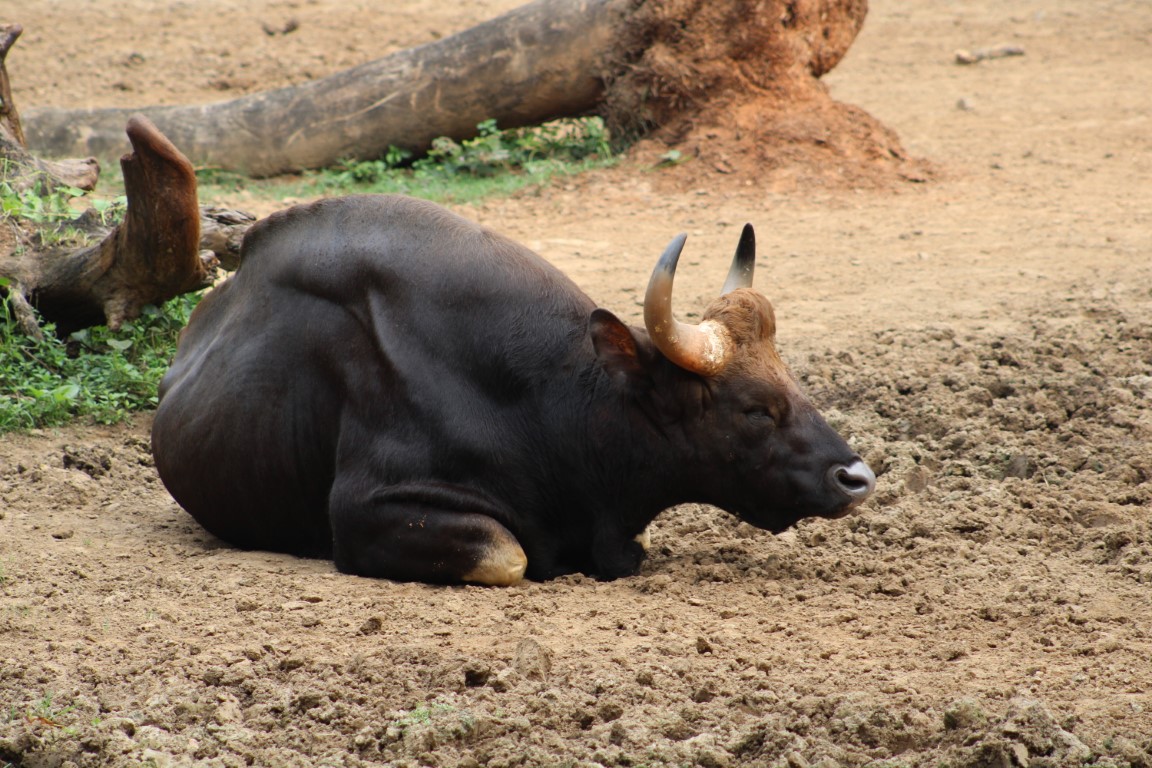
Among other creatures this is what I was.
Abilities depend on the realm;
realm also depends on abilities.
At birth I forgot completely by which path
I came.
I don't know, these years, which school
of monk I am.

Translation by Kazuaki Tanahashi and David Schneider in Essential Zen. 1994. HarperSanFrancisco.

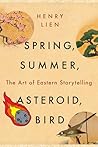
BOOK: “Spring, Summer, Asteroid, Bird” by Henry Lien

Spring, Summer, Asteroid, Bird: The Art of Eastern StorytellingSpring, Summer, Asteroid, Bird: The Art of Eastern Storytelling by Henry Lien
My rating: 4 of 5 stars

Publisher Site

I enjoyed, and was stimulated in thought, by the first half of this book, as well as by sections of the latter half, especially in the fourth chapter. (It’s arranged into four chapters, echoing the book’s central idea of a unique four-act approach to storytelling prevalent in Eastern societies. I’ll get to why I was not so fond of Ch. 3 later.) The book employs exemplary works of literature, film, and even video games to support the claim that there’s not just one approach to sound story crafting — but, rather, that Eastern societies developed distinct modes of storytelling reflecting their values and worldview. (A note on the use of the word “Eastern”: while the book draws heavily on East Asian sources, it tries to make a broader case suggesting not only South Asia but also the Middle East [i.e. everyplace not big-W “Western”] fit this mold. The book might have made a stronger case sticking to East Asia, as – for example – it might be argued that Arabia / Persia of the time of One Thousand and One Nights, being Abrahamic, was closer to Europe than East Asia in values and worldview. To be fair, the author does argue that some parts of that book are believed to have come from farther East (India and, possibly, beyond.))

The book proposes that there are two (arguably three) styles of story construction that are distinctly Eastern. The first is a four-act structure that is far from just a rejiggering of the three and five act forms with which English Literature students will be familiar. Incidentally, the book’s rather unusual title maps to the elements of this four-act structure. The second involves circular and nested story structure. I don’t know that the author succeeds in (or even seeks to) convince the reader that this is a uniquely Eastern approach, but -rather – makes an argument as to why it is prominent in Eastern storytelling.

The author picked an excellent set of works to illustrate his points. Generally, the works are both well-known and well-received among diverse audiences. The films he employs as cases include Parasite, Everything Everywhere All at Once, and Rashomon (the latter also being a literary work.) Lien uses one of my favorite Haruki Murakami novels Hard-Boiled Wonderland and the End of the World as a critical example. I was not at all familiar with the video games he describes (beyond name,) but – given that I’d at least heard of them – I assume they are pretty popular (though I can’t speak to whether they have any discernable stories and will have to take that on faith.) [I’m not sure whether One Thousand and One Nights was a good choice for Eastern literature, though it is an excellent choice as of nested structure.]

As for why I didn’t care for the book’s third part. I should point out that is the most philosophical (and the least explicitly concerned with story) part of the book, and it aims to show how values and worldview vary across cultures such that there are differences in story structure and crafting between different parts of the world. That could be a laudable objective and germane to the book’s point and it’s not why I found this section to be muddled and ineffective. The problem is that the chapter oversimplifies the issue in a way that seems to undercut a broader central argument (that Eastern modes of storytelling are underrepresented outside of the East.) Instead of suggesting that people experience conflicts along continuums (e.g. individual to group identity) and that Easterners tend come to different conclusions than Westerners do based on differing values and cultural perspectives, it engages in an elaboration of the distinctions that seems to suggest there’s some unbridgeable gulf of understanding between cultures (and, quite frankly, kind of feels like it’s shifted from making the aforementioned point to just being a thinly veiled critique of Western culture — which is fine, but probably belongs in a different book — or maybe a manifesto.) But if there were no basis for stories to resonate across this gulf, then not only wouldn’t Parasite and Everything Everywhere All at Once have killed it at both the Oscars and American box office, there’d be no reason for artists to attempt to branch out and tells stories across tribal lines. Without establishing a basis for story resonance, it’s ridiculous to argue that Hollywood should use Eastern modes of storytelling and Eastern worldviews to a greater extent. (A profit pursuing entity is always going to seek the largest possible customer base.) I’m not attempting to negate the argument that there are different approaches to storytelling among different peoples nor that more diversity of approaches shouldn’t be seen across cultures. I’m saying that this chapter doesn’t well support the argument for greater representation of Eastern modes of storytelling outside of Eastern outlets (publishers, film studios, etc.) because it spends so much time arguing the cultural differences that it doesn’t indicate how cross-cultural story resonance is possible.

Overall, I found this to be an interesting and thought-provoking read, though it was – for me – a bit muddled in the middle.

View all my reviews

“Without desire everything is sufficient” by Ryōkan Taigu

Without desire everything is sufficient.
With seeking myriad things are impoverished.
Plain vegetables can soothe hunger.
A patched robe is enough to cover this bent old body.
Alone I hike with a deer.
Cheerfully I sing with village children.
The stream under the cliff cleanses my ears.
The pine on the mountain top fits my heart.

Translation by Kazuaki Tanahashi and Daniel Leighton in Essential Zen (1994) HarperSanFrancisco.

BOOKS: “Kokoro” by Natsume Sōseki 

KokoroKokoro by Natsume Sōseki
My rating: 5 of 5 stars

Publisher Site – Pushkin Press

I first read this many years ago in college for a course on Japanese culture. I didn’t have a good reading experience then because this novel is too quiet to hold the concentration of a fidgety mind. However, on rereading it, I found it to be an intense and moving reading experience. It’s a brutally realistic piece of literary fiction, featuring quiet and unexpressive characters who are never-the-less experiencing a kind of agony of living.

The book’s beginning revolves around the relationship between a young man just finishing college and an older, somewhat hermetic, man. By “relationship” I’m not talking about a sexual or otherwise intimate interaction. This strange relationship might best be made sense of by the fact that the young man calls the older, “Sensei” (i.e. “teacher.”) So, it is largely an informal mentor-mentee relationship, but the reader may not really understand why “Sensei” is a reasonable honorific for the old man until the end. The latter portion of the book is Sensei’s “confession,” or the telling of formative events of his life. It is in this confession that we learn that Sensei is not so much a teacher by virtue of conveying abstract scholarly information but rather he teaches by showing the young man his own life story as a cautionary tale.

You must be in a quiet state of mind to keep attuned to this book, but – if you can do so – it is well worth reading. I’d highly recommend it for readers of literary fiction.

View all my reviews

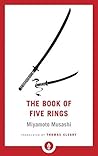
BOOKS: “The Book of Five Rings” by Miyamoto Musashi [trans. by Thomas Cleary] [w/ Yagyu Munenori’s “Book of Family Traditions”]

The Book of Five Rings: A Classic Text on the Japanese Way of the Sword (Shambhala Pocket Library)The Book of Five Rings: A Classic Text on the Japanese Way of the Sword by Miyamoto Musashi
My rating: 5 of 5 stars

Publisher Site – Shambhala Publications

This edition, i.e. The Shambhala Pocket Library edition, contains two guides to strategy, tactics, and philosophy of combat by famous early Edo Period swordsmen. The titular work is Miyamoto Musashi’s The Book of Five Rings, but the volume also contains Yagyu Munenori’s The Book of Family Traditions. The naming of the book is meant to capitalize on the continuing popularity of Musashi, who remains well-known to this day not only because of his own works and legend, but because of an afterlife in pop culture that ranges from Eiji Yoshikawa’s novel to a recent Netflix animated series. That said, one shouldn’t conclude Yagyu Munenori was some sort of slouch. He was, in fact, a martial arts teacher to the Shogun’s son, and he founded a branch of his family’s martial arts school that continues to this day.

It is interesting to see these two guides back-to-back, being by authors whose lifespans largely overlapped, though – in other ways – their lives were quite different. While there is some conceptual overlap in these guides, the two definitely show two very different minds at work, Musashi the pragmatic eccentric and Yagyu the Zen philosopher of noble standing.

Miyamoto Musashi is probably the most famous swordsman in Japan’s history. Oddly enough, he’s not known for his experience in battle (he lived at the tail end of the Warring States period and was only in a couple battles), but – rather – for his 62 duels. The Book of Five Rings and other works he left behind are certainly important factors in his continuing fame. Musashi was a bit of a renaissance man: painter, poet, and sculptor in addition to a swordsman. He also left behind a school of swordsmanship, Niten Ichi-ryū.

The Book of Five Rings is divided into five parts: earth scroll, water scroll, fire scroll, wind scroll, and void scroll.

The earth scroll provides an overview of martial science and an introduction to Musashi’s school, which is noted for its simultaneous use of both the large and short sword. A section is devoted the rhythm of martial arts, a crucial topic. It also includes what might be considered Musashi’s 9-point budō kun (a list of warrior precepts.)It’s worth mentioning a couple of these:
#7 Become aware of what is not obvious.
#9 Do not do anything useless.

The Water scroll describes Musashi’s approach to swordsmanship. It covers a range of elements of a martial art including footwork, the focus of one’s eyes, physical posture, mental posture, techniques, and approaches to cutting and thrusting.

The Fire scroll deals with the strategic or interactive aspects of the battle.

The Wind scroll explores other martial arts. Musashi discusses martial arts that use an unusually long sword, an atypically short sword, that focus on powerful strikes, and those that focus on many rapid strikes. He contrasts other martial arts with his own on subjects such as their focus with the eyes and their footwork.

The void scroll deals with, well, emptiness. It’s actually a short wrap-up.

Yagyu’s guide is much more philosophical and mind-centric. It’s not that Musashi doesn’t deal with such topics, but he also devotes considerable space to more practical nuts and bolts of swordsmanship and strategy. It’s also true that Yagyu gets into technical considerations such as control of distancing (if in a bit more poetic way than Musashi.) One can get a feel for the nature of Yagyu’s Book of Family Traditions [on the Art of War] by seeing how it is organized into three parts: “The Killing Sword,” “The Life-Giving Sword,” and “No Sword.” The latter two indicating the author’s belief in the importance of not equating warrior and killer (nor winning with killing) as well as not fixating on the sword.

These two men had great insight into strategy and the tactics of swordsmanship, their guides are worth being read and reread. And the two authors do offer two intriguingly different approaches to a similar subject.

View all my reviews

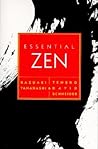
BOOKS: “Essential Zen” ed. by Kazuaki Tanahashi & David Schneider

Essential ZenEssential Zen by Kazuaki Tanahashi
My rating: 5 of 5 stars

Google Books Page

This is a collection of short writings (poems, koans, and prose excerpts) on Zen Buddhism arranged into loosely themed sections. The writings tend toward the artistic, creative, and metaphorical, with relatively few straightforward descriptions of technique or philosophy. The writings range from those of Chinese and Japanese monks who lived hundreds of years ago to present-day poets and Zen practitioners. Among the more frequently drawn from sources are: Hanshan, Ikkyu, Dogen, Ryokan, Hakuin, Gary Snyder, Robert Aitken, Seung Sahn, John Daido Loori, Thich Nhat Hanh, and Peter Levitt. But there are many others, including some who have only a single piece included.

There’s a substantial “Notes” section that gives source, translation, and — in some cases — background information. Most of the translations (both Japanese and Chinese) are by the editors, Kazuaki Tanahashi and David Schneider. There are illustrations, but they are all ensō (circular brush paintings) and related forms.

This is a highly readable and insightful collection of short writings, and I’d highly recommend it for individuals interested in Zen or Eastern Philosophy more generally.

View all my reviews

Death Poem of Ikkyū [w/ Audio]

I borrowed these one month ago, yesterday.
I'm returning them today.
I borrowed five and return four --
Repaid, but for Original Emptiness.

NOTE: This is one of three Death Poems attributed to Ikkyū, supposedly the middle one.

“Cicada’s Cry” by Matsuo Bashō [w/ Audio]

the stillness --
soaking into stones
cicada's cry

Translation from: Higginson, William J. 1985. The Haiku Handbook: How to Write, Share, and Teach Haiku. Tokyo: Kodansha Int. p. 11

“Raven at Dusk” by Matsuo Bashō [w/ Audio]

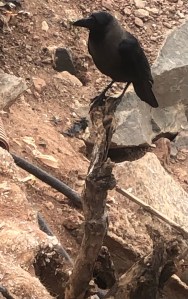
on a barren branch
a raven has perched —-
autumn dusk

Five Seasonal Poems of Miura Chora [w/ Audio]

NEW YEAR

New Year's Day:
the ancient voice of a
nightingale.

SPRING

idyllic nights
and quiet days:
spring rains.

SUMMER

cold water, and
a couple of rice cakes:
it's summertime.

AUTUMN

morning glories
are tousled by
Autumn winds.

WINTER

lingering wind
and snow fall
upon me.