BOOKS: “The Last Brother” by Nathacha Appanah

The Last BrotherThe Last Brother by Nathacha Appanah
My rating: 5 of 5 stars

Publisher Site — Gray Wolf Press

When Mauritius made it onto my shortlist for upcoming travel, I needed to find an enlightening work of Mauritian literature, and this book was prominently discussed as one that might fit the bill.

The book is narrated by an old man telling a story from his boyhood. It is a poignant and riveting tale. The book’s title, The Last Brother reflects the protagonist’s (Raj’s) first tragedy, losing his two brothers in a natural disaster in Mapou, Mauritius. Raj’s family then moved south where his father got work in a prison.

Much of the book revolves around a strange historical event — the imprisonment of a large number of Jews on Mauritius during World War II. These Jews had fled Europe and were trying to make their way to Palestine but were not granted entry because of a lack of acceptable documentation. They were then sent to Mauritius where they were imprisoned in a detention camp.

The reader only sees this event through the relationship of Raj and David. Raj is taken to the prison infirmary after being beaten by his alcoholic father. There he meets David, a Jewish boy in the detention camp. It isn’t until the very end of the book that the author presents the facts of the historic event. I think this is a wise move, allowing the reader only knowledge of what the characters would know (which – as nine-year-olds – is not much.) The late reveal adds to the tension and makes some of the characters’ decisions more understandable.

The last part of the book is a little reminiscent of Huck Finn, except without Twain’s lightheartedness and with a more melancholic and tragic tone and ending, but featuring two young men on the lam for different reasons.

I found this novel to be a potent read and would highly recommend it for readers of global literature — especially if you expect to find yourself in Mauritius at some point.

View all my reviews

BOOKS: “Birds, Beasts, and A World Made New” by Guillaume Apollinaire & Velimir Khlebnikov [ed. / trans. Robert Chandler]

Birds, Beasts and a World Made New: Guillaume Apollinaire and Velimir Khlebnikov (1908-22) (Pushkin Press Classics)Birds, Beasts and a World Made New: Guillaume Apollinaire and Velimir Khlebnikov (1908-22) by Guillaume Apollinaire
My rating: 5 of 5 stars

Publisher Site – Pushkin Press

This poetry collection recalls a time and tells a story. Perhaps it’s not right to call it a poetry collection, not because it isn’t one, but because that’s not all it is. Most of the book consists of selections of poetry from Guillaume Apollinaire and Velimir Khlebnikov juxtaposed by themed grouping. But there is also backstory and biography included throughout as well as in the book’s final section.

One might wonder why anyone would construct a two-poet collection featuring a Frenchman and a Russian. Well, the two men did have a number of things in common, most disturbingly that they both died young in the early twentieth century. Apollinaire died at age 38 in 1918 and Khlebnikov died at 36 in 1922. The fact that these men’s writing careers so overlapped is one of the reasons the book works. They waded through a common zeitgeist. Another commonality that makes the collection relevant and intriguing is that both poets had a penchant for experimentalism in their work.

Seeing the work of these poet’s organized as the volume does, one recognizes both similarities and differences. This includes the fact that the tone of each poet’s work ranges widely from whimsical to the brutal morosity of poems on war and the suffering it entails.

I found this collection to offer a powerful reading experience and would recommend it highly to all poetry readers.

View all my reviews

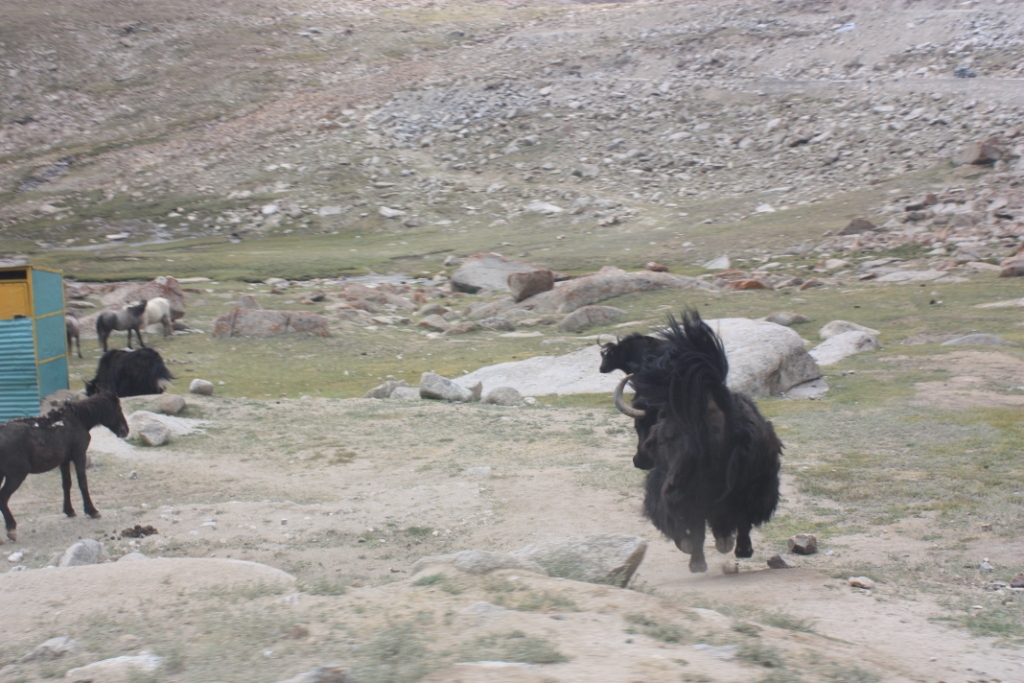
“The Yak” by Hilaire Belloc [w/ Audio]

As a friend to the children commend me the Yak.
You will find it exactly the thing:
It will carry and fetch, you can ride on its back,
Or lead it about with a string.

The Tartar who dwells on the plains of Thibet
(A desolate region of snow)
Has for centuries made it a nursery pet,
And surely the Tartar should know!

Then tell your papa where the Yak can be got,
And if he is awfully rich
He will buy you the creature -- or else he will not.
(I cannot be positive which.)

“Toward the South” by Guillaume Apollinaire [w/ Audio]

Zenith
These griefs
These gardens on and on
Where the toad croons a tender cry skyblue
The hind of silence startled races by
The nightingale that love has bruised sings in
Your body's bush on which I've picked each rose
Our hearts hang from the same pomegranate bough
And in our gaze pomegranate blossoms blow
That falling one by one have strewn the road

Translator: Harry Duncan

BOOKS: “Gothic Tales” by Marquis de Sade [Trans. by Margaret Crossland]

Gothic TalesGothic Tales by Marquis de Sade
My rating: 5 of 5 stars

Amazon.in Page

Release Date: September 3, 2024

This collection of short fiction is an excellent entry point for the reader wishing to be introduced to the philosophy and literary stylings of the Marquis de Sade. It is less visceral and explicitly violent than the works for which Sade is most famous (i.e. Justine, 120 Days of Sodom, and Philosophy in the Boudoir.) While it does deal in libidinal issues throughout and has a few stories that are explicitly erotica (notably the last couple pieces,) it never ventures up to or over whatever thin line separates erotica from pornography.

While all the pieces share Sade’s signature philosophy and interests, it is in other ways a quite diverse collection of writings. The first piece, “Eugenie De Franval,” is a novella that takes up about half the book, and it is followed by a piece that, in today’s parlance, might be called flash fiction, “The Horse-Chestnut Flower.” Pieces such as “Eugenie De Franval” and “Florville and Courval” are tragedies while the comedies include: “Emilie De Tourville,”[granted with grim elements] “The Husband Who Played Priest,” “Room for Two,” and “The Self-Made Cuckold.” Those last three – as well as “The Horse-Chestnut Flower”– are comedic in a modern sense, not just the literary sense.

I can’t say how much of the difference in tone and intensity of these pieces from Sade’s other stories is owed to the selected source material and how much is owed to translation and editorial decisions, but it makes for a read that is more intriguing in story and less shocking and disturbing than many other translations of Sade’s work.

I enjoyed these stories. They had many clever twists and turns that I don’t recall experiencing in Sade’s novels. Several stories rely on a great deal of deus ex machina coincidences, but I think that works just fine — particularly in the more humorous stories. I’d highly recommend this for readers looking to ease into the work of the Marquis de Sade.

View all my reviews

BOOKS: “The Flowers of Evil” by Charles Baudelaire

Les Fleurs du MalLes Fleurs du Mal by Charles Baudelaire
My rating: 5 of 5 stars

Amazon.in Page

I read the 1909 Cyril Scott translation of Baudelaire’s poetry collection. It consists of 54 poems, including “Condemned Women” but not including others of the six poems that were banned in early editions and which only came to be included in later editions. (I did look up and read a couple translations each for the six poems — because censorship can’t be allowed to prevail. Not surprisingly, they are calm by today’s standards. It should be noted that Baudelaire played in symbolism, and so his poems – while ahead of their time in subject matter – didn’t tend toward explicit vulgarity in the first place.)

The Scott translation is all in rhymed verse, the largest share of it presented as sonnets — though there are some longer pieces (longer, but not long. It’s a quick read.) “The Broken Bell” and “Spleen” were highlights for me, but the whole collection is intriguing, evocative, and readable.

I enjoyed this collection tremendously, even with such an old translation. The hedonism, eroticism, and macabre of Baudelaire’s work creates an intense tone.

I’d highly recommend this collection for all poetry readers.


View all my reviews

BOOKS: “Simple Passion” by Annie Ernaux

Simple PassionSimple Passion by Annie Ernaux
My rating: 5 of 5 stars

Amazon.in Pge

I’ll admit, I picked up this book because Ernaux won the 2022 Nobel Prize for Literature and I’m uncomfortable being ignorant of the work of a Literature Nobel Laureate. Her work is atypical of Nobel Prize winners. She is primarily known as a memoirist rather than a novelist, poet, or even essayist, and while she has a large body of works, many are quite short for prose work — i.e. under 100 pages.

This is a straightforward story of obsession, the author’s obsession with a married man, a diplomat from Eastern Europe during the late days of the Cold War. (The book doesn’t get into any Cold War intrigues, so don’t expect any. It’s a completely personal story.) The autobiographical narrative describes the lifecycle of obsession and is loaded with psychological insight. One sees the degree to which Ernaux’s yearning to be with this man intrudes on all aspects of her life, in as much as she can be said to have a life, so much of it being laid aside for their periodic dalliances. It is the kind of compulsion known mostly to young first lovers and those of addictive personalities.

A couple of the most compelling insights come as fourth wall breaks when Ernaux offers insight into her thoughts on writing. (One is that writing should have an effect like pornography [not necessarily be pornographic,] and another is that she writes to learn if anyone else does the things she does.)

I enjoyed read this. It’s an extremely fast read as it’s only around sixty pages and puts the reader in that compulsive mindset. I’d highly recommend it. I can’t speak to how typical it is of her work because it’s the first I’ve read from her, but it was mentioned prominently in the “best of” lists that came out around the time of her Nobel win.

View all my reviews

Be Drunken by Charles Baudelaire [w/ Audio]

Be always drunken. Nothing else matters: that is the only question. If you would not feel the horrible burden of Time weighing on your shoulders and crushing you to the earth, be drunken continually.

Drunken with what? With wine, with poetry, or with virtue, as you will. But be drunken.

And if sometimes, on the stairs of a palace, or on the green side of a ditch, or in the dreary solitude of your own room, you should awaken and the drunkenness be half or wholly slipped away from you, ask of the wind, or of the wave, or of the star, or of the bird, or of the clock, or whatever flies, or sighs, or rocks, or sings, or speaks, ask what hour it is; and the wind, wave, star, bird, clock will answer you: “It is the hour to be drunken! Be drunken, if you would not be martyred slaves of Time, be drunken continually! With wine, with poetry, or with virtue, as you will.”

NOTE: This is the Arthur Symons translation from the 1913 Elkin Mathews edition of Baudelaire’s Poems in Prose. Available via Project Gutenberg at: https://www.gutenberg.org/cache/epub/50489/pg50489-images.html#XI

BOOK REVIEW: Eastbound Maylis de Kerangal

EastboundEastbound by Maylis de Kerangal
My rating: 5 of 5 stars

Amazon.in Page

Release of Paperback Edition: February 7, 2023

This novella is translated from French but set in Russia. The story is short and simple, yet evocative. It’s about the attempt of its two main characters to conduct very different plans of escape. Aliocha is a soldier who’s traveling by train to a remote assignment in the East when he decides to desert. Aliocha’s desertion plan ends up hinging on the assistance of a foreign woman, Hélène, a French woman who – as it happens – is fleeing a failed relationship. For whatever reason, but perhaps because she knows the intense need to break free, Hélène decides to shelter Aliocha in her cabin until he can make clean getaway.

This is a quick but intense read. The lack of common language between the two escapees makes for an austere telling, one that adds to the emotional tone of the story. I recommend it for readers of literature in translation.


View all my reviews

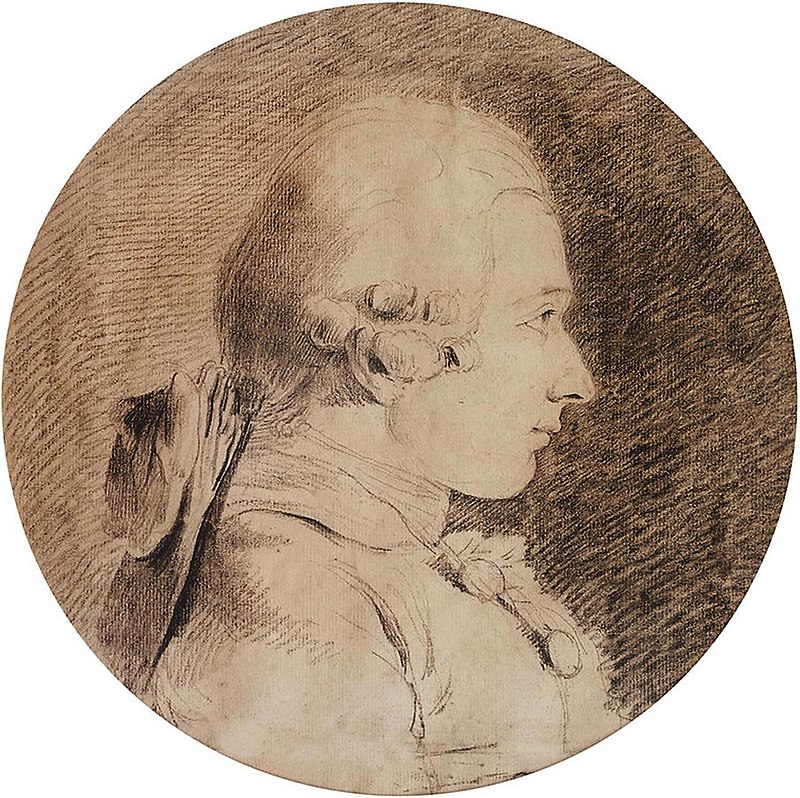
Marquis de Sade Limerick

There once was a Marquis named de Sade
whose philosophy many found odd:
The pursuit of pleasure,
by any measure,
is to spoil by not sparing the rod!