BOOKS: 千字文 [Thousand Character Essay] by 周兴嗣 [Zhou Xingsi]

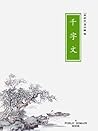
千字文千字文 by 周兴嗣
My rating: 4 of 5 stars

A version with English commentary can be found at the IFA Gallery

This short work, consisting of just one-thousand characters, is first and foremost a teaching tool for children. While it presents a thousand of the most important Chinese characters, it also delivers lessons on history, ethics, philosophy, and culture by way of short sayings.

It’s arranged into 250 4-character phrases (125 sentences) and reads as a lyric poem, though because it dates to the Sixth Century, the degree to which the rhyme scheme holds varies depending upon the which spoken language one speaks (e.g. Mandarin, Cantonese, or Hakka.)

There have been different versions of this work over the centuries.

This is a much beloved work of literature among Chinese, though its sayings do not necessarily hold up as well as works like Sunzi’s Art of War or Laozi’s Daodejing. Some do, but most are much less relevant than when written.

As someone learning Chinese, I’d highly recommend this work as a way to expose oneself to language while gaining insight into Chinese culture.

View all my reviews

PROMPT: Talk

Daily writing prompt
Who would you like to talk to soon?

I’d like to be able to talk to anyone in Mandarin soon, unfortunately my pace of learning is so glacial as to preclude talking “soon” — at least on broad and undefined topics. [Note: When I say “anyone” I mean anyone who speaks Mandarin and has interesting things to say.]

BOOKS: “Chinese Grammar Wiki BOOK: Intermediate” ed. by John Pasden, et. al.

Chinese Grammar Wiki BOOK: IntermediateChinese Grammar Wiki BOOK: Intermediate by John Pasden
My rating: 5 of 5 stars

Publisher Site – AllSet

I’ve found this series helpful in offering a basic guide to grammar for learning Mandarin through Simplified Characters and pinyin. It provides plenty of examples and is not dense with explanation and elaboration but rather focuses on the core principles as well as demonstrations of common pitfalls. It covers the B1 grammar points which is a designation used by, but not original to, the series. (As far as I can tell, it’s a European standard that has been applied across languages to organize the concepts one should be able to express at a given level of language learning.

This is the second book of the series that I’ve worked through (the third if one counts the “Just the Basics” level which is a subset of the Beginner level book,) and I intend to continue on to the “Upper Intermediate” guide.

This may not be the series you want if you’re a linguist looking for nuanced insight into Chinese grammar, but it’s excellent for your average language learner. [It also seems to be quite affordable compared to many competing grammar books and series.]

View all my reviews

“Spring Thoughts” by Li Bai [w/ Audio]

Yan grass shimmers like silken jade.
Qin mulberry trees' green leaves droop.
Your homecoming is now at hand
As heartbreak has me thin and stooped.
Spring Winds and I are strangers --
Why, past my curtains, the inward swoop?

Chinese Title: 春思; Original poem in Simplified Chinese:

燕草如碧丝, 秦桑低绿枝;
当君怀归日, 是妾断肠时。
春风不相识, 何事入罗帏?

Note: this is poem #7 in “300 Tang Poems” [唐诗三百首]

BOOKS:  木兰辞 [Ballad of Mulan] by Anonymous

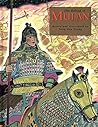
The Ballad of Mulan: 木兰辞 (Simplified Chinese Characters with Pinyin)The Ballad of Mulan: 木兰辞 by Song Nan Zhang
My rating: 5 of 5 stars

Available online at YellowBridge

This is a short lyric poem (15-1/2 quatrain, or 62 lines) that tells the story of a young woman who disguises herself as a man and joins the military to fill a slot that would otherwise have required her aged and infirm father to serve. The tiny poem packs in ten-plus years, during which Hua Mulan serves with great distinction and then returns home to take care of her parents. It’s a well-known tale that emphasizes the importance of filial piety and sacrifice. Though outside of China (as well as Taiwan and other Chinese cultural enclaves,) many may know it from the Disney version which has been panned for ditching the Confucian values and replacing them with ones that were thought would resonate better with a Western audience.

The poem is mostly arranged in quatrains of five-character lines with alternate line rhymes.

It’s a quick read and there is no room for the detailed tales of heroism that are depicted in adaptations.

If one is looking for a culturally insightful telling of the story of Hua Mulan, this is the right place to look. I’d highly recommend reading it.

View all my reviews
BOOKS: 三字经 by 王应麟 [“Three Character Classic” by Wang Yinglin]

三字经三字经 by 章炳麟
My rating: 5 of 5 stars

Available online — Project Gutenberg

This is a Confucian primer written in lines of three characters. It’s a children’s book in the sense that it’s aimed at children, but not necessarily with respect to being presented in a manner most conducive to childhood learning. (While it’s concise, the material isn’t presented in an interesting or memorable form. i.e. It’s intended for brute force rote memorization.)

The book consists of five sections, ranging between twenty-four and one hundred and six lines (72 to 318 characters per chapter.) The first introduces Confucian virtues. The second offers a broad overview of classics of Chinese philosophy. The third section lists the dynasties of China. The penultimate section describes ideal behavior from a Confucian perspective. The last, and briefest, section is largely a pep talk on studying hard.

As someone learning Mandarin Chinese, it’s interesting to see how sentences are formed in this sparse format, and this text offers insight into Chinese history and philosophy, in addition to providing a good early reader.

If you are interested in learning elementary Confucianism or you’re learning Chinese and looking for short and simple texts for reading, I’d recommend one look into the Three Character Classic.

View all my reviews

BOOKS: 孙子兵法 [Sunzi’s Art of War] by Sunzi

孙子兵法白话全译孙子兵法白话全译 by 史哲 文
My rating: 5 of 5 stars

Available online – YellowBridge

In thirteen short chapters, Sunzi lays out a masterclass in strategy. One sees in Sunzi’s work the mark of a Taoist mindset, seeing it in the book’s emphasis on engaging in warfare only when necessary, doing things the easy way whenever possible, and never letting one’s ego write checks one isn’t able to cash in lives.

There is good reason that this is one of the world’s most well-known (if not the most well-known) treatise on warfare. Far from being complicated and technical, this guide is full of pithy teachings such as: “War is the way of deception.” “No country ever benefited from a long war.” “Defeating the enemy without fighting is supreme excellence.” “To be undefeated lies in oneself, to be victorious lies in the enemy.” “Know the enemy and yourself and victory is assured; know heaven and earth and victory is complete.” (And these teachings are even more concise in the original Chinese.)

In addition to basics like leadership, maneuver, and terrain, the book devotes chapters to both the use of fire and spies in warfare. (One’s level of understanding is central to strategic victory throughout Sunzi’s teachings.)

I’d highly recommend this book for anyone interested in strategy, martial arts, or other strategic pursuits. The book may be ancient, but it’s not obsolete by any means.

View all my reviews
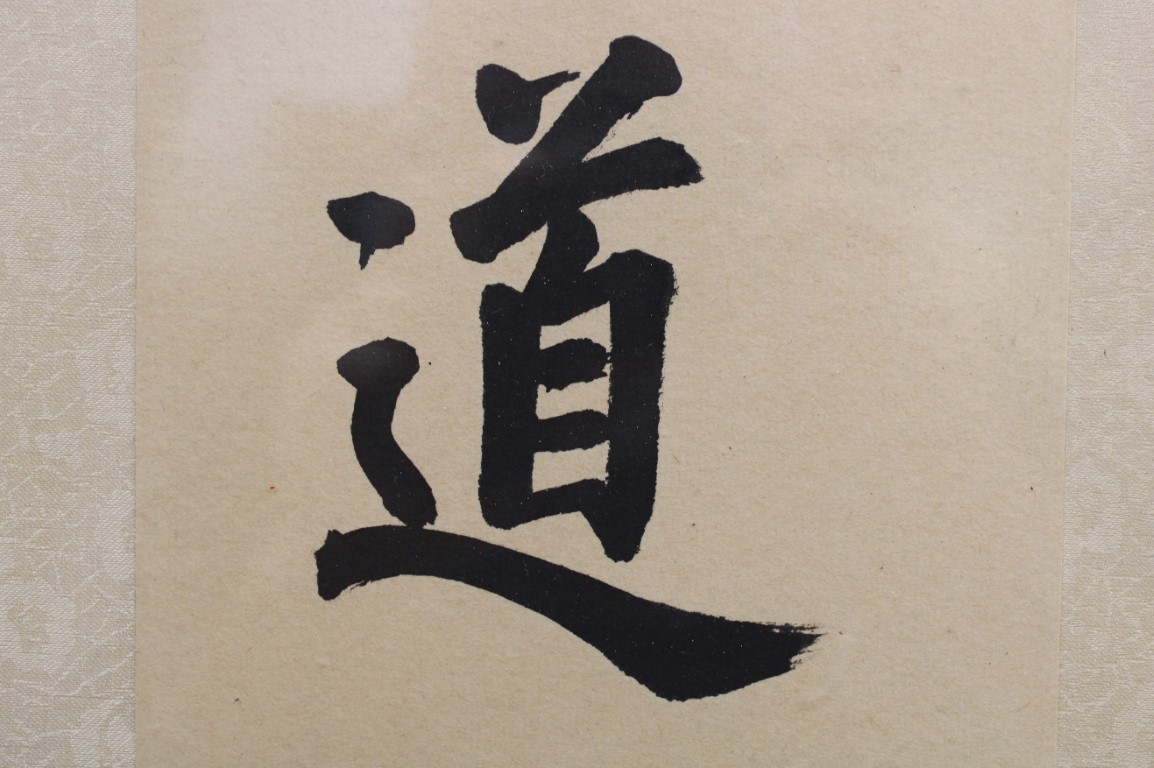
BOOKS: 道德经 by 老子 [a.k.a. Daodejing by Laozi]

老子道德经校释(简体中文版): 中华传世珍藏古典文库 (Chinese Edition)老子道德经校释(简体中文版): 中华传世珍藏古典文库 by 王弼
My rating: 5 of 5 stars

Available in Traditional & Simplified Chinese [w/ multiple translations] at YellowBridge

Packed into the 81 brief chapters of this book is the core Taoist philosophy on life, human relationships, governance, and war. Most often, it offers a wisdom that turns conventional wisdom on its head, advocating for inaction over action, less over more, simplicity over complication, and for recognizing the usefulness of what isn’t.

Some of the book’s central ideas are captured in these quotes:

上善若水。水善利万物而不争. “The greatest good is like water. It benefits all without fighting.” [Ch. 8]
金玉满堂,莫之能守 “A house full of jade and gold cannot be guarded.” [Ch. 9]
知人者智,自知者明。胜人者有力,自胜者强。“He who knows others is smart; he who knows himself is enlightened. He who conquers others has power; he who conquers himself is mighty.” [Ch. 33]
柔胜刚,弱胜强。“Softness overcomes hardness; weakness overcomes strength.” [Ch. 36]
道常无为而无不为。“The Dao is constant inaction, yet nothing is left undone.” [Ch. 37]
善者,吾善之;不善者,吾亦善之;德善。“The good, I treat well; the bad, I also treat well. Yeah Virtue!” [Ch. 49]
知者不言,言者不知。“He who knows does not speak; he who speaks does not know.” [Ch. 56]
千里之行,始于足下。“The journey of a thousand li (“miles”) begins with a single step.” [Ch. 64]
天之道,不争而善胜 “The way of heaven is to win without fighting.” [Ch. 73]
信言不美,美言不信。“True words aren’t pleasing; pleasing words aren’t true.” [Ch. 81]

I think this is one of those works that should be read and reread. It may help rewire your brain in useful ways.

View all my reviews

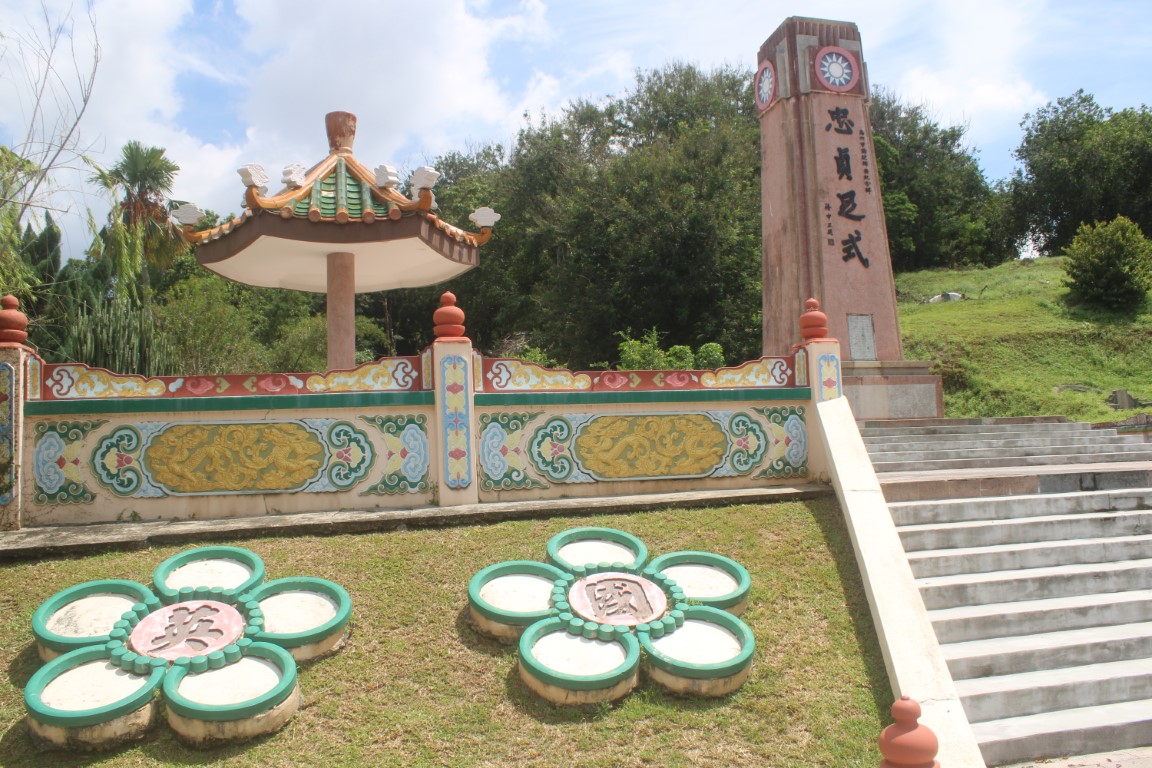
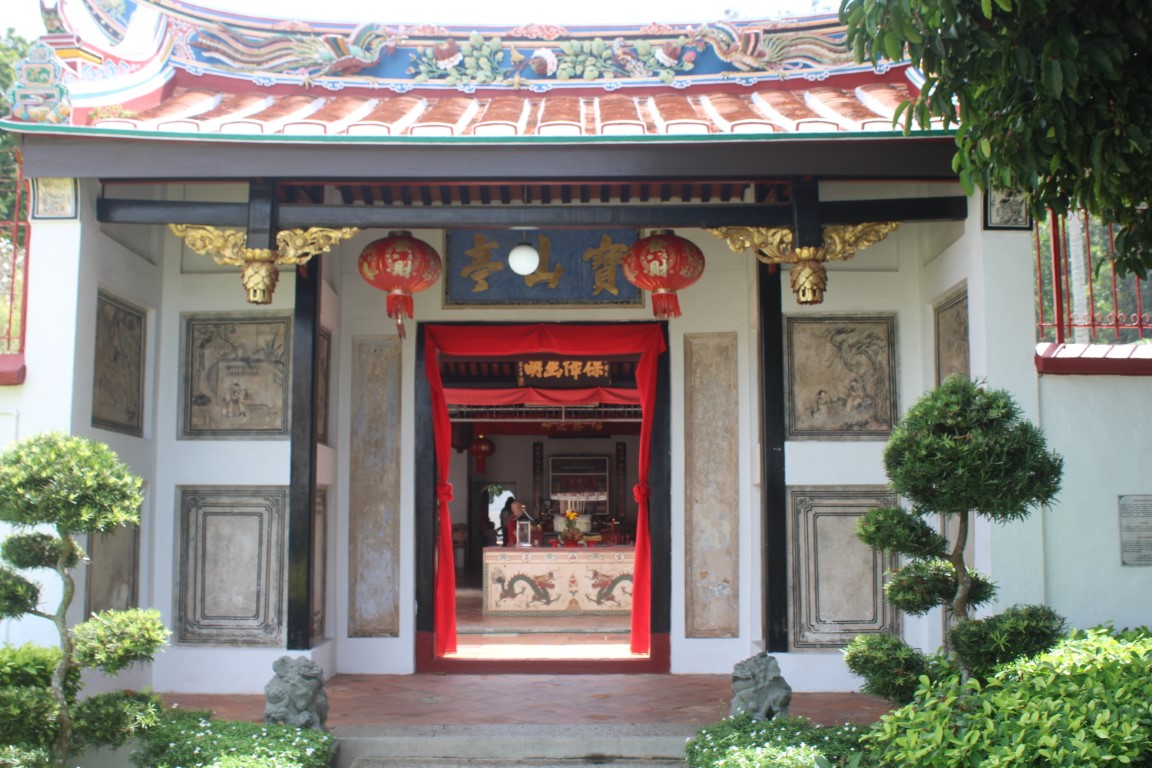
DAILY PHOTO: Bukit Cina [Chinese Hill — 三宝山]

World War II Resistance Memorial
One (communal) grave/memorial is at the highest point of the hill.
Poh San Teng Temple [a.k.a. Bǎo Shān Tíng]

BOOKS: “Chinese Grammar Wiki BOOK: Elementary” ed. by John Pasden

Chinese Grammar Wiki BOOK: ElementaryChinese Grammar Wiki BOOK: Elementary by John Pasden
My rating: 5 of 5 stars

Publisher Site

Confronted with a vast sea of Chinese grammar texts, this is the series I chose, and I’ve been happy with my decision. This, the beginner level grammar guide, is reasonably priced, logically organized, easy to use, and has all one needs without time-wasting excesses.

The core of the book consists of 135 grammar points (40 “A1” level and 95 “A2” level.) For each point there is a clear but simple explanation of the rule, a formulaic statement of said rule [an easy to find timesaver when reviewing,] a number of examples (with Chinese characters, pinyin, and an English translation) and any cautions to consider (i.e. common mistakes, ways Chinese grammar differs from English, and common exceptions to the rule.) The examples used simple and common words and phrases to drill basic and useful vocabulary.

This book is organized to put bite-sized chunks of learning at hand so that one can do more or less, depending upon one’s schedule.

I’d recommend this book for anyone looking for a basic Chinese Grammar text.

View all my reviews